

PowerOutage.us tracks more than 950 utilities serving over 200 million customers. Our outage data shows solar panel and power station bundles need to have enough capacity and recharge flexibility to provide reliable energy after a blackout.
How we ranked these solar generator bundles
Our solar generator bundle ranking combines captured manufacturer specifications, Amazon listing data, and owner reviews. We also consider trends from our PowerOutage.us outage records.
- Usable capacity and inverter capability: We weighted LFP storage, pure-sine output, surge headroom, and useful ports most heavily.
- Solar recovery and charging flexibility: We considered panel wattage, solar-input ceiling, MPPT support, and AC or vehicle charging next.
- Emergency usability: We looked at UPS or EPS behavior, controls, state-of-charge visibility, cables, and idle draw.
- Battery longevity, safety, and support: Then we considered cycle claims, warranty, safety documentation, support, and owner evidence.
- Portability and value: Finally, we looked at panel weight, deployment, price, expandability, and included hardware.
How these solar generator bundles compare
The comparison table shows the battery, inverter, included panel, and station weight that determine runtime, appliance support, solar recovery, and portability.
| Solar generator bundle | Battery capacity | Continuous output | Included solar | Station weight |
|---|---|---|---|---|
| EcoFlow DELTA 2 Max + 220 W | 2,048 Wh | 2,400 W | 220 W | 50.7 lb |
| Jackery 1000 v2 + 200 W | 1,070 Wh | 1,500 W | 200 W | Under 24 lb |
| Anker C1000 Gen 2 + 200 W | 1,024 Wh | 2,000 W | 200 W | 24.9 lb |
| BLUETTI AC180 + 200 W | 1,152 Wh | 1,800 W | 200 W | 35.3 lb |
| Goal Zero Yeti 1500 + Nomad 200 | 1,505 Wh | 2,000 W | 200 W | About 53 lb |
5 Best solar panel and power station bundles for emergency prep
These five solar generator bundles cover expandable 2 kWh backup, lightweight 1 kWh use, fast wall charging, budget refrigerator support, and rugged premium deployment.
1. EcoFlow DELTA 2 Max + 220 W bifacial panel
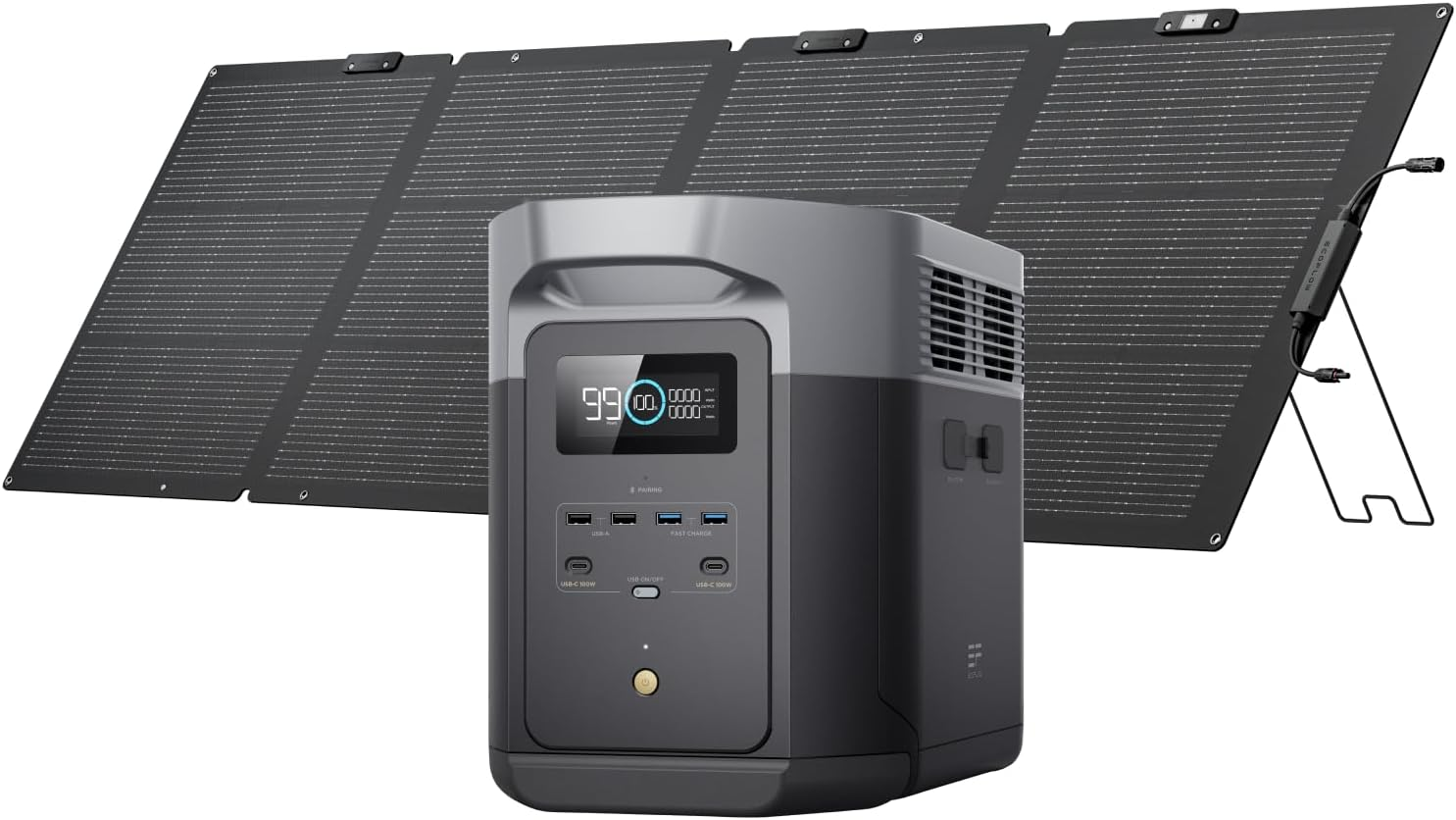
EcoFlow DELTA 2 Max supplies 2,048 Wh, 2,400 W continuous output, and a 1,000 W solar ceiling for demanding essential-load plans.
Households should consider the EcoFlow bundle when refrigeration, networking, lighting, and intermittent kitchen loads need more storage than a 1 kWh kit. Buyers should plan more panel wattage for same-day solar recovery.
- Battery: 2,048 Wh LFP, expandable to 6,144 Wh.
- AC output: 2,400 W continuous and 4,800 W surge.
- Outlets: Six AC outlets.
- Solar: 220 W included panel and 1,000 W input ceiling.
- Weight and life: 50.7 lb with a manufacturer rating of 3,000 cycles to 80%.
Pros
- The strong inverter supports several essential appliances.
- Expandable storage supports longer outage plans.
- The 1,000 W solar ceiling supports faster recovery with added panels.
- The app and broad port selection simplify monitoring and connections.
Cons
- The included 220 W panel is small for a 2,048 Wh battery.
- The station and solar hardware are heavy.
- The design predates newer DELTA 3 platforms.
EcoFlow DELTA 2 Max reviews
Reviewers on Amazon rate the EcoFlow DELTA 2 bundle 4.7 stars overall. Owners commonly praise the app and appliance output, while recurring complaints concern weight, charging-fan behavior, and solar production below optimistic expectations.
Should you buy the EcoFlow DELTA 2 Max bundle?
You should buy the EcoFlow bundle if capacity, appliance output, and expansion outweigh portability. You should pass if one lightweight panel must restore the battery in one day.
2. Jackery Solar Generator 1000 v2 + SolarSaga 200 W
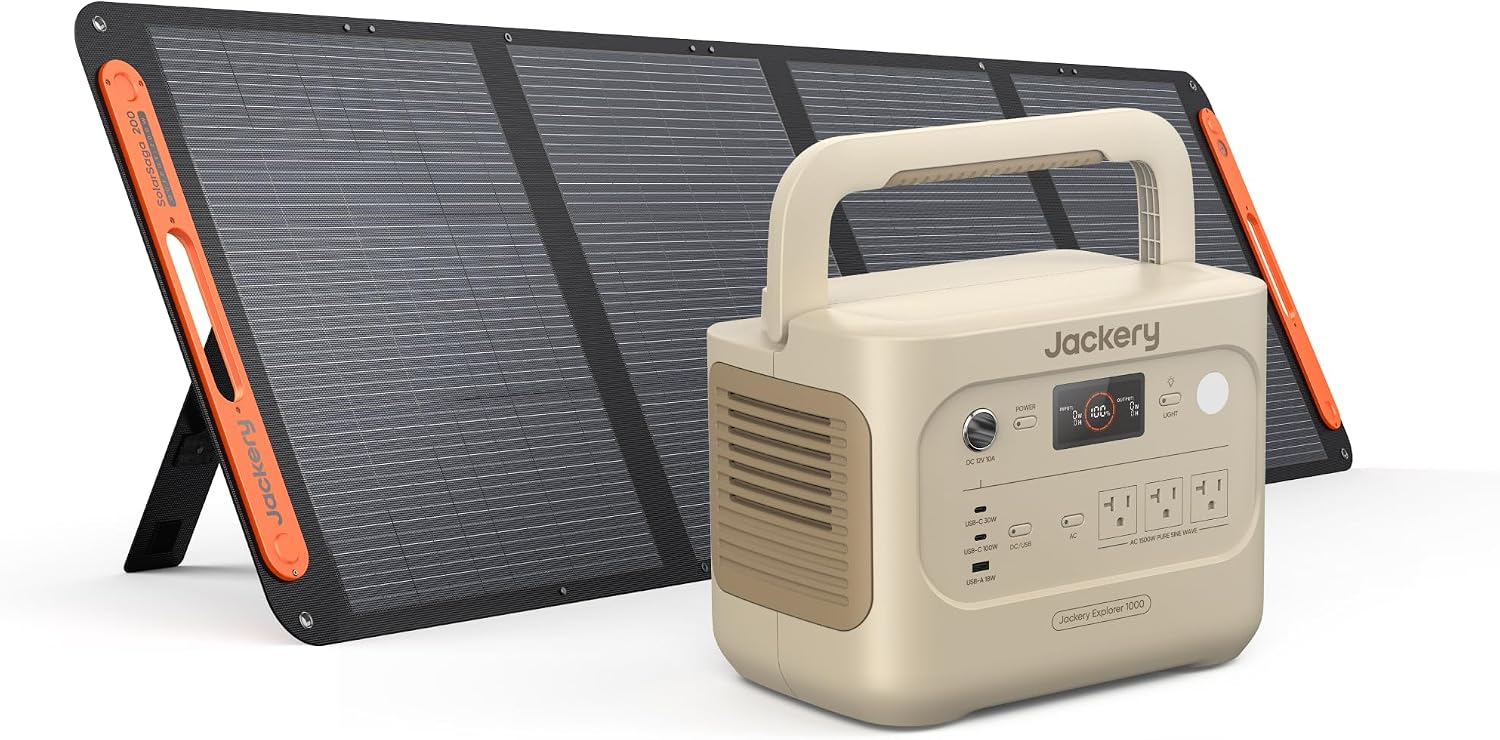
Jackery Solar Generator 1000 v2 combines 1,070 Wh, 1,500 W output, and under-24-lb handling for portable household essentials.
Renters and households should consider the Jackery bundle when simple setup and room-to-room mobility matter. This bundle is great for portability and easy setup.
- Battery: 1,070 Wh LFP.
- AC output: 1,500 W continuous and 3,000 W surge.
- Outlets: Three AC outlets.
- Solar: 200 W included panel and 400 W input ceiling.
- Portability and backup: Under 24 lb with sub-20-ms UPS operation and a 4,000-cycle claim.
Pros
- The bundle has an excellent output-to-weight ratio.
- The simple interface reduces setup time.
- Fast AC charging supports short restoration windows.
- Amazon listing shows strong reviews.
Cons
- Three AC outlets limit simultaneous connections.
- The 400 W solar ceiling restricts future panel expansion.
- One 200 W panel needs most of a clear day to fully recharge.
Jackery Solar Generator 1000 v2 reviews
Owners rate this bundle 4.7 stars from over 2,700 ratings on Amazon. Owners like the portability, controls, build quality, and dependable appliance power, while complaints focus on limited outlets, solar input, and bundle-variant confusion.
Should you buy the Jackery Solar Generator 1000 v2?
You should buy the Jackery bundle if portability, simplicity, and value lead your decision. You should pass if multi-day storage or large solar expansion matters more.
3. Anker SOLIX C1000 Gen 2 + 200 W bifacial panel
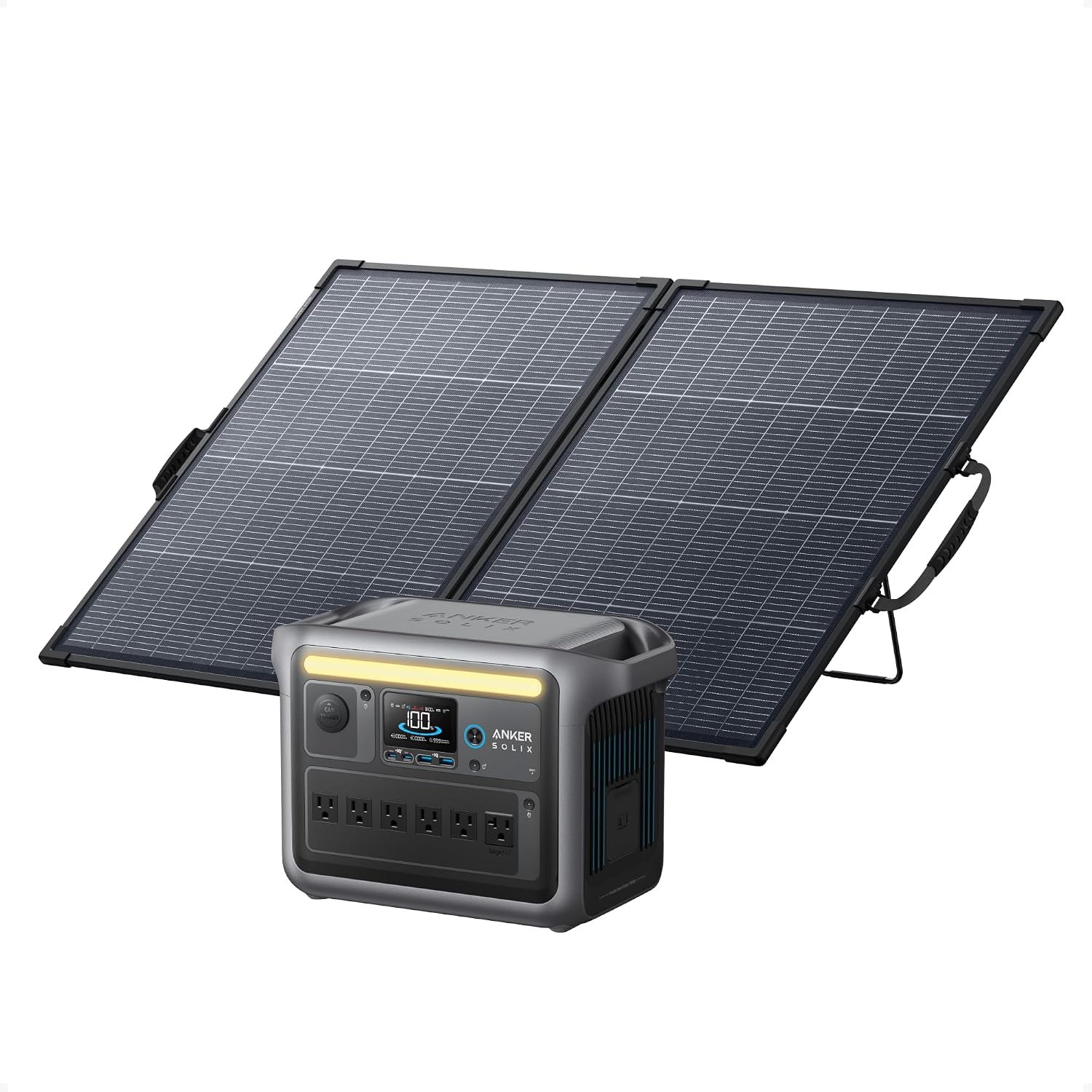
Anker SOLIX C1000 Gen 2 supplies 2,000 W from a 1,024 Wh battery and recharges quickly from wall power before a storm.
Consider the Anker bundle when fast wall charging and high output-to-weight performance matter to you. A higher solar ceiling lets you charge faster with more panels.
- Battery: 1,024 Wh LFP.
- AC output: 2,000 W continuous and 3,000 W peak.
- Ports: Ten output ports.
- Solar: 200 W included panel and 600 W input ceiling.
- Recharge and backup: Advertised 49-minute AC recharge and 10 ms UPS operation on the supported configuration.
Pros
- The inverter provides the highest output among the 1 kWh finalists.
- Fast wall charging captures brief restoration windows.
- The 600 W solar ceiling leaves useful expansion room.
- Ten ports include high-power USB-C.
Cons
- The fastest charging mode increases fan noise and heat.
- The included panel uses only one-third of the solar ceiling.
- Gen 2 listing variants can differ in ports and color.
Anker SOLIX C1000 Gen 2 reviews
This panel and battery bundle has 4.7 stars on Amazon from just a handful of reviews. Owners of the C1000 platform praise charging speed, the display, compact size, and app, while complaints mention fan noise and accessory prices.
Should you buy the Anker SOLIX C1000 Gen 2?
You should buy the Anker bundle if fast recovery and high 1 kWh output matter most. You should pass if the included 200 W panel must use the station's full solar ceiling.
4. BLUETTI AC180 + 200 W panel
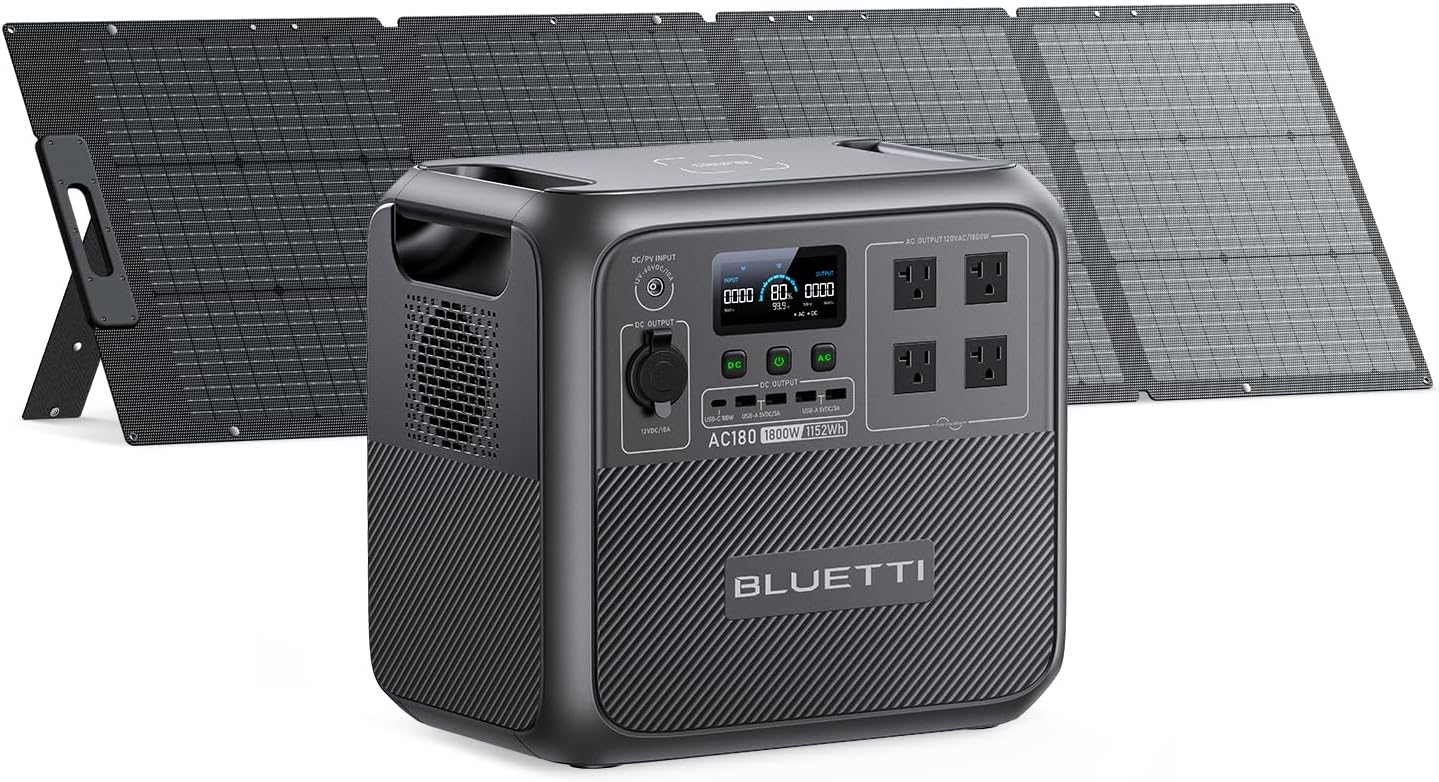
BLUETTI AC180 pairs 1,152 Wh and 1,800 W pure-sine output with frequent sale pricing for refrigerator and essential-load backup.
Value-focused households should consider the BLUETTI bundle when storage and four AC outlets matter more than low weight. Four AC outlets let one unit run a refrigerator, a router, and two phone chargers at the same time.
- Battery: 1,152 Wh LFP with a claimed 3,500 cycles to 80%.
- AC output: 1,800 W pure sine with 2,700 W lifting mode.
- Outlets: Four AC outlets and 100 W USB-C.
- Solar: 200 W included panel and 500 W input ceiling.
- Weight and backup: 35.3 lb with UPS or EPS operation.
Pros
- The battery stores more energy than most 1 kWh rivals.
- Four AC outlets support several essential devices.
- The LFP cycle claim supports long ownership.
- Frequent discounts improve bundle value.
Cons
- The station is heavier than Jackery and Anker alternatives.
- A 200 W panel recharges the battery slowly.
- Lifting mode is not full 2,700 W pure-sine capability.
BLUETTI AC180 reviews
The captured Amazon listing held 4.5 stars from 525 ratings. Owners like the value, refrigerator performance, and simple setup, while complaints cluster around weight, charging-fan noise, app connectivity, and panels arriving separately.
Should you buy the BLUETTI AC180?
You should buy the BLUETTI bundle if refrigerator capacity and sale value outweigh weight. You should pass if fast recovery from one included panel matters most.
5. Goal Zero Yeti 1500 + Nomad 200
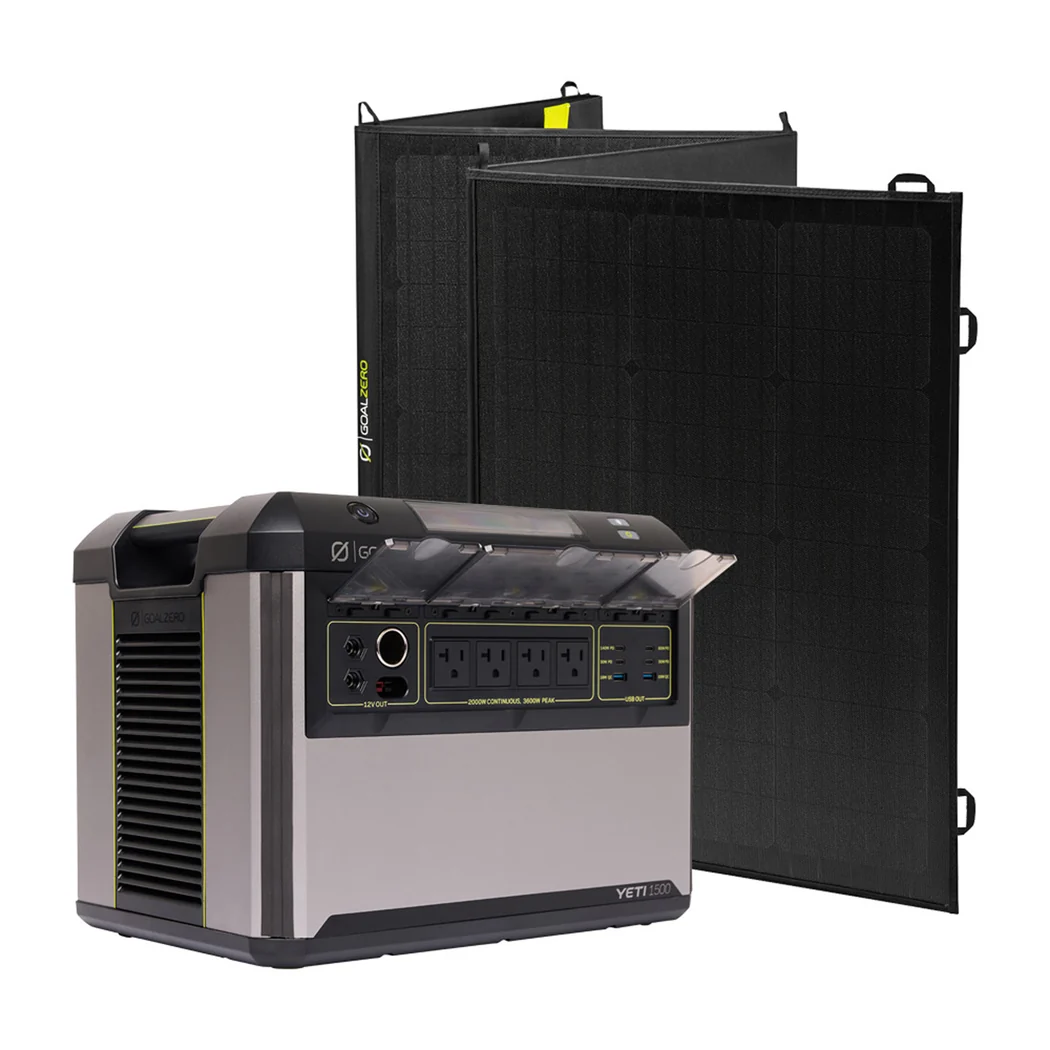
The Goal Zero Yeti 1500 bundle supplies 1,505 Wh in an aluminum IPX4 platform with strong RV and 12 V integration.
Outdoor and RV buyers should consider this bundle when construction, weather resistance, support, and 12 V output justify the premium. Buyers must confirm that the bundle contains the 6th Gen LFP Yeti rather than the older 1500X.
- Battery: 1,505 Wh LFP with a claimed 4,000 cycles to 80%.
- AC output: 2,000 W continuous and 3,600 W surge.
- Ports: Fourteen outputs, including 140 W USB-C PD.
- Solar: Nomad 200 panel and a 900 W input ceiling.
- Construction: About 53 lb with IPX4 protection and a 12 V, 30 A output.
Pros
- Aluminum construction supports demanding transport.
- The 12 V output suits RV equipment.
- The 900 W solar ceiling supports major panel expansion.
- Goal Zero provides a five-year warranty.
Cons
- The station and panel cost more than the other picks.
- The station weighs about 53 lb.
- The included panel underuses the solar-input ceiling.
Goal Zero Yeti 1500 reviews
This bundle has a 4.8-star rating on Goal Zero’s site. Owners praise construction, port organization, and RV output, while complaints mention weight and intermittent Bluetooth pairing.
Should you buy the Goal Zero Yeti 1500?
You should buy the Goal Zero bundle if rugged construction and RV-friendly output justify the premium. You should pass if price, weight, or bundled solar recovery controls the decision.
How recent outages change the solar generator bundle you should buy
Hurricane Helene affected 4.79 million customers, and some western North Carolina areas remained dark for 14 days. A 1 kWh kit covers hours, so people in long outages need expandable storage and more solar input.
Hurricane Milton affected 3.4 million Florida customers and produced brief restoration windows before repeat failures. Fast AC charging and enough panel wattage help a solar generator bundle capture energy whenever grid power or sunlight returns.
How to choose a solar generator bundle for emergency prep
A solar generator bundle should match measured energy, appliance surge, solar recovery, portability, and expansion to the household's outage plan.
- Runtime: Estimate AC runtime with battery Wh multiplied by 0.85, then divided by measured device watts.
- Solar recovery: Divide the battery's watt-hours by the panel's watts to get a rough charge time, then add about a third more to cover clouds, panel angle, and heat.
- Motor startup: Confirm continuous and surge ratings for refrigerators, pumps, and compressors.
- Portability: Choose a portable 1 kWh kit for short essentials or an expandable 2 kWh platform for longer outages.
- Home circuits: Use approved transfer equipment because a portable station must never backfeed a panel.
- Placement: Keep the station dry and ventilated within its rated temperature range, and place solar panels outdoors in sunlight.
You might also want to compare DIY solar kits and portable power stations vs generators before choosing a category.