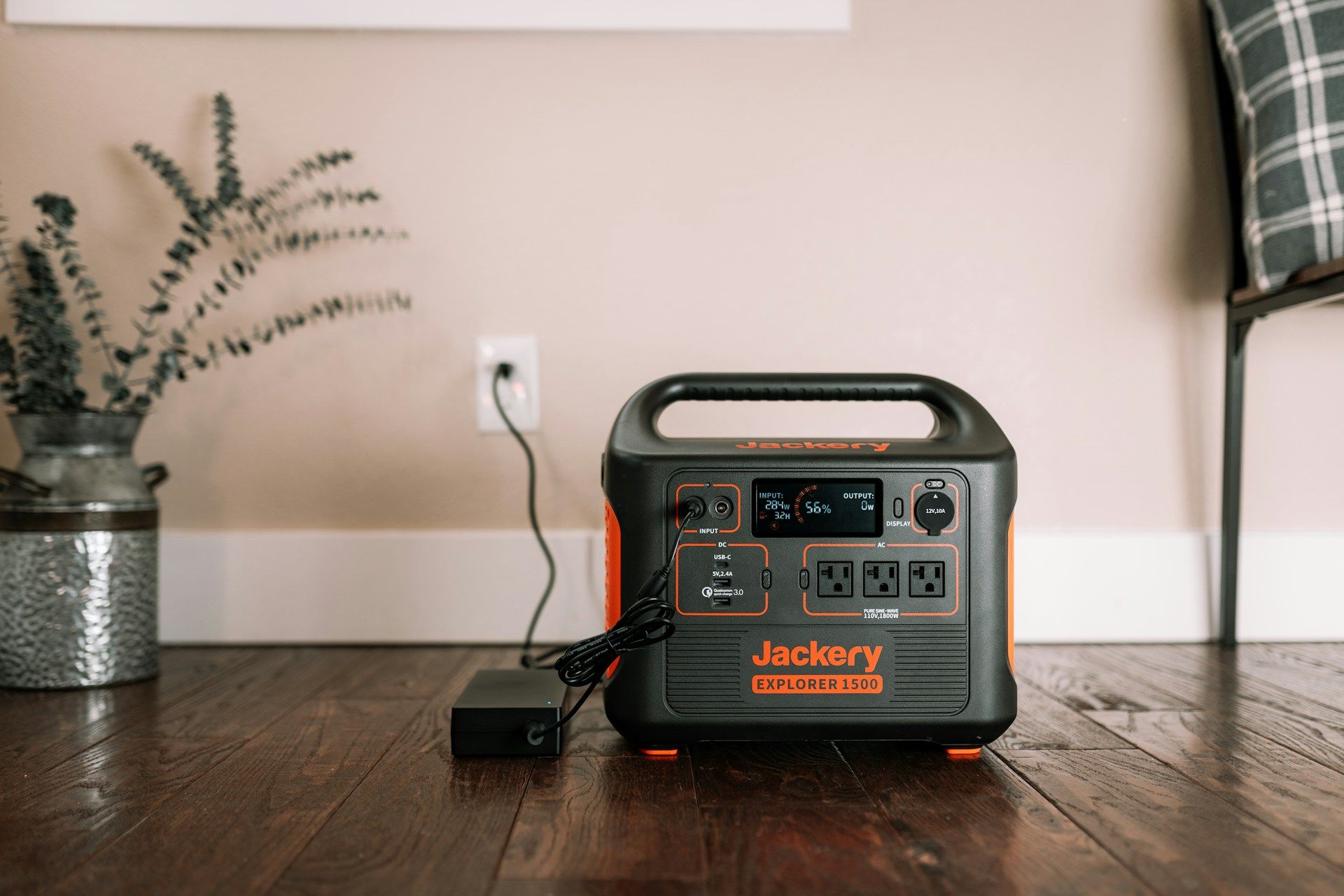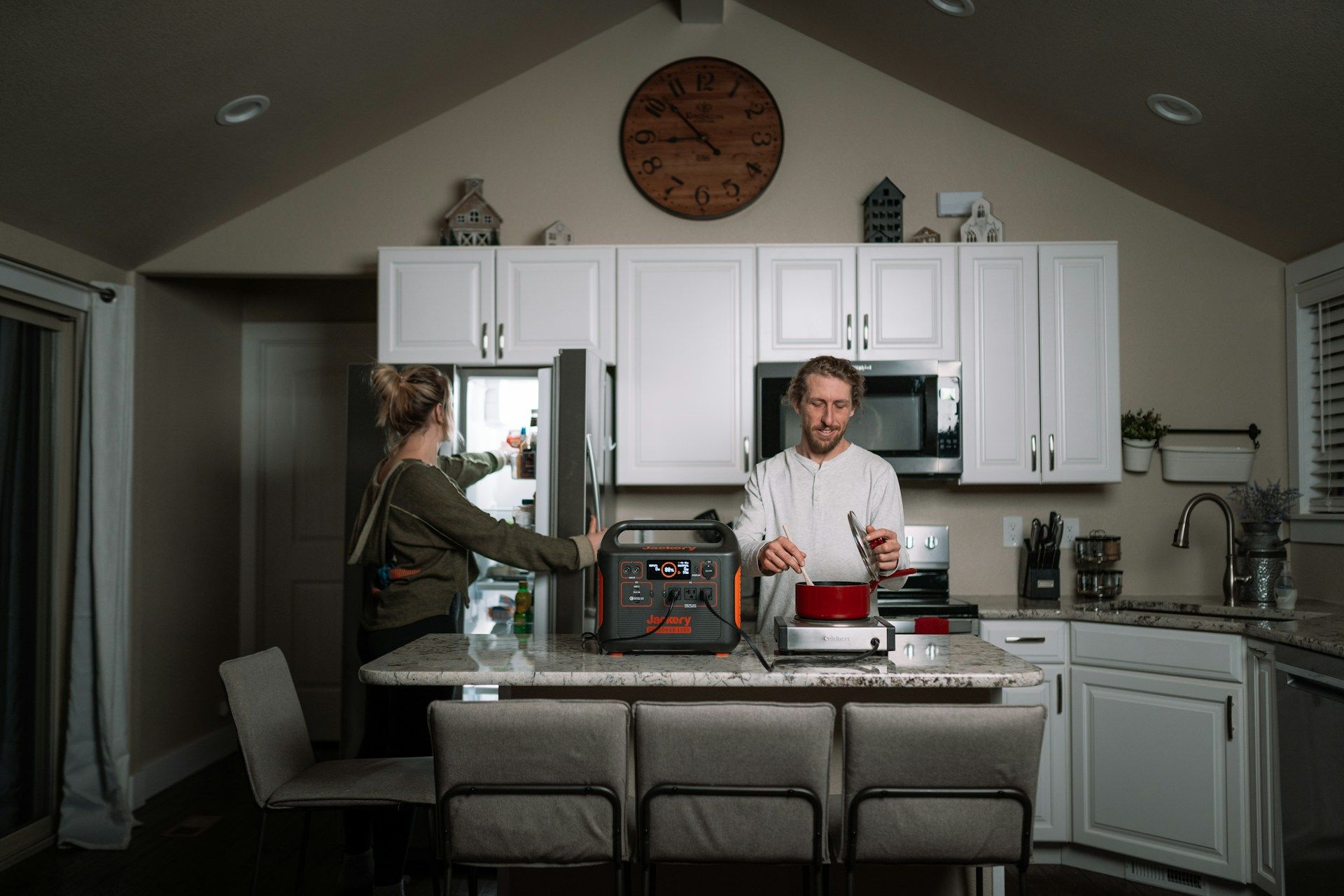


The best portable power stations for power outages use LiFePO4 battery cells, carry at least 1,024Wh, and deliver above 1,800 watts of continuous inverter output. The five units in our home battery backup guide below cover apartments through small homes.
PowerOutage.us monitors 950 utilities and updates outage data every 10 minutes during live events. That national coverage can help you see how long power outages in your region last to decide on the right portable power station.
5 Best portable power stations for power outages in 2026
Choosing among LiFePO4 portable power stations comes down to matching watt-hour capacity to outage duration and inverter output to the peak wattage of your highest-draw appliance.
1. Anker Solix C1000 Gen 2
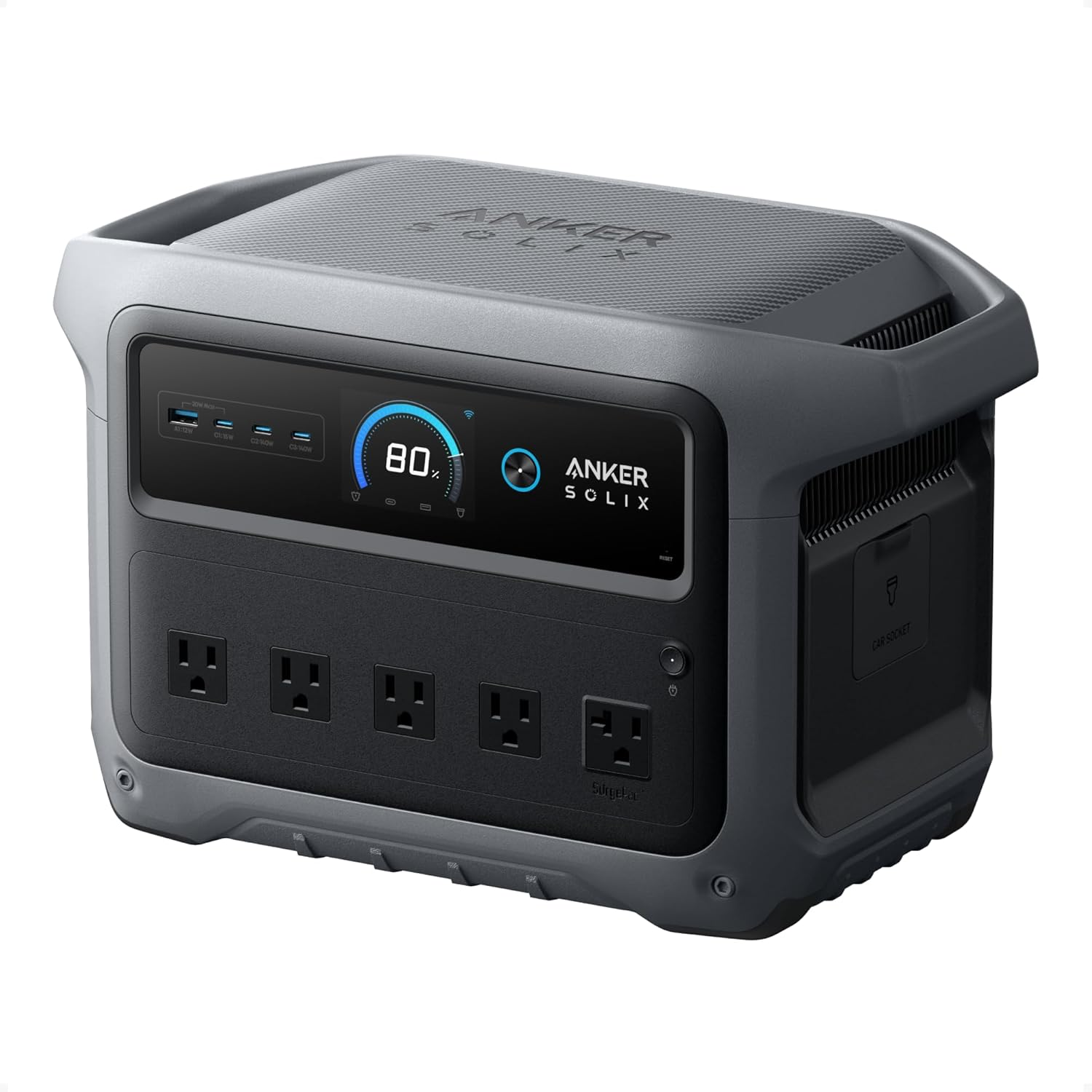
The Anker Solix C1000 Gen 2 holds 1,056 Wh of LiFePO4 capacity and delivers 1,800 watts of continuous output. It fully recharges in 58 minutes. It’s a practical option for renters and apartment dwellers keeping smartphones, laptops, a Wi-Fi router, and LED lighting running through outages.
What are the Anker Solix C1000 Gen 2's features?
The Anker Solix C1000 Gen 2 prioritizes fast recharging and compact size over maximum capacity, making it the strongest fit for outage scenarios where the station will be refilled between events.
- 1,056 Wh LiFePO4 battery with a 10-year lifespan rating
- 1,800 W continuous AC output across six standard wall outlets
- 58-minute full recharge from a wall outlet via AC input
- 20 ms UPS transfer time for uninterruptible protection of desktop computers
- Dual 100 W USB-C ports for simultaneous laptop charging
- Smartphone app with ultra-fast charge mode toggle
The 58-minute recharge time is the most significant practical advantage for outage prep. If a winter storm warning arrives with only a few hours of notice, the Anker Solix C1000 Gen 2 can go from empty to full before the grid fails. That speed matters most when there is no time to plan ahead.
What are the pros and cons of the Anker Solix C1000 Gen 2?
The Anker Solix C1000 Gen 2 delivers more recharging speed and UPS functionality than any other unit in this guide at the 1,000Wh capacity tier, but its fixed capacity limits its role to outages under 24 hours.
Pros
- Fastest recharge time in the 1,000 Wh class at 58 minutes from a wall outlet
- Compact enough to store in an apartment closet or under a desk
- 20 ms UPS function protects desktop computers during the grid-to-battery transition
Cons
- 1,056 Wh limits home refrigerator compressor runtime to roughly 5 hours
- No battery expansion option keeps total capacity fixed at purchase
- 1,800 W ceiling excludes some startup surges that exceed that threshold
2. EcoFlow DELTA 3 Plus
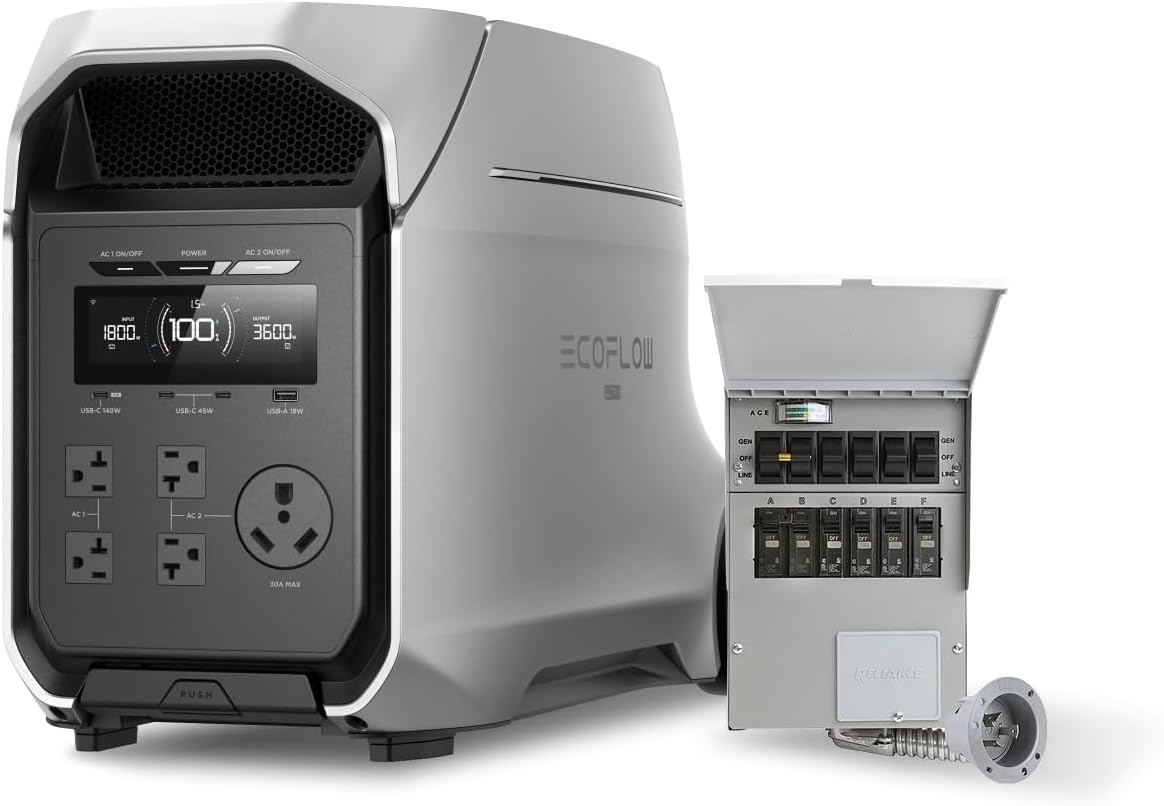
The EcoFlow DELTA 3 Plus starts at 1,024 Wh and expands to 3,000 Wh by adding an extra battery. It outputs 1,800 watts and switches to battery power in 10 milliseconds. Large apartment residents expecting multi-day outages and wanting room to grow capacity will find it the strongest match.
What are the EcoFlow DELTA 3 Plus's features?
The EcoFlow DELTA 3 Plus combines a competitive base capacity with the fastest AC input recharge and the highest solar input in the 1,024 Wh class, built around an expandable architecture.
- 1,024 Wh LiFePO4 battery expandable to 3,000 Wh with a compatible EcoFlow extra battery
- 1,800 W continuous AC output with 6,000 W surge capacity
- 10ms UPS transfer time for sensitive electronics protection
- 1,500 W AC input recharge for a full charge in under one hour from empty
- Solar input up to 1,000 W for outdoor recharging during extended outages
- Smartphone app with real-time wattage monitoring for each outlet
The expandability is the feature that separates the EcoFlow DELTA 3 Plus from fixed-capacity stations in the same price range. Buying the base unit now and adding an extra battery during a future storm season costs less than purchasing a larger-capacity station upfront.
What are the pros and cons of the EcoFlow DELTA 3 Plus?
The EcoFlow DELTA 3 Plus offers more capacity growth potential than any other unit at the 1,024 Wh entry point, though the total cost of a fully expanded system approaches the price of a 2,048 Wh unit bought outright.
Pros
- Expandable capacity lets you scale without replacing the station
- 1,500 W AC input charges from zero in under one hour before a storm
- 1,000 W solar input handles multi-day outages when paired with 200W monocrystalline panels
Cons
- Base 1,024 Wh limits refrigerator compressor runtime to 5 hours without the expansion battery
- The expansion battery adds $400 to $700 to the total system cost
- 1,800 W output cannot start central air conditioning compressors that surge above that threshold
3. Bluetti Elite 200 V2

The Bluetti Elite 200 V2 carries 2,048 Wh of LiFePO4 capacity and delivers 2,400 watts of continuous output across 11 outlets. It runs a home refrigerator for roughly 10 hours. Households needing one unit for a full day of essential loads, including CPAP machines and device charging, will prefer it.
What are the Bluetti Elite 200 V2's features?
The Bluetti Elite 200 V2 packs 2,048 Wh of LiFePO4 capacity into a chassis 19 percent smaller than its predecessor, with 11 outlets and a 10 ms UPS for whole-apartment outage coverage.
- 2,048 Wh LiFePO4 battery with a 3,500-cycle lifespan rating
- 2,400 W continuous AC output across 11 power outlets
- 10 ms UPS transfer time for uninterruptible power to sensitive devices
- Expandable with Bluetti external battery modules
- Bluetooth and Wi-Fi smartphone app control with per-outlet monitoring
- Chassis footprint reduced by 19 percent compared to the previous Bluetti Elite generation
The 11-outlet count can handle a kitchen refrigerator, a bedroom CPAP machine, a living room lamp, and two phone chargers simultaneously.
What are the pros and cons of the Bluetti Elite 200 V2?
The Bluetti Elite 200 V2 leads this guide in outlet count and delivers enough capacity for a full day of refrigerator and CPAP use, though its weight makes it less suited to frequent room-to-room movement.
Pros
- 2,048 Wh covers a full day of refrigerator, CPAP machine, and device charging without recharging
- 11 outlets handle multiple simultaneous loads across different rooms in a house or apartment
- Expandable with extra battery modules for multi-day outages
Cons
- Heavier and larger than 1,024 Wh-class stations, limiting portability between rooms
- 2,400 W output excludes large kitchen appliances above that threshold
- Higher upfront cost compared to 1,024 Wh-class stations
4. EcoFlow DELTA Pro 3
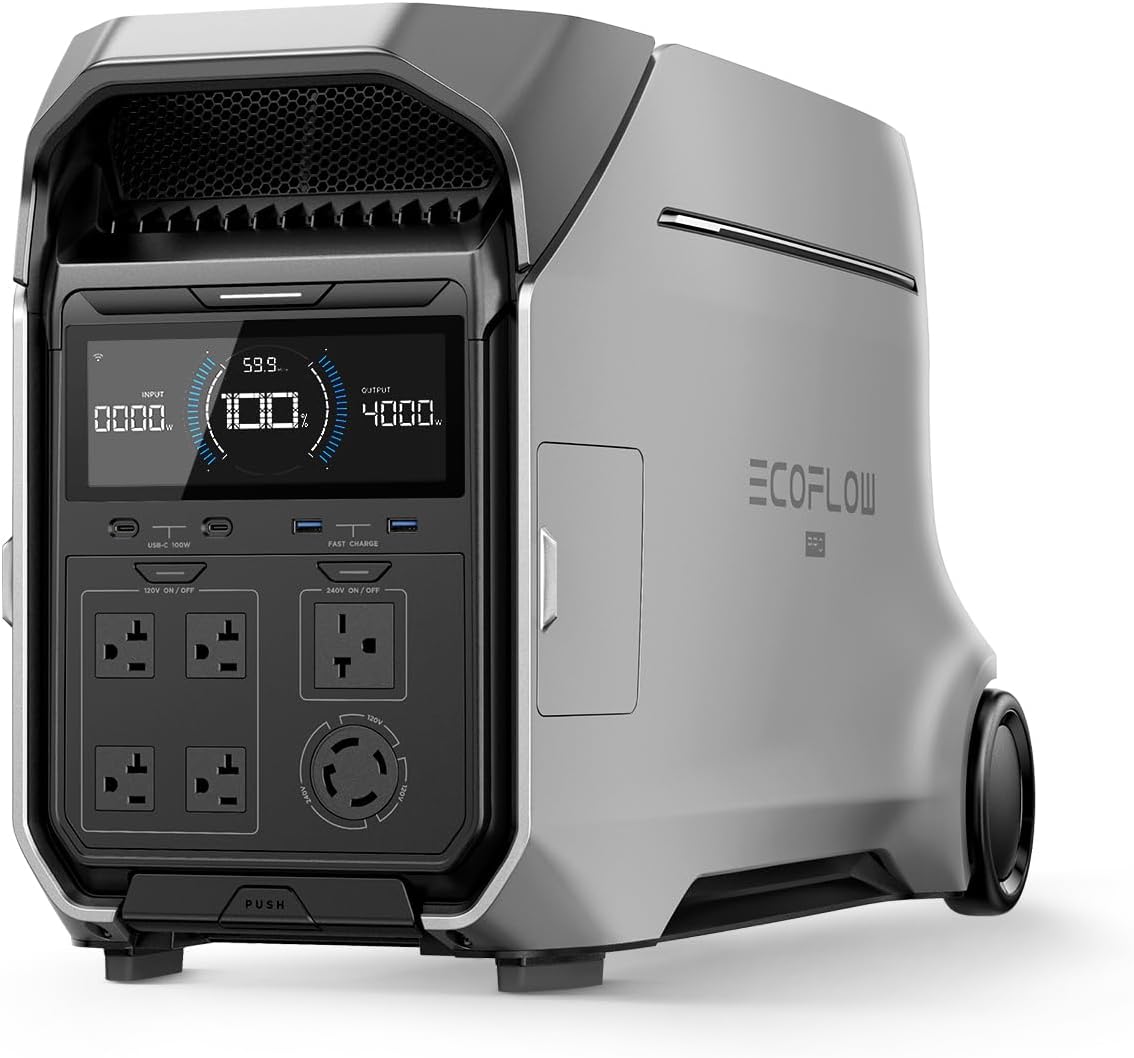
The EcoFlow DELTA Pro 3 holds 4,096 Wh of LiFePO4 capacity and outputs 3,600 watts continuously. It runs a home refrigerator for roughly 20 hours and expands to 12,000 Wh. Small homeowners facing multi-day outages who want portable capacity without a permanent generator install will find it the clearest choice.
What are the EcoFlow DELTA Pro 3's features?
The EcoFlow DELTA Pro 3 scales from 4,096 Wh to 12,000 Wh and integrates with 120V and 240V home circuits, positioning it as the strongest portable option for homeowners who want to avoid a standby generator installation.
- 4,096 Wh LiFePO4 battery expandable to 12,000 Wh via EcoFlow extra batteries
- 3,600 W continuous AC output with 7,200W surge capacity
- Compatible with both 120 V and 240 V home circuits
- Solar input up to 2,600 W across multiple monocrystalline panels
- EcoFlow Smart Home Panel 2 integration for circuit-level switching
- Smartphone app with full EcoFlow ecosystem monitoring and control
The 2,600 W solar input is the highest in this guide. On a clear day after a storm, two 400 W bifacial solar panels connected in series can begin meaningful recharging within hours of sunrise.
What are the pros and cons of the EcoFlow DELTA Pro 3?
The EcoFlow DELTA Pro 3 delivers the longest base refrigerator runtime and the highest inverter output in this guide, but its cost and weight mean it isn’t appropriate for an apartment.
Pros
- 4,096 Wh base capacity covers refrigerator, CPAP machine, lighting, and device charging for 24 or more hours
- 3,600 W inverter handles power tools, microwave ovens, and larger kitchen appliances
- Solar input extends runtime indefinitely during sustained sunny weather
Cons
- $2,300 to $3,700 price range is the highest in this guide
- Heavier than 1,024 Wh and 2,048 Wh-class stations, requiring wheels for room-to-room movement
- Smart Home Panel 2 circuit integration requires a licensed electrician for permanent installation
5. Jackery Explorer 1000 v2
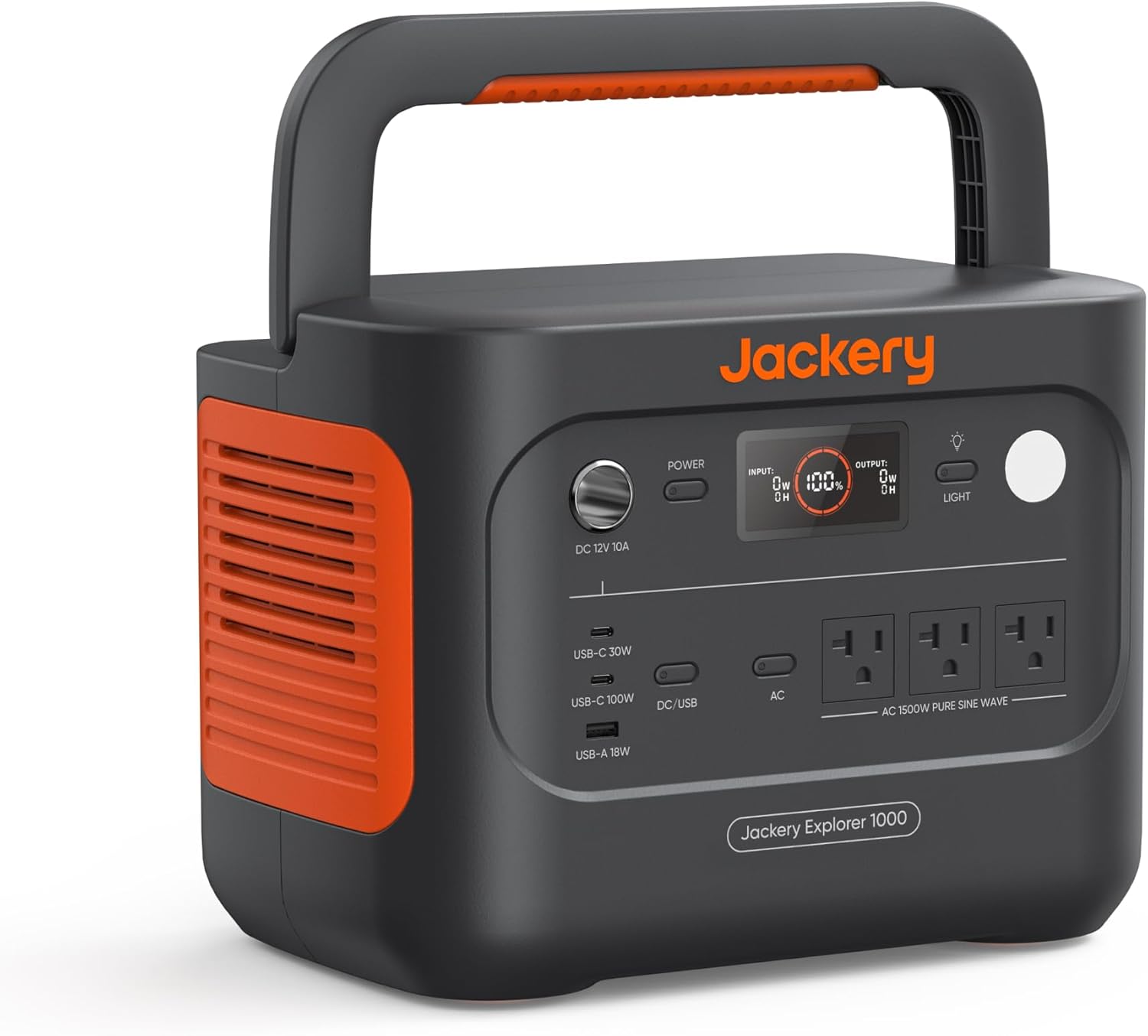
The Jackery Explorer 1000 v2 holds 1,070 Wh of LiFePO4 capacity and weighs 23.8 pounds. It delivers 1,500 watts continuously. Renters keeping smartphones, laptops, a Wi-Fi router, and LED lighting running through outages under 24 hours will find it the most portable match in this guide.
What are the Jackery Explorer 1000 v2's features?
The Jackery Explorer 1000 v2 leads this guide in portability with a 23.8-pound chassis and a foldable handle, built around a 4,000-cycle LiFePO4 battery that outlasts most comparable units in its price range.
- 1,070 Wh LiFePO4 battery with a 4,000-cycle lifespan rating
- 1,500 W continuous AC output with 3,000 W surge capacity
- Dual 100 W USB-C ports for simultaneous laptop charging
- 23.8 pounds with a foldable handle for one-person carry
- Compatible with Jackery SolarSaga monocrystalline solar panels
- LED display showing battery percentage and estimated remaining runtime
At 23.8 pounds with a foldable handle, the Jackery Explorer 1000 v2 is light enough to carry between rooms, move to a vehicle, or bring to a neighbor's house without effort.
What are the pros and cons of the Jackery Explorer 1000 v2?
The Jackery Explorer 1000 v2 is the most portable unit in this guide and the most practical for renters who move power between locations, though its 1,500 W ceiling and limited solar input restrict its role to essential-device outage scenarios.
Pros
- 23.8 pounds with a foldable handle enables one-person carry between rooms and vehicles
- 4,000-cycle LiFePO4 battery maintains rated capacity through 10 or more years of regular use
- Dual 100 W USB-C ports charge two laptops simultaneously
Cons
- 1,500 W ceiling cannot start a home refrigerator compressor that surges above that threshold
- No UPS functionality creates a brief power gap during grid-to-battery transfer
- Solar input limits multi-day recharging speed compared to higher-capacity stations in this guide
How to choose a portable power station for power outages
Choosing a portable power station for power outage use comes down to three variables: watt-hour capacity, continuous inverter output, and battery chemistry.
How many watt-hours do you need for a power outage?
Watt-hours measure total energy storage, and the number determines how long a station can power your appliances before the battery drains.
- Under 1,000Wh: Smartphones, laptops, Wi-Fi routers, and LED lighting during outages under 12 hours
- 1,000Wh to 2,000Wh: Above, plus a home refrigerator compressor for 5 to 10 hours; appropriate for most single-day outages in apartments and condos
- 2,000Wh to 4,000Wh: Refrigerator, CPAP machine, television, and device charging across 24 hours or more; appropriate for extended outages in houses
- 4,000Wh and above: Multi-day outages with refrigerator and essential circuit coverage; practical for small homes with sump pumps or medical equipment
This framework assumes no solar panel recharging. If you pair a portable power station with a 200-watt monocrystalline panel, effective capacity increases with each day of available sunlight, and a 1,024 Wh unit can last well beyond 24 hours. See our best battery systems guide for expandable options if your needs exceed the 4,000 Wh range.
Does LiFePO4 battery chemistry matter for emergency backup?
LiFePO4 (lithium iron phosphate) cells outlast NMC (lithium nickel manganese cobalt oxide) cells by six to eight times in total charge cycles before capacity drops below 80 percent of rated capacity. NMC cells in budget portable power stations typically rate for 500 charge cycles. LiFePO4 cells in units like the Anker Solix C1000 Gen 2 rate for 3,000 or more.
For emergency use, this difference comes down to one specific scenario: a power station stored for 11 months and then needed during a hurricane. An NMC unit stored at full charge in a warm garage loses capacity faster than a LiFePO4 unit in the same conditions.
LiFePO4 cells also resist thermal runaway more effectively than NMC cells. A garage that reaches 120°F during the summer months puts NMC cells at greater risk of accelerated degradation.
What appliances can a portable power station run during an outage?
Continuous inverter output in watts determines which appliances a portable power station can power, and this number is separate from watt-hours. A station with high capacity but low inverter output will run down slowly, but can’t start a refrigerator compressor at all.
Common appliance average watt draws:
- Smartphone charger: 5 to 20 W
- Wi-Fi router: 10 to 20 W
- LED light bulb: 9 to 15 W per bulb
- Laptop computer: 30 to 90 W
- CPAP machine (without humidifier): 30 to 60 W
- CPAP machine (with heated humidifier): 60 to 90 W
- Home refrigerator (average cycling draw): 100 to 200 W, startup surge to 600 W or above
- Box fan: 50 to 100 W
- 5,000 BTU window air conditioner: 500 to 700 W
- Sump pump: 800 to 1,200 W running, startup surge above 3,000 W
How long can a portable power station run a refrigerator?
A typical home refrigerator compressor draws roughly 100 to 200 watts on average, but surges to 600 watts or above at startup, and both numbers shape which portable power station is the right match.
The average draw matters for runtime calculations. The startup surge matters for inverter output selection. A station with a 1,800 W or higher continuous rating can start the compressor; a station with an 800 W rating can’t, regardless of its watt-hour capacity.
| Battery capacity | Approximate refrigerator runtime | Minimum inverter output needed |
|---|---|---|
| 768 Wh | 3 to 4 hours | 800 W or above |
| 1,024 Wh | approximately 5 hours | 1,800 W or above |
| 2,048 Wh | approximately 10 hours | 1,800 W or above |
| 4,096 Wh | approximately 20 hours | 3,600 W or above |
These estimates assume a 200 W average draw after the compressor startup cycle. A 21-cubic-foot top-freezer refrigerator consumes more than a 14-cubic-foot apartment refrigerator. A full refrigerator loaded with food retains cold longer than a half-empty one, which reduces how often the compressor cycles and extends total battery life.
For more on matching battery capacity to refrigerator type and size, see our best battery for refrigerator guide.
What real power outages reveal about how much backup power you need
Verified outage event data from storms tracked by PowerOutage.us consistently shows that the shortest restoration times are in urban utility districts and the longest are in rural and mountainous regions. The gap between a four-hour outage and a 14-day outage can come down to geography alone.
Winter Storm Fern left 1,005,641 customers without power across a 2,000-mile corridor in January 2026. Tennessee was the hardest-hit state, with 306,700 customers losing electricity for more than six days, and NOAA described the ice accumulation as comparable to hurricane-level damage.
Hurricane Helene knocked out power for 4.79 million customers across four states in September 2024, the largest single event PowerOutage.us tracked that year. Western North Carolina mountain counties waited more than 14 days for restoration, while urban Charlotte recovered in under 24 hours.
The pattern across both events is consistent. Outages lasting four to six hours are manageable on a 1,024Wh station. Outages lasting three to six days demand 4,096Wh at minimum, and ideally a solar panel charging setup to extend runtime beyond what any fixed battery capacity alone can provide. Prepare for the next storm season with our power outage emergency kit guide.
Can a portable power station run a CPAP machine through the night?
A continuous positive airway pressure machine without a heated humidifier draws roughly 30 to 60 watts. With a heated humidifier at full output, that draw rises to 60 to 90 watts. The difference between humidifier on and humidifier off can determine whether a 1,024 Wh station lasts one night or two.
| Battery capacity | CPAP runtime (no humidifier, 60 W avg) | CPAP runtime (with humidifier, 90 W avg) |
|---|---|---|
| 1,024 Wh | approximately 17 hours (2 nights) | approximately 11 hours (1 night) |
| 2,048 Wh | approximately 34 hours (4 nights) | approximately 22 hours (2.5 nights) |
| 4,096 Wh | approximately 68 hours (8 nights) | approximately 45 hours (5 nights) |
FEMA recommends that households with electricity-dependent medical devices contact their utility provider before a storm and keep backup power available at all times.
If a CPAP machine is the highest-priority load during an outage, prioritize total watt-hours over inverter output when selecting a station. CPAP machines draw consistent wattage rather than high-surge startup loads, so the inverter ceiling matters less than total stored energy.
For a full checklist of battery backup requirements for medical devices, see our medical device power outage checklist.
Can you recharge a portable power station with solar panels during an outage?
A 200-watt monocrystalline solar panel can recharge a 1,024 Wh portable power station in roughly six hours of peak sunlight. Using a solar portable generator like this extends outage runtime from days to weeks and can help you get through extreme events better than a battery without solar.
- 100W monocrystalline panel with 1,024 Wh station: About 12 to 14 hours to full charge in full sun
- 200W panel with 1,024 Wh station: About 6 to 7 hours
- 200W panel with 2,048 Wh station: About 12 to 14 hours
- Two 200W panels with a 2,048 Wh station: About 6 to 7 hours
Most US locations receive 4 to 6 peak sun hours per day on average, per data from the National Laboratory of the Rockies. A single 200 W panel will typically top off (not fully recharge) a 1,024 Wh station during most real-world outage scenarios.
Quick recap
To summarize our picks, the Anker Solix C1000 Gen 2 suits apartments and short outages and is the best portable power station. Beyond that,
- The Bluetti Elite 200 V2 covers a full day of refrigerator and CPAP loads.
- The EcoFlow DELTA Pro 3 handles small homes through multi-day outages.
- The Jackery Explorer 1000 v2 is the lightest portable option in this guide.