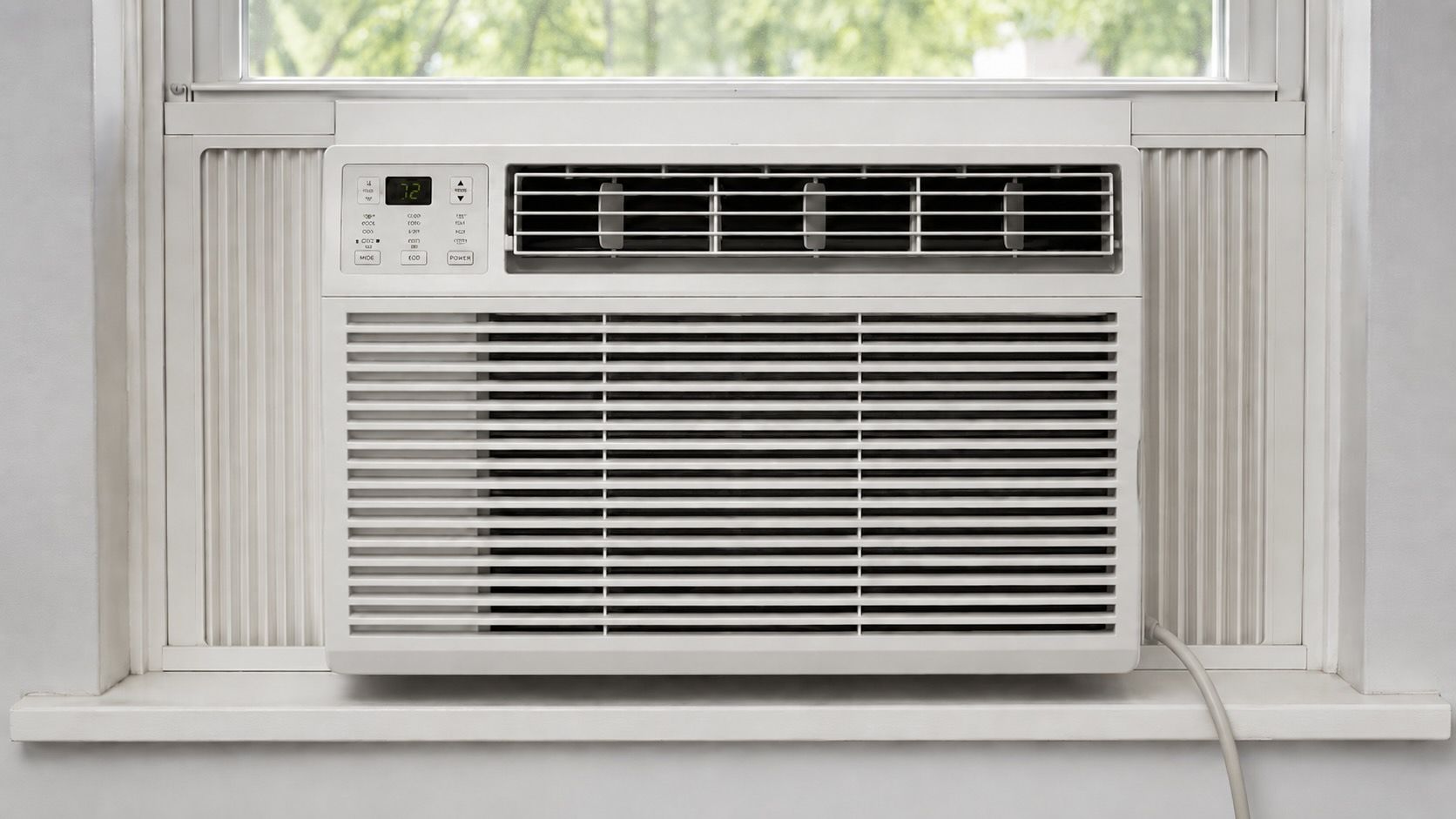


PowerOutage.us tracks more than 950 utilities serving over 200 million customers, about 95 percent of the country. We rank reliable power stations on surge and capacity based on that live battery backup and outage data. Heat waves cause the longest, most dangerous outages, and a window AC ranks among the hardest loads a battery has to start.
How we ranked these power stations for a window AC
We read the manufacturer specs, pulled owner and lab reviews, and layered our PowerOutage.us outage data over both to rank these power stations for running AC units.
The AC compressor draws a sharp spike at startup, two to three times its running watts, so a station can fail to start an AC even when its rated draw indicates it could run one. A 5,000 BTU unit runs near 450 W and spikes past 1,200 W. A 12,000 BTU unit runs near 1,200 W and spikes past 2,700 W.
Here is how we ranked them:
- Surge rating: We weighted surge rating heaviest because the station has to clear the AC's startup spike, not just its running watts.
- Running output and capacity: We rated running output and capacity next, since they set how long the station cools.
- Recharge speed: We checked recharge speed and solar input so the station refills between power cuts.
- Expandability: We scored expansion because a long heat outage rewards a station you grow.
- Value: We weighed price, too, but ranked it under the rest, since you need a unit that actually runs an air conditioner.
The best power stations for running a window AC unit
These five match AC size, from a small 5,000 BTU unit up to a big 12,000 BTU one.
1. EcoFlow DELTA Pro 3
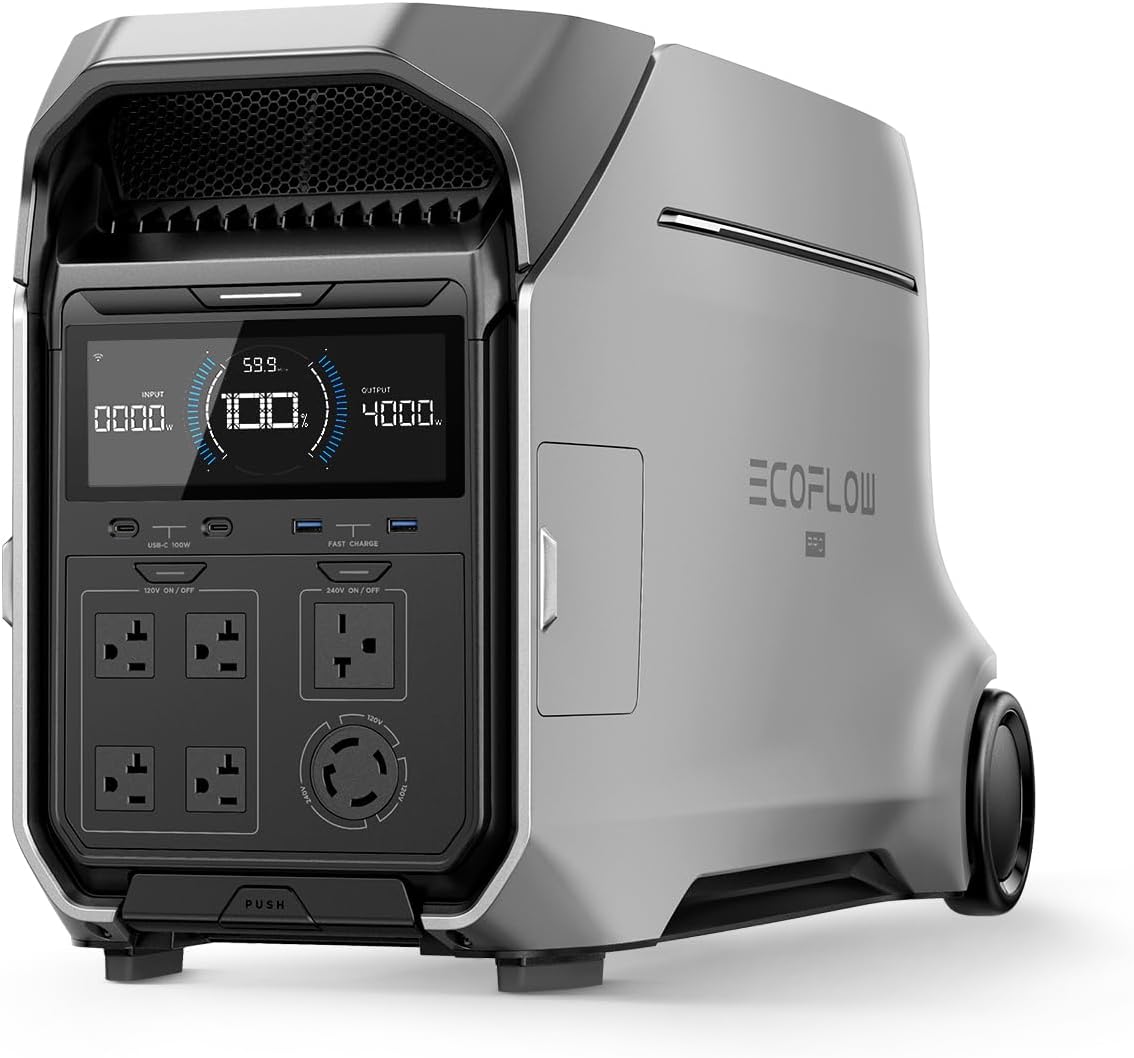
The EcoFlow Delta Pro 3 starts every window AC and runs one for hours on its 4,096 Wh battery and 4,000 W output.
Run a room through a full heat outage and keep output headroom for the rest of the house. One base unit cools a room for hours. Add expansion batteries, and it runs a hot night end to end, while the 240 V output feeds large appliances and dedicated circuits that 120 V units never reach.
- Capacity: 4,096 Wh LiFePO4, expandable to 48,000 Wh
- Output: 4,000 W AC, 120/240 V
- AC compatibility: Starts and runs any window AC, including 12,000 BTU
- Battery lifespan: 4,000 charge cycles
- Weight: About 110 lbs, wheeled
Pros
- Starts any window AC.
- Runs hours of cooling per base unit.
- Scales to a full overnight load.
- Feeds 240 V to high-draw circuits.
Cons
- Premium price.
- Heavy enough to require wheels.
- Excess capacity for a small 5,000 BTU unit.
What buyers report
Verified purchasers cite the output headroom and the unit's hold on a compressor, which it starts and runs without hesitation. Reported complaints are about price and weight.
Should you buy it?
Buy the EcoFlow Delta Pro 3 to cool a room for hours and keep some whole-home headroom in reserve. Pass on it when you run only a small AC for short periods.
2. Anker SOLIX F3800
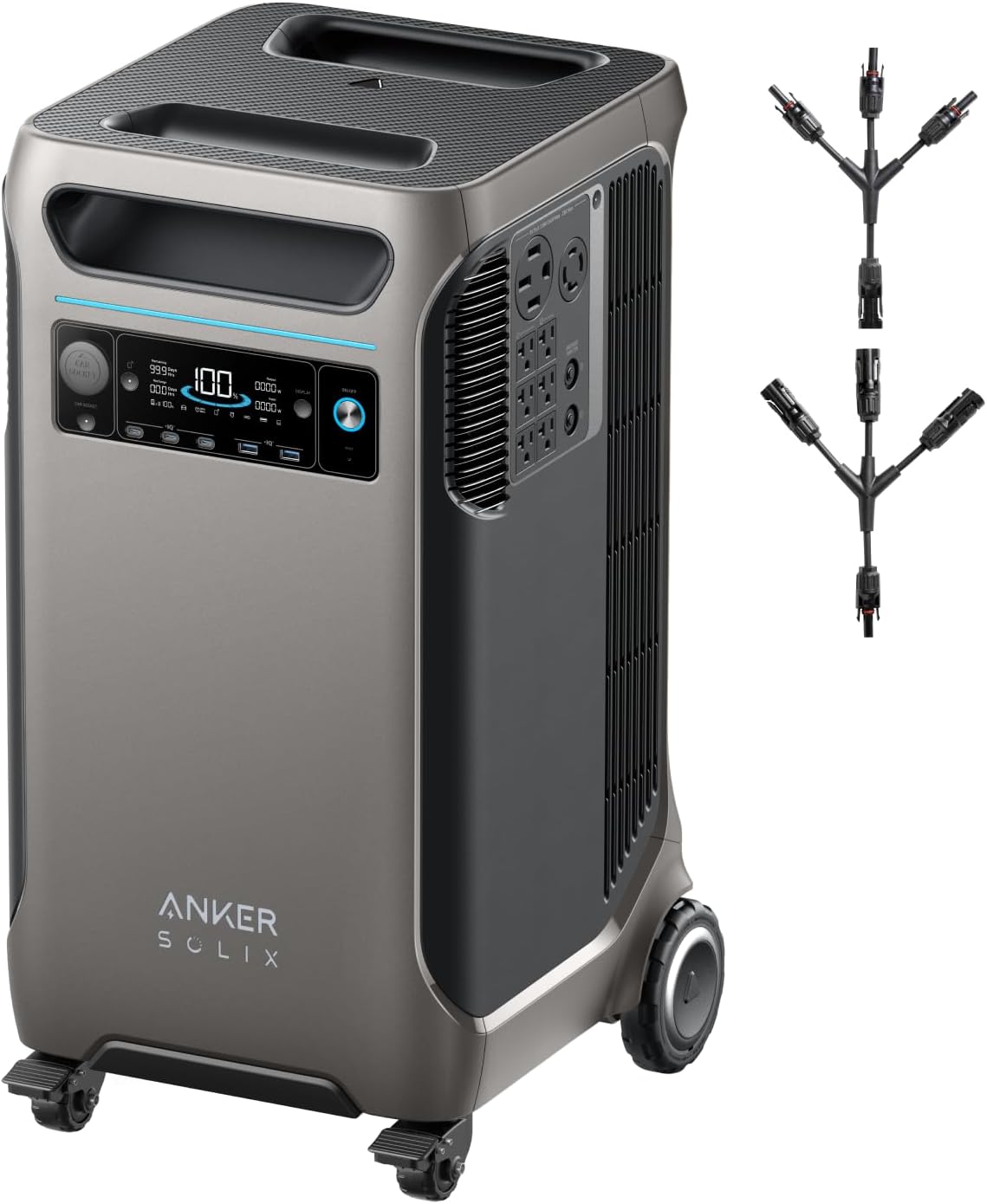
The Anker SOLIX F3800 pushes 6,000 W from a 3,840 Wh battery, so it starts the biggest window ACs and runs other loads at once.
Run an AC, a fridge, and lights off one station. The 6,000 W output and 240 V leave headroom that no other pick here matches, and the battery expands deep into multi-day territory.
- Capacity: 3,840 Wh LiFePO4, expandable to 26.9 kWh
- Output: 6,000 W AC, 120/240 V
- AC compatibility: Starts any window AC with a large surge headroom
- Warranty: 5 years
- Weight: About 132 lbs, wheeled
Pros
- Pushes 6,000 W, the most here.
- Starts any window AC.
- Feeds 240 V to the whole house.
- Expands deep for a multi-day outage.
Cons
- Heaviest unit.
- Premium price.
What buyers report
Verified purchasers point to the output and 240 V that run heavy loads, an AC among them, with watts to spare. The complaints revolve around weight and cost.
Should you buy it?
Buy the Anker SOLIX F3800 to run an AC plus some other whole-house loads at once. Pass on it when you want to cool only one small room.
3. Jackery Explorer 2000 Plus
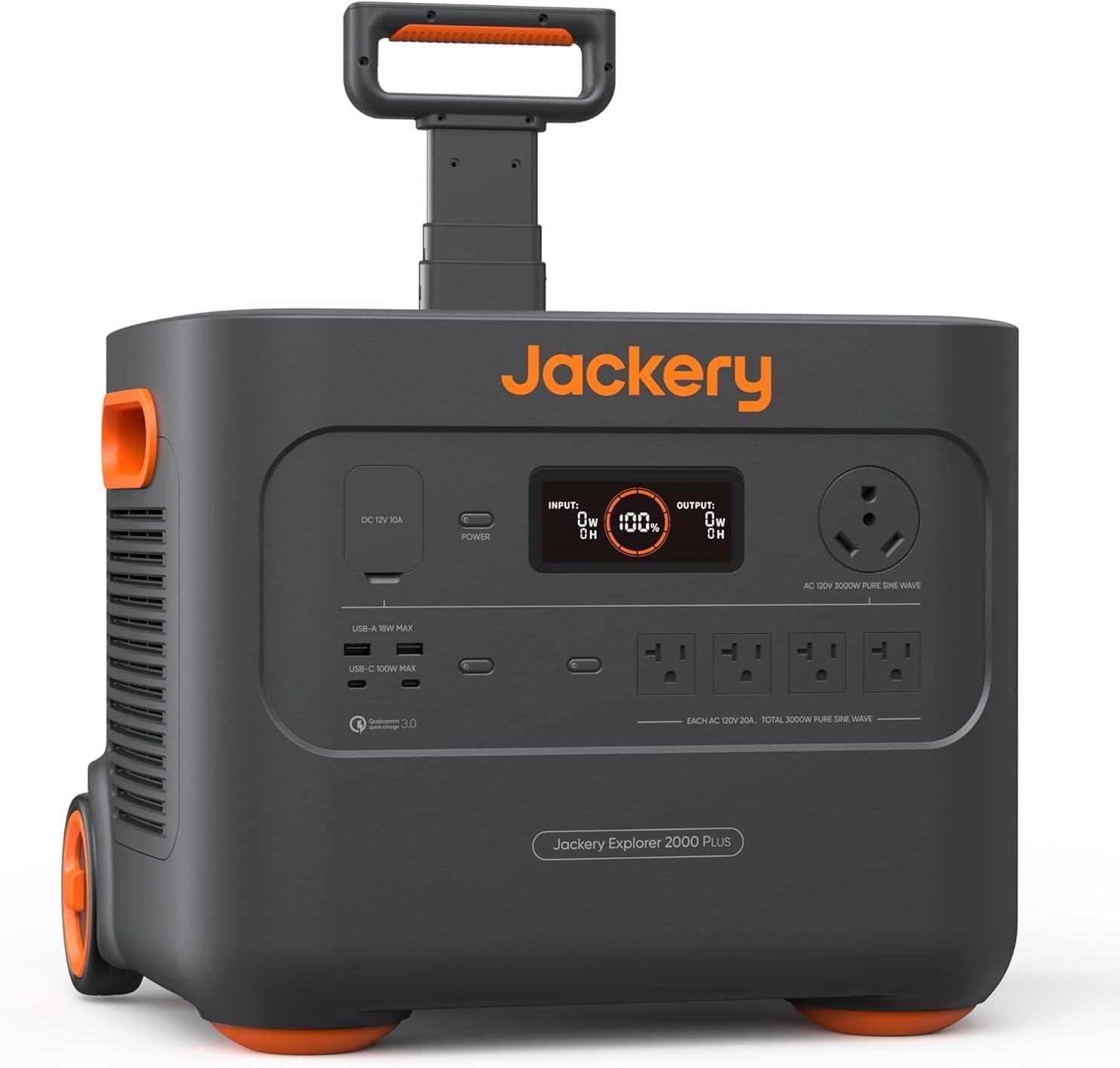
The Jackery Explorer 2000 Plus peaks at 6,000 W from a 2,042 Wh battery, so it absorbs the startup surge of a large window AC.
Skip the wheeled whole-home system and carry this one instead. The 6,000 W peak starts a 12,000 BTU compressor, the 3,000 W output runs it, and you add capacity as the outage runs long. UPS switchover guards the load through a grid drop.
- Capacity: 2,042 Wh LiFePO4, expandable to 24 kWh
- Output: 3,000 W AC, 6,000 W peak
- AC compatibility: 6,000 W peak handles a 12,000 BTU startup surge
- Battery lifespan: 10-year lifespan claim
- Feature: UPS switchover
Pros
- Peaks at 6,000 W for a big AC startup.
- Runs 3,000 W output.
- Expands to 24 kWh.
- Protects sensitive equipment with UPS protection.
Cons
- Runs about 1.5 hours on a big AC per base.
- Expansion packs add up.
What buyers report
Buyers praise the high peak that starts with big compressors and the wide expansion range. On the other hand, the recurring downside is per-pack cost as you grow.
Should you buy it?
Buy the Jackery Explorer 2000 Plus to run a big window AC from a station you carry and still expand. Pass on it when you want the longest runtime out of the box.
4. Anker SOLIX S2000
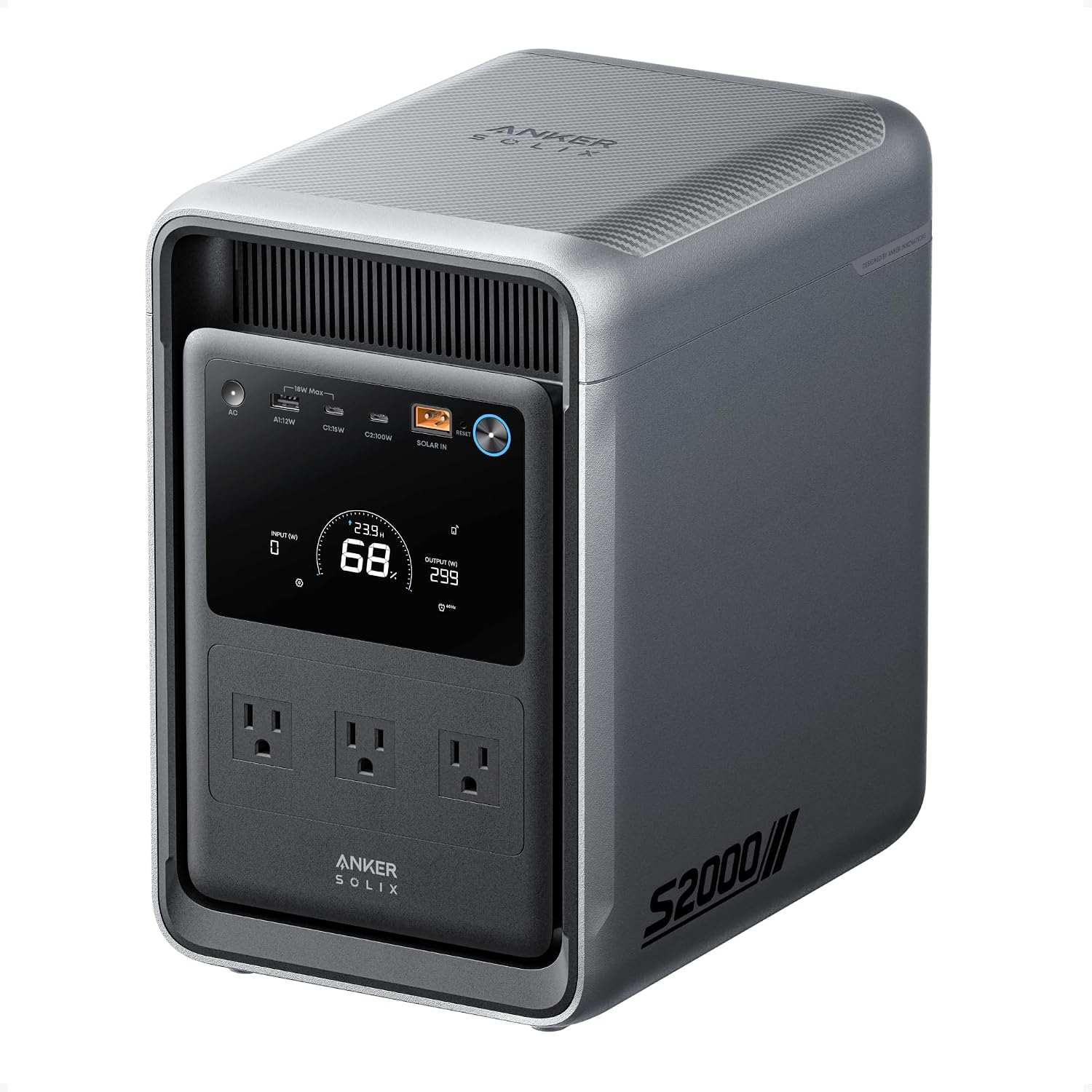
The Anker SOLIX S2000 peaks at 3,000 W from a 2,000 Wh battery, so it starts and runs a 5,000 to 10,000 BTU window unit for years.
Buy once and cool through years of heat outages. Anker rates the battery at 10,000 cycles, the longest in this lineup, and the S2000 recharges fast and switches over in 10 ms as a UPS. It runs a 5,000 to 10,000 BTU AC for a couple of hours per charge.
- Capacity: 2,000 Wh LiFePO4
- Output: 1,500 W AC, 3,000 W peak
- AC compatibility: 3,000 W peak starts a 5,000 to 10,000 BTU AC
- Recharge: Up to 1,600 W AC, 400 W solar
- Battery lifespan: 10,000 cycles, the longest rated here
- Weight: 35.7 lbs, ≤10 ms UPS, 5-year warranty
Pros
- Runs the longest rated battery life here.
- Starts a mid-size AC.
- Carries light at 35.7 lbs.
- Recharges fast and switches over in 10 ms.
Cons
- Runs 1,500 W native output.
- Will not start a big 12,000 BTU unit.
- Runs about a couple of hours of cooling per charge.
What buyers report
Owner reviews are thin, since the S2000 is a newer product. The numbers here trace to Anker's published specs, including the 10,000-cycle rating and the claim it runs a 700 L fridge for up to 35 hours.
Should you buy it?
Buy the Anker SOLIX S2000 to run a 5,000 to 10,000 BTU AC from a unit that holds up over years of heat outages. Pass on it when you run a big 12,000 BTU unit or need more than a couple of hours per charge.
5. EcoFlow DELTA 3 Plus
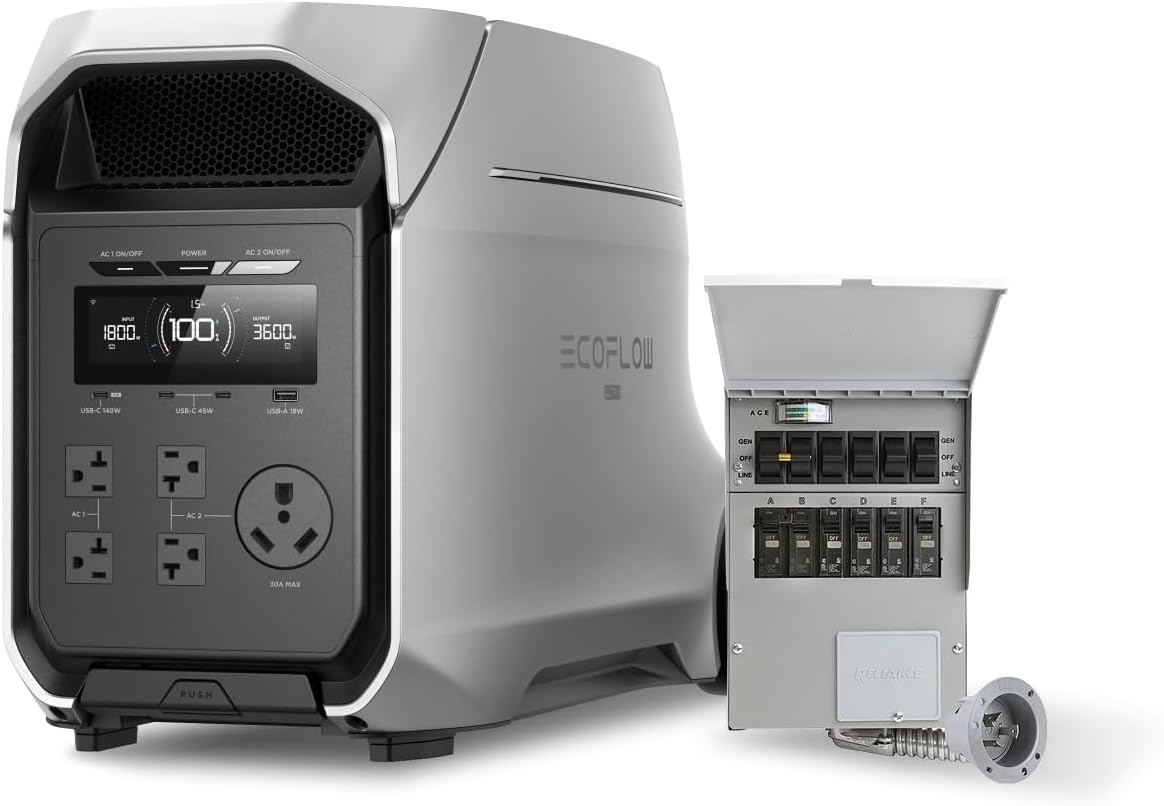
The EcoFlow Delta 3 Plus surges to 2,700 W with X-Boost from a 1,024 Wh battery, which starts and runs a small 5,000 BTU window AC.
Move it from room to room and recharge it fast. It runs a 5,000 BTU unit for a couple of hours per base, recharges fully in 56 minutes, and doubles its runtime with one expansion battery.
- Capacity: 1,024 Wh LiFePO4, expandable to 2,048 Wh
- Output: 1,800 W AC, 2,700 W X-Boost
- AC compatibility: Runs a 5,000 BTU window AC for about 2 hours per base
- Recharge: 56 minutes to full
- Weight: About 27.6 lbs, 10 ms UPS
Pros
- Carries light and portable.
- Starts a small 5,000 BTU AC.
- Recharges fully in 56 minutes.
- Double the runtime by adding one battery.
Cons
- Runs small 5,000 BTU units only.
- Runs about 2 hours per base.
What buyers report
Verified purchasers rate it as the portable pick that runs a small AC and recharges fast, backed by EcoFlow's true UPS. The one limit they flag is small ACs only.
Should you buy it?
Buy the EcoFlow Delta 3 Plus to cool a small bedroom AC from a light station you grow. Pass on it when you run a mid-size or large window unit.
Power outages and why surge headroom matters
Hurricane Milton struck Florida in October 2024 and cut power to 3.4 million customers. These customers had to deal with the heat and humidity that make a window AC the appliance that most needs a power station to run.
Similarly, Hurricane Helene cut power to 4.79 million customers in 2024, some for two weeks. When the grid drops in summer, cooling becomes the load people need most, and the AC compressor's startup spike is the test if a small battery fails.
How to choose a power station for a window AC
Choosing a power station for a window AC involves knowing your AC draw and surge, as well as seeing whether you can use less energy.
- Match surge to your AC: Read the unit's surge rating against the compressor's startup spike, not the running watts.
- Size capacity to runtime: Divide watt-hours by the AC's running watts for a rough hour count.
- Pick an inverter or eco AC when you can: Inverter window units start softer and draw less power.
- Drop the BTU for one room: A 5,000 BTU unit taxes a battery far less than a 12,000 BTU one.
Consider adding portable solar panels for extreme heat outages, since those run long.