

PowerOutage.us tracks more than 950 utilities serving over 200 million customers, about 95 percent of the country. We rank these reliable power stations on output and capacity using that outage data, because the outages that put people at risk are the cold ones, and finding the right unit for a space heater is crucial.
How we ranked these power stations for a space heater
We didn't bench-test these units. We combined the manufacturer specs, owner and lab reviews, and our PowerOutage.us outage data.
Here's the thing about heaters. A standard space heater pulls 1,500 W on high, so heater runtime is roughly the battery's watt-hours divided by 1,500. A 2,000 Wh battery gives you a little over an hour. Run the heater on low or eco, around 750 W, and you roughly double that.
So here's what we weighted, heaviest first:
- Continuous output: We weighted continuous output heaviest because the station has to clear 1,500 W without tripping.
- Capacity: We rated capacity next since watt-hours determine how long the heater keeps running.
- Surge headroom: We checked surge headroom because the station has to handle a resistive load cleanly.
- Recharge speed: We looked at recharge speed and solar input so the station can recharge between cuts.
- Value per watt-hour: Finally, we looked at price per watt-hour, and our fridge sizing guide shows the math on other loads.
The best power stations for running a space heater
These five power stations from brands like EcoFlow, Jackery, and Bluetti all clear the 1,500 W that a heater needs. They differ on how long they'll keep it running.
1. EcoFlow DELTA Pro 3
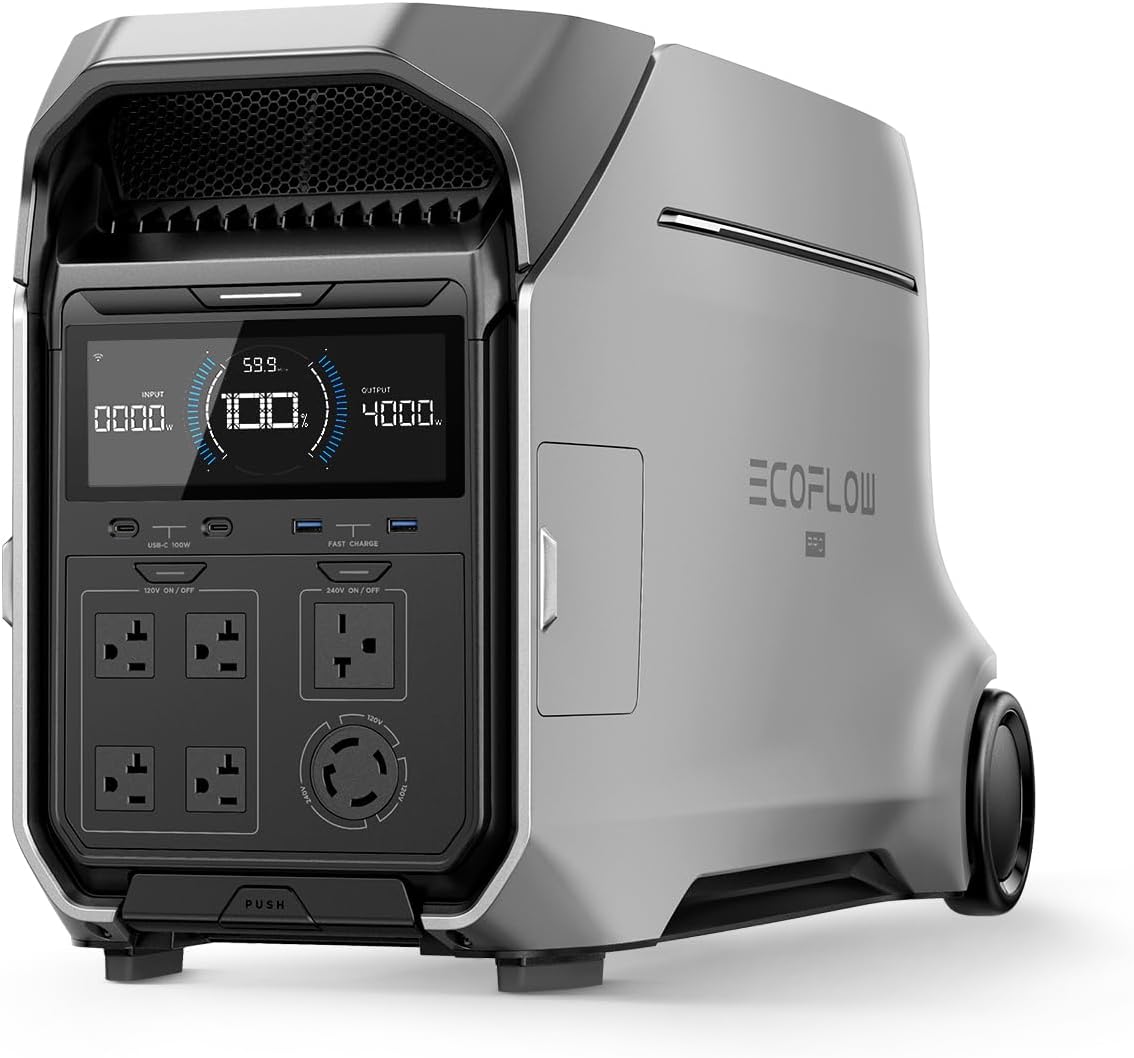
The EcoFlow Delta Pro 3 holds 4,096 Wh and outputs 4,000 W, so it runs a 1,500 W space heater about 2.5 hours per base unit and far longer with batteries added.
You should consider the EcoFlow Delta Pro 3 if you actually want to heat a room through an outage, not just for a few minutes. Add a battery or two, and you cover a cold night, and the 240 V output runs the rest of the house too.
- 4,096 Wh LiFePO4, 4,000 W AC, 120/240 V
- Runs a 1,500 W heater for about 2.5 hours per base unit
- Expandable to 48,000 Wh
- Wheeled, about 110 lbs
- 4,000 cycles
Pros
- Longest heater runtime here.
- Huge output headroom.
- Expandable for a full cold night.
- 240 V for other appliances.
Cons
- Expensive.
- Heavy.
- Overkill if you only need short bursts.
EcoFlow DELTA Pro 3 reviews
EcoFlow Delta Pro 3 Reviewers cite the big capacity and the output headroom that shrugs off a heater's draw. The downsides are the price and the weight.
Should you buy the EcoFlow DELTA Pro 3?
You should buy the EcoFlow Delta Pro 3 if you want to keep a room warm for hours and run other loads on 240 V. You should pass on it if you only need short bursts of heat.
2. Anker SOLIX F3800
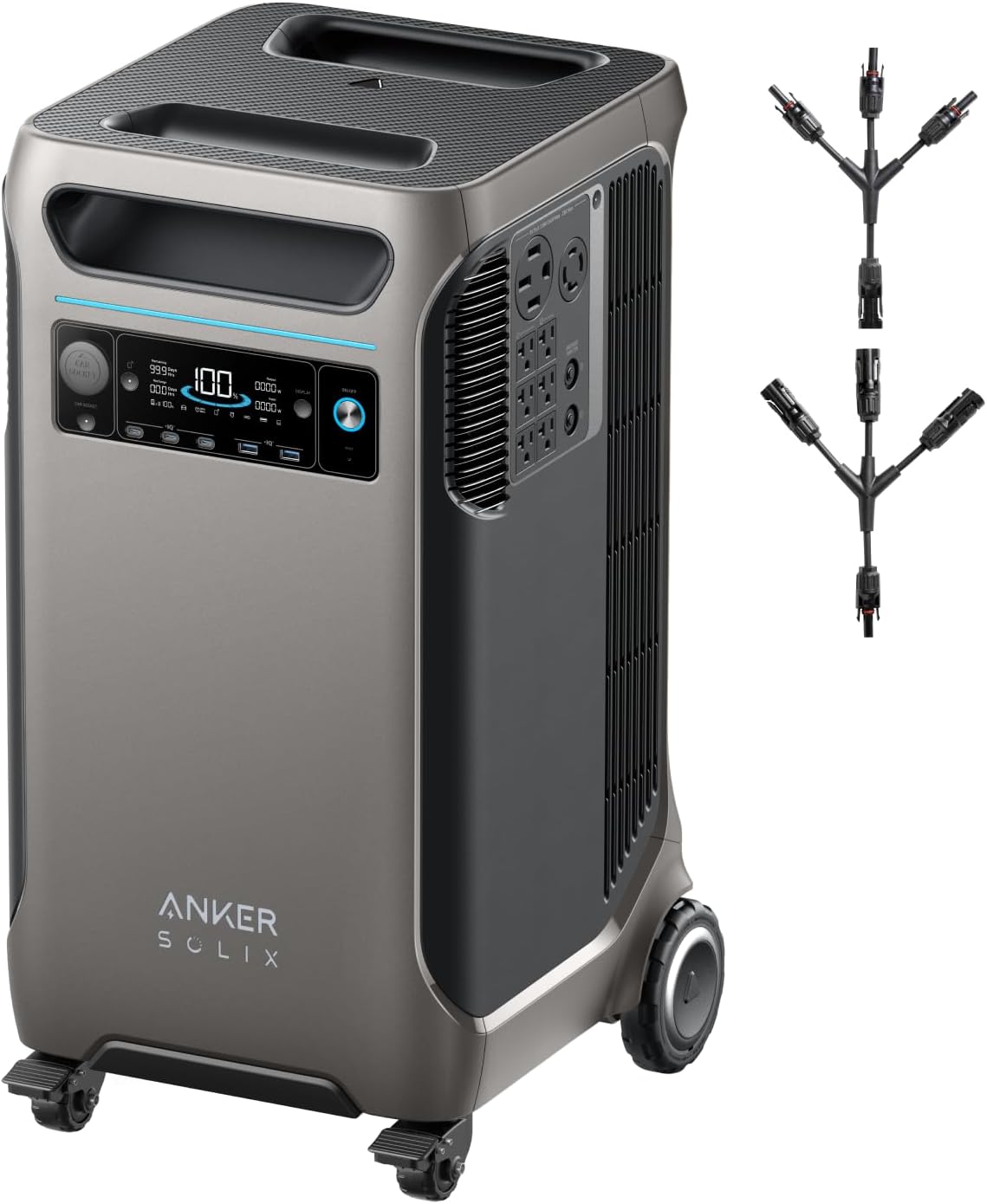
The Anker SOLIX F3800 holds 3,840 Wh and powers 6,000 W, so a 1,500 W heater barely touches its headroom, and it runs about 2.4 hours.
You should consider the Anker SOLIX F3800 if you want to run a heater and a few more essentials at once. The 6,000 W output and 240 V mean nothing if the house is off the table.
- 3,840 Wh LiFePO4, 6,000 W AC, 120/240 V
- Runs a 1,500 W heater for about 2.4 hours per base
- Expandable to 26.9 kWh
- Wheeled, about 132 lbs
- 5-year warranty
Pros
- 6,000 W output, the most here.
- 240 V for the whole house.
- Deep expansion.
- 5-year warranty.
Cons
- Heaviest unit.
- Premium price.
Anker SOLIX F3800 reviews
Reviewers of the F3800 point to the output and 240 V for running heavy loads with room to spare. The complaints they have are about weight and cost.
Should you buy the Anker SOLIX F3800?
You should buy the Anker SOLIX F3800 if you want to run a heater plus other whole-house loads at once. You should pass on it if you only need to warm one room.
3. Bluetti AC200L
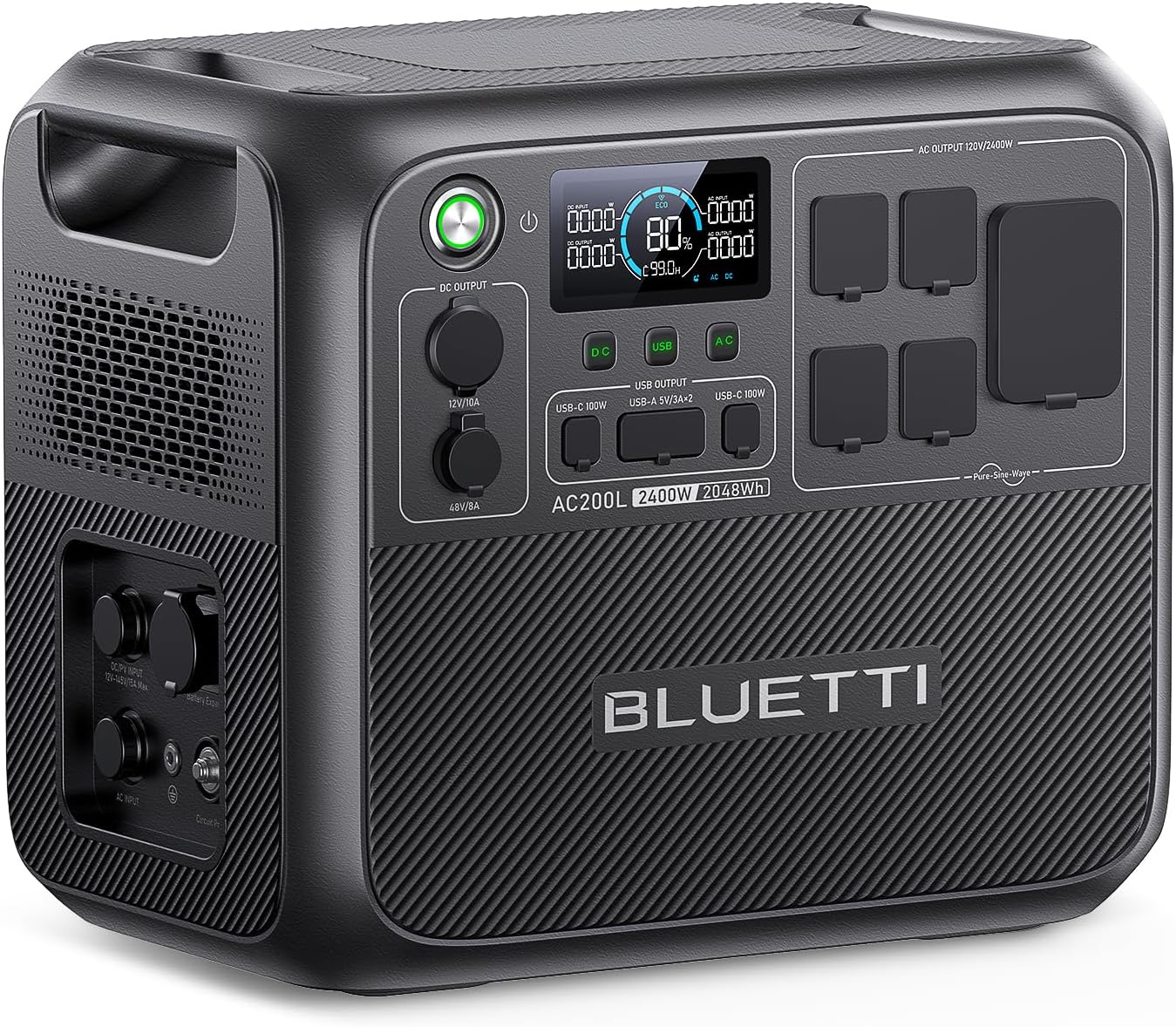
The Bluetti AC200L holds 2,048 Wh, and its Power Lifting mode pushes to 3,600 W on resistive loads, which is exactly what a space heater is.
You should consider the Bluetti AC200L if you want the most capacity per dollar for heating. Power Lifting is made for resistive devices like heaters, and the base runs a 1,500 W heater for about 1.3 hours.
- 2,048 Wh LiFePO4, 2,400 W native, 3,600 W Power Lifting
- Runs a 1,500 W heater for about 1.3 hours per base
- Expandable to 8,192 Wh
- 30A RV output
- 4,000+ cycles
Pros
- Strong capacity per dollar.
- Power Lifting fits resistive heaters.
- Expandable to 8,192 Wh.
- 30A RV outlet.
Cons
- 2,400 W native output.
- Power Lifting only helps resistive loads. About 1.3 hours per base at full heat.
Bluetti AC200L reviews
Bluetti AC200L reviewers appreciate the capacity-per-dollar, and Power Lifting is a genuine benefit for resistive heaters. The gripes are the lower native wattage and some app quirks.
Should you buy the Bluetti AC200L?
You should buy the Bluetti AC200L if you want the most expandable capacity for heating on a budget. You should pass on it if you need to start big motors at the same time.
4. Jackery Explorer 2000 Plus
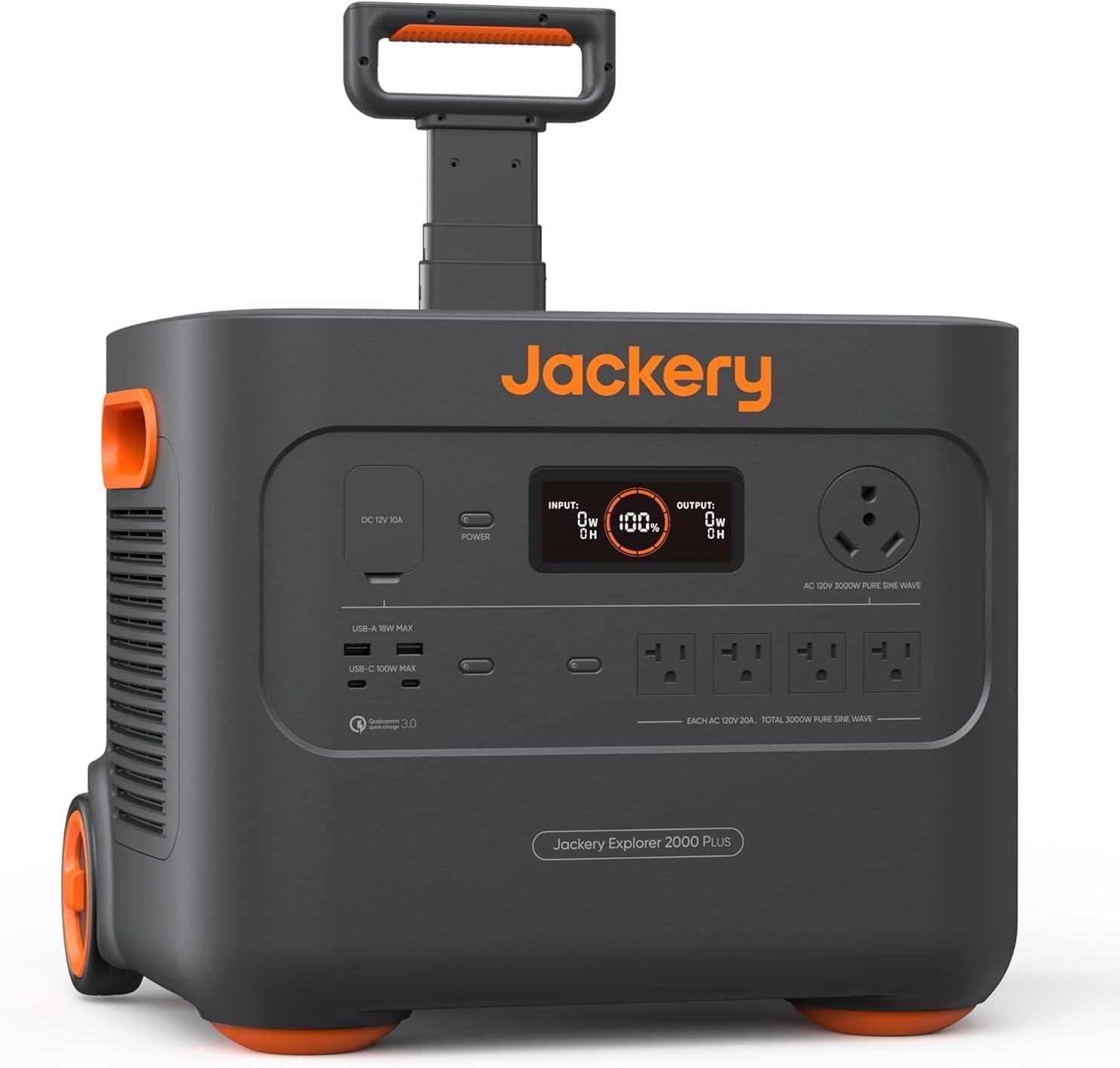
The Jackery Explorer 2000 Plus holds 2,042 Wh and outputs 3,000 W, so it runs a 1,500 W heater with headroom for about 1.3 hours per base.
You should consider the Jackery Explorer 2000 Plus if you want a mid-size power station that handles a heater and can be expanded later. The UPS switches over fast to protect fridge components.
- 2,042 Wh LiFePO4, 3,000 W (6,000 W peak)
- Runs a 1,500 W heater for about 1.3 hours per base
- Expandable to 24 kWh
- UPS switchover
- 10-year lifespan claim
Pros
- 3,000 W output.
- Expands to 24 kWh.
- UPS protection.
- Long lifespan rating.
Cons
- About 1.3 hours per base at full heat.
- Expansion adds up.
Jackery Explorer 2000 Plus reviews
Reviewers praise the 3,000 W output and the expansion range, which is useful if you also want to back up a fridge during an outage. The downside is the per-pack cost as you increase the system size.
Should you buy the Jackery Explorer 2000 Plus?
You should buy the Jackery Explorer 2000 Plus if you want a mid-size unit for a heater with room to expand. You should pass on it if you need the longest runtime out of the box.
5. Anker SOLIX C1000
The Anker SOLIX C1000 holds 1,056 Wh and outputs 1,800 W, which powers a 1,500 W heater and runs it for about 40 minutes, or longer on low.
You should consider the Anker SOLIX C1000 if you want the cheapest unit that can actually run a heater. It works best with the heater on low or eco, and it recharges fully in 58 minutes between cuts.
- 1,056 Wh LiFePO4, 1,800 W output
- Runs a 1,500 W heater for about 40 minutes, longer on low
- 58-minute full recharge
- Expandable to 2,112 Wh
- 3,000 cycles, 5-year warranty
Pros
- The cheapest unit that runs a heater.
- Fast 58-minute recharge.
- Expandable to 2,112 Wh.
- Light enough to move.
Cons
- About 40 minutes at full heat.
- Best with the heater on low.
Anker SOLIX C1000 reviews
Reviewers like that it clears a heater's watts and recharges fast, and pairing it with a quiet generator setup for longer events. The limit they note is short runtime at full heat.
Should you buy the Anker SOLIX C1000?
You should buy the Anker SOLIX C1000 if you want the cheapest way to run a heater on low for short stretches. You should pass on it if you need to heat a room for hours.
Power outages and why heater runtime matters
Winter Storm Fern cut power to over 1 million customers across the South in January 2026, with six days of darkness in the hardest-hit areas. Deep cold like that makes a space heater the one load you can't run without.
Also, we saw Hurricane Helene leave parts of western North Carolina without power for 14 days in 2024. Homeowners had to deal with the mountain cold. In a cold outage like that, heat is the load that matters, and it's the one that drains a battery fastest.
How to choose a power station for a space heater
You should consider things like power output and capacity (which are different) to choose a power station. Keep in mind that turning heaters on low or eco power can extend your runtime.
- Check the output first: It has to clear 1,500 W, or 1,800 W to be safe.
- Size capacity to the hours you want: Runtime is roughly watt-hours divided by 1,500.
- Run the heater on low or eco: Around 750 W roughly doubles your runtime.
- Consider a smaller heater: A 750 W unit aimed at one person stretches any battery.
- Remember the upside: A battery indoors makes no carbon monoxide, unlike a fuel heater, so build a power outage emergency kit around it.