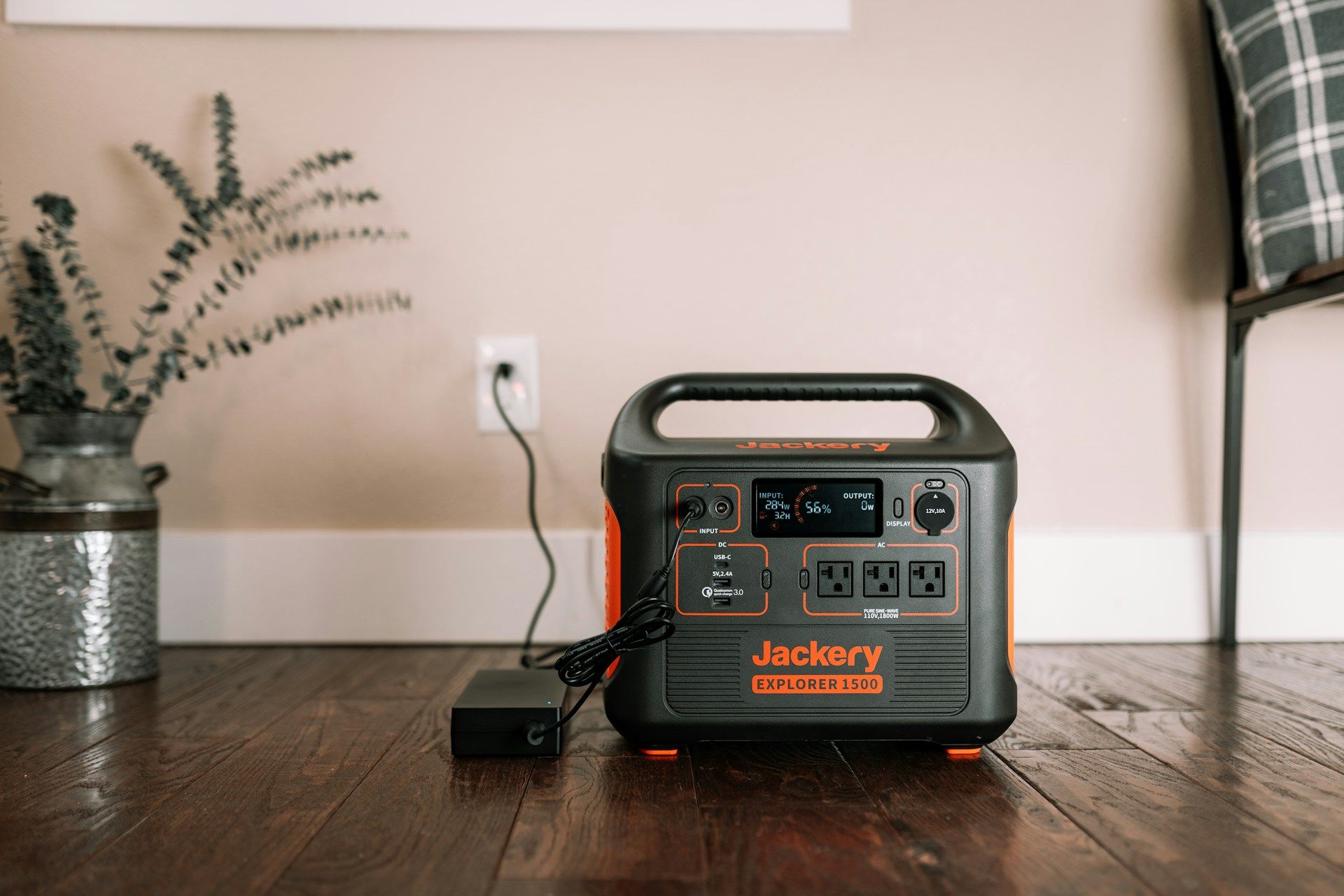


Knowing your fridge's actual hourly draw, not its label wattage, is what separates an accurate battery backup runtime estimate from one that leaves your food spoiling mid-outage. The math is pretty straightforward once you separate running watts from surge watts and account for compressor cycling. This guide walks through the formula, a runtime table by battery capacity, and the factors that cut your runtime short before you hit the theoretical limit.
At PowerOutage.us, we track power outages across 950+ utilities serving more than 200 million U.S. customers, so we've got a pretty clear picture of how long outages actually run. The difference between a 1,000 Wh and a 2,000 Wh power station is the difference between a refrigerator that runs through the night and one that shuts off before the sun comes up.
How long a portable power station runs a refrigerator
Most portable power stations run a standard refrigerator for roughly 8 to 12 hours per full charge. Running a refrigerator on a portable power station is basically a math problem with three inputs: the fridge's effective hourly draw, the power station's usable watt-hour capacity, and the inverter's efficiency rate. Let’s break it down.
What is the average daily watt-hour draw of a refrigerator?
Most refrigerators consume between 1,200 Wh and 1,500 Wh per day for a standard kitchen model, not the 100 W to 800 W shown on the appliance's energy label. The label shows running wattage at the compressor. That's the draw rate when the motor is actively running. But it doesn't show how long the compressor actually runs each hour.
Refrigerator compressors cycle on and off to maintain interior temperature rather than running continuously.
- In a well-insulated modern refrigerator at typical kitchen temperatures, the compressor runs roughly 30% to 50% of the time.
- A unit drawing 200 W at the compressor may only pull an effective average of 60 W to 100 W per hour across a full day.
- This distinction matters a lot when you're sizing a power station. Using nameplate wattage as your hourly draw rate will make every runtime estimate too short.
The U.S. Department of Energy's ENERGY STAR program certifies refrigerators based on actual annual kWh consumption. That gives you a much more accurate baseline than the running-watt label alone. A certified 18-cubic-foot top-freezer refrigerator typically uses 400 kWh to 500 kWh per year, which works out to 1,100 Wh to 1,370 Wh per day.
Portable power station fridge runtime formula
To calculate refrigerator runtime on a portable power station, you divide the station's usable battery capacity by the fridge's effective hourly draw, then apply an inverter efficiency discount of 10% to 15%.
Here’s the formula:
(Power station capacity in Wh x inverter efficiency) / fridge effective hourly draw (Wh/hr) = runtime in hours
And here's an example. The EcoFlow DELTA 3 Plus carries 1,024 Wh of LFP battery capacity. Its inverter efficiency runs approximately 87%. A standard top-freezer refrigerator with a 200 W compressor cycling at 40% duty draws an effective 80 Wh per hour. Runtime estimate: (1,024 x 0.87) / 80 = approximately 11 hours.
Power station idle consumption adds a secondary drain. Every unit draws 10 W to 40 W just to keep its inverter circuit and display active, regardless of what's plugged in. Over 12 hours, that adds up to 120 Wh to 480 Wh consumed. For smaller stations under 1,000 Wh, idle draw can shorten runtime by 10% to 20%. For larger 2,000 Wh units, the impact is proportionally smaller but still worth factoring in during multi-day outages.
Refrigerator type affects how long your battery will last
Fridge type is the single biggest variable in runtime calculations because a 24-cubic-foot French door refrigerator can consume two to three times more energy per day than a compact apartment refrigerator. Before you apply any runtime formula, figure out which category your refrigerator falls into.
Mini fridges and 12 V compressor coolers (50 W to 100 W running)
Mini fridges and 12 V compressor coolers are the easiest loads for a portable power station because their continuous compressor draw rarely exceeds 60 W and their daily consumption typically runs 150 Wh to 400 Wh. A 1,024 Wh power station can run a mini fridge drawing 50 Wh per hour for around 17 hours before the battery depletes.
Here's an important distinction, though. 12 V compressor-based coolers like those used in RVs and overlanding rigs are more efficient than thermoelectric (Peltier) coolers, which draw power continuously without a cycling compressor. Thermoelectric models run at a constant 40 W to 60 W draw with no cycling benefit, making them less efficient per degree of cooling than a compressor cooler at the same wattage.
Standard top-freezer and French door refrigerators (100 W to 200 W running)
A standard top-freezer refrigerator or French door model draws 100 W to 200 W at the compressor with a daily consumption average of 1,200 Wh to 1,500 Wh. These are the most common refrigerators in U.S. households and the main sizing target for most portable power station purchases. On a 1,024 Wh station, expect 7 to 11 hours of runtime. On a 2,048 Wh station, expect 14 to 20 hours.
ENERGY STAR-certified models in this category tend toward the lower end of that wattage range. A 2020 or newer French door refrigerator with an inverter compressor may draw only 90 W to 130 W running, while a non-inverter model from the same era draws 150 W to 200 W.
Inverter compressors modulate their speed rather than cycling fully on and off, which improves efficiency and also reduces the compressor startup surge.
Older side-by-side refrigerators and high-capacity models (200 W to 400 W+ running)
Refrigerators manufactured before 2010 and large-capacity side-by-side models (25 cubic feet or more) often draw 200 W to 400 W at the compressor, with a daily consumption of 1,800 Wh to 2,800 Wh. The compressor startup surge on these units can reach 1,200 W to 1,600 W for one to three seconds each time the motor kicks on.
- This surge threshold is the most common reason a portable power station fails to run an older or larger refrigerator.
- A station with a continuous output of 1,800 W may carry a peak surge rating of only 2,200 W.
- An older refrigerator with a 1,600 W startup surge will just barely clear that rating and may trip the overcurrent protection during startup if other devices are also drawing power.
For these models, a power station with a 3,000 W to 3,400 W surge rating is the safer match.
Portable power station refrigerator runtime table
The table below shows estimated runtime by power station capacity and refrigerator type, calculated using real-world watt-hour consumption rates rather than nameplate running wattage. An inverter efficiency factor of 0.87 is applied throughout. Idle consumption is excluded from the table and discussed separately.
| Power station capacity | Mini fridge/12 V compressor cooler (50 Wh/hr effective) | Standard French door or top-freezer refrigerator (125 Wh/hr effective) | Older side-by-side or large-capacity refrigerator (225 Wh/hr effective) |
|---|---|---|---|
| 500 Wh | 8 hours | 3.5 hours | 2 hours |
| 1,024 Wh | 17 hours | 7 hours | 4 hours |
| 2,048 Wh | 35 hours | 14 hours | 8 hours |
| 4,096 Wh | 71 hours | 28 hours | 16 hours |
These figures represent best-case conditions: stable ambient temperature around 70°F, minimal door openings, and no other loads drawing from the station simultaneously. Add other devices (lights, phone chargers, a router) and the runtime drops accordingly.
What reduces portable power station runtime for a refrigerator?
Three things consistently cut refrigerator runtime below the theoretical estimate: compressor startup surge strain, inverter efficiency loss, and the power station's own idle consumption drain. And each one works through a different mechanism and needs a different mitigation approach.
Compressor startup surge and inverter output limits
Every time a refrigerator compressor starts, it draws two to three times its running wattage for one to three seconds. A compressor rated at 200 W may spike to 500 W to 600 W at startup. An older non-inverter compressor in a side-by-side refrigerator may spike to 1,200 W or more.
Ambient temperature and thermostat cycling increase draw
A refrigerator operating in a kitchen at 85°F during a summer blackout cycles its compressor more frequently than the same model at 68°F in winter. Higher ambient temperature means more heat infiltrates the cabinet, requiring the compressor to run longer and more often to maintain the 37°F interior target.
Power station idle consumption
Every portable power station draws 10 W to 40 W just to keep its inverter circuitry, display panel, and battery management system active, regardless of connected load. This idle consumption runs continuously from the moment you switch the unit on.
Over a 12-hour outage, a station idling at 20 W burns 240 Wh before the refrigerator draws a single watt. On a 1,024 Wh station, that idle drain represents nearly 24% of total capacity. Larger inverter units tend to idle at higher wattages. A 3,600 W inverter in a large station may idle at 30 W to 50 W, adding 360 Wh to 600 Wh of consumption over 12 hours. Smaller stations with 1,800 W inverters typically idle at 10 W to 20 W.
Unfortunately, battery capacity ratings on portable power stations reflect total stored energy, not usable energy.
- LFP batteries typically deliver 90% to 95% of rated capacity before the battery management system protects the cells by cutting output.
- That means a 2,048 Wh LFP station delivers approximately 1,845 Wh to 1,946 Wh in practice.
- Older NMC battery stations may deliver only 80% to 85% of rated capacity across their usable discharge range, which further reduces effective runtime.
Powering fridges in real-life outages
Most homeowners underestimate how long grid outages actually last because residential utility restoration after a major storm routinely takes 48 hours to 14 days in hard-hit counties. A power station sized for an 8-hour overnight outage becomes inadequate the moment a Category 3 hurricane makes landfall.
When Hurricane Milton struck Florida on October 9, 2024, PowerOutage.us recorded 3.4 million customers without power at peak. The restoration pattern wasn't a single clean outage followed by recovery. It was cycling grid failures where power returned briefly for 30 minutes to 2 hours before failing again. Homeowners who had sized their power station for a single overnight outage found themselves recharging mid-cycle, making fast-charging LFP stations a meaningful advantage during events like this.
Hurricane Helene's impact across western North Carolina in September 2024 illustrated the opposite problem. No cycling recovery at all. With 1.18 million North Carolina customers losing power and mountain county infrastructure requiring complete rebuilds rather than repairs, some rural customers went 14 or more days without grid power.
South Carolina logged a 53-hour average outage duration, the worst in the nation per the EIA. For those customers, a 2,048 Wh power station covering 14 hours of refrigerator runtime wasn't a backup plan. It was the first day's solution to a two-week problem.
Pairing a power station with a monocrystalline solar array becomes the only practical answer when outages measure in days rather than hours. For storm-specific preparation by event type, see our storm prep guide.
Which portable power stations can actually run a refrigerator long enough?
The right portable power station for a refrigerator depends on fridge size and target runtime. 1,000 Wh covers short outages. 2,000 Wh covers 24-hour outages for most standard refrigerators. And 4,000 Wh or more is what you need for multi-day coverage. The stations below are matched to specific scenarios based on battery capacity, surge rating, and inverter output.
Best portable power stations for a mini fridge or compact refrigerator
A compact refrigerator or 12 V compressor cooler drawing 50 Wh to 80 Wh per hour effective pairs well with a 1,000 Wh to 1,100 Wh LFP station, covering 12 to 17 hours before depleting. The priority at this capacity tier is surge rating and recharge speed, since smaller units need to recharge frequently during longer outages.
Jackery Explorer 1000 v2
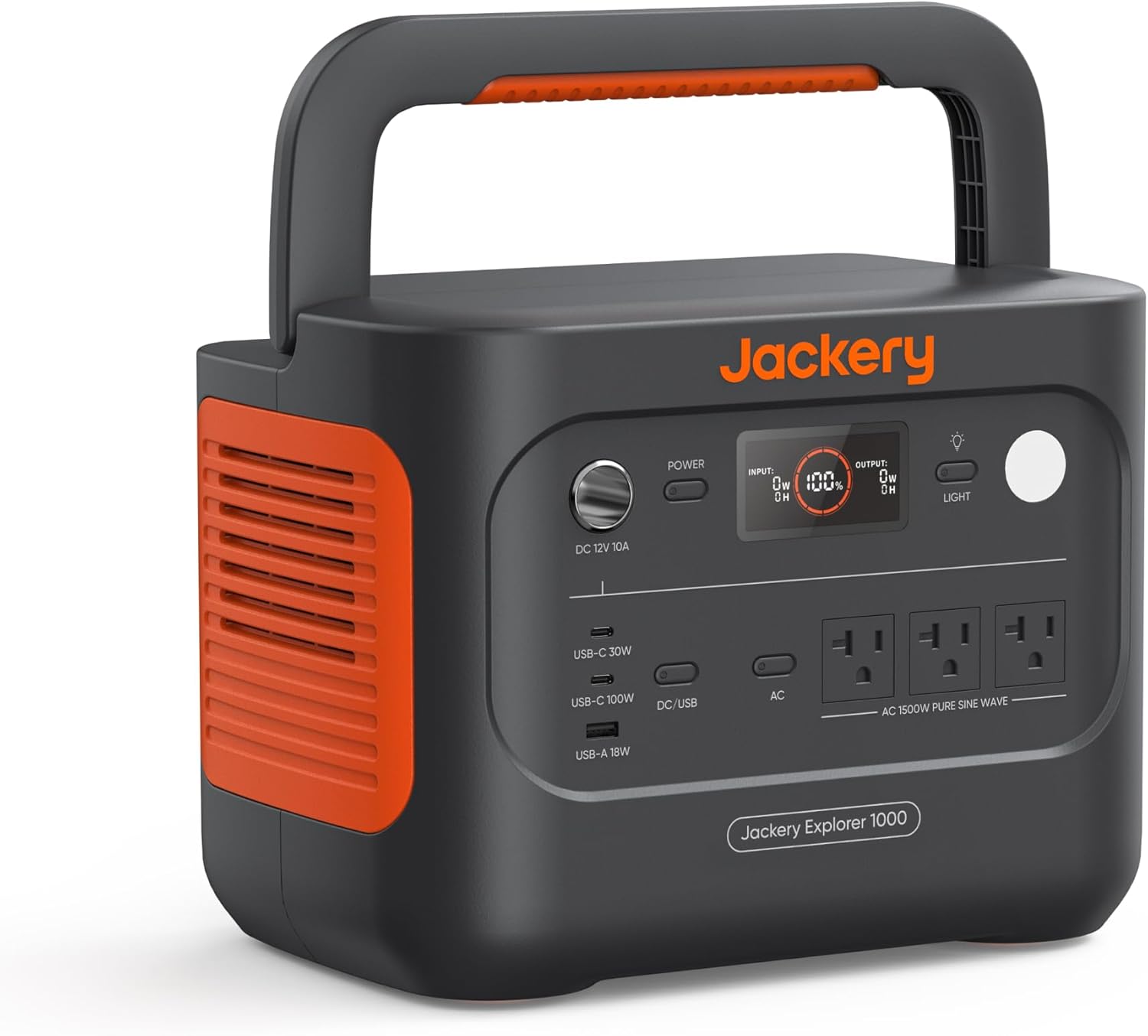
1,070 Wh LFP, 1,500 W output, 23.8 lbs. Estimated runtime of 13 to 17 hours on a compact refrigerator. Dual 100 W USB-C ports for simultaneous device charging.
EcoFlow DELTA 3 Plus
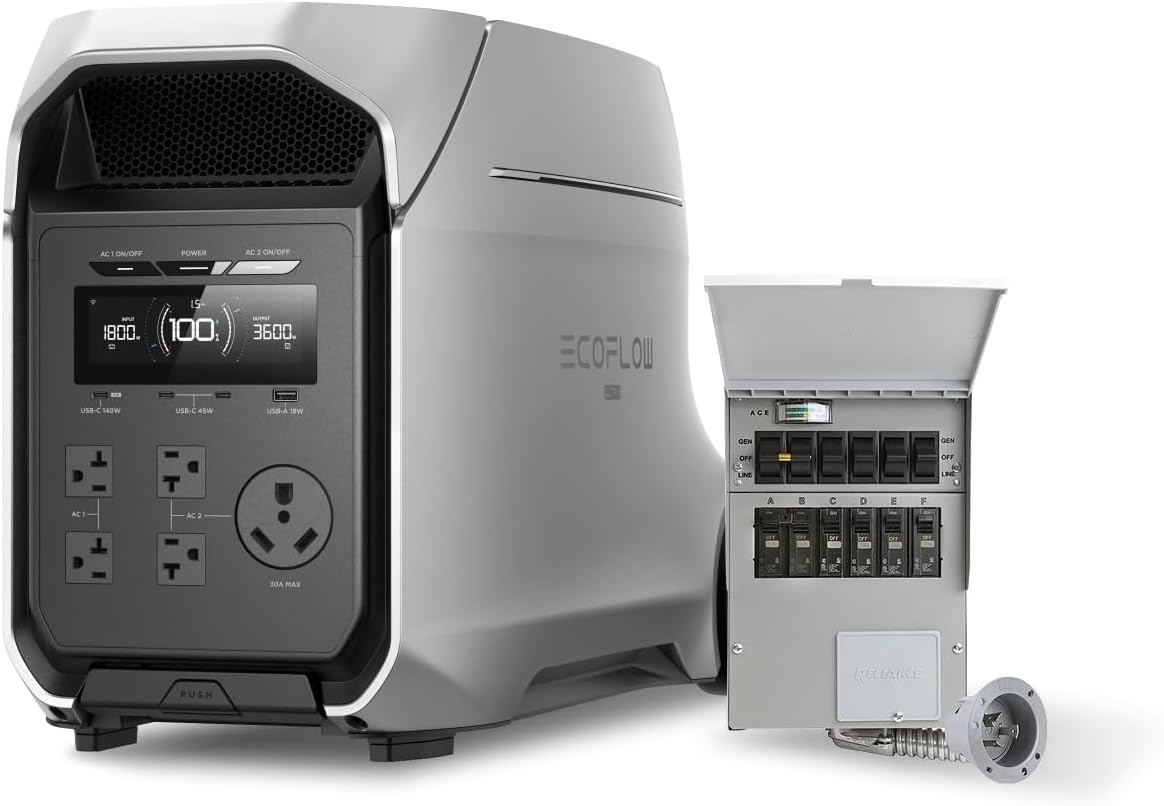
1,024 Wh LFP, 1,800 W output, 10 ms UPS transfer. Expandable to 3 kWh with an add-on battery. UPS mode protects the compressor from startup voltage drops.
Anker Solix C1000 Gen 2
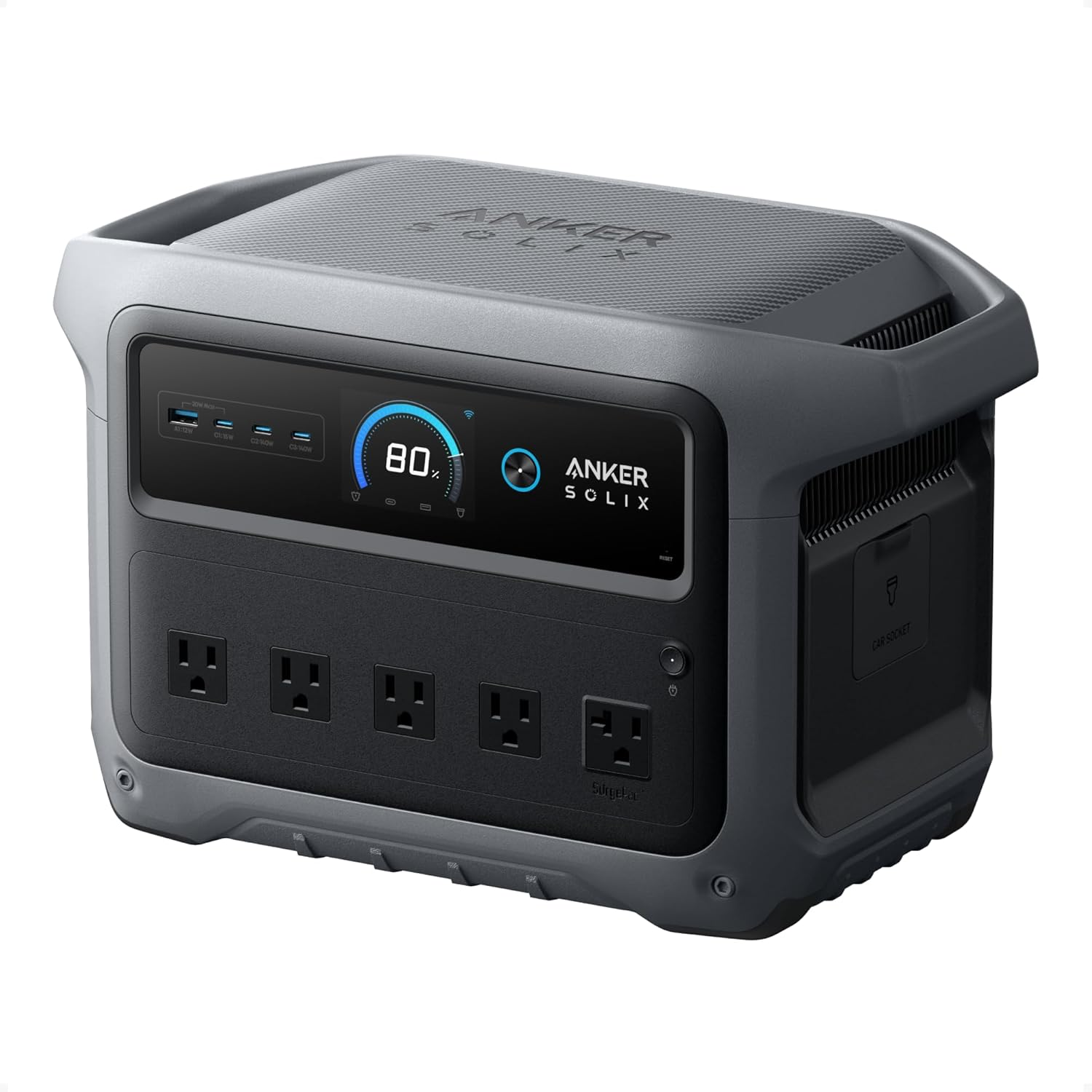
1,056 Wh LFP, 1,800 W output, 58-minute full recharge). Fastest recharge in this capacity class. well-suited for cycling outages where brief grid windows allow opportunistic top-ups.
For a detailed comparison of battery options matched to refrigerators specifically, see best battery backup for a refrigerator.
Best portable power stations for a standard kitchen refrigerator
A standard top-freezer refrigerator or French door refrigerator drawing 1,200 Wh to 1,500 Wh per day needs a 2,000 Wh station for a single 24-hour coverage window. Surge rating becomes the critical spec. Verify the station's peak output clears your compressor's startup wattage before purchase.
Bluetti Elite 200 V2

2,048 Wh LFP, 2,400 W continuous output, 10 ms UPS. 11 AC outlets and 10 ms auto-transfer. The estimated runtime is 14 to 18 hours on a standard refrigerator and is expandable.
EcoFlow DELTA 3 Max Plus
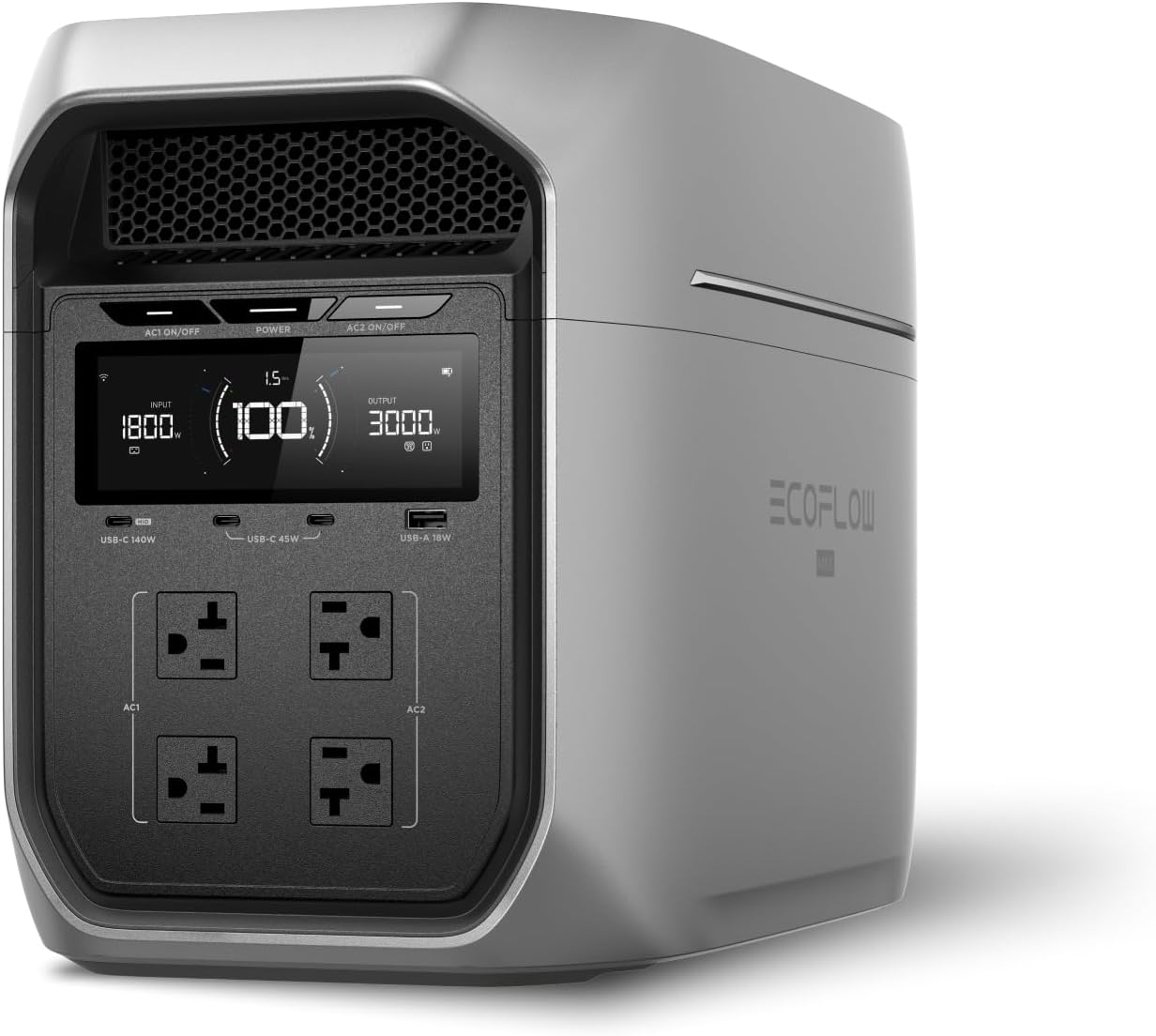
2,048 Wh LFP, 3,000 W continuous, 6,000 W surge. The 6,000 W surge rating clears the compressor startup on virtually all residential refrigerators, including older side-by-side models. Expandable to 5 kWh.
Anker Solix F3000
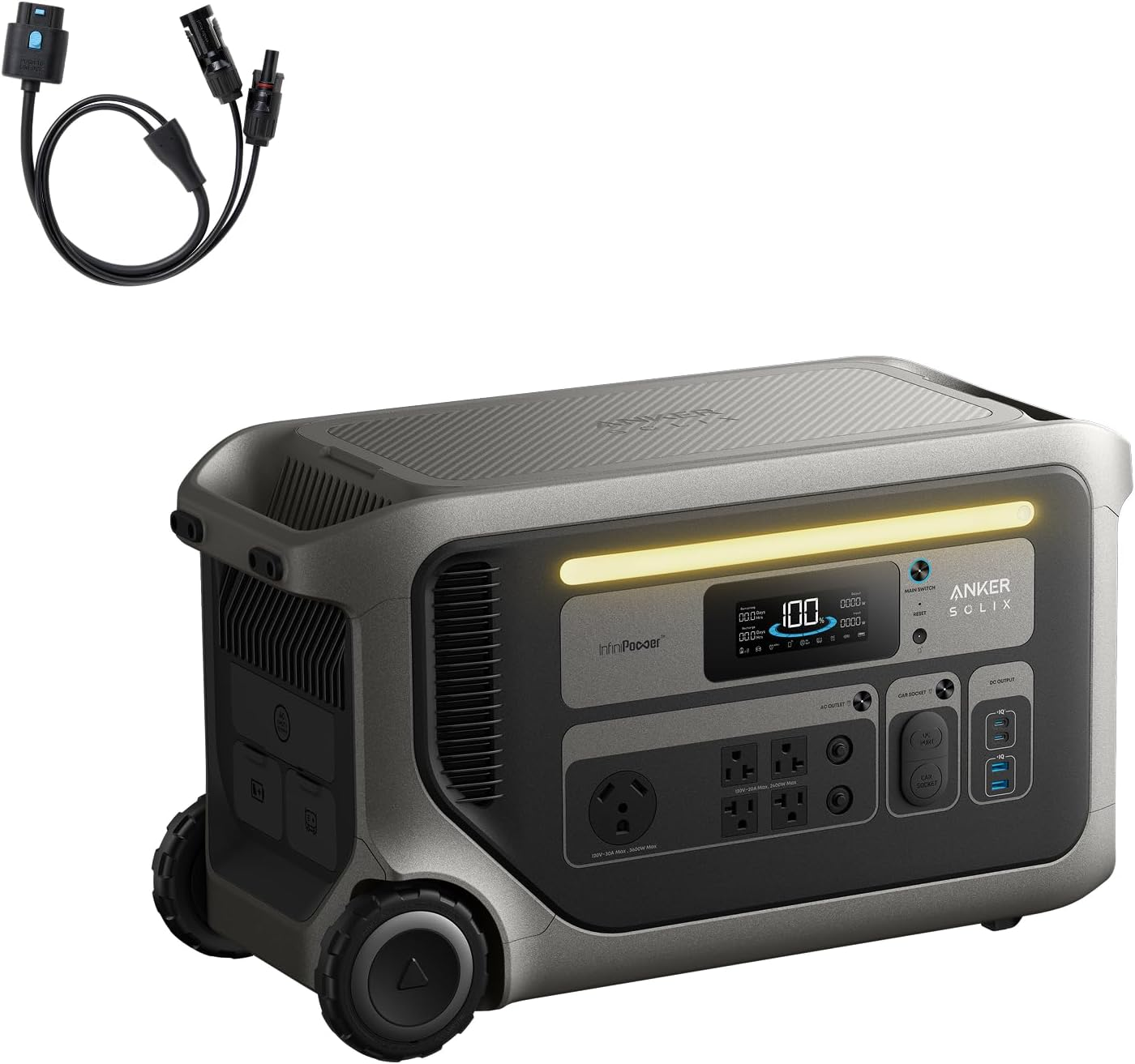
3,072 Wh LFP, 3,600 W output, expandable to 6 kWh. 28 hours on a standard refrigerator at base capacity. Dual-voltage solar input for daytime recharge during extended outages.
Quick recap
A portable power station runs a standard kitchen refrigerator for 7 to 14 hours per 1,000 Wh of LFP capacity, depending on fridge size, ambient temperature, and inverter efficiency. Mini fridges stretch that runtime to 14 to 17 hours per 1,000 Wh. Older large-capacity refrigerators cut it to 4 hours or fewer. Solar recharging eliminates the runtime ceiling entirely.