

PowerOutage.us tracks more than 950 utilities serving over 200 million customers, and we consider outage trends in our home battery backup coverage. Our outage data favors inverter setups that respect vehicle limits, so you avoid unsafe equipment that can’t support emergency loads.
How we ranked these car power inverters
Our car power inverter ranking combines manufacturer specifications, manuals, reviews, owner evidence, and safety guidance.
- Electrical safety and output quality: We weighted waveform, continuous and surge ratings, protection, fusing, certification evidence, and cable quality at 30%.
- Useful outage capability: We weighted support for communications, lighting, computers, medical accessories, and selected direct-battery loads at 25%.
- Vehicle connection and usability: We weighted plug type, battery cables, remote controls, displays, USB ports, and installation burden at 20%.
- Reliability and owner evidence: We weighted warranty, review volume, owner sentiment, and model history at 15%.
- Value and portability: We weighted price, size, included hardware, and usefulness beyond one outage at 10%.
We started with 20 products overall. Modified-sine products lost points for sensitive loads, and high-output models lost points when ordinary vehicle use made current and installation impractical. We placed the two low-power socket models ahead of every direct-battery model because battery wiring adds fire, arcing, reverse-polarity, and starter-battery risks. We also applied the electrical and combustion precautions in our power outage safety checklist.
How these car power inverters compare
The comparison table separates output, connection, waveform, and ports since these factors determine safe vehicle use and device compatibility.
| Car power inverter | Continuous and peak | Connection | Waveform | AC and USB ports |
|---|---|---|---|---|
| BESTEK 300 W | 300 W/700 W | 12 V socket | Pure sine | 2 AC/2 USB-A |
| DeWalt DXAEPI140 | 140 W/unknown | 12 V socket | Modified sine | 1 AC/USB-C/USB-A |
| Renogy PUH 1000 W | 1,000 W/2,000 W | Direct battery | Pure sine | Verify exact variant |
| GIANDEL 1200 W | 1,200 W/2,400 W | Direct battery | Pure sine | 2 AC/USB-A/USB-C |
| Energizer EN500 | 500 W/1,000 W | Socket or clamps | Modified sine | 2 AC/USB varies |
A vehicle socket remains limited by its fuse and wiring even when an inverter carries a higher nameplate rating. A direct battery connection can carry more current, but only properly sized cables, an inline fuse, correct polarity, ventilation, and adequate alternator capacity make that connection suitable for high loads.
The best car power inverters for power outages
These five car power inverters place simple plug-in models first and direct-battery models last because installation risk matters during an emergency.
1. BESTEK 300 W Pure Sine Wave
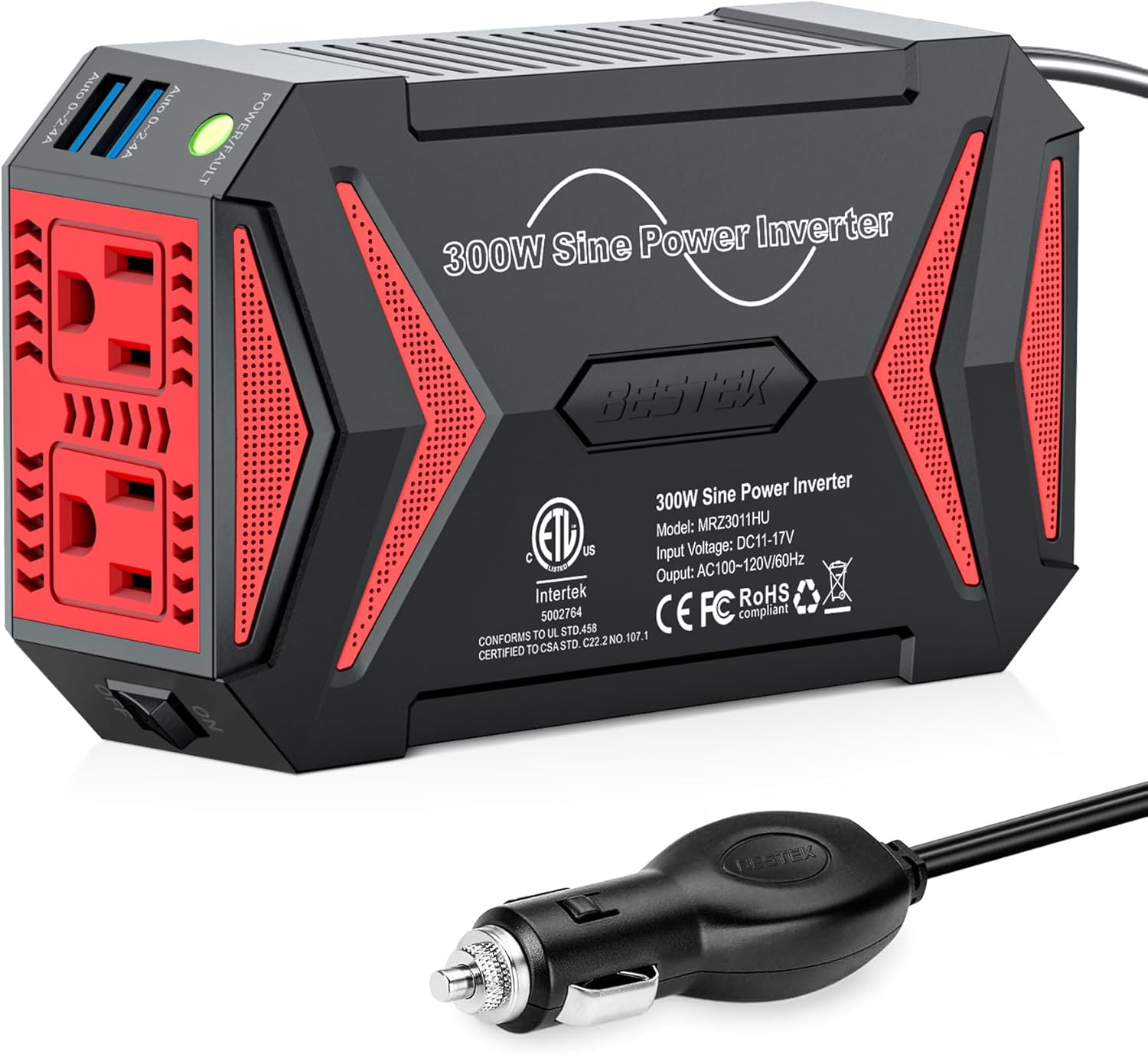
BESTEK 300 W Pure Sine Wave supplies clean AC through two outlets for sensitive low-power electronics connected to a vehicle socket.
Consider the BESTEK for laptops, routers, camera batteries, LED lights, and charging when total load stays within the vehicle manual's socket limit. Most users should treat it as a 120 to 150 W inverter unless the manual permits more.
- Output: 300 W continuous and 700 W peak.
- Input: 12 to 17 V through a cigarette-lighter plug.
- AC outlets: Two.
- USB: Two USB-A ports with 4.8 A shared.
- Protection: Built-in fuse, fan, voltage, overload, heat, and short-circuit protection.
Pros
- Pure-sine output suits sensitive electronics.
- The compact metal housing travels easily.
- Two AC outlets support more than one device.
- The Amazon listing has strong review volume.
Cons
- Most sockets cannot safely supply 300 W.
- The inverter lacks USB-C PD.
- The fan can sound noticeable in a quiet vehicle.
BESTEK 300 W reviews
Owners on Amazon rate it 4.5 stars from over 5,600 ratings. Owners like its reliability, compact size, laptop power, and simple setup, while complaints mention fan noise, cord length, and shutdown above the vehicle socket limit.
Should you buy the BESTEK 300 W?
You should buy the BESTEK if clean, low-power AC and plug-in simplicity fit your devices. You should pass if planned loads exceed the vehicle socket's documented limit.
2. DeWalt DXAEPI140
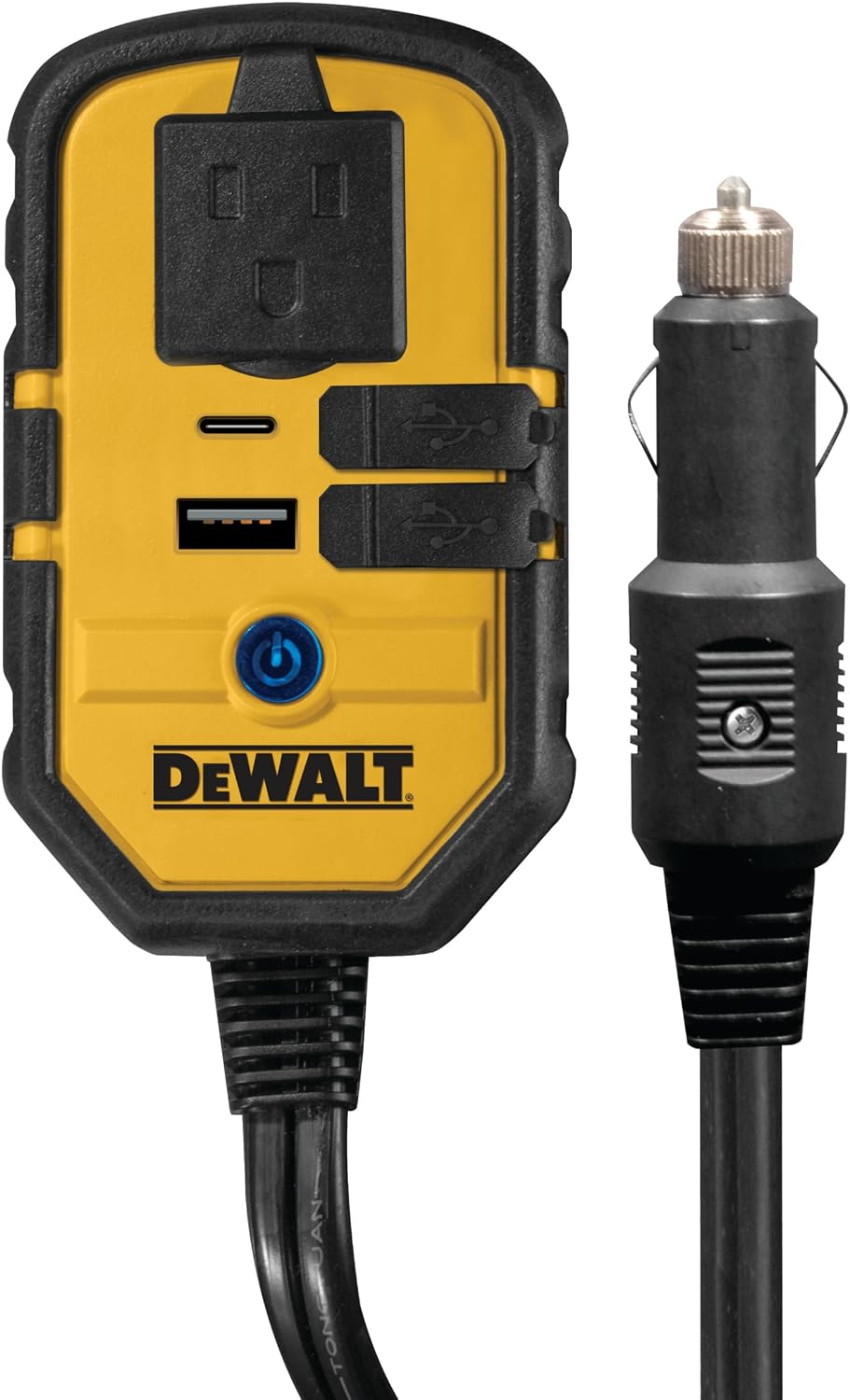
DeWalt DXAEPI140 supplies 140 W through a silent, fanless design that matches many vehicle accessory circuits.
Drivers should consider the DeWalt for phones, routers, laptops, and lights when rugged construction and predictable low-power operation matter. Its modified-sine AC doesn’t work for every waveform-sensitive device.
- Output: 140 W continuous.
- Input: 12 V accessory plug.
- AC outlets: One.
- USB: 25 W USB-C and 15 W USB-A.
- Protection: Low-voltage shutdown with permanent-mount provisions.
Pros
- The wattage matches many vehicle socket limits.
- Fanless operation is silent.
- USB-C and USB-A support modern and older devices.
- The rugged housing and thick cord support long-term use.
Cons
- One AC outlet limits connections.
- The 25 W USB-C port charges larger laptops slowly.
- Modified-sine output limits sensitive-load compatibility.
DeWalt DXAEPI140 reviews
Buyers on Amazon rate it 4.2 stars from over 4,000 ratings. Positive reviews mention the quiet design, durability, and familiar brand, while complaints mention one outlet, modest USB-C speed, and low appliance capability.
Should you buy the DeWalt DXAEPI140?
You should buy the DeWalt if charging-class loads and silence define your plan. You should pass if you need to run a refrigerator, heater, tool, or need pure sine wave output.
3. Renogy PUH 1000 W Pure Sine Wave
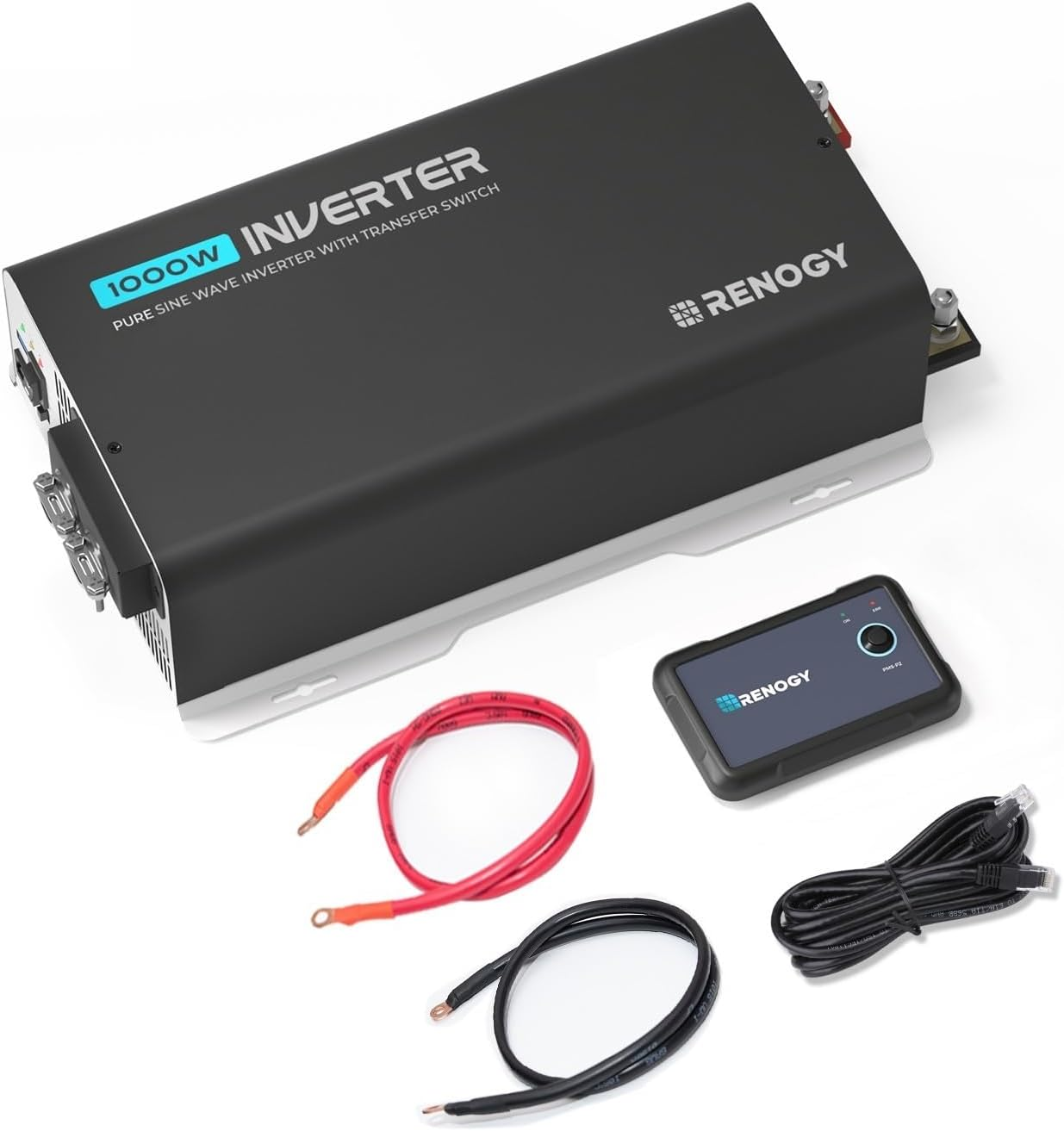
Renogy PUH 1000 W supplies pure-sine output with Bluetooth and transfer functionality for a correctly wired vehicle or auxiliary-battery system.
Truck, van, and emergency-vehicle owners should consider the Renogy when the battery, alternator, fuse, cables, and ventilation can support high current. This inverter is not a cigarette-lighter product.
- Output: 1,000 W continuous and 2,000 W surge.
- Waveform: Pure sine.
- Input: 12 V direct battery connection.
- Transfer: Integrated UPS or AC-priority function.
- Controls: Bluetooth monitoring and remote support.
Pros
- Pure-sine output suits computers and many approved medical accessories.
- A 1,000 W ceiling supports several moderate loads.
- Bluetooth provides remote monitoring.
- Renogy publishes broad installation documentation.
Cons
- Correct cables, fusing, battery support, and ventilation require planning.
- The unit can’t deliver high output through a socket.
- Transfer logic and app setup add complexity.
Renogy PUH 1000 W reviews
PUH 1000 W owners rate it 4.3 stars from 4,700 ratings. Owners appreciate its stable output and monitoring, while complaints center on Bluetooth, transfer behavior, and undersized-cable installation problems.
Should you buy the Renogy PUH 1000 W?
You should buy the Renogy if a professionally planned 12 V system needs pure-sine power near 1,000 W. You should pass if a cigarette-lighter socket, unfused cable, starter battery, or unknown alternator is the only source.
4. GIANDEL 1200 W Pure Sine Wave
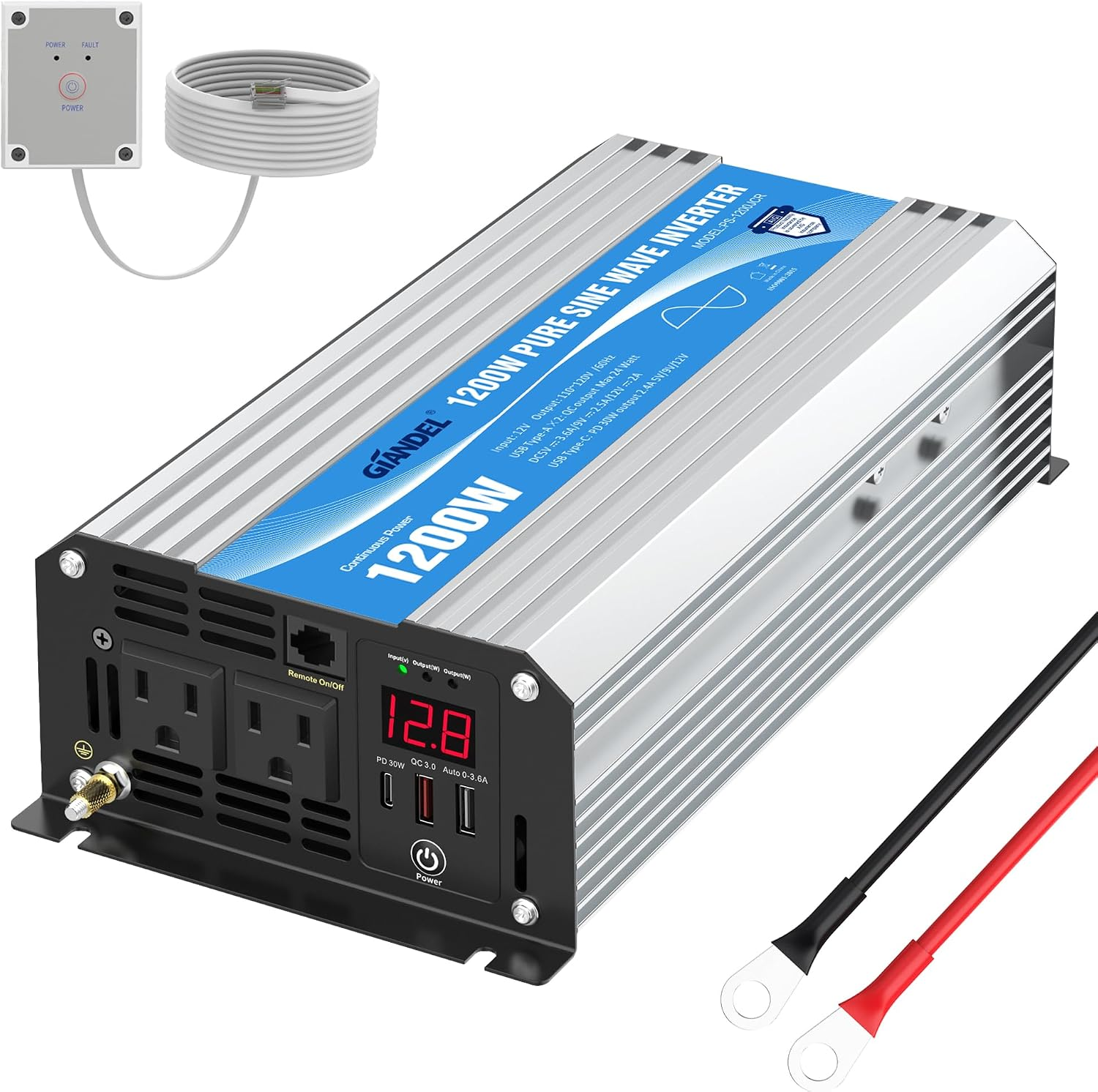
GIANDEL 1200 W Pure Sine Wave provides a wired remote and modern USB ports for a capable auxiliary-battery system.
Buyers should consider the GIANDEL when a dedicated deep-cycle battery, short fused cables, and adequate ventilation support several electronics or selected appliances. A starter battery should not undergo repeated deep discharges.
- Output: 1,200 W continuous and 2,400 W peak.
- Waveform: Pure sine with claimed THD below 3%.
- Efficiency: Greater than 90% claimed.
- Ports: Two AC outlets, USB-A or QC, and 30 W USB-C.
- Controls: Wired remote and temperature- or load-controlled fan.
Pros
- Pure-sine output protects compatible sensitive loads.
- The output rating provides strong value.
- A wired remote supports installed use.
- Modern USB ports handle device charging.
Cons
- Full output requires very high DC current.
- Giandel has a smaller support network than Renogy.
- Cable loss and battery voltage can trigger shutdowns.
GIANDEL 1200 W reviews
People who bought the Giandel on Amazon rate it 4.4 from over 700 ratings. Owners like the clean output, value, and quiet light-load behavior, while complaints mention fan cycling, voltage sensitivity, cable loss, and nuisance shutdowns.
Should you buy the GIANDEL 1200 W?
You should buy the GIANDEL if value matters and a properly designed auxiliary battery can support its current. You should pass if the starter battery is the only energy source.
5. Energizer EN500 500 W
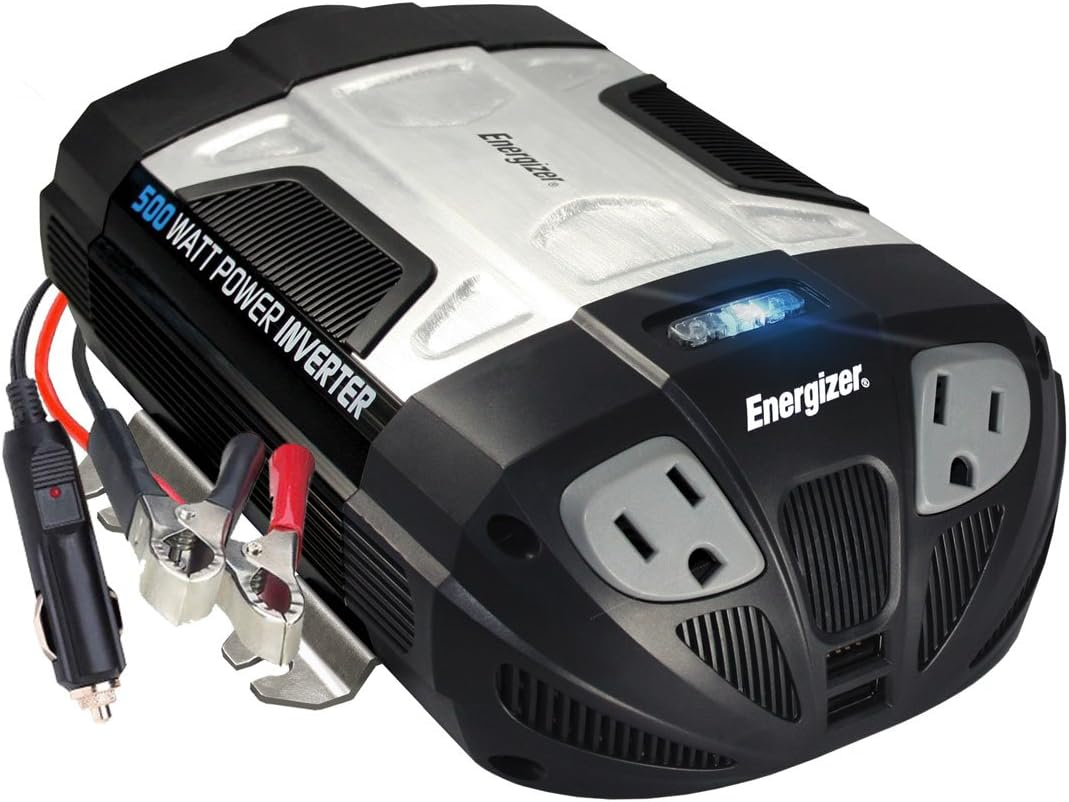
Energizer EN500 includes a socket lead and battery clamps for light plug-in loads and selected higher direct-battery loads.
Buyers should consider this kit when connection flexibility and low price are important, and the equipment accepts modified-sine power. Be aware that temporary battery connections demand careful polarity, cable routing, ventilation, and spark control.
- Output: 500 W continuous and 1,000 W peak.
- Waveform: Modified sine.
- AC outlets: Two.
- Connections: Cigarette-lighter lead and direct battery clips.
- Protection: Thermal fan with overload, temperature, and short-circuit protection.
Pros
- Two connection methods support light and higher loads.
- The 500 W class covers several simple devices.
- Compact dimensions help vehicle storage.
- The kit costs less than the high-output pure-sine picks.
Cons
- Modified-sine output limits sensitive-load use.
- Full output requires battery clamps.
Energizer EN500 reviews
Owners give the Energizer 4.0 stars from over 900 reviews. Owners like the included hardware and price, while complaints focus on fan noise, unrealistic high-load expectations, and confusion about the accessory-plug limit.
Should you buy the Energizer 500 W?
You should buy this kit if simple loads benefit from plug or clamp flexibility and you can follow its connection procedure exactly. You should pass if sensitive electronics, medical devices, exposed battery clips, or exact variant specifications control the decision.
Which car power inverter setup fits a major outage?
Winter Storm Fern left more than 1,005,641 customers without power at peak, with some areas dark beyond six days. A car inverter is a short bridge, so long outages require fuel, battery reserve, and another charging plan.
Hurricane Helene affected 4.79 million customers, and western North Carolina outages reached 14 days. Continuous vehicle idling is a poor multi-day plan, so refrigeration and home circuits favor a portable power station or installed backup. Our extended outage preparation guide covers the water, food, communications, and charging layers that an inverter cannot replace.
How to choose and connect a car power inverter safely
A car power inverter must match the socket or battery connection, waveform, current demand, alternator reserve, and planned devices. Direct battery connection is generally safe only when the installation follows the vehicle and inverter manuals.
When should you connect an inverter directly to a car battery?
A direct battery connection should serve loads that exceed the documented socket limit and remain within the battery, alternator, and inverter limits.
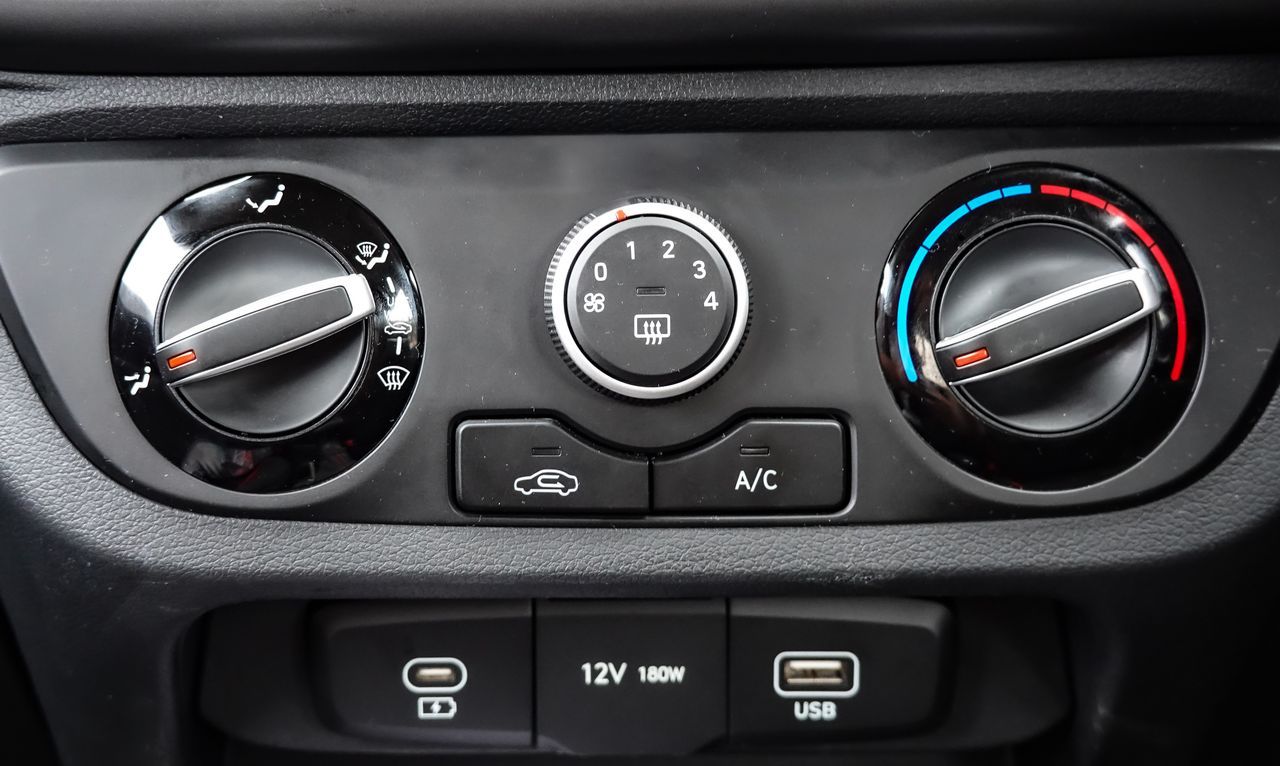
Many 10 to 15 A vehicle sockets support roughly 120 to 180 W. An inverter above about 150 W often needs a direct connection to deliver more than a socket can provide, but the vehicle manual sets the actual cutoff.
Power tools, refrigerators, and approved medical devices may require this connection when their running and startup watts fit the system. Our car charger and inverter guide explains the connection choices in more detail.
Why can a direct battery connection handle more power?
A direct battery connection sends high current through short, heavy copper cables instead of thin dashboard wiring.
The heavier cables reduce voltage drop, prevent repeated accessory-fuse failures, and protect the factory socket circuit from loads it was not designed to carry. A 1,000 W inverter can draw about 98 A at 12 V and 85% efficiency, far beyond a typical accessory circuit.
What can go wrong with a direct battery connection?
A poor direct battery connection can cause a dead battery, damaged equipment, severe arcing, fire, burns, or a battery explosion.
- Starter-battery discharge: An inverter can drain a starter battery quickly with the engine off and leave the vehicle unable to restart. Repeated deep discharge also shortens starter-battery life.
- Unfused positive cable: A direct connection bypasses the vehicle fuse panel. A shorted cable can carry enough current to overheat, melt insulation, and start a fire.
- Reverse polarity: Crossed positive and negative leads can create sparks, blow fuses, and destroy an inverter.
- Hydrogen ignition: Lead-acid batteries can release flammable hydrogen. A spark at the battery can ignite accumulated gas, so OSHA requires spark control and ventilation around charging batteries.
- Tool arcing: A wrench or other metal object that bridges the positive terminal and grounded vehicle metal can carry fault current, cause burns, and damage the battery or tool.
- Carbon monoxide: A running gasoline or diesel vehicle can produce lethal exhaust. The vehicle must run outdoors and well away from doors, windows, vents, and garages, as explained in our generator safety guide.
Which steps make a direct battery connection safer?
A safe direct battery setup requires the correct fuse, copper cable, polarity, connection sequence, ventilation, load limit, and cable routing.
- Read both manuals: The vehicle and inverter manuals control the allowed connection point, fuse size, wire gauge, grounding method, ventilation clearance, and operating limit.
- Install the positive fuse: The positive cable needs a correctly rated DC fuse close to the battery, ideally within about 7 inches when the manufacturer allows that placement. A 1,000 W Renogy system, for example, specifies a 150 A battery fuse, but another model may require a different rating.
- Use short, heavy copper cable: Cable size depends on inverter power, run length, insulation rating, and installation conditions. Some 1,000 W Renogy models specify 4 AWG copper for a 3-foot run, so buyers should not assume one gauge fits every installation.
- Turn loads and the inverter off: Jewelry, loose tools, flames, cigarettes, and other spark sources should stay away from the battery. The battery area needs ventilation, and the terminals and cables must be clean and undamaged.
- Follow the specified connection order: A typical negative-ground clamp procedure connects positive first and negative last, then disconnects negative first and positive last. Some manuals direct the final negative clamp to an approved chassis ground away from the battery, while hardwired inverters may require the battery's negative terminal. The vehicle and inverter manuals specify the correct method.
- Protect the cables: The hood, sharp metal, hot engine parts, belts, and fans must not pinch, cut, melt, or pull the cables. Temporary clamps must stay dry and secure.
- Protect the starter battery and alternator: Substantial loads normally require the engine to run outdoors, but idle output may not cover the inverter and vehicle loads. The operator should monitor voltage, stop before the battery loses starting reserve, and use a dedicated deep-cycle or LFP auxiliary battery for extended discharge.
- Keep AC separate from home wiring: An inverter must never backfeed a wall receptacle or electrical panel. Home circuits require approved transfer equipment and qualified installation.
A professionally planned auxiliary-battery system fits sustained high-power use better than loose clamps on a starter battery. Compare battery backup and whole-house generators if the intended loads or outage duration exceed what a vehicle can support safely.