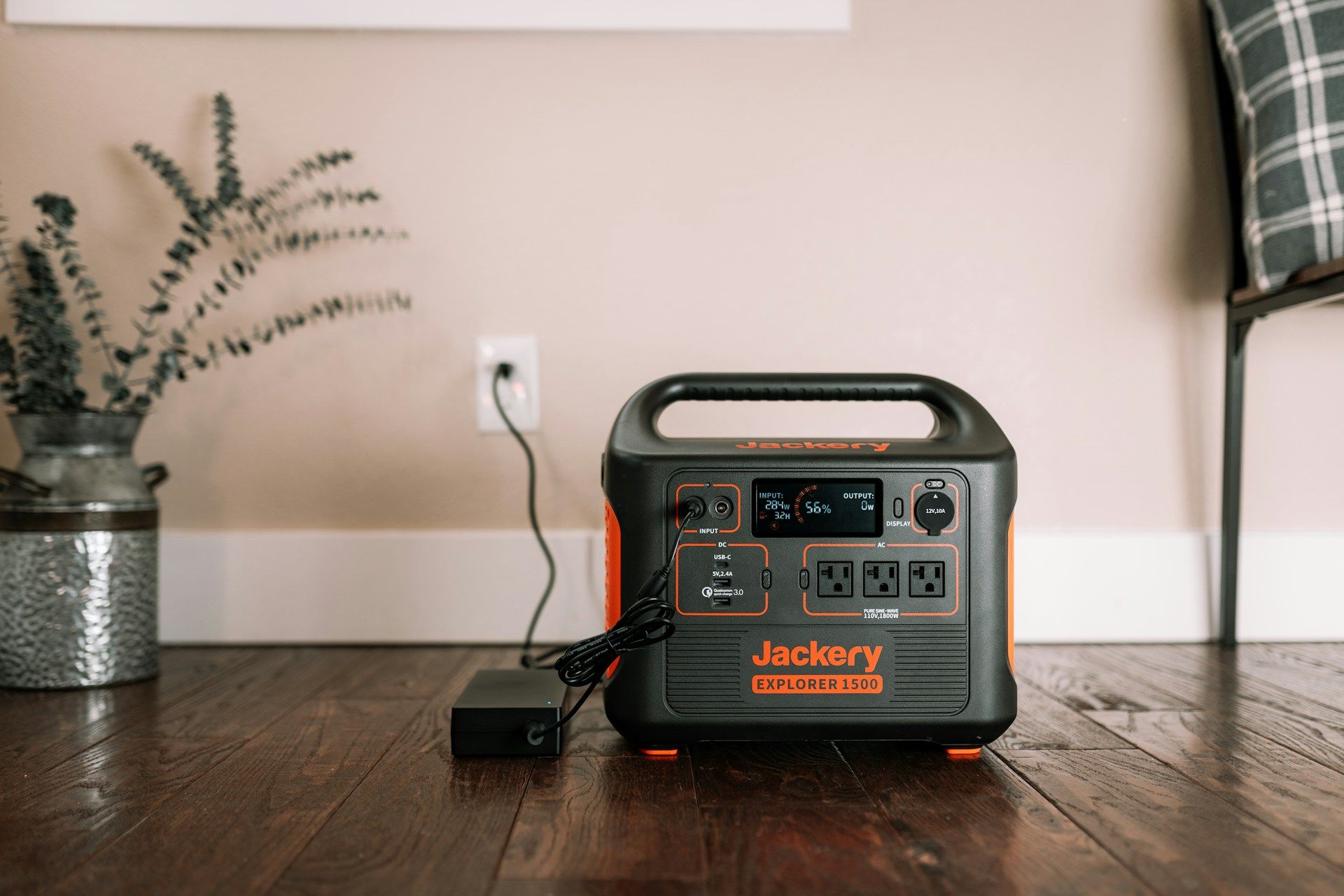


Last year’s storm season may have you thinking about getting a home battery backup, but how long does one actually last? That depends on three things: usable kWh capacity, household load in watts, and whether a solar panel array is recharging the battery bank during the outage. Understanding how these variables interact lets you choose the right home battery backup system before the next blackout, not after it.
PowerOutage.us monitors 950+ utilities serving over 200 million U.S. customers, tracking every major outage event since 2016 with data refreshing every 10 minutes during live events. That real-time coverage helps you learn how long outages actually last in your region and how much battery capacity households genuinely need.
How long does a home battery last during an outage?
How long a home battery system runs is a direct function of its usable kWh capacity divided by the rate at which household appliances draw from it. For example:
- A 13.5 kWh lithium iron phosphate battery system running at 1.5 kW average draw lasts roughly 8 to 9 hours before hitting its minimum state of charge.
- Running the same battery at 750W extends that window to 15 or more hours.
How does household draw affect runtime?
The U.S. Energy Information Administration reports that U.S. households consume an average of 28.9 kWh per day, which works out to approximately 1.2 kW per hour. But during an outage, what matters is not average daily consumption. What matters is which circuits remain active.
- Low load (750W): Refrigerator, freezer, LED lighting, phone and laptop chargers. A single 25 kWh battery lasts 15 to 24 hours. A 13.5 kWh Powerwall 3 lasts roughly 12 to 16 hours.
- Average load (1.5 kW): Above plus a window air conditioner unit or ceiling fans and a television. A 25 kWh battery lasts 8 to 12 hours. A 13.5 kWh battery lasts 5 to 7 hours.
- High load (4.5 kW): Central HVAC compressor, multiple refrigerators, and standard appliances running simultaneously. A 25 kWh battery lasts 3 to 4 hours. A 13.5 kWh battery lasts roughly 2 to 3 hours.
- Very high load (8 kW): Electric resistance heaters, dual-zone HVAC systems, or electric ranges in use. A 25 kWh battery lasts 1 to 2 hours. A 13.5 kWh battery lasts under 90 minutes.
Obviously, there’s a big gap between a low and high electrical load. The same battery bank lasts ten times longer when you limit draw to essential circuits rather than running the whole home at normal consumption.
Having a full charge when the outage starts is important
It’s basic math that a home battery system at 100% state of charge provides its full rated runtime during an outage. A system at 30% when the grid fails delivers roughly 30% of those estimates.
This isn’t a minor detail. During Hurricane Milton in October 2024, PowerOutage.us tracked multi-day cycling grid failures across 3.4 million Florida customers, with power returning in 30-minute to 2-hour windows before failing again.
- Cycling failures give you short times to recharge a battery.
- Homeowners who didn’t use those brief grid windows to recharge their battery banks started each new blackout with a fraction of usable capacity.
- Systems with automated pre-charge features, like Storm Watch on Tesla Powerwall units, charged to 100% before the storm made landfall and kept recharging whenever power was back on.
Does battery chemistry affect how long a home battery lasts?
Battery chemistry is important and it affects the depth of discharge, cycle count before capacity degradation, and operating temperature range. These change how a battery performs during outages over months and years of use, not just the first event.
Why LiFePO4 cells provide more discharge cycles than standard lithium-ion packs
Lithium iron phosphate cells (LiFePO4 or LFP) use an iron-phosphate cathode that remains structurally stable under repeated full discharge cycles. This means it lasts longer over the long term. Most LiFePO4 home battery systems carry warranties covering 4,000 to 6,000 cycles at 70% retained capacity.
On the other hand, a standard nickel-manganese-cobalt (NMC) lithium-ion pack typically lasts 1,500 to 3,000 cycles under similar conditions.
LFP cells also tolerate deeper discharge levels without degrading any faster. Where standard lithium-ion packs lose cycle life quickly when regularly discharged below 20% state of charge, LiFePO4 cell stacks are designed for 80 to 100% depth of discharge as their normal operating range.
Does temperature shorten runtime for different chemistry types?
Overall, LFP batteries are best for average weather conditions, while NMC batteries perform better in extreme cold but are sensitive to high heat. Lead acid batteries lose capacity in cold and have a shorter lifespan from running in heat.
LFP batteries operate well between 32°F and 113°F (0°C to 45°C) when charging and between -4°F and 140°F (-20°C to 60°C) during discharge. Below freezing, internal electrolyte resistance increases, which reduces the amount of current the battery can deliver at a given moment. This means actual runtime under cold conditions is shorter (by about 70 to 80%) than rated runtime at room temperature, even with identical state of charge.
Lead-acid batteries, by contrast, suffer more severe cold-weather performance loss. At a discharge depth of 50% or more, lead-acid cell plates sulfate faster, permanently reducing capacity.
The bottom line is lead-acid battery banks require replacement far sooner than LFP and NMC systems and deliver less runtime per cycle throughout their shorter service life.
How does household energy consumption determine battery runtime?
The rate at which you draw electricity to power appliances from a fixed battery bank is the most controllable variable in the runtime equation. Capacity is fixed once you own the system. Solar input depends on the weather. But electrical load is something you can actively manage during an outage.
High-draw appliances that reduce battery runtime fastest
Our whole-home backup cost guide covers sizing for full coverage, but for most single-battery installations the practical answer is that high-draw appliances need to be managed or disconnected during grid outages.
- Central air conditioning units, electric resistance water heaters, and electric ranges draw between 3 kW and 5 kW each during active operation.
- A single central AC compressor running on a 13.5 kWh battery bank can exhaust the system in under three hours.
- Heat pump water heaters draw roughly 500W in heat-pump mode but up to 4.5 kW in resistance backup mode.
- Switching a heat pump water heater to vacation mode before or during an outage reduces its draw by 80% and meaningfully extends battery runtime.
Essential load circuits extend runtime by isolating refrigerators, lights, and phone chargers
An essential load subpanel separates critical circuits (refrigerator, freezer, LED lighting, internet router, phone chargers, medical devices) from non-critical circuits (electric range, dryer, water heater). When the grid drops, the battery system powers only the essential subpanel. This configuration is the single most effective way to stretch runtime, because it eliminates high-draw appliances from the battery's burden without requiring manual unplugging during an outage.
Installing a subpanel is an expense, but it’s worth it if your area has a few outages per year and you want to maximize battery use. For example,
- A standard side-by-side refrigerator draws 100 to 200W in normal cycling.
- A chest freezer draws 30 to 100W.
- LED lighting for a four-bedroom home draws under 200W total.
- A Wi-Fi router and a few phone chargers add another 50 to 100W.
That entire essential load cluster draws under 600W combined, which means a 13.5 kWh battery bank sustains it for roughly 20 hours or more.
Which home battery systems last longest during an outage?
Tesla, FranklinWH, Enphase, and Generac all offer high-capacity home backups. Wall-mounted home battery systems come in a range of usable kWh capacity, continuous output rating, and cycle warranty terms. These differences directly translate to longer or shorter runtime under the same load conditions. The following systems represent the leading options for residential outage backup.
Tesla Powerwall 3
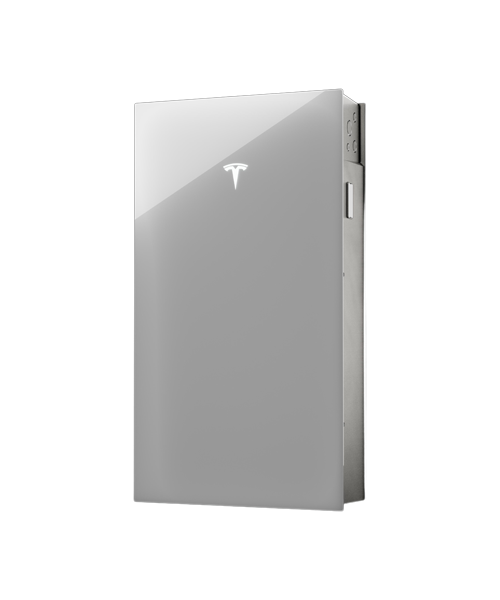
The Tesla Powerwall 3 stores 13.5 kWh of usable capacity with a continuous output of 11.5 kW and a peak output of 185A (approximately 22.1 kW for 10 seconds). The integrated inverter eliminates a separate component and allows the system to handle large surge loads from compressor motors at startup.
The Powerwall 3 uses LFP cell chemistry with a 10-year warranty covering unlimited cycles to 70% retained capacity. Storm Watch mode pre-charges the unit to 100% when a storm is forecast, addressing the state-of-charge problem directly.
For a household running essential loads at 750W, a single Powerwall 3 provides 12 to 16 hours of runtime. Stacking a second unit doubles that to 24 to 32 hours.
FranklinWH aPower
The FranklinWH aPower stores 13.6 kWh usable with a 10 kW continuous output. It uses LFP cell chemistry and supports whole-home backup without an essential load subpanel, covering all circuits including HVAC compressors and electric ranges.
The FranklinWH app displays real-time power flow and runtime estimates, which allows homeowners to make informed load-shedding decisions during an outage. Multiple FranklinWH aPower units stack to increase total capacity in 13.6 kWh increments.
Enphase IQ Battery 5P
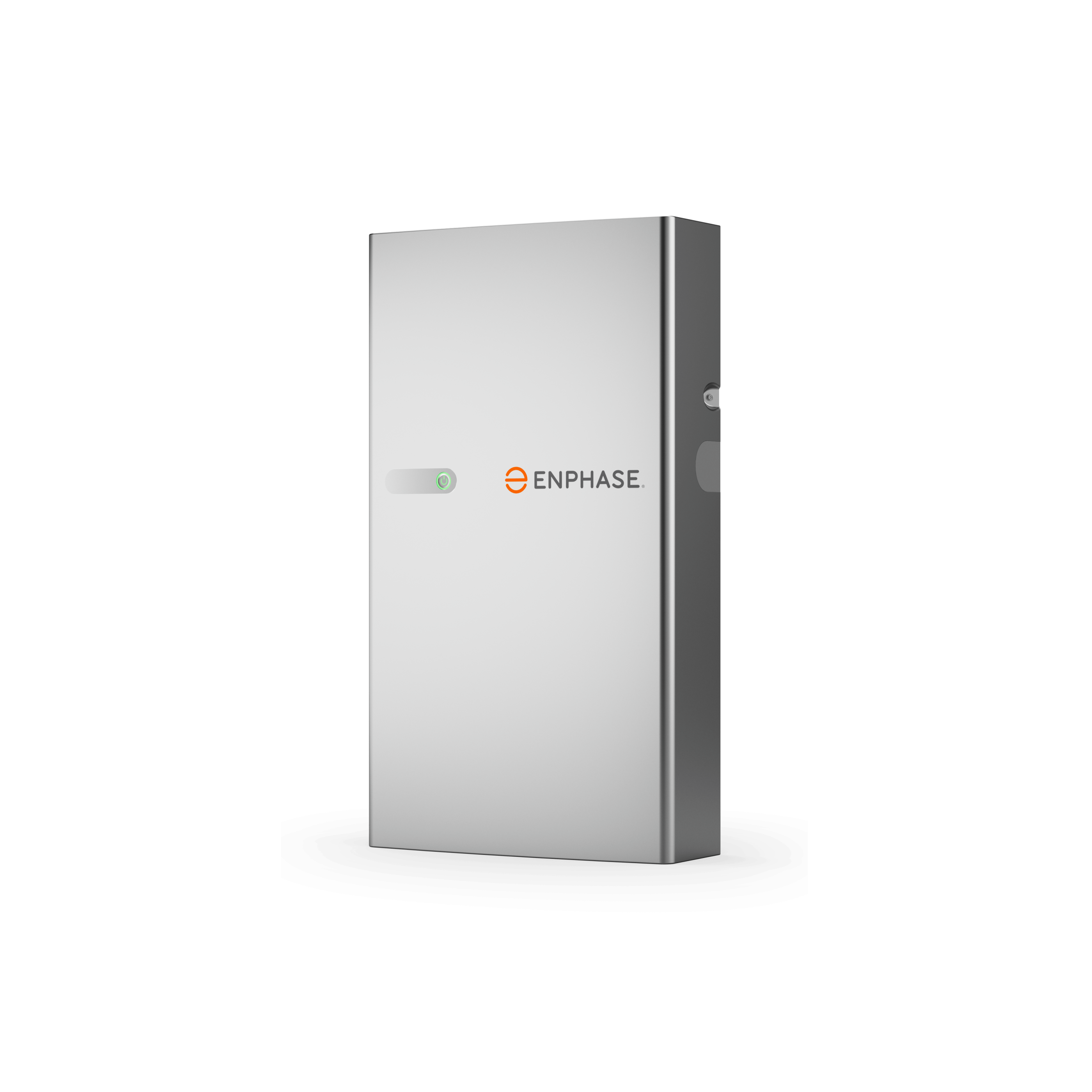
The Enphase IQ Battery 5P provides 5 kWh usable capacity per unit with a 3.84 kW continuous output. Its modular design means homeowners typically install three to five units for meaningful whole-home coverage. Each IQ Battery 5P unit uses LFP cell chemistry and integrates with the Enphase Installer App for real-time monitoring.
The lower per-unit capacity makes the IQ Battery 5P better suited to essential-load configurations than whole-home backup under extended outages, unless four or more units are installed.
Generac PWRcell 2
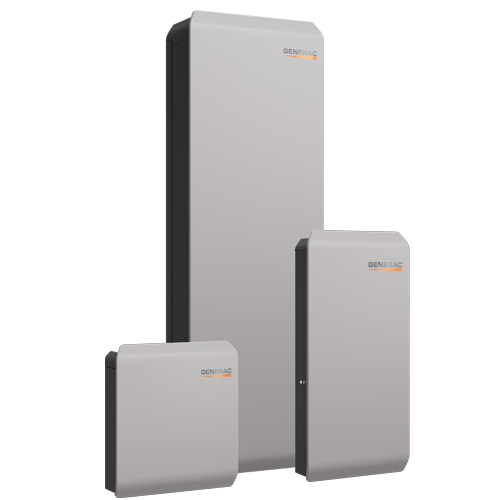
The Generac PWRcell 2 is a modular system with a base capacity of 9 kWh expandable to 18 kWh per cabinet by adding PWRcell battery modules. The PWRcell 2 uses LFP cell chemistry and delivers a 9 kW continuous output with a 12 kW peak.
The Generac PWRcell 2’s modular architecture allows incremental capacity expansion after initial installation, which makes it practical for homeowners who want to start with essential-load coverage and scale toward whole-home backup over time.
Does solar recharging extend how long a home battery lasts during an outage?
A solar panel array paired with a home battery system can give you more runtime, but only if your system has islanding capability and can generate off-grid.
During daylight hours, solar panels generate electricity that offsets household draw before it ever reaches the battery bank. Surplus generation charges the battery, restoring capacity for overnight or cloudy-period use.
Be aware that standard solar panel systems shut off when grid power goes offline. So if you added a battery later, you would need an inverter and automatic transfer switch that support islanding.
All that said, a battery backup without solar is still helpful fo remergency power during outageompares for households that can’t install panels.
Real outages show how long home batteries need to last
When Hurricane Helene made landfall in late September 2024, PowerOutage.us tracked 4.79 million customers losing power across Florida, Georgia, South Carolina, and North Carolina.
Western NC mountain counties experienced restoration timelines that went over 14 days. A single 13.5 kWh battery, even cycling with solar, can’t bridge a 14-day outage alone. In that case, alternating between a generator and battery can provide a better solution.
Similarly, Winter Storm Fern in January 2026 left over 1 million customers without power across a 2,000-mile zone from New Mexico to New England, with Nashville-area residents enduring 6+ days of blackout.
PowerOutage.us tracked peak impact at 1,005,641 customers, with Tennessee alone accounting for 306,700. Cold-weather battery performance during Fern was a real issue, as LFP cell stacks operating below freezing delivered less than rated capacity per charge. NMC batteries would have performed better during the cold.
How can you make a home battery last longer during a blackout?
Two strategies consistently produce the largest gains: circuit prioritization through a smart panel or essential load subpanel, and pre-event charging using Storm Watch or equivalent automation.
Extending runtime during an outage is mainly a load management problem. The battery's kWh capacity is fixed, but the rate at which you draw from it isn’t. See our power outage emergency kit guide for a broader preparedness checklist.
Using load management apps and smart panels to prioritize critical circuits
Battery mamangement apps and smart electrcal panels like SPAN can help you prioritize essential circuits during an outage and save money at other times during the year.
The SPAN smart electric panel assigns individual circuit-level control to a smartphone app. During an outage, a homeowner can switch off the electric dryer, water heater, and second-zone HVAC compressor in seconds, reducing draw from 4.5 kW to under 1 kW without physically unplugging anything. The SPAN app also displays real-time runtime estimates that update as loads change.
Tesla's app, FranklinWH's portal, and the Enphase Installer App all provide runtime estimates based on current draw and remaining state of charge. These estimates update in real time, which means you can observe the effect of turning off a window air conditioning unit immediately.
Pre-charging to full capacity before a forecast storm with Storm Watch mode
Tesla Powerwall units running Storm Watch check weather service data and automatically charge to 100% state of charge when a storm meeting threshold criteria is approaching. Without this feature, the battery's state of charge at the time of the outage depends on you checking the charge or switching the mode.
For homeowners without automated pre-charge features, the manual equivalent is to switch the battery system to "backup only" or "full charge" mode 24 to 48 hours before a forecast storm.
Quick recap
At the end of the day, a home battery lasts 8 to 12 hours on essential loads under average draw from a 13.5 kWh LFP cell system. Reducing active circuits to under 750W extends runtime to 15 or more hours. Solar recharging adds daytime capacity (if you have islanding). Stacking multiple units and pre-charging before a storm are the most effective strategies for multi-day outage coverage.