




PowerOutage.us tracks more than 950 utilities serving over 200 million customers, about 95 percent of electricity customers in the country. Our outage data shows how long communities stay dark, which is why we rank communicators alongside an emergency radio: the radio brings news in, and a communicator gets your communication out.
How we ranked these satellite communicators
We ranked these emergency communicators on manufacturer specs, published expert testing, owner reviews, and our own PowerOutage.us outage data.
Here's what we weighted, heaviest first:
- Two-way messaging: We favored options that offer reply functionality (instead of just sending a message), because "message sent" means little until your family answers back.
- Battery life: We favored devices that run for days or weeks so you can rely on the communicator for longer.
- Subscription honesty: We compared monthly costs, activation fees, and whether plans can be paused between storm seasons.
- Network: We favored the Iridium network for its global, proven coverage.
- Tester and owner reliability: We leaned on published SOS reports and expert group tests.
How these satellite communicators compare
Compare these satellite communicators on messaging, subscription costs, battery life, and price. Keep in mind that prices can move around.
| Device | Messaging | Subscription | Battery | Approx price |
|---|---|---|---|---|
| Garmin inReach Messenger | Two-way, standalone, or phone | $8 to $35 per month | 28 days | $280 |
| Zoleo | Two-way via phone app | $20 to $50 per month | 200+ hours (about 8 to 9 days) | $155 |
| ACR Bivy Stick | Two-way via phone app | $19.99 to $59.99 per month | 3 to 7 days | $200+ |
| ACR ResQLink View RLS | SOS only | None | 5-year battery, 28 h transmit | $530 |
| Garmin GPSMAP 67i | Two-way + full GPS | $8 to $35 per month | 165 h (425 h Expedition) | $630 |
5 Best satellite communicators for emergencies
These five picks range from a $155 phone-paired messenger to a subscription-free satellite beacon that lasts for years on its battery.
1. Garmin inReach Messenger
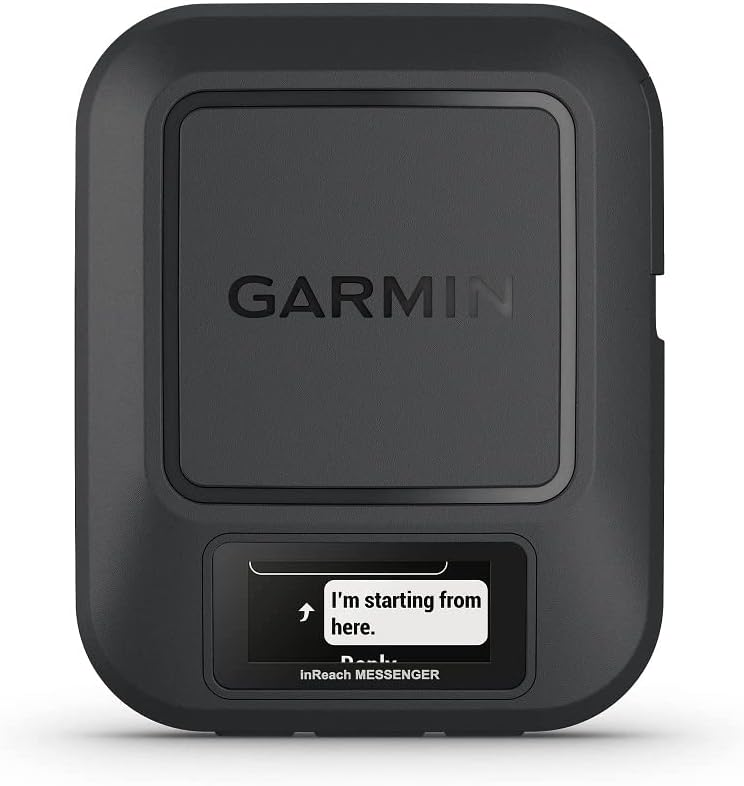
The Garmin inReach Messenger sends and receives texts anywhere on the Iridium network, and its battery runs 28 days between charges.
Garmin’s inReach is a great option for households in hurricane zones since its standalone messaging is reliable. You should choose the inReach Messenger if you want two-way contact that still works standalone after your phone dies.
- Two-way texting over Iridium, standalone or paired to a phone
- 28 days of battery in 10-minute tracking mode
- SOS to Garmin Response, staffed 24/7
- Plans run $8 to $35 per month plus a $39.99 activation, and they suspend at no cost
- IPX7 waterproof, about 4 oz
Pros
- Works without your phone.
- 28-day battery leads this list.
- Documented real-world SOS saves.
- Plans pause between storm seasons.
Cons
- Standalone typing on the small screen is slow.
- SOS requires an active subscription.
Garmin inReach Messenger reviews
Amazon customers rate the inReach Messenger 4.4 stars across over 400 reviews. Positive reviews mention how it switches between cell and satellite reliably. That said, some mention it takes a while to type a message on the device.
Should you buy the Garmin inReach Messenger?
You should buy the inReach Messenger if your family needs dependable two-way contact through a multi-day blackout. You should pass on it if you'll only ever need a distress call, where the subscription-free ResQLink does that one job for less over time.
2. Zoleo
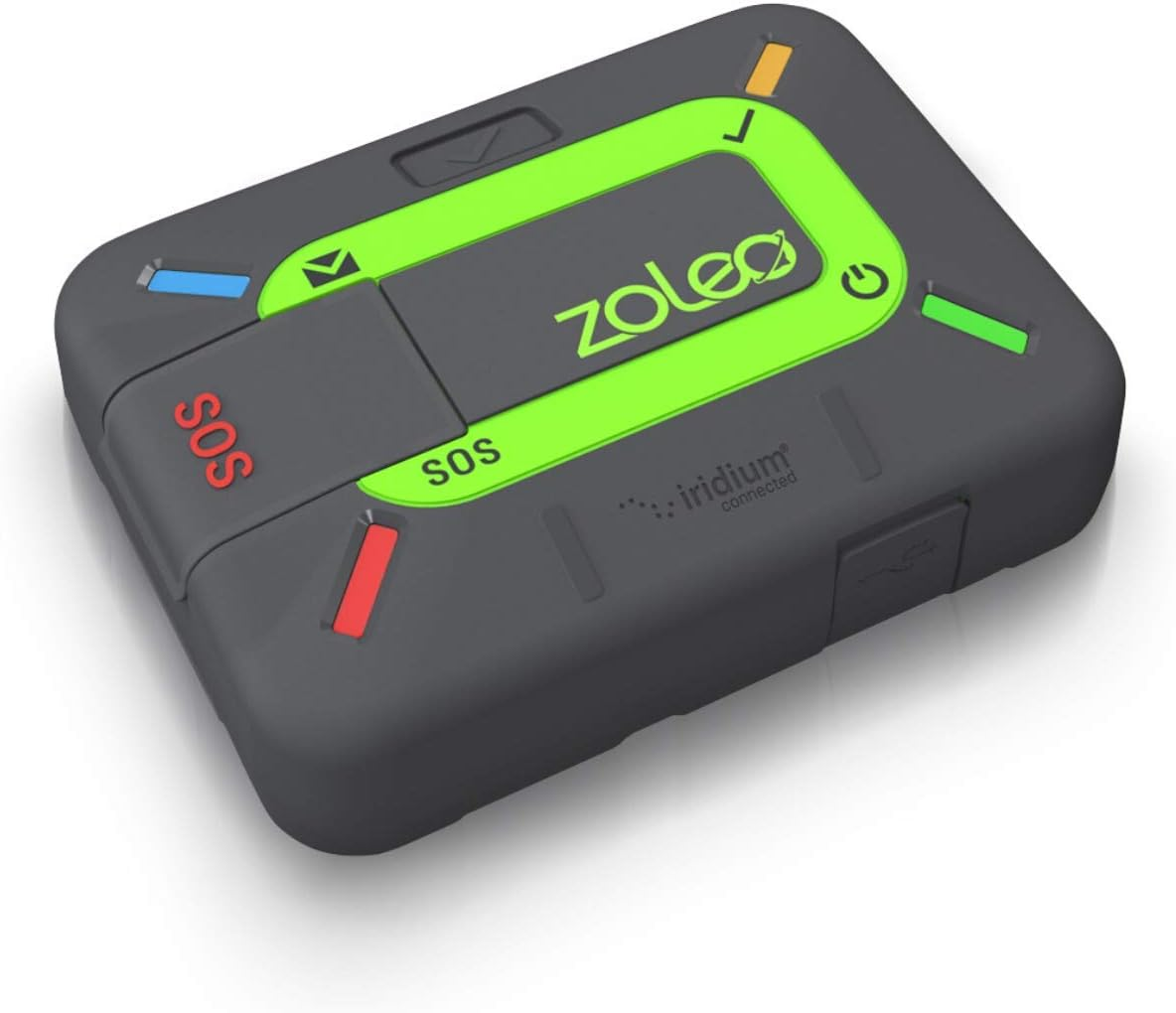
The Zoleo pairs with your phone to send two-way satellite texts over Iridium, and it provides a real SMS number for your contacts to reach you.
Budget-first families who keep phones charged get the most value from the Zoleo. You should consider the Zoleo if you want full two-way messaging at half the price of the Garmin.
- Two-way Iridium messaging through the Zoleo app
- Dedicated SMS number and email address that your contacts can text
- 200+ hours (about 8 days) of battery in message-check mode
- Plans at $20, $35, and $50 per month, pausable at no cost
- IP68, about 5.2 oz
Pros
- Costs about $155.
- Contacts can text you using a normal number.
- Messages route over satellite, cell, or wifi, whichever works.
- Plans pause in the off-season.
Cons
- Custom messages need your phone to be powered; without that, it sends only check-ins and SOS.
- Heavier than the Garmin.
Zoleo reviews
Owners rate the Zoleo 4.5 stars from over 3,000 reviews. Reviewers like the seamless satellite-to-cell routing. Complaints center on the phone dependency for real messages.
Should you buy the Zoleo?
You should buy the Zoleo if you want two-way satellite texting on a budget, and you'll keep a charged phone beside it. You should pass on it if you want a device that sends custom messages on its own, where the inReach Messenger stands alone.
3. ACR Bivy Stick
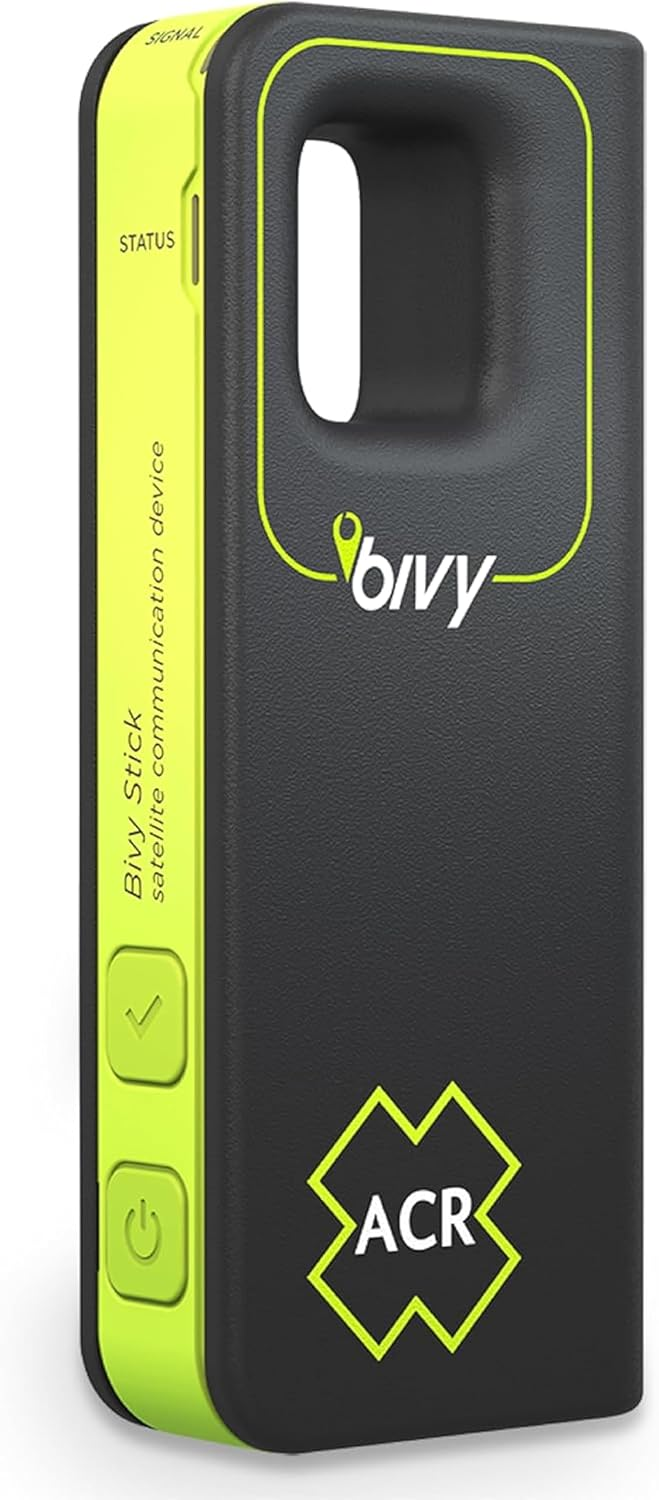
The ACR Bivy Stick weighs 3.5 oz and still sends two-way Iridium messages through your phone.
The ACR Bivy Stick is best if you’re building a go-bag and watching your ounces. You should consider the Bivy Stick if you want the lightest two-way option and can live with slightly slower message delivery.
- Two-way Iridium messaging via the Bivy app
- 3.5 oz, the lightest two-way pick here
- 3 to 7 days of battery in typical use, plus a 24-hour SOS reserve
- GroupTrack mesh connects up to 12 users
- Plans from $19.99 to $59.99 per month
Pros
- Lightest two-way messenger on this list.
- The SOS reserve battery adds a safety margin.
- Group tracking for a family or team.
- IP68 build.
Cons
- Messages are sent more slowly than Garmin or Zoleo.
- The app draws criticism for being busy and unrefined.
- Retail prices swing widely; check before buying.
ACR Bivy Stick reviews
Owners rate the ACR Bivy Stick 4.0 from about 200 reviews, and positive reviews say it's a great light messenger. Some say it drains their phone battery quickly, though.
Should you buy the ACR Bivy Stick?
You should buy the Bivy Stick if a low weight is important for your kit and you’re OK with slower delivery. You should pass on it if you want the best messaging speed under stress, where the inReach and Zoleo perform better.
4. ACR ResQLink View RLS
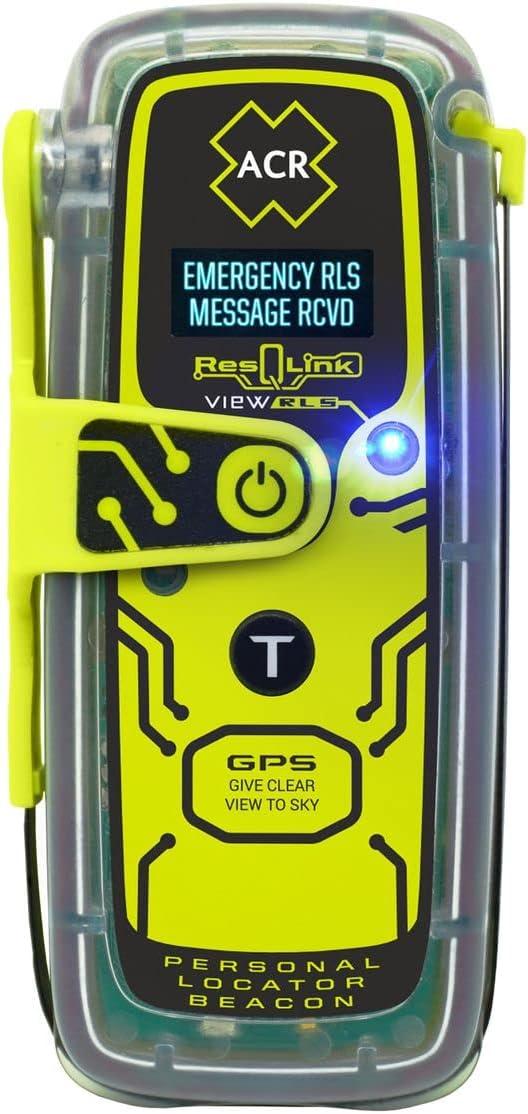
The ACR ResQLink View RLS sends a one-button SOS over the government COSPAS-SARSAT satellite system with no subscription, ever.
The Vew RLS is best for set-it-and-forget-it preppers, since its battery lasts for 5 years. You should consider the ResQLink if you want rescue capability that sits in the kit for 5 years with zero monthly cost.
- SOS on the 406 MHz COSPAS-SARSAT rescue network, no subscription
- Return Link LED confirms your signal was received
- 28+ hours of active transmission; 5-year battery life
- Buoyant and waterproof past 5 m for an hour
- 5.3 oz; free NOAA registration required
Pros
- Zero subscription, zero monthly fees.
- Government rescue network with a proven record.
- Confirmation light shows the signal got through.
- Floats.
Cons
- SOS only; it sends no check-ins and receives no messages.
- Costs more up front than the messengers.
ACR ResQLink View RLS reviews
Amazon customers rate the ResQLink 400 variant 4.8 stars across over 70 reviews. Owners appreciate the easy setup and reliability without a subscription. Some said they were caught off guard that it doesn’t send messages without a subscription.
Should you buy the ACR ResQLink View RLS?
You should buy the ResQLink if you want lifetime SOS coverage with no recurring bills. You should pass on it if the goal is to tell family you're okay, because this device only signals to rescuers through satellite.
5. Garmin GPSMAP 67i
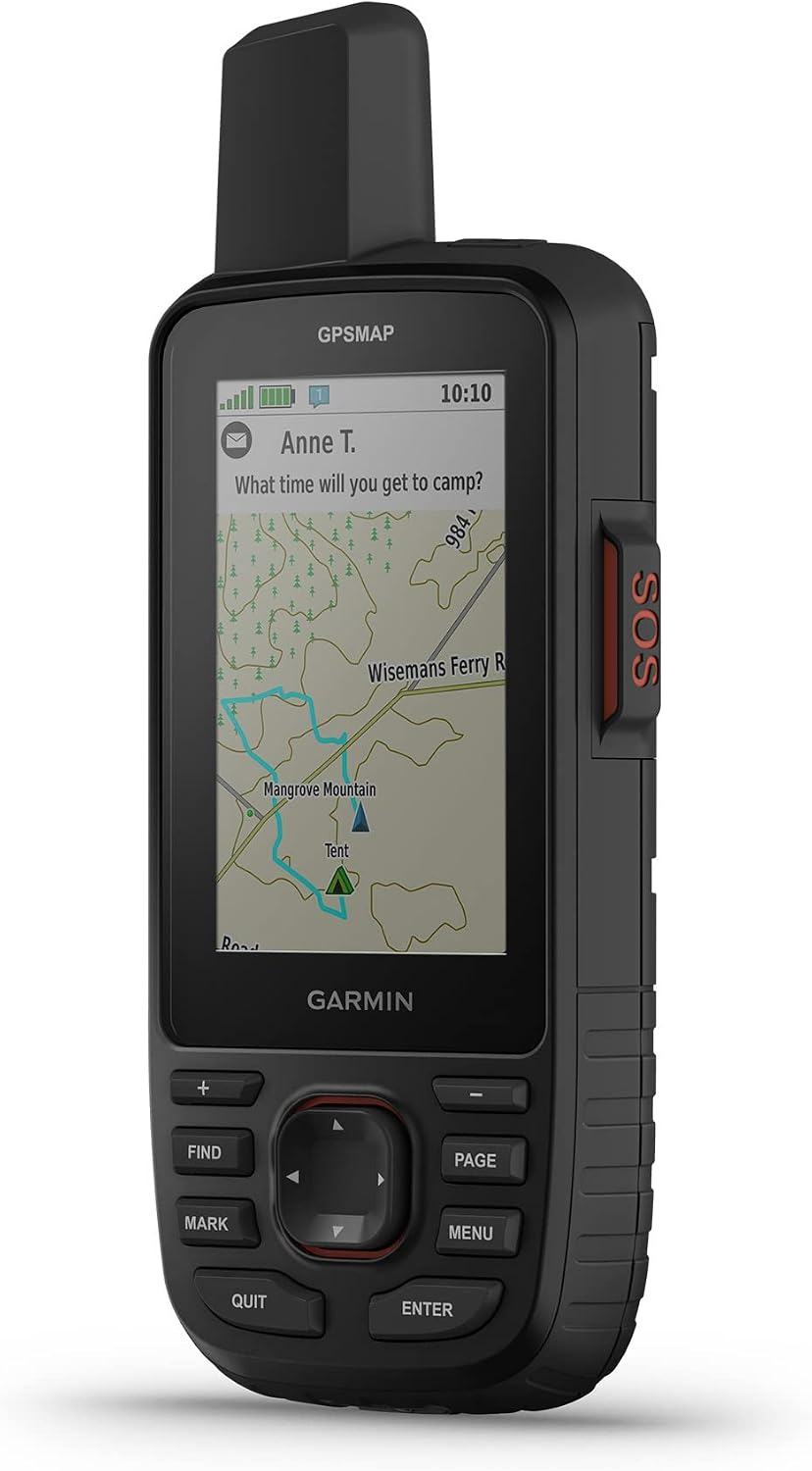
The Garmin GPSMAP 67i packs full topographic GPS navigation and inReach two-way messaging into one MIL-STD-rated handheld.
You’ll like the GPSMAP 67i if you also hike, hunt, or overland. You should consider the GPSMAP 67i if you want one device to cover navigation, weather forecasts, and satellite messaging year-round.
- Full topo GPS plus inReach two-way Iridium messaging
- 165 hours of battery in 10-minute tracking, 425 hours in expedition mode
- Same Garmin plans, $8 to $35 per month plus activation
- IPX7 and MIL-STD-810 shock and thermal rated
- 8.6 oz
Pros
- Navigation and messaging in one unit.
- The battery runs for a week of heavy use.
- Satellite weather forecasts mid-outage.
- Built to military durability standards.
Cons
- Costs about $630.
- More than double the weight of the inReach Messenger.
Garmin GPSMAP 67i reviews
Over 300 owners on Amazon rate the device 4.4 stars overall. Reviewers appreciate that the Garmin 67i has more capabilities for adventurers besides the SOS satellite features. The complaints are around the price and software functionality.
Should you buy the Garmin GPSMAP 67i?
You should buy the GPSMAP 67i if you want to replace both a GPS unit and a messenger in your gear. You should pass on it if you only need emergency contact, where the inReach Messenger does that for half the price and weight.
When the towers go down with the grid
Hurricane Helene knocked out 4.79 million customers in September 2024, and western North Carolina's mountain communities went dark for 14+ days, with communications down alongside the power. Families outside the region spent days unable to confirm anyone was safe. This is exactly the situation that a two-way hurricane power outage communicator handles well.
Similarly, Hurricane Ida destroyed all 8 transmission lines into New Orleans in August 2021 and blacked out the entire city, with some parishes waiting nearly a month for restoration. A satellite messenger doesn't care what the towers are doing for that whole stretch since it still gets your messages our SOS alerts out.
How to choose a satellite communicator for emergencies
Picking a communicator involves deciding whether you want two-way or SOS communication only, how much you can pay for a subscription, and how long you need the battery to last.
- Two-way or SOS-only: You should decide whether you want a two-way conversation or a rescue SOS. Family reassurance needs two-way; a lone SOS need is a PLB.
- Subscription math: Garmin and Zoleo plans pause between storm seasons, which turns a $15 monthly plan into a few months a year. The ResQLink charges nothing at all.
- Battery days, not hours: A 28-day standby beats any phone. Phone-paired units also need the phone alive, so plan how to charge a phone during a power outage and keep power banks for power outage duty charged.
- Sky view required: Satellite devices need an open sky. They message from the yard or a window, not from a basement shelter.
Don’t count on consumer phones with satellite
Even though some modern phones can connect to satellites, phone batteries can deplete quickly and aren’t reliable for long outage situations.
iPhone 14 and newer support Emergency SOS via satellite, roadside assistance in supported regions, Find My updates, and Messages via satellite in supported countries. Some recent Samsung Galaxy and Google Pixel phones now support carrier-based satellite messaging on supported carriers. Those run on a phone battery measured in hours, so they can add to a communication device in your power outage emergency kit, not replace one.