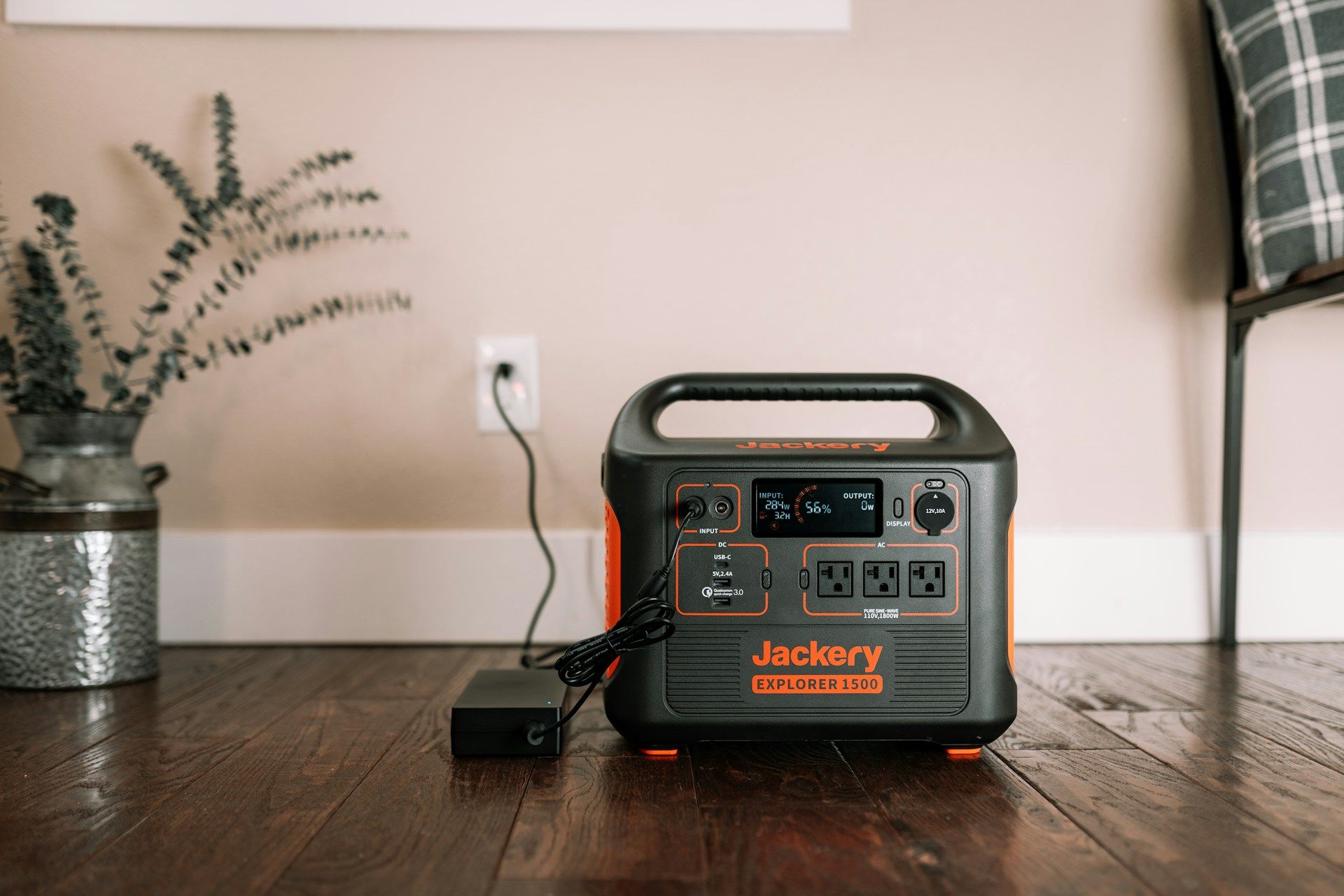


When the grid goes down, power banks are the fastest and most practical way to keep devices charged. No ventilation requirements, no fuel. They cost a fraction of what a portable power station runs, and they show up in every storm preparedness plan that emergency management agencies put together. This guide covers four emergency power banks sized for home outage use, with a buyer's guide for matching capacity and wattage to your actual load.
At PowerOutage.us, we track outages across 96% of U.S. electricity customers, covering more than 950 utilities in real time. Our free outage alerts by text and email give you enough warning to charge your power bank before a storm hits, so it's actually full when you need it. Let’s cover the best power bank options for outages.
4 Best power banks for power outages
The four picks below are sized for home outage use, not travel or backpacking. The deciding factors are capacity (how many devices you can charge), output wattage (whether it handles a laptop), port count (simultaneous charging), and self-discharge rate (how much charge survives months in a drawer).
1. Anker Prime 27,650 mAh
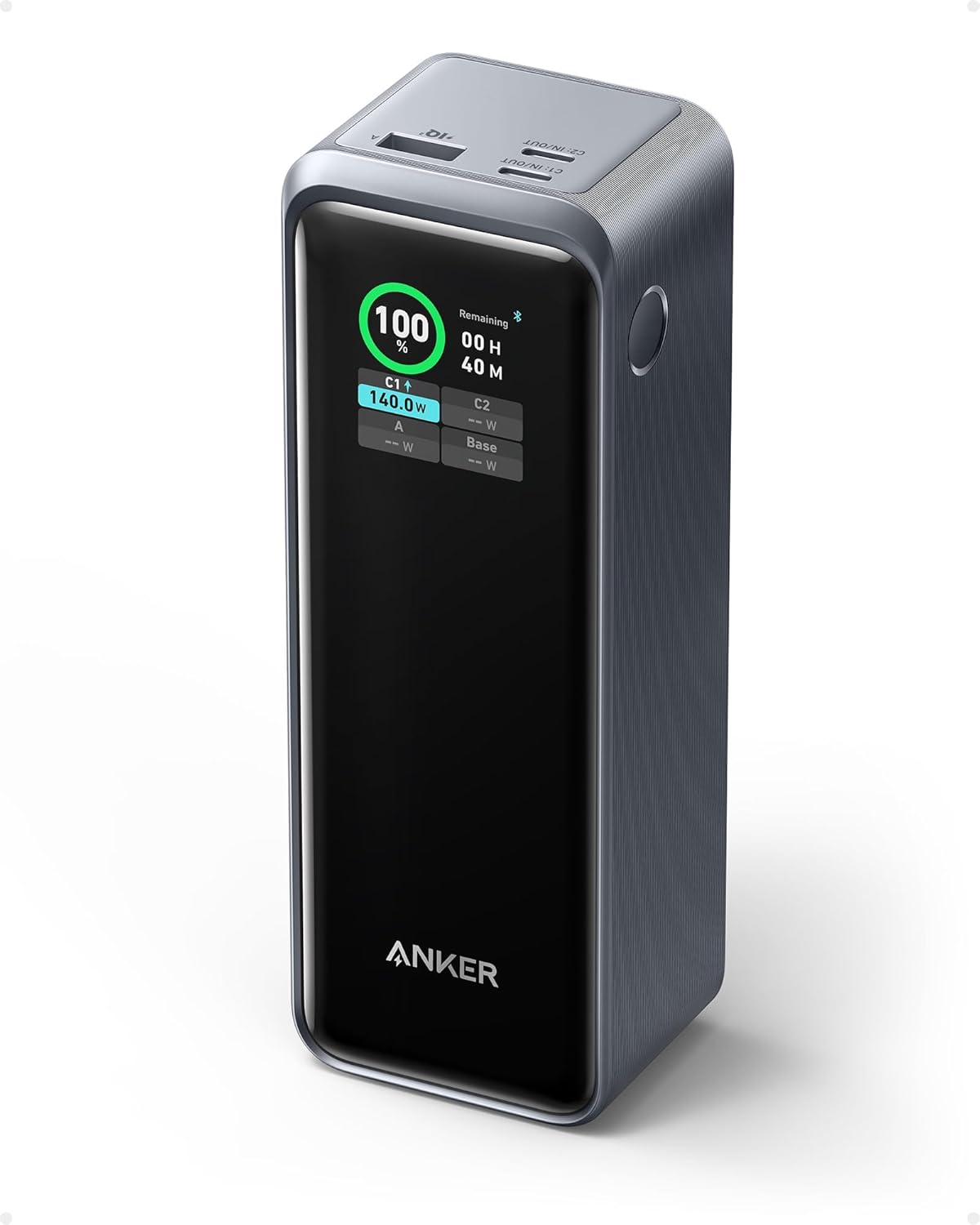
The Anker Prime 27,650 mAh is the best power bank for home emergency use. It pairs 27,650 mAh capacity with 140 W USB-C output and a smart display showing real-time wattage draw. That combination makes it the most capable, easy-to-manage pick in this list for households with a laptop.
What are the Anker Prime 27,650 mAh's features?
The Anker Prime balances high capacity, high wattage, and fast self-recharge in one unit built for power-heavy households.
- Capacity: 27,650 mAh
- Max output: 140 W (USB-C port 1), 67 W (USB-C port 2), 22.5 W (USB-A)
- Combined max output: 250 W across all ports simultaneously
- Recharge time: Approximately 1.5 hours via 140 W input
- Display: Smart display showing battery percentage and live wattage draw per port
- Weight: Approximately 1.5 lbs
- Price range: $130 to $160
The smart display is genuinely useful during an outage. You can see remaining capacity as a percentage and real-time watt draw per port. That lets you figure out how much runtime you have left before you start rationing charging time.
What are the pros and cons of the Anker Prime 27,650 mAh?
The Anker Prime is the most capable power bank in this list. The price reflects that.
Pros:
- 140 W output charges a MacBook Pro at full rated speed without a separate wall adapter
- 27,650 mAh handles approximately 5 full iPhone 15 charges or around 1 full MacBook Air recharge after normal USB-C conversion losses
- Dual high-speed USB-C ports let you charge a laptop and a phone simultaneously at full speed
- Smart display shows actual wattage draw, helping you manage runtime across a long blackout
- Approximately 1.5-hour recharge time lets you capture maximum energy during brief grid restoration windows
Cons:
- At $130 to $160, it's the most expensive pick in this list by a notable margin
- The 1.5 lb weight is manageable but heavier than lighter 10,000 mAh options if you need a superlight pack.
2. UGREEN Nexode 145W 25,000 mAh
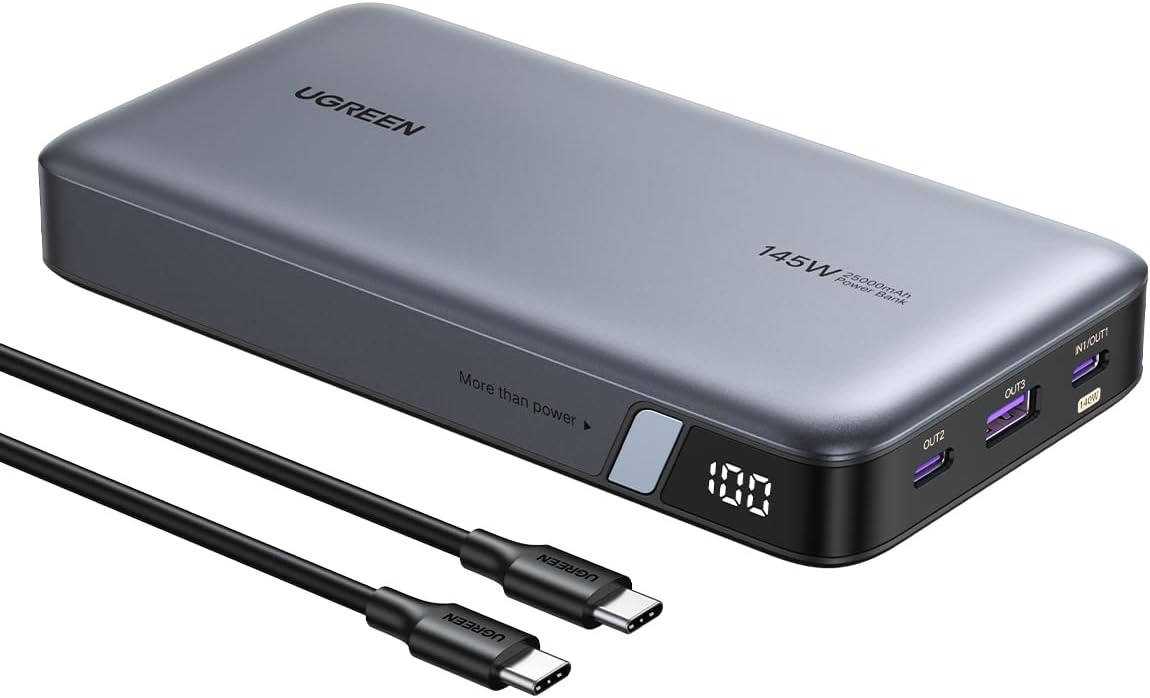
The UGREEN Nexode 145W is the best power bank for households where laptop charging speed is the top priority. Its 145 W single-port output is the highest in this roundup. That makes it the right pick for MacBook Pro users who need full-speed fast charging and want a lighter carry weight than the Anker Prime at a lower price.
What are the UGREEN Nexode's features?
The UGREEN Nexode focuses on maximum single-port output at a lower price point than the Anker Prime.
- Capacity: 25,000 mAh
- Max output: 145 W (USB-C port 1), 65 W (USB-C port 2)
- USB-A port: Yes
- Display: Digital charge indicator
- Weight: 1.1 to 1.2 lb
- Price range: $100 to $130
The 145 W single-port peak is the highest in this list and meaningfully faster for a MacBook Pro, which draws up to 140 W under active load. At 1 lb 1.8 oz, the UGREEN is also noticeably lighter than the Anker Prime for its capacity tier.
What are the pros and cons of the UGREEN Nexode 145W?
The UGREEN Nexode is the best single-port laptop charger in this list, though its dual-port performance drops compared to the Anker Prime when both USB-C ports are in use at the same time.
Pros:
- 145 W single-port output is the highest in this roundup and handles MacBook Pro fast charging at full rated speed
- Lower price than the Anker Prime for only slightly less total capacity
- Lighter at 1 lb 1.8 oz compared to approximately 1.6 lbs for the Anker Prime
- Digital display gives you clear charge level monitoring in the dark
Cons:
- The 145 W peak output is available primarily on a single USB-C port. When multiple devices charge simultaneously, the bank dynamically redistributes power across ports.
- 25,000 mAh is slightly below the Anker Prime's capacity, which matters when you're pushing for every last phone charge toward the end of a long blackout
3. Baseus Blade 100W 20,000 mAh
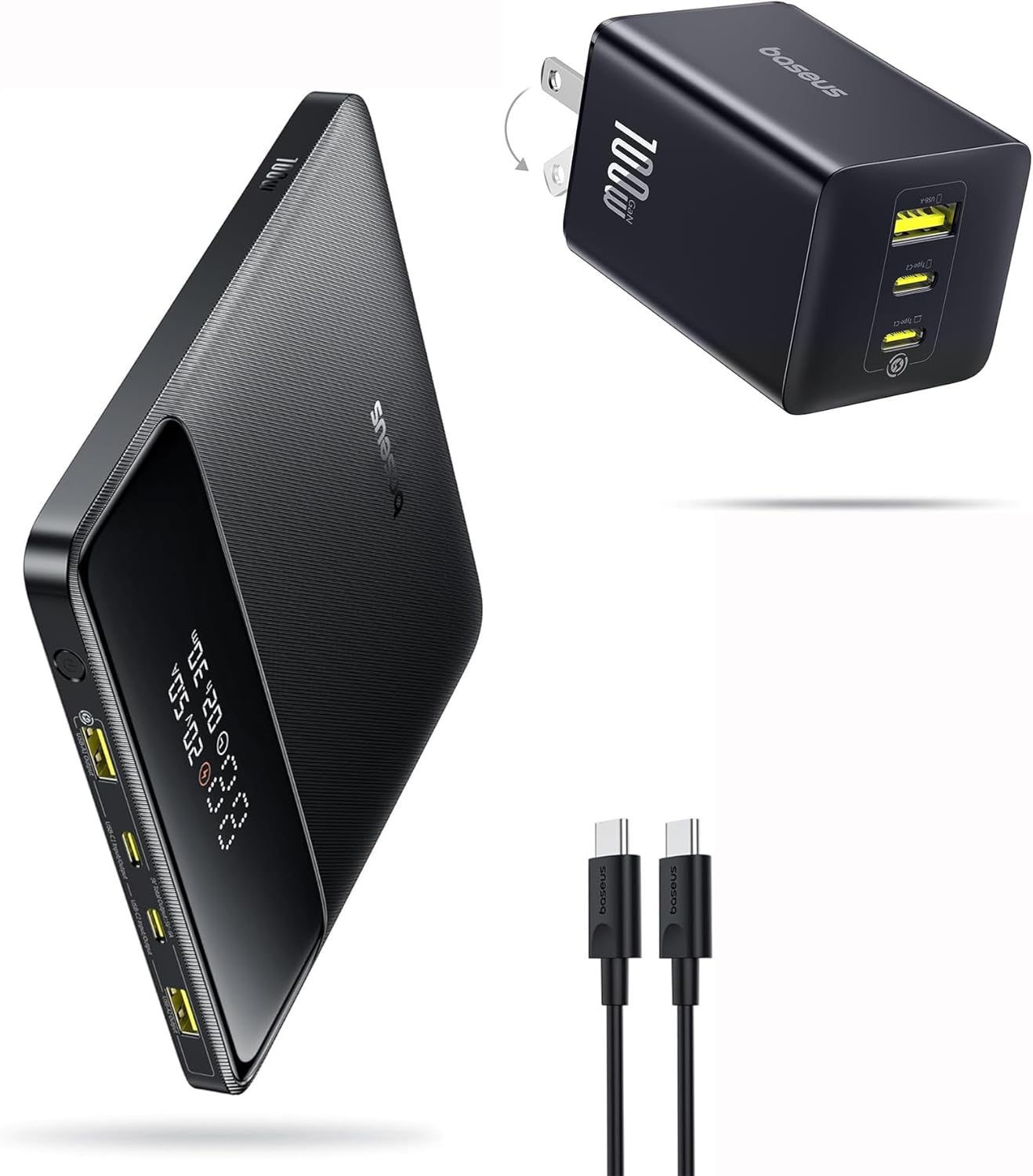
The Baseus Blade 100W is the best power bank in this list for households that need laptop-compatible wattage in a slim, easy-to-store form factor. At roughly 14 mm thick, it slides into a drawer or go-bag without the bulk of the higher-capacity options above. Its 100 W USB-C output handles most ultrabooks and thin laptops at an adequate charging speed.
What are the Baseus Blade's features?
The Baseus Blade trades raw capacity for the slimmest profile in this list while keeping enough output wattage for laptop use.
- Capacity: 20,000 mAh
- Max output: 100 W (USB-C)
- Ports: 2x USB-C, 2x USB-A
- Profile: Approximately 14 mm thick
- Weight: Approximately 15 oz
- Price range: $55 to $75
The slim design matters specifically for long-term storage readiness. A power bank that sits flat in a designated drawer is far more likely to be charged and available than one buried in a bag. The Baseus Blade's low profile makes it the easiest pick in this list to keep in a dedicated outage-ready spot.
What are the pros and cons of the Baseus Blade 100W?
The Baseus Blade is the right pick for slim storage with moderate laptop charging, though its 100 W ceiling is below the Anker Prime and UGREEN Nexode for power-hungry laptops.
Pros:
- 100 W output comfortably handles ultraportables like the Dell XPS 13, Lenovo Yoga, and MacBook Air at normal charging speeds
- Ultra-slim 14 mm profile stores easily in a kitchen drawer, nightstand, or emergency kit
- 20,000 mAh covers approximately 4 to 5 full phone charges plus a partial laptop charge
- Four ports allow simultaneous charging of multiple household devices
Cons:
- 100 W doesn't reach full fast-charging speed for a MacBook Pro, which needs 140 W under full load
- 20,000 mAh offers less total capacity than the three options above, which matters for households with multiple people over a multi-day outage
4. INIU B5 20,000 mAh
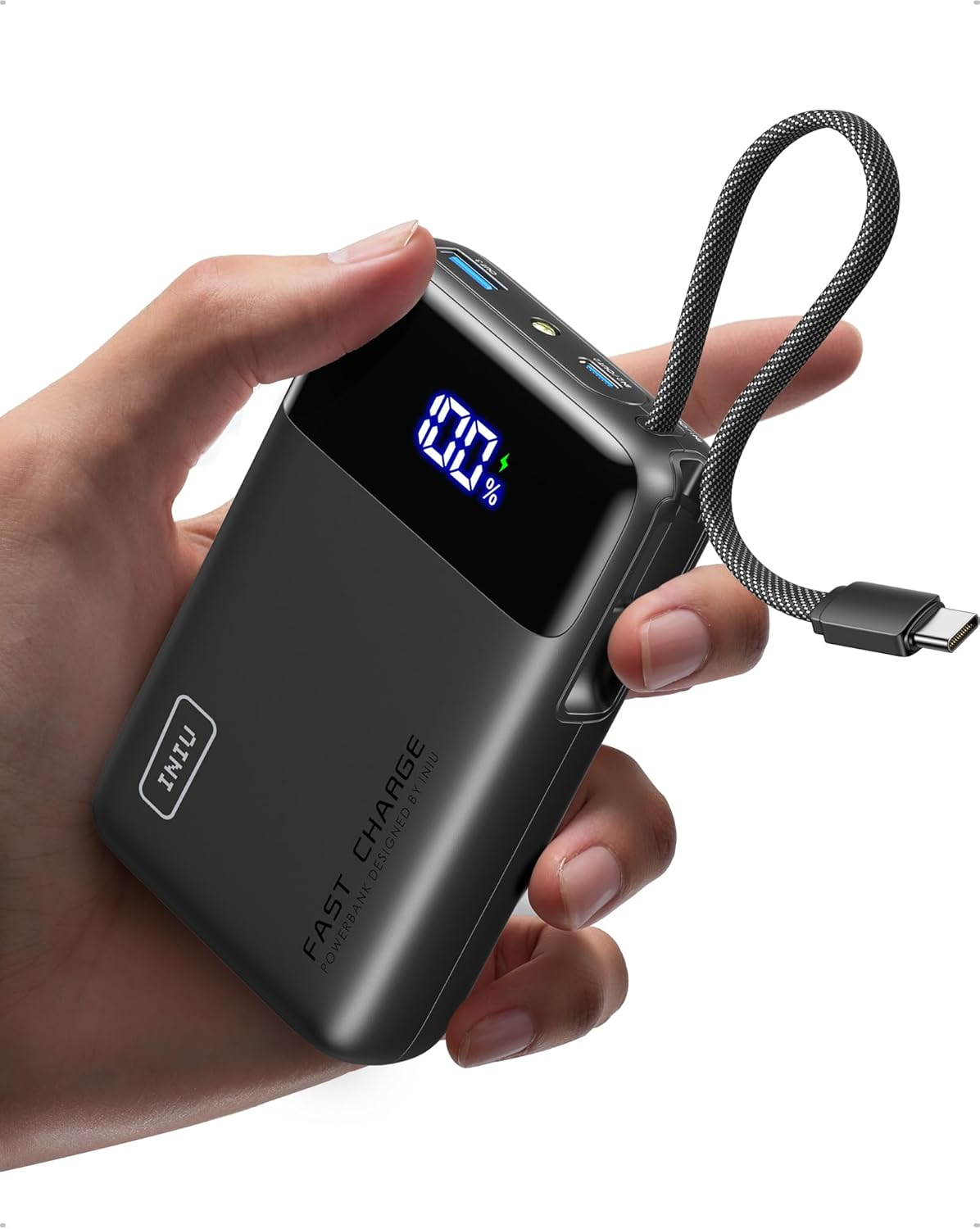
The INIU B5 is the most affordable pick in this list and the right choice for single-person households focused entirely on phone and tablet charging. At under $40, it delivers 20,000 mAh and a digital battery percentage display that makes it easier to ration device charging over a long blackout without guessing how much capacity you've got left.
What are the INIU B5's features?
The INIU B5 prioritizes affordability and usability for households where laptop charging isn't a requirement.
- Capacity: 20,000 mAh
- Max output: 22.5 W (USB-C)
- Ports: 1x USB-C, 2x USB-A
- Display: Digital battery percentage
- Additional features: Built-in flashlight and pass-through charging support on compatible versions.
- Weight: 12.2 oz
- Price range: $35 to $45
The digital display is the most useful feature at this price tier. Knowing you've got 34% remaining is meaningfully more useful than watching one of three LED bars blink out when you're rationing charge over a 24-hour outage.
What are the pros and cons of the INIU B5?
The INIU B5 is the right budget pick for phone-first households, but it isn't suitable for anyone who needs to charge a laptop during an outage.
Pros:
- Under $40 makes outage preparedness accessible without a significant purchase
- Digital percentage display shows exact remaining capacity for better charge rationing
- Built-in flashlight adds a secondary emergency utility
- 20,000 mAh delivers 4 to 5 full phone charges
- Pass-through charging lets the bank recharge from the wall while simultaneously charging a connected device
Cons:
- 22.5 W max output is far too low for modern laptops, which typically need 45 W to 140 W for meaningful charging speed
- Lower capacity than the top three picks in this list means fewer total charges before the power bank itself needs to be recharged
What should you look for in an emergency power bank?
The specs that matter for travel power banks aren't the same specs that matter for home outage use. Pay attention to capacity, output wattage, battery chemistry, and recharge speed.
How much capacity do you actually need for a multi-day outage?
Capacity in milliampere-hours determines how many device charges you get from a fully charged power bank. A modern iPhone 15 Pro has a battery of approximately 3,274 mAh. A MacBook Air M2 stores about 52.6 Wh of energy.
- 10,000 mAh: Approximately 2 phone charges or 0.3 MacBook Air charges. Best for a solo user during a short outage under 12 hours.
- 20,000 mAh: Approximately 4 phone charges or 0.6 MacBook Air charges. Best for one person with a laptop during a full-day outage.
- 26,000 to 27,650 mAh: Approximately 6 phone charges or 2 MacBook Air charges. Best for a small household during a multi-day outage.
One practical note: mAh capacity doesn't convert directly to device charges because of voltage conversion losses at the USB output stage. Expect roughly 70 to 75% of rated capacity to actually reach connected devices.
A 26,800 mAh bank stores around 99 Wh at 3.7 V, but USB-C delivery at 5 V to 20 V incurs the conversion losses built into every lithium-ion battery pack. Airline safety regulations cap most carry-on power banks at 100 Wh, which is why many premium models cluster around the 26,000 to 27,650 mAh range.
For households with more than one person, or outages that extend past 24 hours, 20,000 mAh is the practical floor. The 26,000 to 27,650 mAh picks are the right choice when you don't know when power will return.
Does output wattage matter if you need to charge a laptop?
Output wattage is the single most important spec for laptop users. A power bank with 18 W or 22.5 W output will charge a modern laptop at negligible speed or fail to keep pace with the laptop's power draw under active use.
The three wattage thresholds that matter for emergency use:
- Under 30 W: Phones and tablets only. Most laptops draw power faster than the bank can supply under active use.
- 45 W to 65 W: Acceptable charging speed for a MacBook Air, Dell XPS 13, and most thin ultrabooks.
- 100 W to 145 W: Fast charging for nearly any ultraportable or professional laptop, including larger MacBook Pro models that can accept up to 140 W under peak fast-charge conditions.
The Anker Prime, UGREEN Nexode, and Baseus Blade all deliver 100 W or more and are the only picks in this list suitable for laptop-dependent households.
Why does recharge speed matter during a cycling blackout?
Fast recharge time determines whether your power bank can capture energy during brief grid restoration windows. During Hurricane Milton in October 2024, PowerOutage.us tracked brief restoration periods of 30 minutes or less before repeat failures across Florida. A power bank that needs 6 to 7 hours to fully recharge can't take advantage of those windows.
Fast recharge comparison for the picks in this list:
- Anker Prime 27,650 mAh: 1.5 hours
- UGREEN Nexode 145W 25,000 mAh: 1.5 to 2 hours
- Baseus Blade 100W 20,000 mAh: 2 to 2.5 hours
- INIU B5 20,000 mAh: 5 to 6 hours
For households in hurricane-prone regions with a history of cycling grid failures, the Anker Prime and UGREEN Nexode's fast recharge time is worth the premium. See our hurricane power outage guide for broader preparation steps for coastal outage scenarios.
Ready.gov lists a charged power bank as a standard part of its home emergency kit recommendation, specifically noting that smartphones are the primary channel for receiving emergency alerts during a disaster.
How long will a power bank last during a power outage?
A 26,800 mAh bank running a laptop alongside two phones will exhaust itself in roughly 5 to 7 hours. Used only for conservative phone charging, the same bank can last 2 to 3 days. Runtime depends on which devices you charge and how actively you use them.
- Laptop only (65 W draw): 1 to 1.2 hours
- Laptop (65 W) + 2 phones (30 W combined): 45 to 55 minutes
- 3 phones only (45 W combined): 1.5 to 2 hours
- Phone, tablet, and router (60 W total): 1 to 1.4 hours
These estimates assume roughly 70 to 75% usable efficiency after voltage conversion losses. Actual runtime varies by screen brightness, processor load, battery age, and charging behavior.
According to the EIA, U.S. electricity customers averaged 11 hours without power in 2024, nearly double the annual average from the prior decade. Hurricanes Beryl, Helene, and Milton alone accounted for 80% of those outage hours.
When Hurricane Helene hit in September 2024, PowerOutage.us tracked 4.79 million customers without power across 10 states. Western North Carolina's mountain counties saw more than 14 days without power restoration in the hardest-hit areas.
A 26,800 mAh power bank covers the first 1 to 2 days of device charging, while longer-term backup options like a portable generator or home battery system become the real solution for extended events.
Winter Storm Fern in January 2026 left more than 1,005,641 customers without power at peak. Nashville-area neighborhoods in some zones went 6 or more days without restoration. A fully charged 27,650 mAh power bank in that scenario means keeping a phone and laptop alive through the first critical 48 hours while waiting for grid restoration updates. For winter storm outage preparation beyond what a power bank can cover, a portable power station or generator is the right next step.
Power bank vs. portable power station: Which do you actually need?
Portable power banks charge phones and laptops, while power stations have more power and flexibility to charge more appliances.
Power banks output through USB-C and USB-A ports. They charge phones, laptops, tablets, and small USB accessories. They don't have AC outlets and can't power appliances like a full-size refrigerator, a standard CPAP machine, a window air conditioner, or an electric kettle.
Portable power stations (like the EcoFlow DELTA, Jackery Explorer series, and Bluetti AC series) are significantly larger, heavier, and more expensive. They carry full AC outlets and can run a mini fridge for 8 to 12 hours, power a CPAP overnight, or operate a fan throughout a summer blackout.
Think about it this way:
- Power bank is sufficient: You mainly need to keep phones, a laptop, and a tablet charged. No appliances. Outage expected under 12 to 24 hours, or you already have a longer-term solution.
- Portable power station makes sense: You need to run a refrigerator, CPAP, fan, or window air conditioner. You live in a region with frequent multi-day outages. You have medical devices requiring AC power.
- Both: Use a power bank for immediate device charging and a portable power station for appliances. This is a reasonable combination for households in high-outage-risk regions.
Home battery backups are even beyond portable power stations. These can power an entire home for a day or just essential circuits for longer.
Quick recap
The Anker Prime 27,650 mAh is the best power bank for power outages for most households, with 140 W laptop output and a 1.5-hour recharge time. The UGREEN Nexode 145W is the top choice for maximum laptop charging speed.