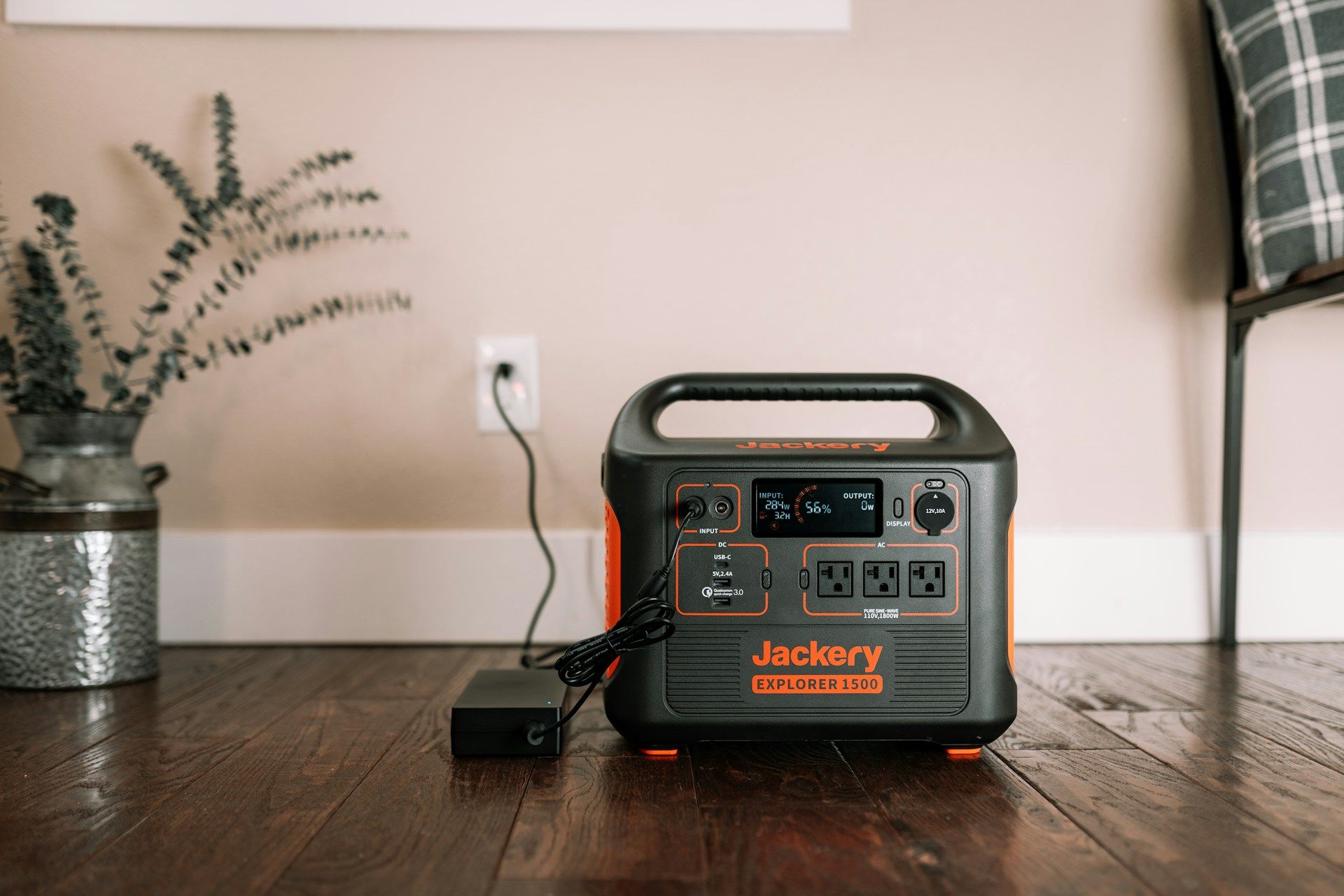


PowerOutage.us tracks more than 950 utilities serving over 200 million customers, so we consider outage types when making recommendations. Medical electrical equipment certification, not just capacity, drives every pick in this UPS battery backup guide.
How we ranked these UPS battery backups
We built this ranking from manufacturer specs, aggregated owner reviews, and the following categories.
- Certification: We only considered units carrying UL 60601-1 certification for patient-care vicinities, since that's the trait that separates this roundup from a general consumer UPS list.
- Capacity and outlet count: We ranked capacity and battery-backed outlet count next, because a household running more than one device needs both the power and the plugs to cover them.
- Runtime at full load: We weighted runtime after capacity, since two units with the same VA rating can still differ in how long they carry a full load.
- Price and reported reliability: We weighted price and owner-reported reliability last, after the certification and capacity specs.
We found the review volume across this entire category is thin. These are niche medical-grade products sold mostly through B2B and medical resellers, not mainstream Amazon bestsellers, so you won't see the thousands of reviews a consumer UPS accumulates.
One more note on sourcing: Tripp Lite publishes a specific leakage-current spec (under 100 µA) for the SMART2500XLHG. CyberPower doesn't publish an equivalent number for the M-series beyond "built-in isolation transformer to minimize leakage current," so we're reporting what each manufacturer actually discloses rather than filling the gap with an invented figure.
Compare medical-grade UPS battery backups
These medical-grade UPS backups vary widely in price, from about $450 for the smallest CyberPower unit to $2,335 for the Tripp Lite pick, so weigh that against how many devices you're actually covering before jumping to the highest capacity.
| UPS battery backup | Capacity | Battery-backed outlets | Runtime at full load | Price |
|---|---|---|---|---|
| CyberPower M550L | 550 Volt-Amperes/440 Watts | 4 | About 8 minutes | $450 to $500 |
| CyberPower M750L | 750 VA/600 W | 6 | About 12 minutes | $660 to $800 |
| CyberPower M1100XL | 1,100 VA/880 W | 6 | About 10 minutes | $780 to $880 |
| Tripp Lite SMART2500XLHG | 2,200 VA/1,920 W | 8 | About 4.4 minutes | $2,335 |
All 4 units here carry UL 60601-1 certification for use in patient-care vicinities, with hospital-grade outlets and a built-in isolation transformer that limits leakage current. However, they aren’t rated for critical care or life support.
If you're backing up a ventilator, a dialysis machine, an infusion pump, or any device where a power gap could be life-threatening, confirm your backup plan with your durable medical equipment provider or clinician, not just against a certification label.
4 Best medical-grade UPS battery backups for home use
Four certified units cover the range from a single bedside device to a multi-device home or small-clinic setup, ranked by capacity, low to high.
1. CyberPower M550L
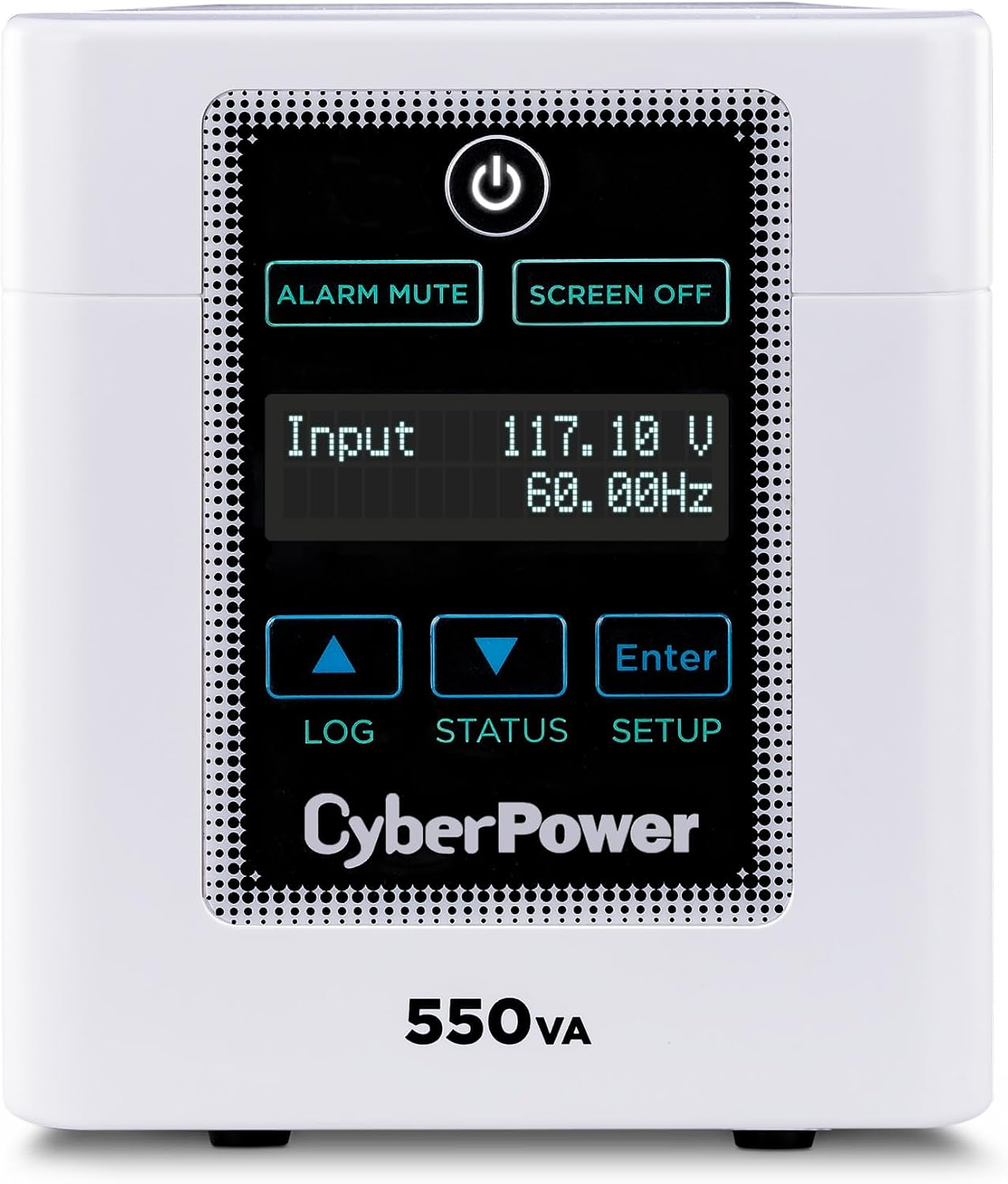
The CyberPower M550L pairs UL 60601-1 certification with a 440 W ceiling, the smallest capacity in this roundup, and the right fit for exactly one bedside device.
If you're covering one motor-based device, like a CPAP or a nebulizer, and nothing else is competing for the same battery, you'll get the most out of the M550L's 4 hospital-grade outlets. The built-in isolation transformer limits leakage current the same way it does across the rest of the line, so the real question for this unit is just whether one device is really all you're protecting.
- 550 VA/440 W capacity
- UL 60601-1 certified, hospital-grade NEMA 5-15R-HG outlets
- Built-in isolation transformer, not rated for critical care or life support
- 4 total outlets, all 4 battery-backed
- $450 to $500
Pros
- Lowest price in the certified line
- Hospital-grade outlets on every plug
- 3-year warranty covers the battery, plus a $400,000 Connected Equipment Guarantee
Cons
- 440 W ceiling limits it to one device
- Amazon review volume is thin, in the single digits to low teens
Should you buy the CyberPower M550L?
You should buy the M550L if you're protecting exactly one bedside medical device and want UL 60601-1 certification without paying for capacity you don't need. You should pass on it if you're running two or more devices, since the M750L covers that job with 6 outlets instead of 4.
2. CyberPower M750L
The CyberPower M750L steps up to a 600 W ceiling and 6 hospital-grade outlets.
If your household runs a CPAP plus a second lower-draw device, like a monitoring tablet or a small nebulizer, the M750L's capacity and outlet count fit better than the entry unit in this line. The extra 2 outlets matter more than the modest capacity jump for most buyers, since it's the plug count that actually decides how many devices get protected power.
- 750 VA/600 W capacity
- UL 60601-1 certified, hospital-grade NEMA 5-15R-HG outlets
- Built-in isolation transformer, not rated for critical care or life support
- 6 total outlets, all 6 battery-backed
- $660 to $800 (MSRP $799.95)
Pros
- 6 hospital-grade outlets, the most in the CyberPower medical line, relative to its price
- 3-year warranty covers the battery, plus a $400,000 Connected Equipment Guarantee
- Runtime headroom over the M550L at a similar footprint
Cons
- Price gap over a similarly-rated consumer UPS is real, and buyers are paying for certification, not raw wattage
- Same low Amazon review volume as the rest of the line
Should you buy the CyberPower M750L?
You should buy the M750L if you're covering two home medical devices and want every outlet to be hospital-grade and certified. You should pass on it if you only need one device covered, since the M550L does that job for less.
3. CyberPower M1100XL
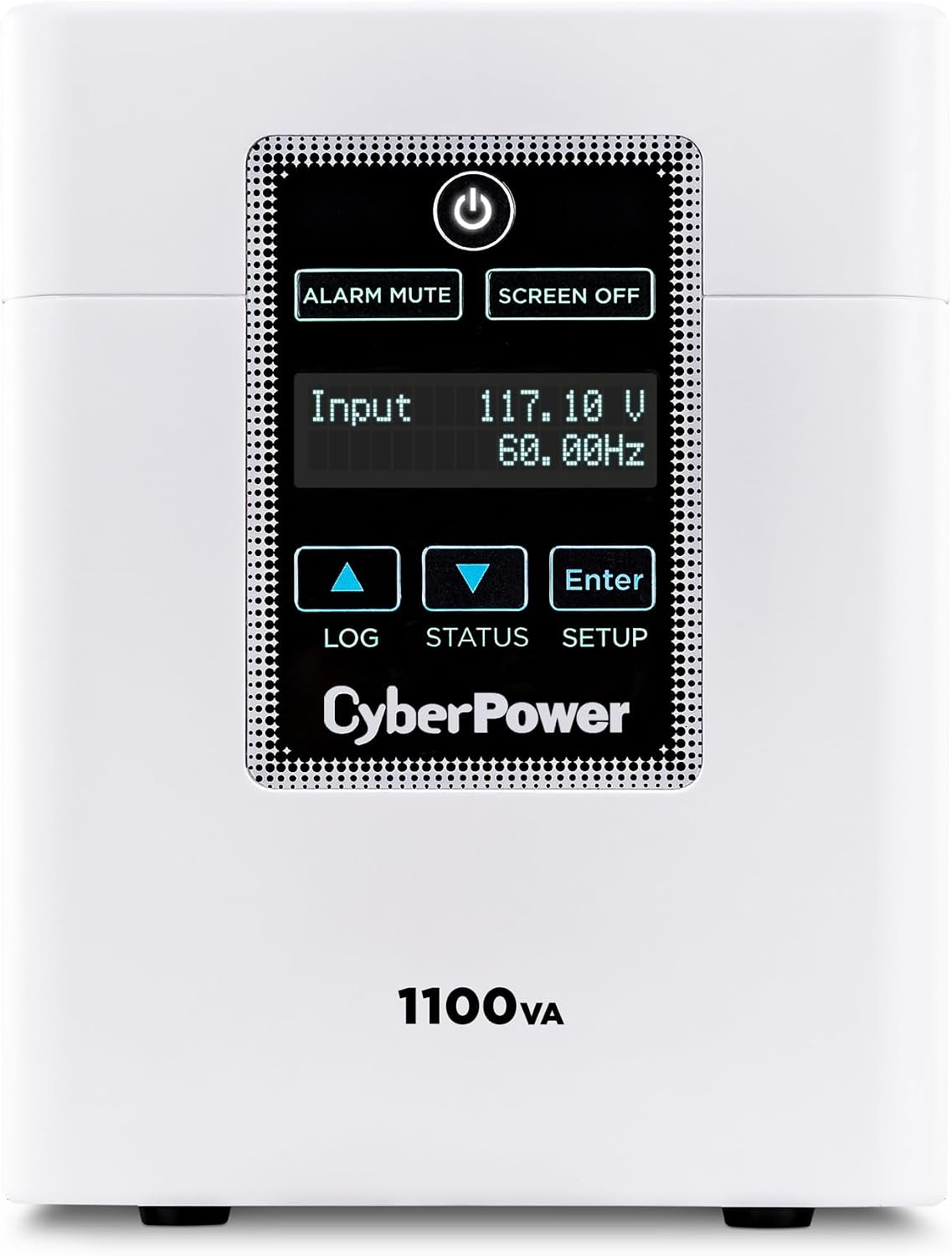
The CyberPower M1100XL tops out the CyberPower medical line at 880 W, enough headroom for a CPAP running alongside a second device.
Home-care setups running two demanding devices, or one demanding device plus a couple of lower-draw accessories, would appreciate the M1100XL's 880 W ceiling and 6 outlets. Published runtime figures show 25 minutes at half load and 10 minutes at full load, so if you're running close to the ceiling, plan for the shorter end of that range.
- 1,100 VA/880 W capacity
- UL 60601-1 certified, hospital-grade NEMA 5-15R-HG outlets
- Built-in isolation transformer, not rated for critical care or life support
- 6 total outlets, all 6 battery-backed
- Runtime: about 25 minutes at half load, about 10 minutes at full load
- $780 to $880
Pros
- Highest capacity in the CyberPower medical line
- 6 hospital-grade outlets matched to the M750L, with more headroom per outlet
- 3-year warranty covers the battery, plus a $400,000 Connected Equipment Guarantee
Cons
- Bulkier and heavier than the M550L and M750L, a tradeoff of the isolation transformer that makes it hospital-grade
- Same low Amazon review volume as the rest of the line
Should you buy the CyberPower M1100XL?
You should buy the M1100XL if you're running two demanding home medical devices and want the most capacity the CyberPower medical line offers. You should pass on it if a single small device is all you're covering, since the M550L or M750L cover that at a lower price.
4. Tripp Lite SMART2500XLHG
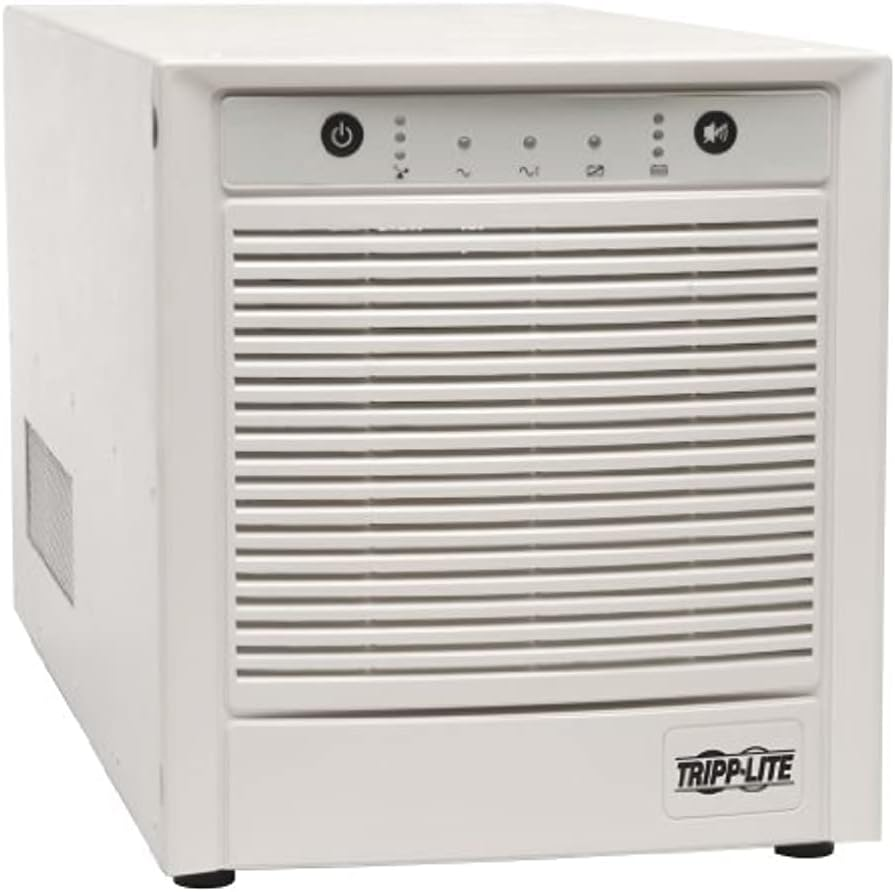
The Tripp Lite SMART2500XLHG provides 1,920 W and 8 outlets, more than double the capacity of any CyberPower unit in this roundup.
If your household or small clinic runs several devices at once, including lab or diagnostic equipment with a C13 power cord, this is the unit built for that job. Its isolation transformer includes a Faraday shield and holds leakage current under 100 µA, a more specific published spec than the CyberPower line states, and its AVR corrects a wide 81V to 143V range back to nominal 120V without ever switching to battery.
- 2,200 VA/1,920 W capacity
- UL 60601-1 3rd edition compliant, isolation transformer with Faraday shield, leakage current under 100 µA
- 8 total outlets, all battery-backed: 4 NEMA 5-15/20R + 4 IEC C13
- Runtime: 13 minutes at half load (960 W), 4.4 minutes at full load (1,920 W), expandable with external battery packs
- $2,335
Pros
- Highest capacity and outlet count in this roundup by a wide margin
- Mixed outlet types cover lab and diagnostic equipment, not just standard household plugs
- Runtime is expandable with external battery packs for longer coverage
Cons
- Highest price in this roundup by a wide margin
- Full-load runtime is short at 4.4 minutes, so it's built to bridge a brief gap, not run a full load for long
Should you buy the Tripp Lite SMART2500XLHG?
You should buy the SMART2500XLHG if your household or small clinic runs several devices at once, some with C13 power cords, and the price fits your budget. You should pass on it if you only need to cover one or two standard bedside devices, since any CyberPower M-series unit does that job for a fraction of the price.
What happens to medical equipment during a power outage?
A power outage knocks medical equipment off grid power the instant it hits, and the events PowerOutage.us tracks show how fast that gap turns dangerous.
Hurricane Ida cut power to more than 1 million Louisiana customers in August 2021, and the outage left some residents trying to run oxygen equipment off a car battery. Certified backup power exists, so no one has to make that choice mid-outage.
Winter Storm Uri knocked out power to 4.4 million Texas customers in February 2021 as the state's grid neared total collapse, contributing to 246 deaths. A grid failure of that size is the scenario a certified medical-grade UPS is sized for.
Choose a medical-grade UPS battery backup for your home
Choosing the right medical-grade UPS comes down to matching certification, capacity, and outlet count to your actual devices, and not assuming "medical grade" covers any device you own.
- Confirm your device isn't critical-care or life-support equipment before relying on any unit in this roundup, since none of them are rated for that.
- Check the device's running-watts spec, usually printed on a label near the power cord, and match it against the unit's rated capacity.
- Size outlet count to how many devices need protected power at the same time, not just the one you're thinking of first.
- For any life-sustaining equipment, confirm the backup power plan with your durable medical equipment (DME) provider or clinician.
- Confirm the manufacturer's power requirements for your specific device before you buy, since the same category of equipment can vary by model.