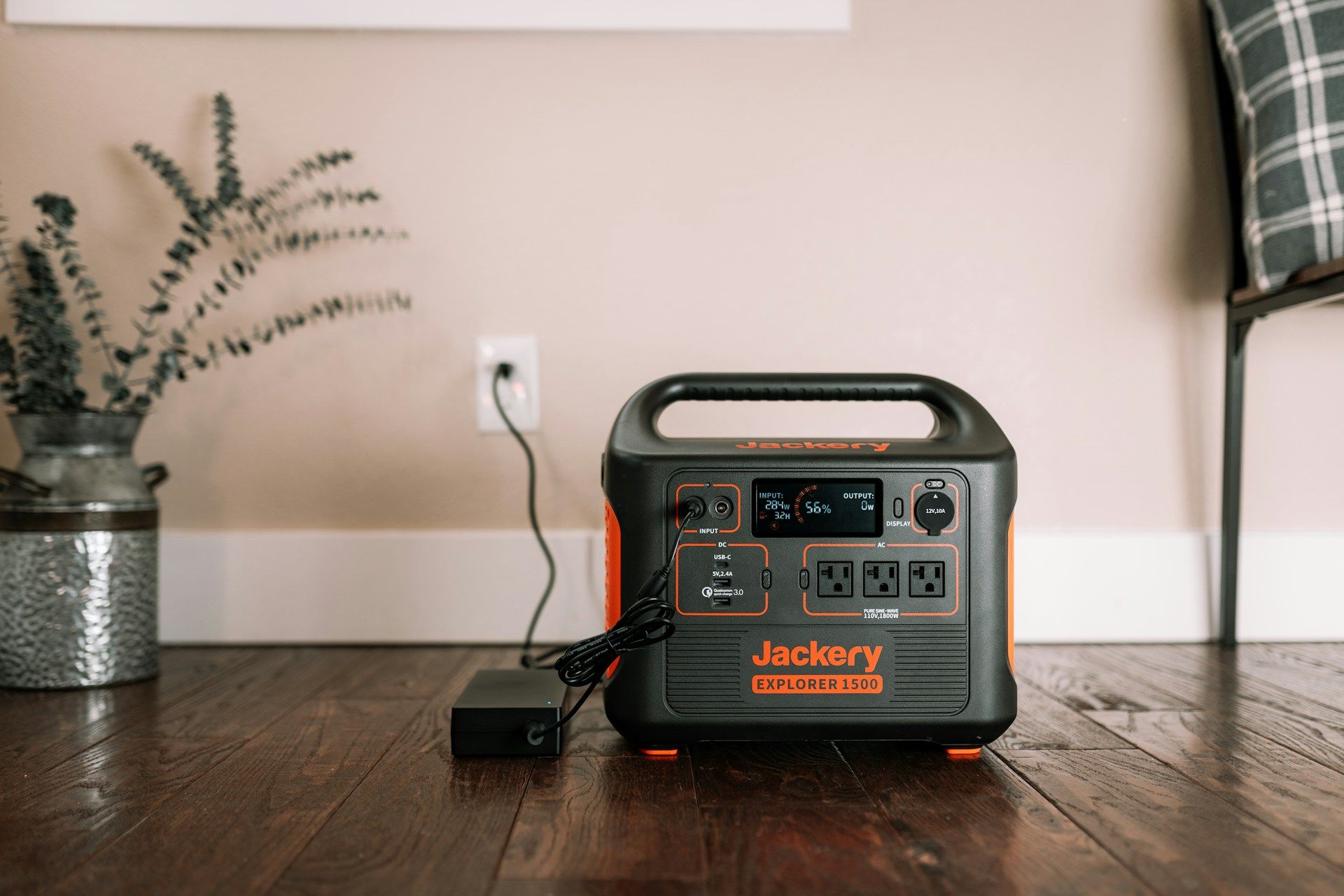


If you're one of the 29.5 million Americans with obstructive sleep apnea, missing a night of CPAP therapy is more than an inconvenience. Research published in PMC links untreated OSA to a six fold increased risk of requiring congestive heart failure treatment and roughly 810,000 motor vehicle crashes per year. This guide covers five battery backup options from 768 Wh to 2,042 Wh, with runtime estimates for humidified and non-humidified use.
At PowerOutage.us, we track over 950 utilities covering more than 200 million U.S. electricity customers, with outage data that refreshes every 10 minutes during live events. According to the EIA, U.S. customers averaged 11 hours without power in 2024, nearly twice the prior decade's annual average. So sizing your CPAP battery backup correctly actually matters.
5 best CPAP battery backups for power outages
Finding the right CPAP battery backup means matching capacity and output to your machine's actual power draw. We looked at each unit on three criteria specific to CPAP use: pure sine wave AC output, watt hour capacity for overnight runtime, and quiet enough operation to actually use in a bedroom.
1. Jackery Explorer 1000 v2
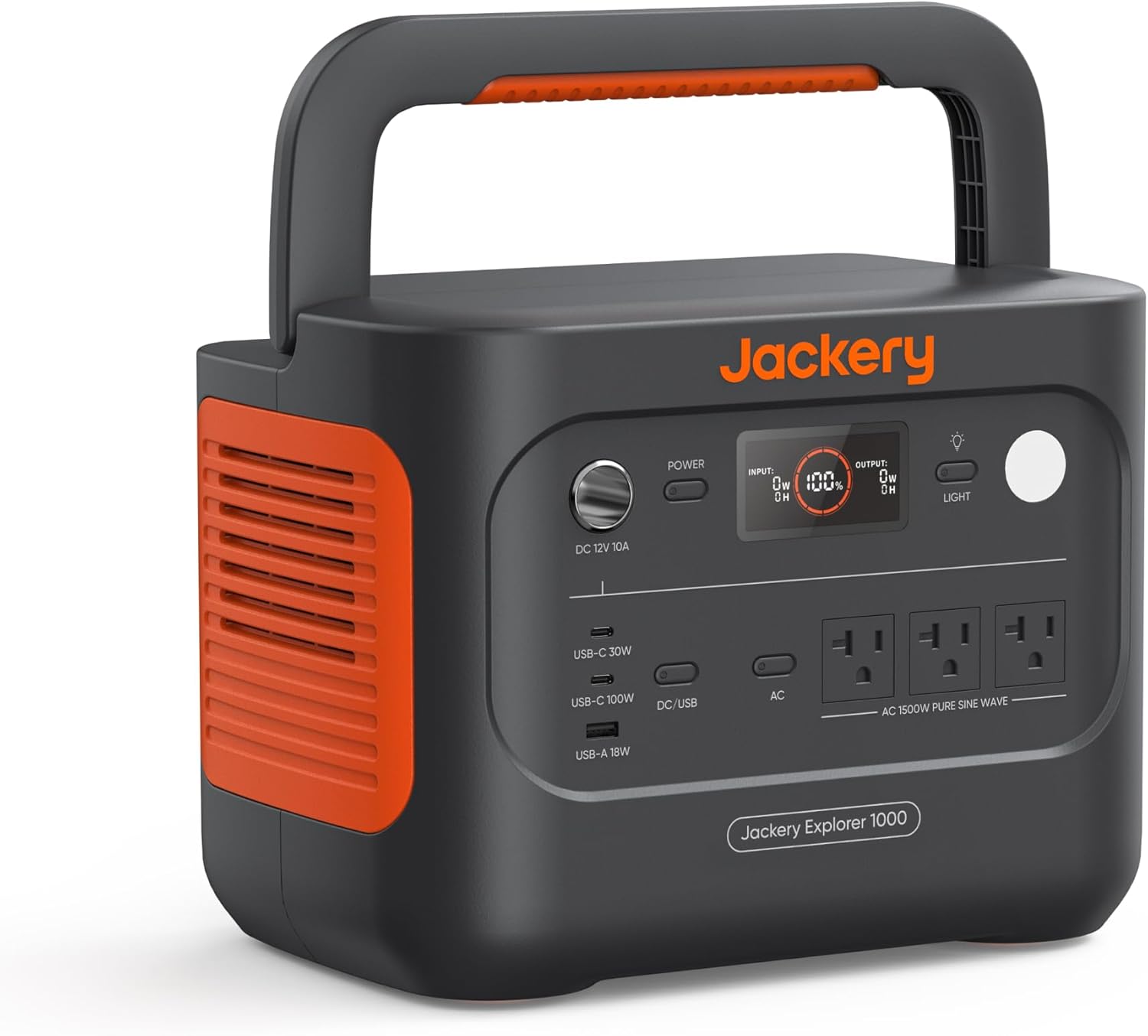
The Jackery Explorer 1000 v2 is the strongest all around pick for CPAP users who need reliable overnight therapy at home or on the road. It has 1,070 Wh of LFP capacity and a 23.8 lb chassis that one person can move between rooms without much effort.
What do you get with the Jackery Explorer 1000 v2?
The Explorer 1000 v2 delivers CPAP ready performance in a pretty compact package, and it has the fastest recharge in its capacity class.
- Battery: 1,070 Wh LFP, rated 4,000+ charge cycles
- Continuous AC output: 1,500 W (pure sine wave)
- DC car port: 12 V / 10 A for DC converter cable connection
- USB-C: 2x 100 W (power delivery)
- AC outlets: 3x standard 110 V
- Weight: 23.8 lbs
- Recharge time: Under 1 hour (Emergency Super Charge)
- UPS mode: Under 20 ms transfer time
- Price range: $400 to $500
Jackery Explorer 1000 v2 pros and cons
The Explorer 1000 v2 earns its top spot because it's the only unit in this list that's genuinely strong on runtime, portability, and recharge speed all at once.
Pros
- 1,070 Wh runs a 30 W CPAP without a humidifier for roughly 30 hours via DC cable, covering about 3 to 4 nights
- 23.8 lbs is light enough to carry between rooms or toss in a car without help
- Emergency Super Charge refills it in under 1 hour, the fastest full recharge in this capacity class
Cons
- The 1,500 W continuous output starts to get close to its ceiling if you run a heated humidifier alongside two or more other devices at once
- At 1,070 Wh, it exceeds the 160 Wh FAA carry-on limit and isn't an option for commercial flights
Should you buy the Jackery Explorer 1000 v2?
The Jackery Explorer 1000 v2 is the right buy for most CPAP users because it pairs 1,070 Wh of LFP capacity with a 23.8 lb chassis and the fastest recharge in its class. If you're choosing one battery backup to cover overnight therapy at home and the occasional trip, this is the pick that does the most without making you compromise on portability or runtime.
Buy it if:
- You want one unit that covers 3 to 4 nights of CPAP use without a humidifier on a single charge
- You need a battery light enough to move between bedrooms or pack in a car
- You want the fastest full recharge in this capacity class so you're ready again after a brief restoration window
Skip it if:
- You're flying with your CPAP, since 1,070 Wh exceeds the 160 Wh FAA carry-on limit. A dedicated travel battery like the ResMed Power Station II fits the rules
- You need multi-day, humidifier-on coverage without recharging. The Jackery Explorer 2000 Plus has the capacity for that
- You're on a tighter budget and only need short outages covered. The EcoFlow RIVER 2 Pro or Bluetti AC70 cost less
2. EcoFlow RIVER 2 Pro
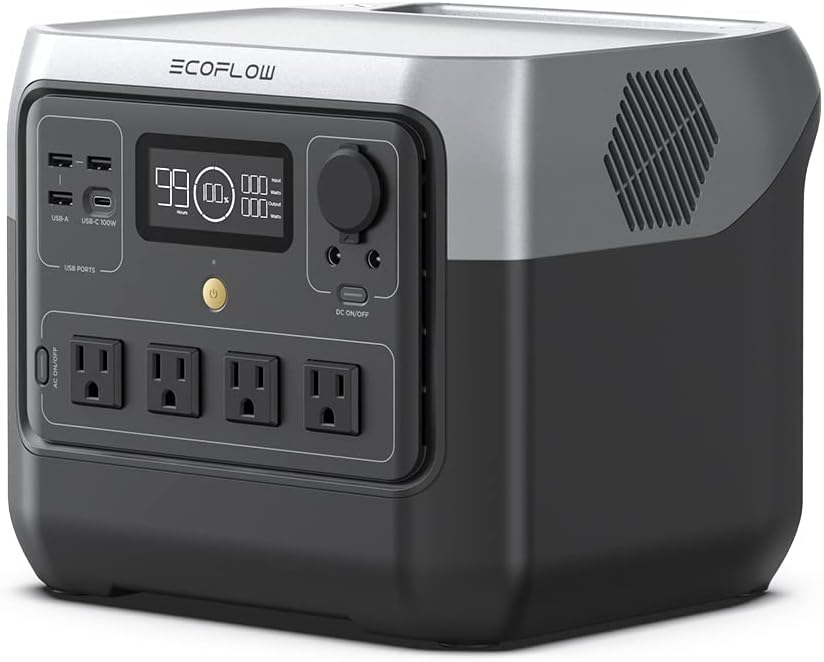
The EcoFlow RIVER 2 Pro is the lightest and fastest recharging unit in this list. It's 17.4 lbs and tops off in 70 minutes, which makes it the best pick for CPAP users who deal with frequent, shorter outages or who want backup for car camping and road trips.
What do you get with the EcoFlow RIVER 2 Pro?
The RIVER 2 Pro trades raw capacity for weight and recharge speed, and that trade off works well for shorter outages and mobile use.
- Battery: 768 Wh LFP
- Continuous AC output: 800 W (EcoFlow X-Boost extends effective output to 1,600 W for compatible appliances)
- Weight: 17.4 lbs
- Recharge time: 70 minutes (full charge, wall outlet)
- USB-C: 100 W output
- Price range: $300 to $400
EcoFlow RIVER 2 Pro pros and cons
The RIVER 2 Pro wins on power station portability and recharge speed. But 768 Wh is the practical floor for multi-night CPAP use without a DC cable.
Pros
- 17.4 lbs is the lightest unit in this list and fits in a large tote bag
- 70 minute full recharge lets you top off during a brief grid restoration window
- 768 Wh covers roughly two to three nights of 30 W CPAP use without a humidifier, via DC cable
- Compact form factor sits comfortably on a nightstand
Cons
- 800 W rated AC output means running the CPAP with a heated humidifier alongside other appliances can push the inverter limit
- 768 Wh isn't enough for CPAP users with high pressure prescriptions running a humidifier for more than one night per charge
Should you buy the EcoFlow RIVER 2 Pro?
The EcoFlow RIVER 2 Pro is the right buy for CPAP users who travel often, because its 17.4 lb frame and 70 minute recharge fit a bag, a car trunk, or a hotel outlet better than any other pick here. For frequent short outages or road trips, it's the lightest way to keep therapy running.
Buy it if:
- You travel with your CPAP and want the lightest unit in this list at 17.4 lbs
- Your outages tend to run two to three nights or less and you're using a DC cable without the humidifier
- You want a fast 70 minute recharge to top off during a brief restoration window
Skip it if:
- You run a heated humidifier most nights. The 800 W AC output and 768 Wh capacity hit their ceiling fast here, so the Bluetti AC70's 1,000 W output or the Jackery Explorer 1000 v2's larger capacity fits better
- You need multi-night coverage on a single charge. The Jackery Explorer 1000 v2 or EcoFlow DELTA 3 Plus covers more nights
- You want live watt monitoring from an app. The Bluetti AC70 adds that feature at a similar capacity
3. Bluetti AC70
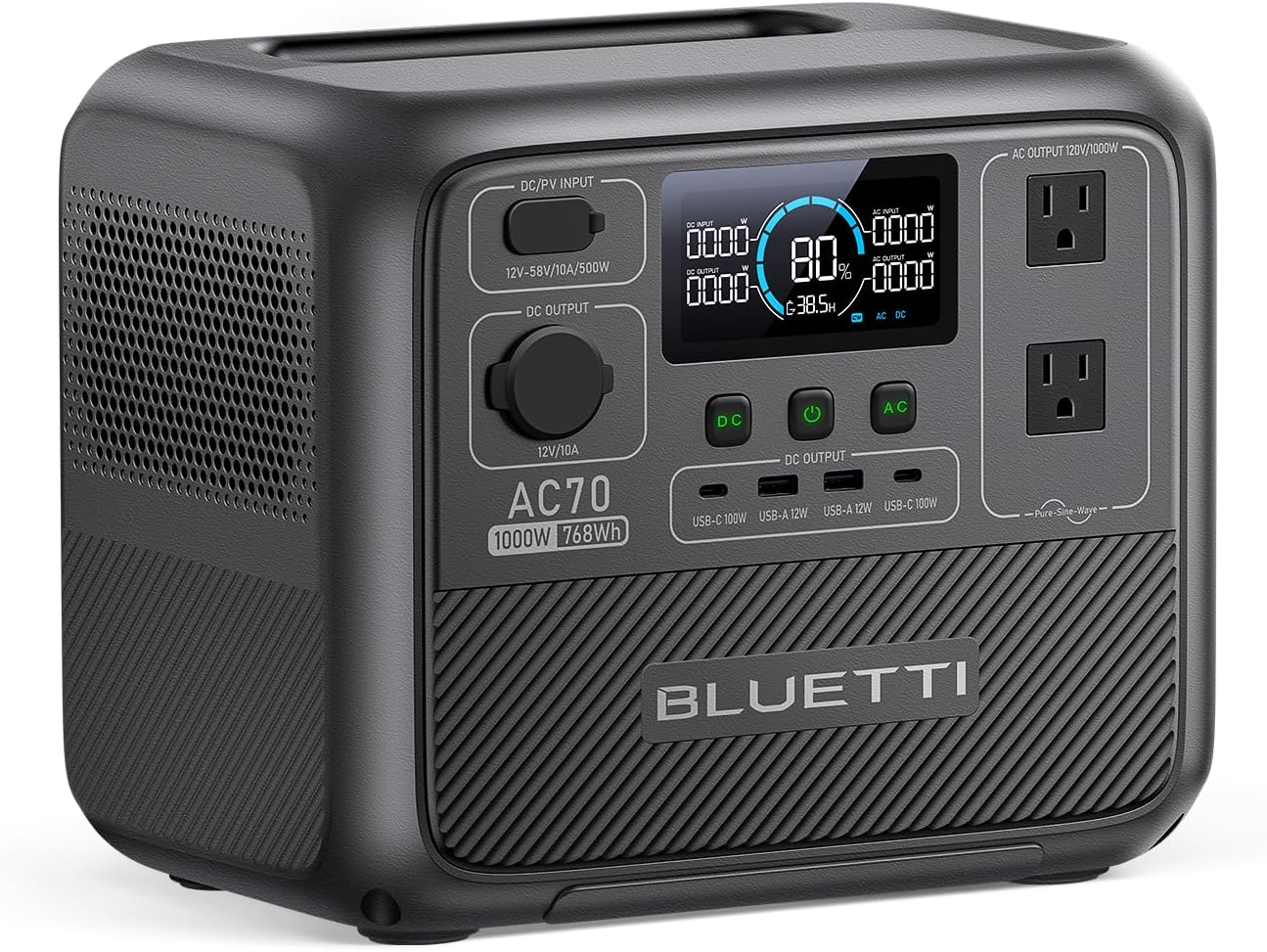
The Bluetti AC70 has 768 Wh of LFP capacity with Bluetooth app monitoring for $400 to $500, which makes it the most feature rich option at the budget end.
What do you get with the Bluetti AC70?
The AC70 adds app connectivity and a bit more output to a 768 Wh LFP platform.
- Battery: 768 Wh LFP
- Continuous AC output: 1,000 W (2,000 W surge lifting for brief peaks)
- App control: Bluetooth via Bluetti app (live watt draw and runtime estimate)
- Recharge time: 45 minutes to 80% (wall outlet)
- UPS mode: Under 20 ms transfer
- Price range: $400 to $500
The Bluetti app's live watt monitoring is useful for CPAP users beyond just general battery management. Say your CPAP is drawing 60 W instead of the expected 30 W, the humidifier is still on, or the pressure setting has changed. Catching that in the app lets you turn the humidifier off and recover runtime before the battery dies at 2 a.m.
Bluetti AC70 pros and cons
The AC70 has the best monitoring experience at the budget power station price point, though its 768 Wh capacity hits the same ceiling as the EcoFlow RIVER 2 Pro for total runtime.
Pros
- Bluetooth app shows live watt draw and runtime projection in real time from any room
- 1,000 W continuous output leaves headroom for a bedside lamp and phone charge alongside the CPAP
- 2,000 W surge lifting handles brief motor starts from small appliances without shutting the unit down
- 45 minutes to 80% is among the fastest partial charges in this capacity tier
Cons
- 768 Wh capacity shares the same multi-night ceiling as the EcoFlow RIVER 2 Pro
- The AC70 supports solar charging input, though it doesn't offer the same large scale battery expansion ecosystem as higher end systems
Should you buy the Bluetti AC70?
The Bluetti AC70 is the right buy for budget minded CPAP users who want app monitoring, because its 768 Wh capacity and Bluetooth app cost $400 to $500 while showing live watt draw from any room. That live data helps you catch a humidifier left on or a pressure change before the battery runs out overnight.
Buy it if:
- You want to track your CPAP's live power draw from an app so you can catch a humidifier left on
- You're on a budget and still want 1,000 W of continuous output with headroom for a lamp or phone charger
- You want one of the fastest partial recharges in this capacity tier, at 45 minutes to 80%
Skip it if:
- You need more than two to three nights of runtime per charge. The Jackery Explorer 1000 v2 or EcoFlow DELTA 3 Plus has more capacity
- You want the lightest possible travel unit. The EcoFlow RIVER 2 Pro weighs less
- You're planning to expand your battery system over time. The EcoFlow DELTA 3 Plus or Jackery Explorer 2000 Plus offer larger expansion ecosystems
4. EcoFlow DELTA 3 Plus
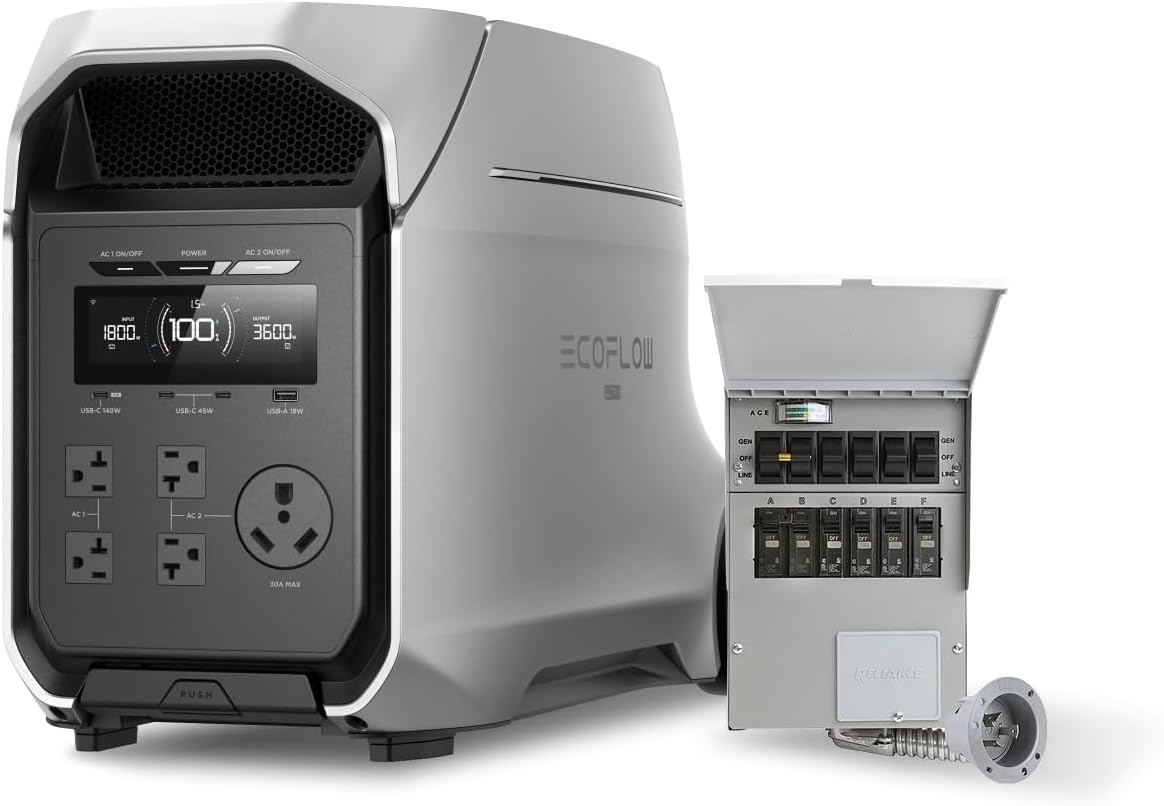
The EcoFlow DELTA 3 Plus starts at 1,024 Wh and expands to 5 kWh with add on battery packs. It's the most scalable option in this list for CPAP users who want one unit capable of covering multi-day outages without replacing it.
What do you get with the EcoFlow DELTA 3 Plus?
The DELTA 3 Plus combines expandable capacity and a 10 ms UPS mode, and it's the only unit in this list that offers both.
- Battery: 1,024 Wh LFP, expandable to 5 kWh via EcoFlow add-on packs
- Continuous AC output: 1,800 W
- UPS mode: 10 ms transfer time
- App control: Yes, via EcoFlow app
- Solar input: Up to 500 W
- Price range: Around $700
The 10 ms UPS transfer time is a meaningful advantage for BiPAP users or anyone on a high end auto CPAP. Some ResMed AirSense models monitor supply voltage continuously and generate a brief alarm or reset cycle if they detect even a short power gap.
At 10 ms, the DELTA 3 Plus finishes the switchover before medical devices can log the interruption as an event.
EcoFlow DELTA 3 Plus pros and cons
The DELTA 3 Plus has the best combination of expandability, UPS speed, and solar input in the mid range. The entry price is higher than the smaller units for similar base capacity though.
Pros
- 1,024 Wh base runs a 30 W CPAP without a humidifier for roughly 29 hours via DC cable, about 3 to 4 nights
- Expandable to 5 kWh for multi-day storm scenarios without buying a new unit
- 10 ms UPS transfer keeps most CPAP machines from detecting the switchover as a power event
Cons
- At 1,024 Wh without expansion packs, per-night performance is similar to the Jackery Explorer 1000 v2 at a higher price
- Expansion packs add a high cost for users who only need 1 to 2 nights of CPAP coverage
Should you buy the EcoFlow DELTA 3 Plus?
The EcoFlow DELTA 3 Plus is the right buy for CPAP users planning for extended outages, because its 1,024 Wh base expands to 5 kWh with add-on packs and its 10 ms UPS mode keeps most CPAP machines from registering the switchover at all. If multi-day grid loss is a real possibility where you live, this is the pick built to grow with that need.
Buy it if:
- You're on a BiPAP or high end auto CPAP and want the fastest UPS transfer time in this list at 10 ms
- You expect multi-day outages and want a base unit you can expand to 5 kWh later
- You want to run the humidifier, lights, and a phone charger at the same time, since the 1,800 W output covers all three
Skip it if:
- You only need 1 to 2 nights of coverage. The Jackery Explorer 1000 v2 offers similar per-night performance for less
- You're not planning to add expansion packs. The base 1,024 Wh costs more than the Jackery Explorer 1000 v2 for similar capacity
- You want the simplest possible setup with no app or expansion ecosystem. The EcoFlow RIVER 2 Pro or Jackery Explorer 1000 v2 fit better
5. Jackery Explorer 2000 Plus
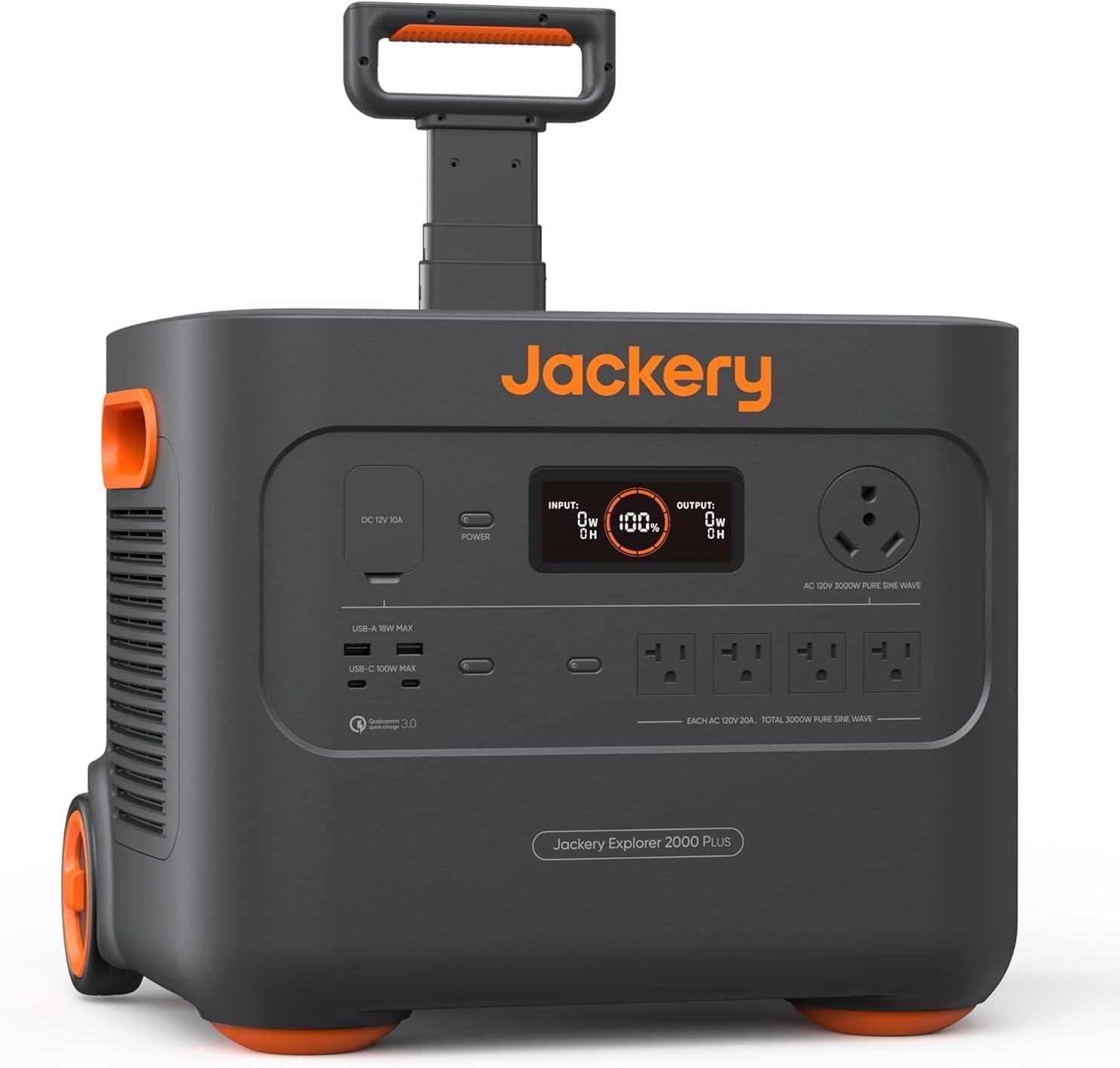
The Jackery Explorer 2000 Plus is the highest capacity unit in this list at 2,042 Wh, and it's built for CPAP users who need a week or more of therapy.
What do you get with the Jackery Explorer 2000 Plus?
The Explorer 2000 Plus delivers the highest single unit capacity in this list with LFP longevity and instantaneous power routing.
- Battery: 2,042 Wh LFP, rated 10-year lifespan
- Continuous AC output: 2,200 W (expandable to 6,000 W in parallel configuration)
- Expandable: Yes, up to 24 kWh with battery packs
- UPS mode: Fast UPS switchover designed to minimize interruption during grid outages
- Price range: $1,200 to $1,500
Jackery Explorer 2000 Plus pros and cons
The Explorer 2000 Plus is the strongest multi-night option in this list, but its size and price put it in a pretty different category from the travel focused units above.
Pros
- 2,042 Wh covers roughly 7 nights of 30 W CPAP use without a humidifier on a single charge via DC cable
- 20 ms UPS routing means sensitive CPAP electronics don't usually detect a power interruption
- Expandable to 24 kWh for whole home backup that covers CPAP as one circuit among several
Cons
- Significantly heavier than smaller units and better suited as a bedside home unit than a portable one
- $1,200 to $1,500 is a lot to spend if you only need one night of backup
Should you buy the Jackery Explorer 2000 Plus?
The Jackery Explorer 2000 Plus is the right buy for CPAP users who need a week or more of backup, because its 2,042 Wh of LFP capacity covers roughly 7 nights of therapy without a humidifier on one charge. For homes in storm prone areas where outages run long, this is the pick sized for that reality.
Buy it if:
- You live somewhere outages regularly run multiple days and want roughly a week of CPAP runtime on one charge
- You want a bedside home unit that can expand to 24 kWh for whole home backup over time
- You're prepared to pair it with solar for extended events and want the largest single unit capacity here to start from
Skip it if:
- You need something portable for travel or to carry between rooms. The Jackery Explorer 1000 v2 or EcoFlow RIVER 2 Pro fit better
- You're flying with your CPAP, since 2,042 Wh far exceeds the 160 Wh FAA carry-on limit. The ResMed Power Station II is the travel option
- You only need 1 to 2 nights of coverage. The Jackery Explorer 1000 v2 or EcoFlow DELTA 3 Plus cost less for similar short term use
How we ranked these CPAP battery backups
We ranked these power stations for one specific situation: keeping a CPAP running during a power outage. We combined manufacturer specs, verified consumer reviews, and published runtime data, then weighted everything against what our outage data says people actually deal with when the grid goes down.
Here's what mattered most, in order:
- Pure sine wave AC output. This got the heaviest weight. CPAP machines contain brushless DC motors and microprocessor pressure controls that need clean AC power, so a unit with a modified sine wave inverter fails the core test for this use case before anything else even matters. Every unit on this list passes.
- Watt hour capacity for overnight runtime. PowerOutage.us tracks outages across 950 utilities in real time, and that data shaped our duration assumptions. The average U.S. customer lost power for around 11 hours in 2024, but storm affected households waited days. We favored units that scale from a single night baseline toward multi-night coverage, from 768 Wh up to 2,042 Wh.
- Continuous AC output versus CPAP plus humidifier draw. A CPAP with a heated humidifier can draw 60 to 90 W. We checked each unit's continuous output against that draw, plus headroom for a lamp or phone charger, since an inverter running near its ceiling is a real failure mode overnight.
- UPS transfer time. For BiPAP users and high end auto CPAP machines that monitor supply voltage continuously, a slow switchover can trigger an alarm or reset. We gave extra weight to units with the fastest documented transfer times.
- Recharge speed and solar input. A faster recharge means less downtime between outages, and solar input matters for extended events where grid power doesn't come back for days.
- Weight and portability. Pounds carried over to the buy and skip guidance, since a 17 lb unit and a 48 lb unit serve different households even at similar capacity.
- Price per watt hour. We compared price ranges against capacity so units of different sizes could compete fairly, from around $300 to $400 at the low end to $1,200 to $1,500 at the high end.
- App monitoring and expansion ecosystem. Live watt monitoring and the ability to add battery packs later got credit where manufacturers documented them, since both affect how a unit performs over years of ownership, not just on day one.
How long of an outage should your CPAP battery cover?
Most CPAP users should size their battery for multiple nights rather than one. U.S. power outages are running longer on average, so multi-night capacity is pretty reasonable rather than excessive for most sleep apnea patients. According to the EIA, U.S. customers averaged 11 hours without power in 2024, nearly double the prior decade's annual average.
Hurricane Helene in September 2024 left 4.79 million customers without power across 10 states, the largest single event PowerOutage.us tracked in 2024. North Carolina's western mountain counties saw outages lasting over 14 days in the hardest hit areas.
That's a scenario where even the 57 hour runtime of the Jackery Explorer 2000 Plus would need a solar recharge partway through. South Carolina customers averaged 53 hours without power for the full year, according to the EIA, the highest of any state in 2024.
In another example, Winter Storm Fern in January 2026 knocked out more than 1,005,641 customers at its peak across the Southeast, with some Nashville area residents going six or more days without getting power back.
For CPAP users in those zones, a high capacity unit like the Jackery Explorer 2000 Plus paired with a 200 W solar panel is pretty much the only way to sustain nightly therapy through an extended event without grid access. Our storm prep guide covers more ideas for battery backup possibilities.
Quick recap
To sum up our picks, the Jackery Explorer 1000 v2 is the best CPAP battery backup for most patients. It combines 1,070 Wh of LFP capacity with portability and the fastest recharge in its class. For travel, the EcoFlow RIVER 2 Pro is the lightest option. For multi-night home backup, the Jackery Explorer 2000 Plus delivers the longest runtime. Use a DC cable and turn off the heated humidifier to get the most out of any unit.