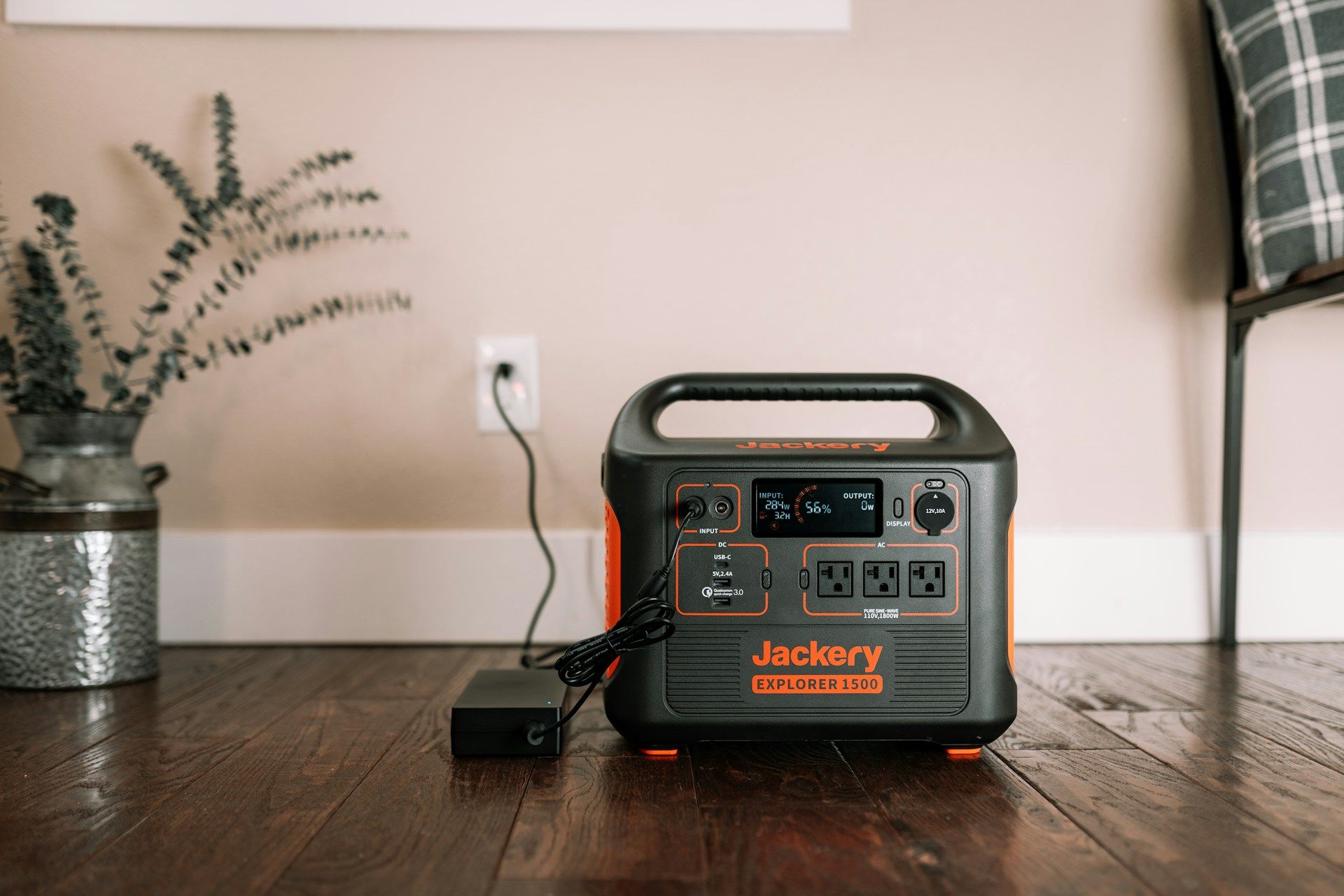


Our rankings rest on PowerOutage.us data. We monitor more than 950 utilities serving over 200 million customers, about 95 percent of the country, and we consider outage trends while recommending battery backups. A household keeps going during an outage with phones, tablets, and a work laptop, and a multi-port pack keeps that whole stack charged for some time.
How we ranked these USB battery packs
These rankings draw on manufacturer specs, owner and published reviews, and PowerOutage.us outage data.
The criteria below run from the factor we weighted heaviest to the one we weighted least.
- Ports and simultaneous charging: First, because an outage powers several devices at once, the pack has to feed them all together rather than one at a time.
- Capacity: Second, counted in phone-fills, because a long outage rewards the pack that recharges the most devices before it dies.
- Watts and Power Delivery: Third, because a pack that also charges a laptop needs Power Delivery near 100 watts on a USB-C port.
- Recharge speed: Fourth, because the pack does no good half-full when the grid drops.
- Value: Last, measured against the cost of a full outage kit rather than the price tag alone.
How these USB battery packs compare
Here’s how our top picks compare to each other.
| Battery pack | Capacity | Max output | Ports | Recharge speed |
|---|---|---|---|---|
| Anker 737 Power Bank | 24,000 mAh | 140 W | 3 (2 USB-C, 1 USB-A) | Up to 140 W |
| Anker Laptop Power Bank | 25,000 mAh | 165 W | 3 USB-C + 2 built-in cables | About 2 hrs (100 W) |
| UGREEN Nexode 145W | 25,000 mAh | 145 W | 3 (2 USB-C, 1 USB-A) | About 2 hrs (65 W) |
| Anker 747 Power Bank | 26,800 mAh | 87 W | Multiple | About 2.5 hrs (65 W) |
| INIU Power Bank 100W | 25,000 mAh | 100 W | 3 outputs | About 1.5 hrs (65 W) |
5 Best USB battery packs for charging multiple devices
The five picks below stretch from a budget three-output pack to a flagship that charges a laptop and two phones together.
1. Anker 737 Power Bank (PowerCore 24K)
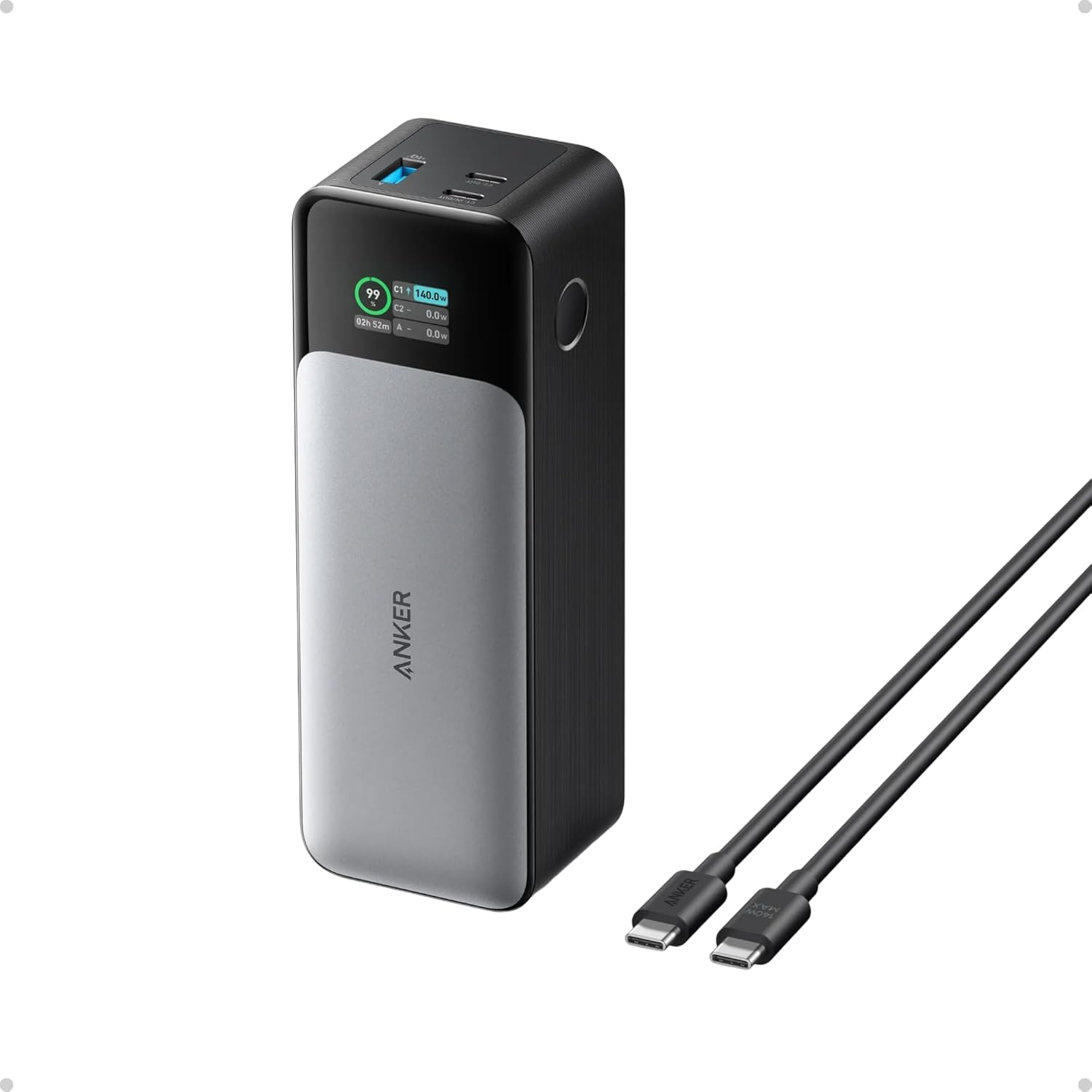
A 24,000 mAh cell, 140 watts across three ports, and a smart display rank the Anker 737 the most capable multi-device pack here.
Reach for the 737 to power an entire household's gear from one unit. Both USB-C ports hold full output, so it charges a laptop and a phone at the same time, and the display reports the live watts and the hours left on the cell.
- Capacity: 24,000 mAh, 86.4 Wh, flight-safe
- Output: 140 W across 3 ports (2 USB-C, 1 USB-A)
- Display: Smart screen showing live watts and time
- Recharge: Refills at up to 140 W
- Phone fills: Charges a phone about four to five times
Pros
- Feeds 140 W across three ports.
- Reports live power on the smart display.
- Charges itself fast at 140 W.
- Stays flight-safe under 100 Wh.
Cons
- Prices above most rivals.
- Carries a chunky body.
- Weighs more than slim packs.
What buyers report
Owners call out the smart display and the two full-power USB-C ports, naming it the do-everything pack. Their complaints revolve around the price and the size.
Should you buy it?
Choose the Anker 737 to charge a laptop and phones together and watch the numbers as it works. Skip it if you only ever charge a phone or two and want a pocketable pack.
2. Anker Laptop Power Bank (25K)
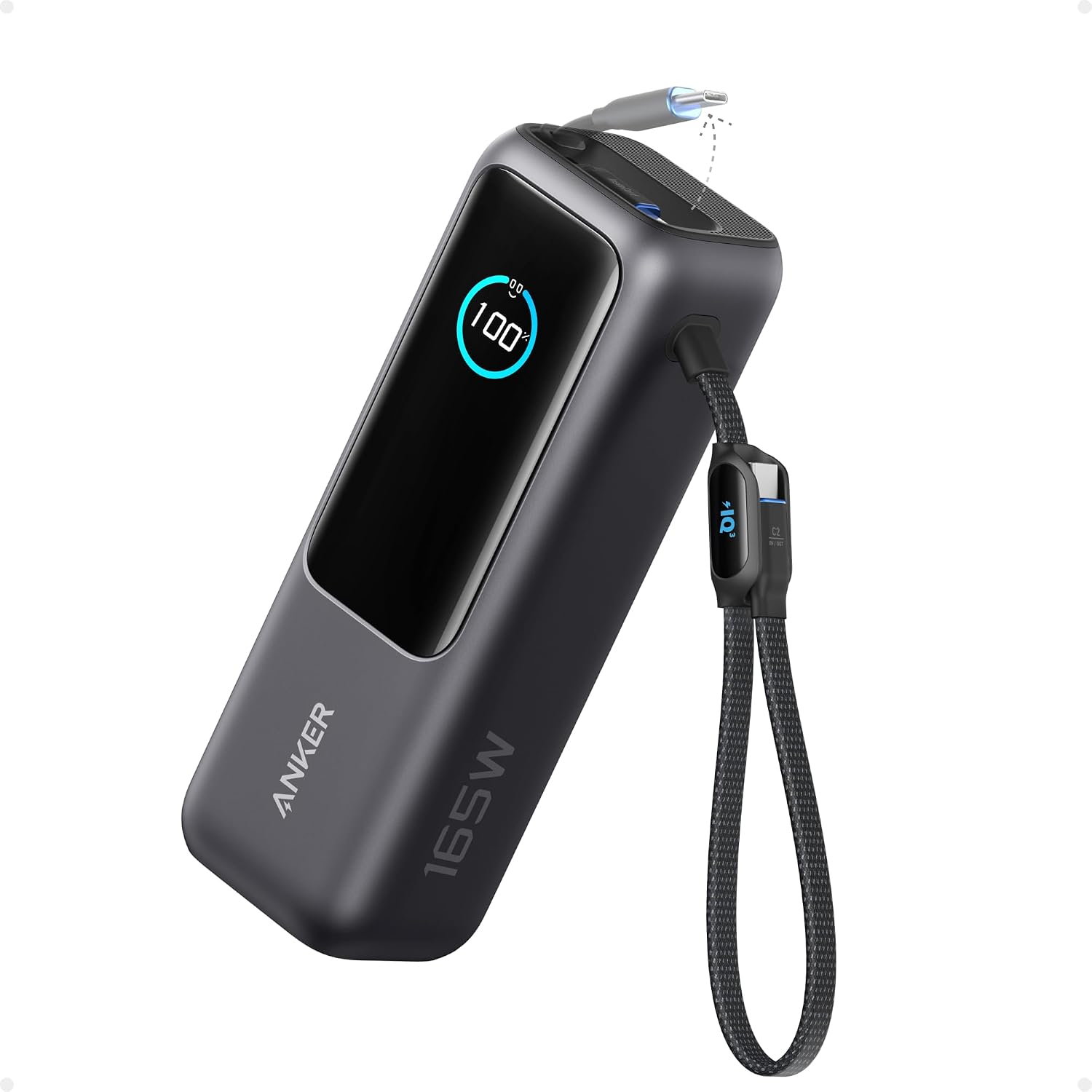
Three USB-C ports, one USB-A port, and two built-in USB-C cables eliminate the need to carry charging cables while supporting up to four devices at once.
Pick this pack when several people need power at the same time. Two USB-C ports support up to 100 W output, with total output up to 165 W. The two retractable cables stay attached, and nobody hunts for a cord because the pack carries its own.
- Capacity: 25,000 mAh
- Output: 165 W total, 3 USB-C ports at 100 W each
- Cables: 2 built-in retractable cables, 4 connection points
- Build: Flight-ready capacity
- Job: Charges a laptop and phones together
Pros
- Opens five connections at once.
- Carries its own cables, none to lose.
- Drives 100 W on each USB-C port.
- Banks high capacity for a group.
Cons
- Packs a bulkier body.
- Prices at the premium tier.
- Weighs down a bag.
What buyers report
Reviewers credit the built-in cables and charging a stack of devices at once without a cord kit. Their note repeats: it runs bulky and costs more.
Should you buy it?
Buy the Laptop Power Bank when several people or devices need charging together. Pass on it if you want a slim pack for one or two devices.
3. UGREEN Nexode 145W 25,000mAh
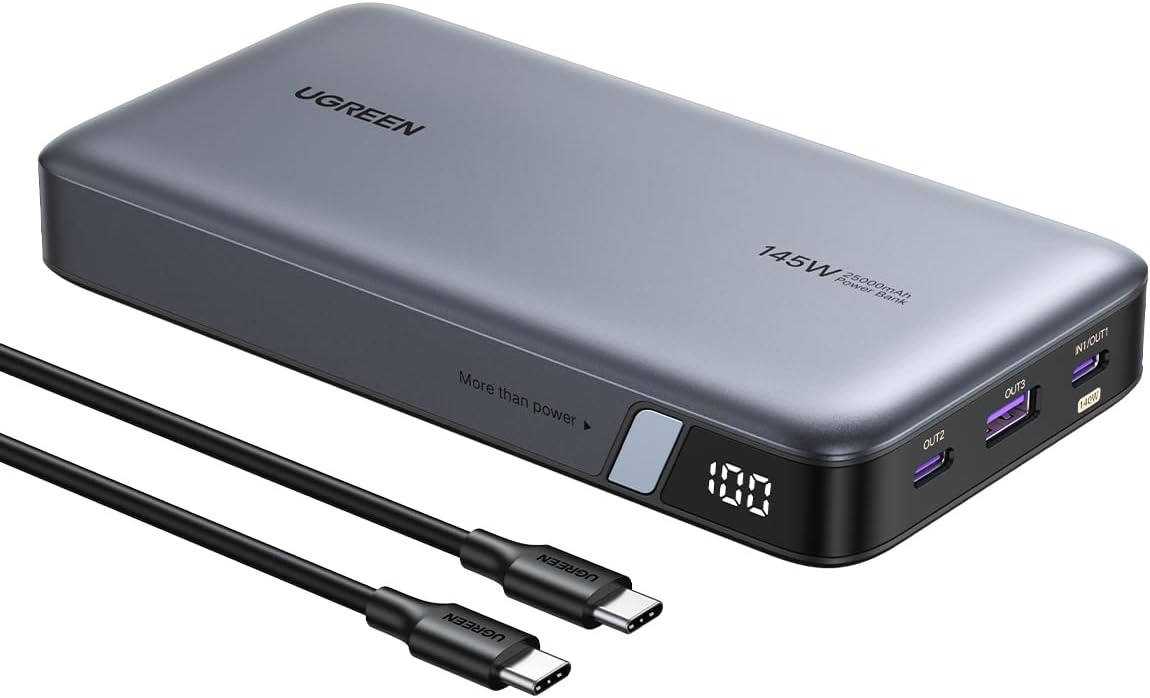
A 25,000 mAh cell, 145 watts, and a roughly two-hour recharge let the UGREEN Nexode trail the flagships by little and cost less.
Take the Nexode to charge at flagship pace for a lower price. Its flat body slides into a bag, a single USB-C port reaches 140 watts for a laptop, and a 65-watt charger refills it in about two hours.
- Capacity: 25,000 mAh
- Output: 145 W across 3 ports (2 USB-C, 1 USB-A)
- Build: Flat, bag-friendly shape
- Recharge: About 2 hours on a 65 W charger
- Phone fills: Charges a phone about five times
Pros
- Charges similar to flagship options for less.
- Slides flat into a bag.
- Recharges in about two hours.
- Pushes 140 W single-port for laptops.
Cons
- Shows no smart display.
- Runs plain software.
- Still carries a chunky weight.
What buyers report
Owners rate it the value answer to the 737, flatter in a bag, and nearly as strong. The recurring note: it doesn’t have a live display.
Should you buy it?
Get the UGREEN Nexode 145W to charge fast for less in a flatter shape. Skip it if you want a live display or built-in cables.
4. Anker 747 Power Bank (PowerCore 26K)
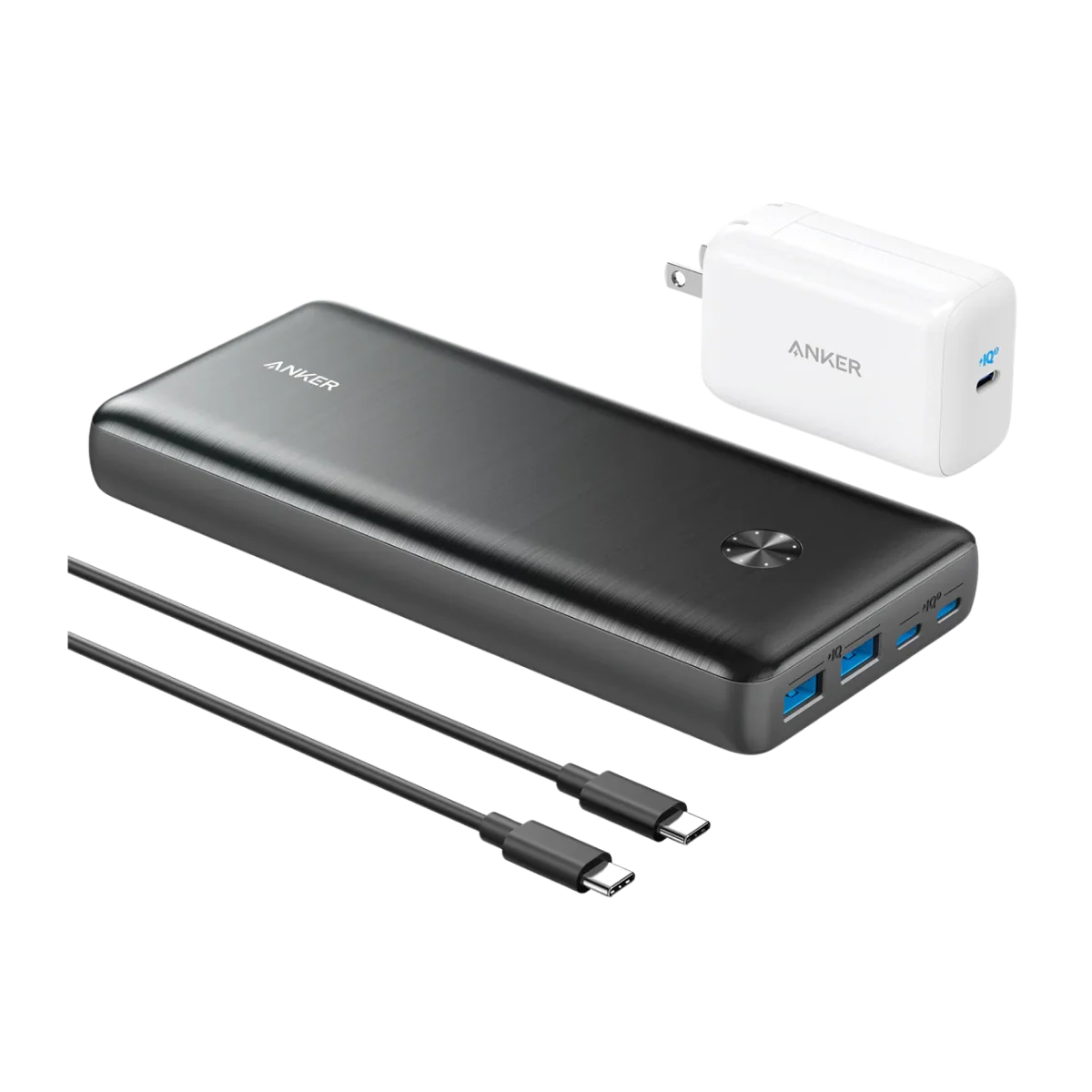
A 26,800 mAh cell, the largest here, lets the Anker 747 recharge a family's phones and tablets again and again through a long outage.
Lean on the 747 when several people share one pack for days. Raw capacity outweighs peak watts once you recharge many devices over and over, and this cell holds the most charge in the lineup.
- Capacity: 26,800 mAh, the most here
- Output: 87 W
- Ports: Multiple outputs
- Build: Flight-safe
- Job: Recharges many phones and tablets repeatedly
Pros
- Offers the highest capacity here.
- Powers a group's devices for days.
- Feeds multiple ports.
- Holds up on Anker's build.
Cons
- Caps lower than the 140 W packs.
- Charges a laptop slowly.
- Weighs heavy in a bag.
What buyers report
Reviewers favor the deep capacity for keeping several people's devices alive across a long outage. Their note: the peak wattage trails the flagships.
Should you buy it?
Buy the Anker 747 when a household runs on one pack for days, and capacity beats peak speed. Pass on it if you need 140 W to charge a laptop fast. For a longer outage, step up to a power station.
5. INIU Power Bank 25,000mAh 100W
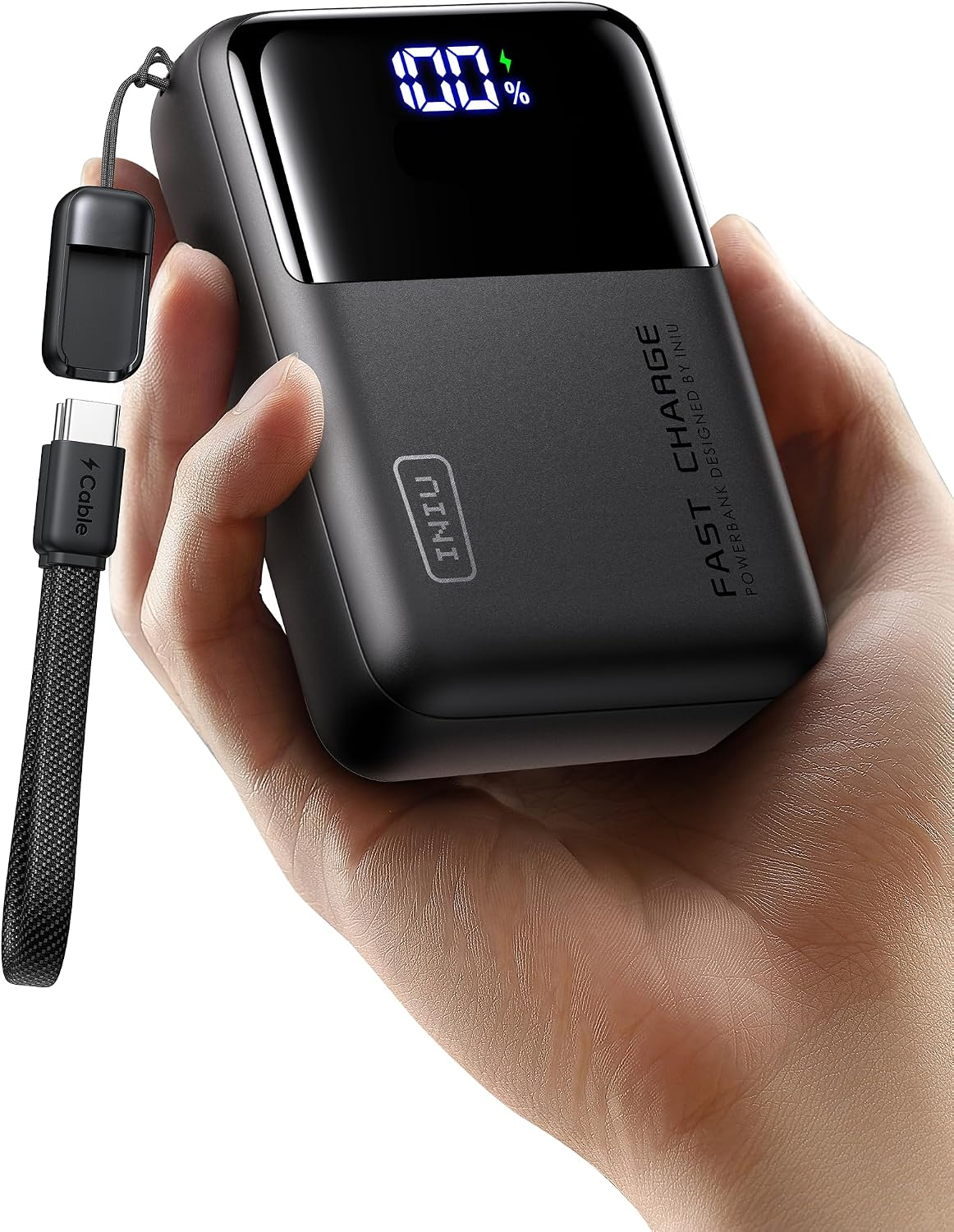
A 25,000 mAh cell, 100 watts, and three outputs let the INIU charge several devices for a fraction of the flagship price.
Choose the INIU to charge three devices on a tight budget. It carries no display and recharges more slowly, but it powers a phone, a tablet, and earbuds at once for far less money.
- Capacity: 25,000 mAh
- Output: 100 W across 3 outputs
- Price: The lowest cost here
- Reputation: Well-reviewed value brand
- Phone fills: Charges a phone several times
Pros
- Costs the least in this group.
- Feeds three outputs at once.
- Has a high capacity for the money.
- Holds a reliable track record.
Cons
- Shows no display.
- Recharges more slowly than the flagships.
- Caps output at 100 W.
What buyers report
Owners point to the value and the reliability, with three outputs charging several devices cheaply. Their notes: the slower recharge and the missing display.
Should you buy it?
Buy the INIU to charge several devices for the lowest price. Skip it if you need a display, built-in cables, or 140 W for a laptop. A solar power bank covers off-grid refills instead.
Power outages and why multi-device charging matters
In January 2026, Winter Storm Fern cut power for over 1 million customers across the South, and the hardest-hit areas sat dark for six days. For a family, that stretch meant phones, tablets, and a work laptop with no outlet to feed them.
Two years earlier, Hurricane Helene left parts of western North Carolina without power for 14 days. A single high-capacity multi-port pack, charged before the storm and refilled with solar, keeps a household connected across a span like that.
How to choose a USB battery pack
Choosing a battery pack for multiple devices involves knowing how many ports you need, the size you want, and the type of output power that’s necessary.
- Count ports against devices. Match the number of outputs to how many things you charge at the same time.
- Size capacity to your day. Total the phone-fills and laptop top-offs you need, then choose the watt-hours.
- Read the watts. Modern laptops generally benefit from 100 W or higher USB-C Power Delivery, while some newer models support up to 140 W; a phone charges fine on less.
- Mind the recharge clock. Large packs take hours to refill, so charge them to full before a storm.
- Plan past a single day. Pair the pack with a solar charger or a power station, and add a medical device plan if anyone depends on one.