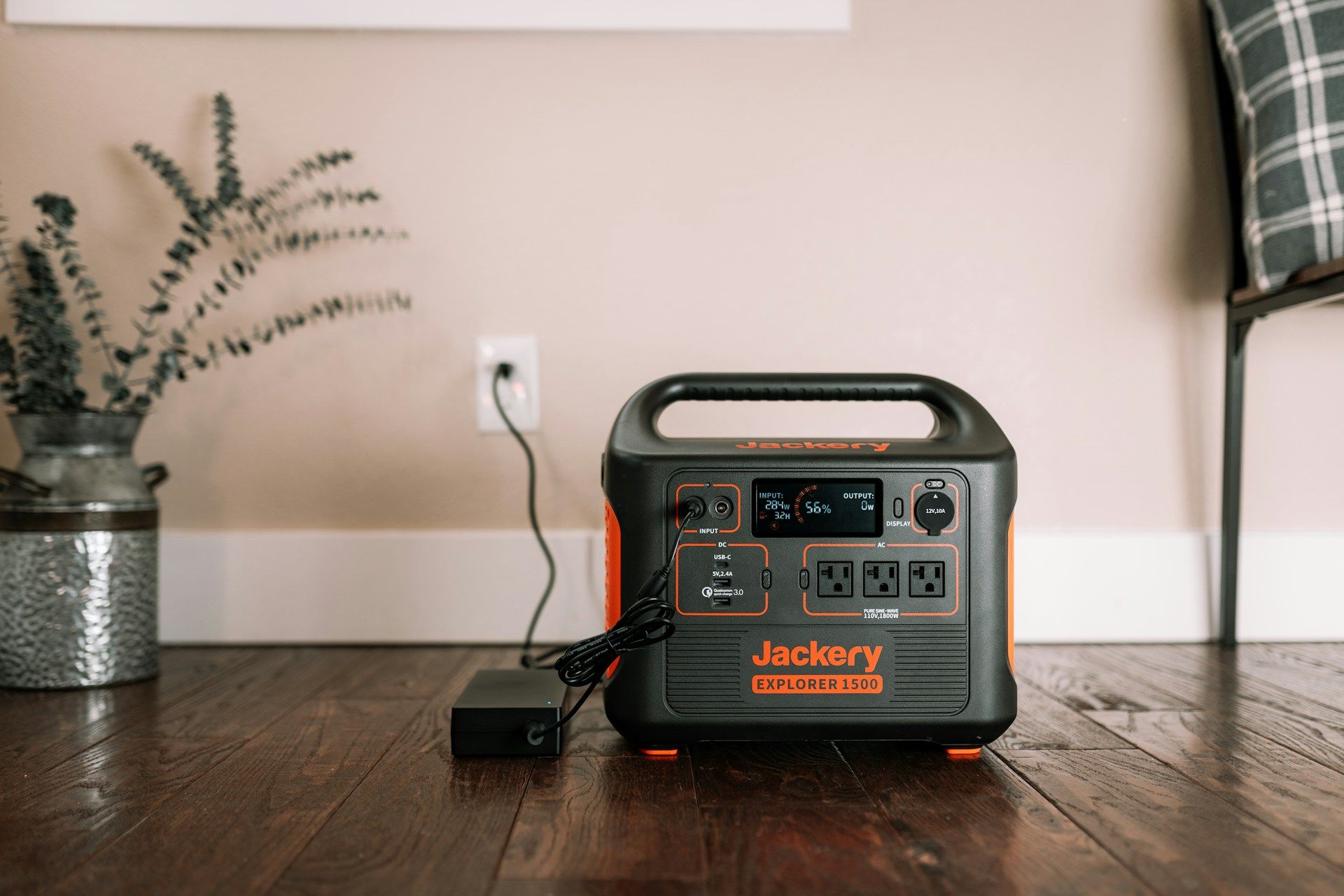


PowerOutage.us tracks more than 950 utilities serving over 200 million customers, about 95 percent of the country. We rank expandable and reliable power station units first, using that live battery backup and outage data, because the outages that actually strand people run for days, not hours, and a unit you can add batteries to is the only portable way to cover that.
How we ranked these expandable power stations
To rank these expandable power stations, we combined the manufacturer specs, owner reviews, and our PowerOutage.us outage data for blackout patterns.
Here's what we looked at:
- Base capacity and expansion: We weighed capacity heaviest because a multi-day outage is a capacity problem above all.
- Recharge speed: We rated AC and solar recharge next, so you can refill in a restoration window or off the sun.
- Output watts: We checked the output and whether the unit does 120/240 V because heavy appliances need it.
- Cycle life and warranty: We looked at LiFePO4 cycle life and warranty since a backup unit has to last for years.
- Weight and value: We finally considered weight and price per watt-hour, so the unit still earns its place.
5 best expandable power stations for long outages
These five power station units cover the range from a light unit that doubles with one battery up to a wheeled system that scales to whole-home, multi-day power. Our picks include options from EcoFlow, Jackery, Bluetti, and Anker SOLIX.
1. EcoFlow DELTA Pro 3
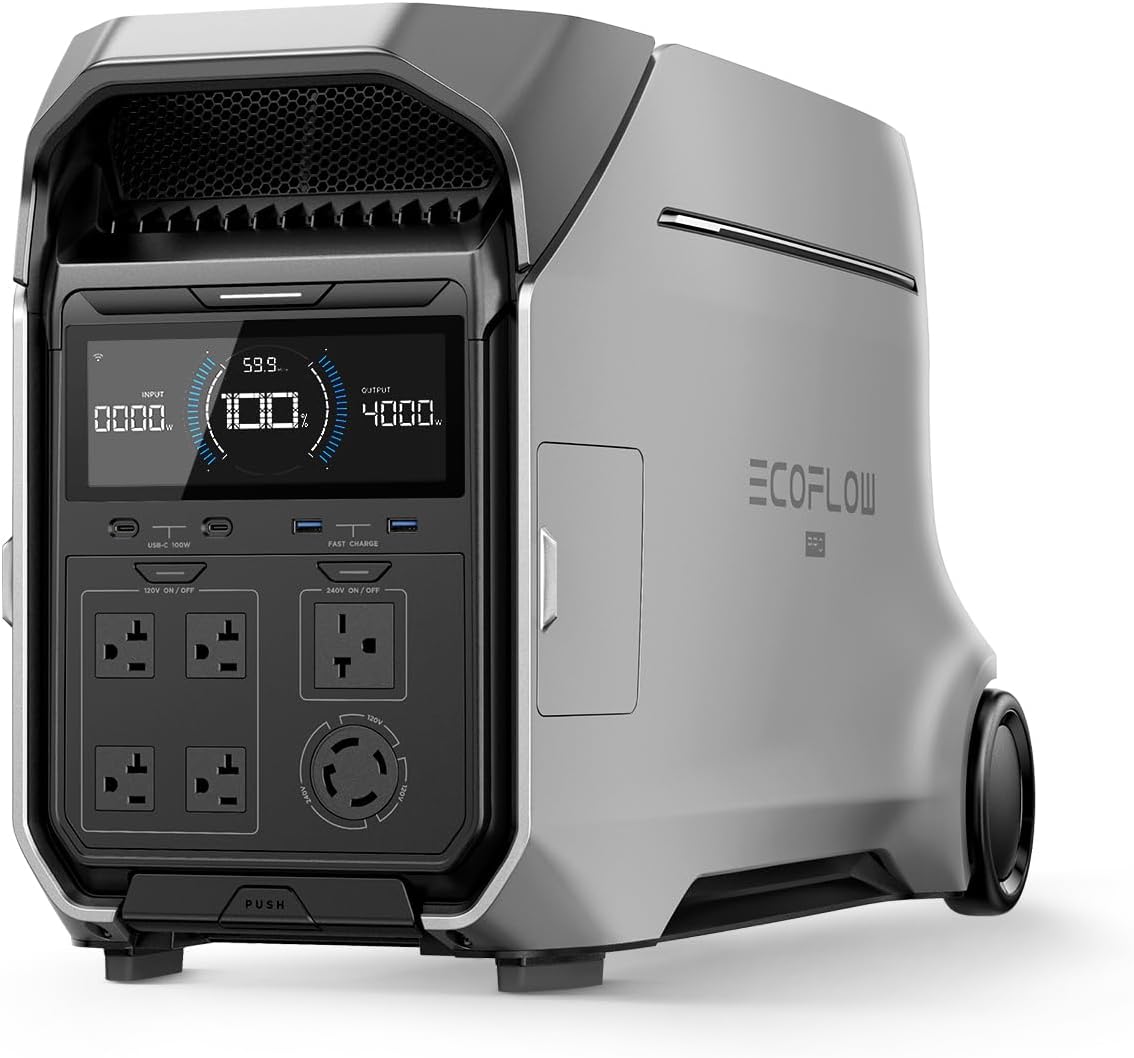
The EcoFlow Delta Pro 3 starts at 4,096 Wh, puts out 4,000 W at 120/240 V, and expands to 48,000 Wh, which is enough to power a house for days.
Homeowners should consider the EcoFlow Delta Pro 3 if they want portable whole-home backup without installing a standby generator. The split-phase 240 V runs a well pump, dryer, or AC, and you add batteries as your needs grow.
- 4,096 Wh LiFePO4, 4,000 W AC, 120/240 V split-phase
- Expandable to 48,000 Wh with extra batteries and a second unit
- Can run many refrigerators for multiple days, depending on energy consumption
- Wheeled, about 110 lbs
- 4,000 cycles
Pros
- True portable whole-home capacity.
- 240 V for heavy appliances.
- Scales to days of runtime.
- LiFePO4 with 4,000 cycles.
Cons
- Expensive.
- Heavy, even on wheels.
- Expansion batteries add up fast.
EcoFlow DELTA Pro 3 reviews
Reviewers call the Delta Pro 3 the clearest portable whole-home pick, with a big base, split-phase 240 V for well pumps and dryers, and enough expansion for days. The downsides of it are the price and the weight.
Should you buy the EcoFlow DELTA Pro 3?
You should buy the EcoFlow Delta Pro 3 if you want portable whole-home backup for multi-day outages and you'd rather not install a standby battery system. You should pass on it if you only need to cover a few essentials.
2. Anker SOLIX F3800
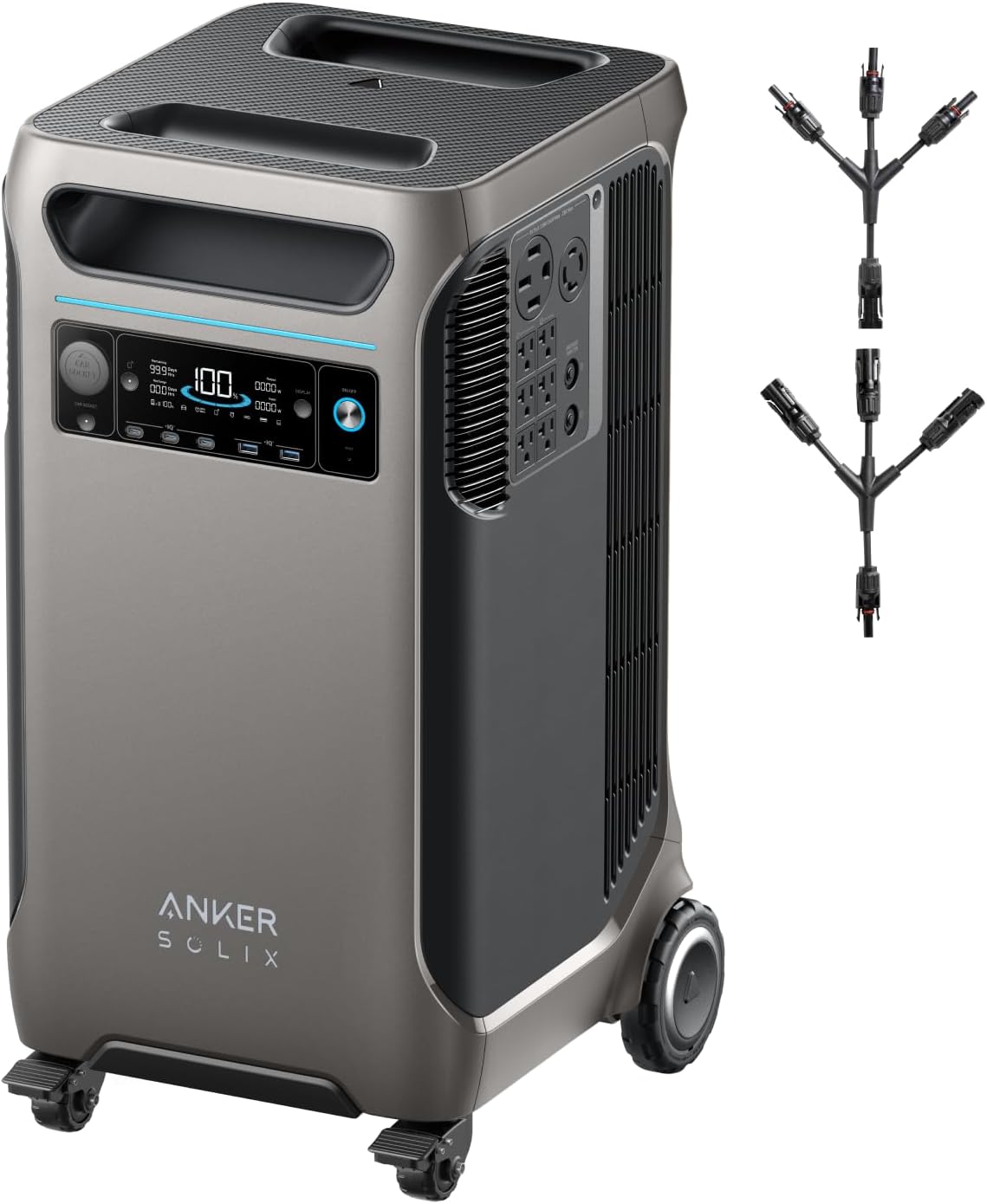
The Anker SOLIX F3800 holds 3,840 Wh, pushes 6,000 W at 120/240 V, and expands to 26.9 kWh, so it runs the heavy stuff most batteries can't.
You should consider the Anker SOLIX F3800 if you need real 240 V and high wattage for a well pump, a dryer, or central AC. Stack up to six battery packs, and the battery system powers critical loads for days.
- 3,840 Wh LiFePO4, 6,000 W AC, 120/240 V
- Expandable to 26.9 kWh with up to 6 BP3800 packs
- NEMA 14-50 and 30A outlets
- Wheeled, about 132 lbs
- 5-year warranty (with 10-year lifespan)
Pros
- 6,000 W output, the highest here.
- True 120/240 V split-phase.
- Deep expansion to 26.9 kWh.
- 5-year warranty.
Cons
- Heaviest unit on the list.
- Premium price.
- Expansion packs are pricey.
Anker SOLIX F3800 reviews
Amazon reviewers point to the 6,000 W output and true 240 V for running heavy appliances, plus the deep expansion. The complaints, according to owners, are the weight and the cost.
Should you buy the Anker SOLIX F3800?
You should buy the Anker SOLIX F3800 if you need 240 V and high wattage for a well pump or whole-house loads during a long outage. You should pass on it if you don't need 240 V or if you want something you can carry.
3. Bluetti AC200L
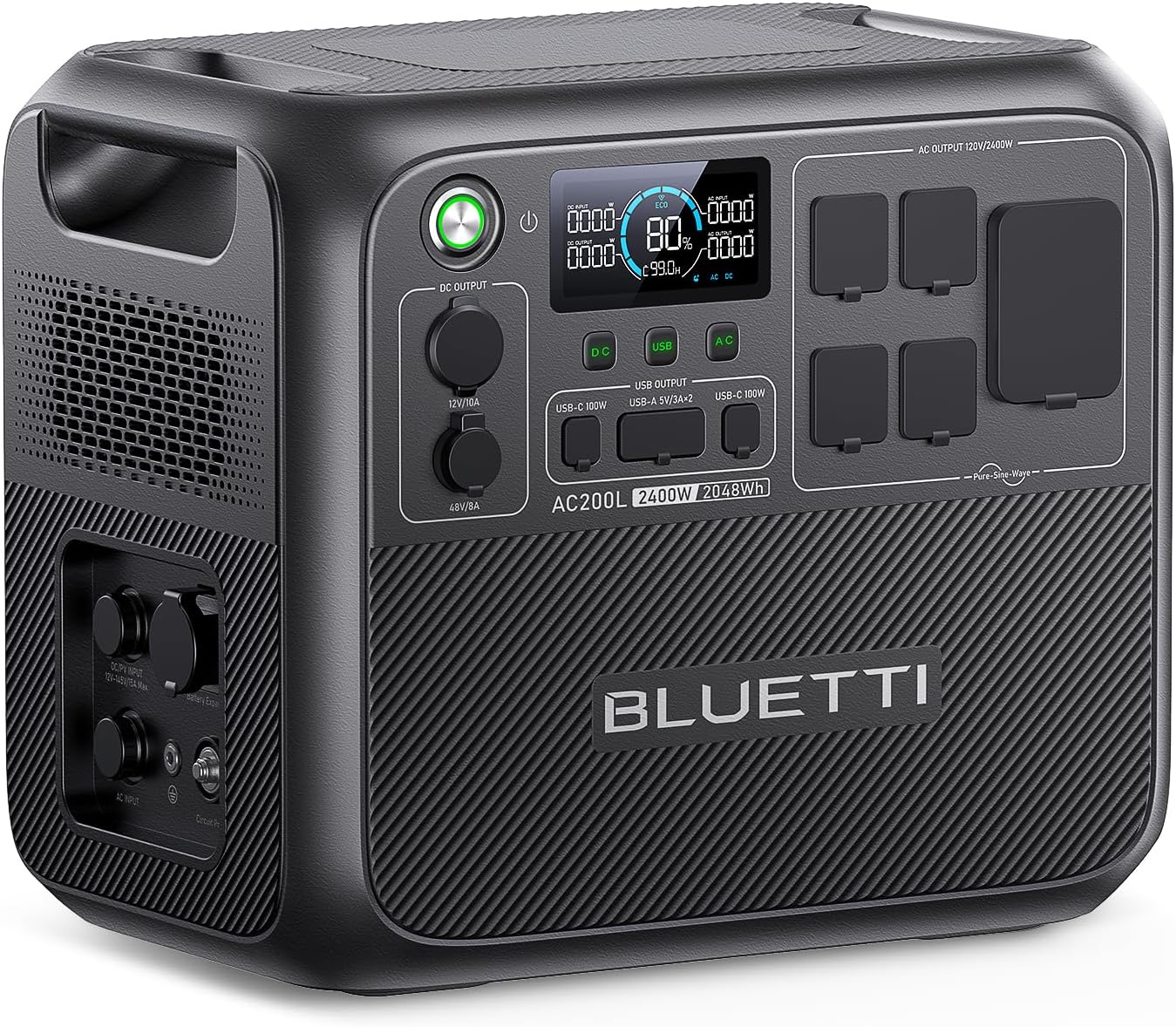
The Bluetti AC200L holds 2,048 Wh, runs 2,400 W, and expands to 8,192 Wh, which is a lot of capacity for the price.
You should consider the Bluetti AC200L if you want the most watt-hours per dollar and a 30A RV plug. Add a couple of B300 packs, and it covers a fridge and essentials for a multi-day stretch.
- 2,048 Wh LiFePO4, 2,400 W (3,600 W Power Lifting)
- Expandable to 8,192 Wh with B300 or B210 packs
- 30A RV output
- About 62 lbs
- 4,000+ cycles
Pros
- Strong capacity per dollar.
- 30A RV outlet.
- Power Lifting runs higher-watt resistive devices.
- Expandable to 8,192 Wh.
Cons
- 2,400 W native output is lower than rivals.
- Power Lifting only works on resistive loads.
- App and firmware can be finicky.
Bluetti AC200L reviews
Bluetti AC200L reviewers like the capacity-per-dollar and the 30A RV plug, and Power Lifting helps with higher-watt resistive loads. The gripes are about the lower native wattage and some app quirks.
Should you buy the Bluetti AC200L?
You should buy the Bluetti AC200L if you want the most expandable capacity for the money. You should pass on it if you need to start a lot of high-watt motors at once.
4. Jackery Explorer 2000 Plus
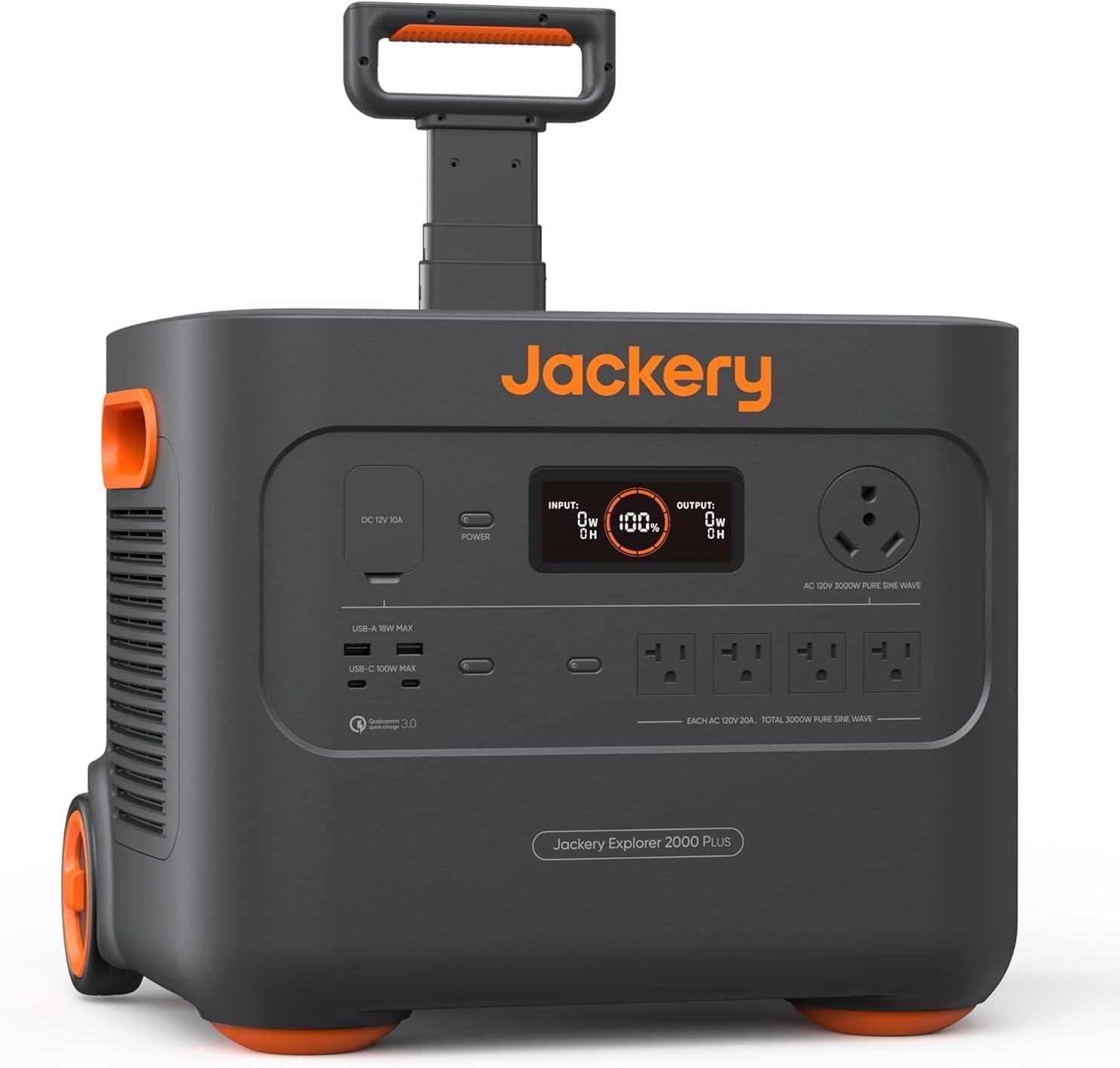
The Jackery Explorer 2000 Plus holds 2,042 Wh, runs 3,000 W, and scales to 24 kWh, which is one of the widest expansion ranges here.
You should consider the Jackery Explorer 2000 Plus if you want to start mid-size and go a long way without changing systems. The UPS function keeps a fridge or electronics protected.
- 2,042 Wh LiFePO4, 3,000 W (6,000 W peak)
- Expandable to 24 kWh with up to 5 packs
- UPS switchover
- About 61 lbs
- 10-year lifespan claim
Pros
- 3,000 W output.
- Scales from 2 kWh to 24 kWh.
- UPS protection.
- Long lifespan rating.
Cons
- Full expansion gets expensive.
- Heavier than the 1 kWh units.
Jackery Explorer 2000 Plus reviews
Jackery Explorer owners praise the scale-to-24 kWh range and the 3,000 W output for backing up a fridge. The main knock is the per-pack cost as you expand.
Should you buy the Jackery Explorer 2000 Plus?
You should buy the Jackery Explorer 2000 Plus if you want a mid-size unit with room to grow to whole-home capacity. You should pass on it if you need 240 V output or if you want the cheapest entry point.
5. EcoFlow DELTA 3 Plus
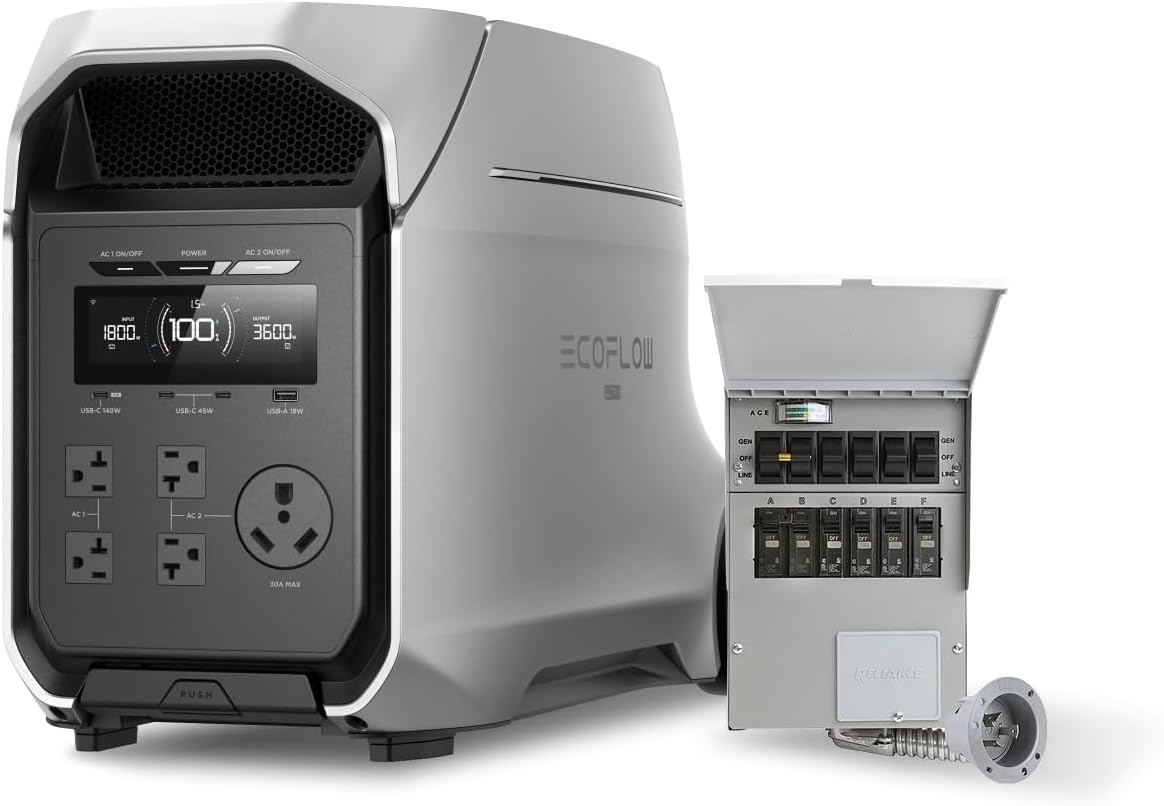
The EcoFlow Delta 3 Plus holds 1,024 Wh, recharges in 56 minutes, and doubles to 2,048 Wh with one extra battery, the easiest way to start.
You should consider the EcoFlow Delta 3 Plus if you want a light, affordable unit that still grows. It's true UPS, so a fridge or electronics never see the outage, and it tops off fast between cuts.
- 1,024 Wh LiFePO4, 1,800 W (2,700 W X-Boost)
- Expandable to 2,048 Wh with a smart extra battery
- 56-minute full recharge, 10 ms UPS
- About 27.6 lbs
- 4,000 cycles
Pros
- Light and affordable.
- Fast 56-minute recharge.
- True UPS switchover.
- Doubles with one battery.
Cons
- Tops out at 2,048 Wh.
- Essentials only, not whole-home.
EcoFlow DELTA 3 Plus reviews
Reviewers like EcoFlow Delta 3 Plus as the affordable option: light, fast-charging, and it doubles with one EcoFlow battery while giving true UPS. The limit they note is the 2,048 Wh ceiling.
Should you buy the EcoFlow DELTA 3 Plus?
You should buy the EcoFlow Delta 3 Plus if you want a cheap, light way to cover essentials with room to double later. You should pass on it if you need to run a whole house or 240 V appliances.
Power outages and why expandable capacity matters
Most portable batteries can’t cover a two-week outage without expansion batteries or recharging. This is why having expandable capacity matters. For example, Hurricane Helene knocked out 4.79 million customers in September 2024, and parts of western North Carolina stayed dark for 14 days.
Similarly, Winter Storm Fern cut power to over 1 million customers across the South in January 2026, with six days of darkness in the hardest-hit areas. Multi-day outages are a capacity problem, and capacity is exactly what expandable systems add.
How to choose an expandable power station for an outage
You should consider things like size, power ceiling, recharge options, and more to pick the right expandable power station.
- Size the base to your daily need: Add up the watt-hours you use in a day, then multiply by the number of days you want to cover.
- Check the ceiling: Look at how far the unit expands and what each battery pack costs.
- Weigh recharge options: AC speed matters between cuts, and solar input matters when the grid stays down.
- Get 120/240 V: If you run a well pump, dryer, or AC, get a power station that handles 240 V.
- Favor LiFePO4: Every pick here uses it, so you get thousands of cycles and a long life. Build a power outage emergency kit around the unit.