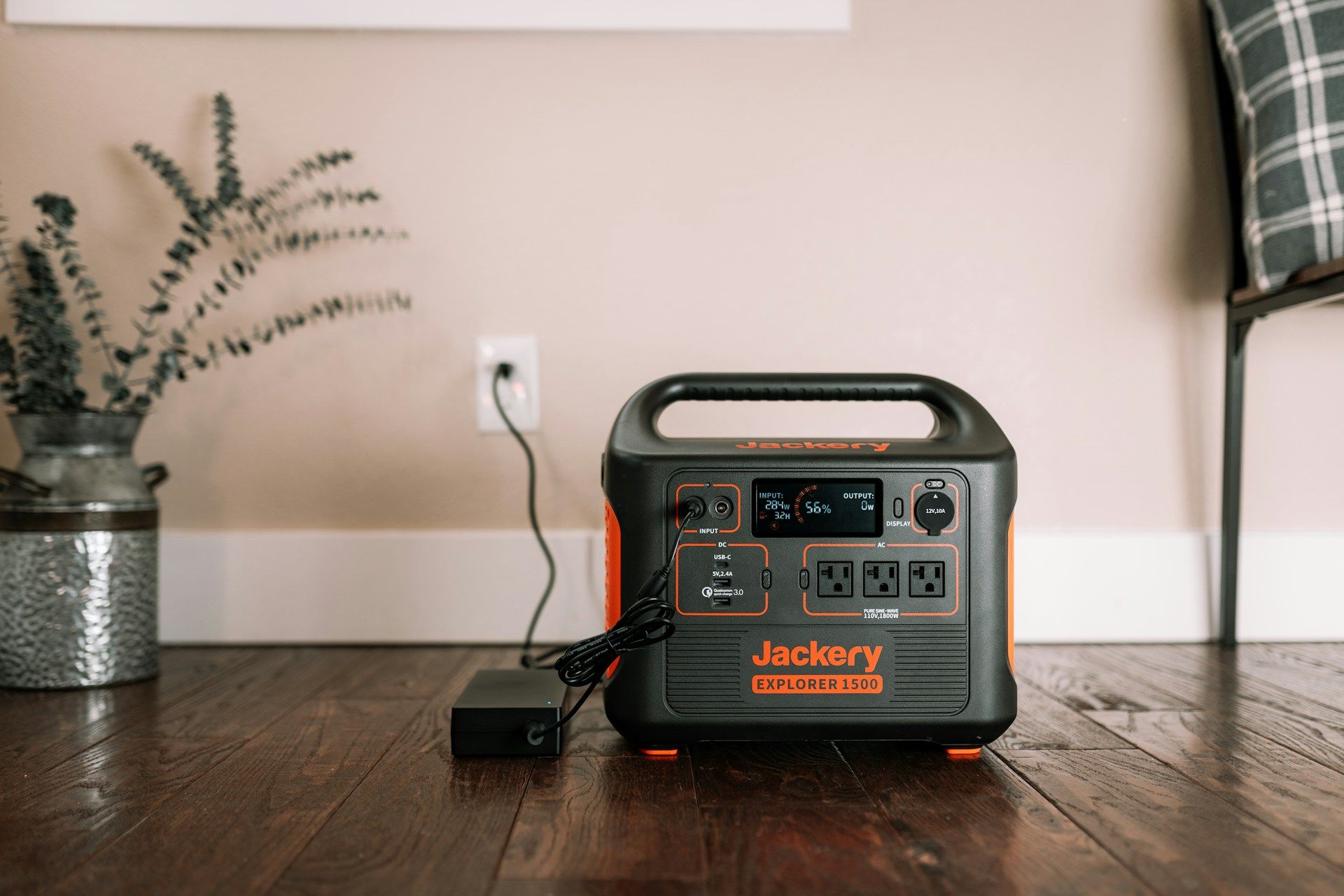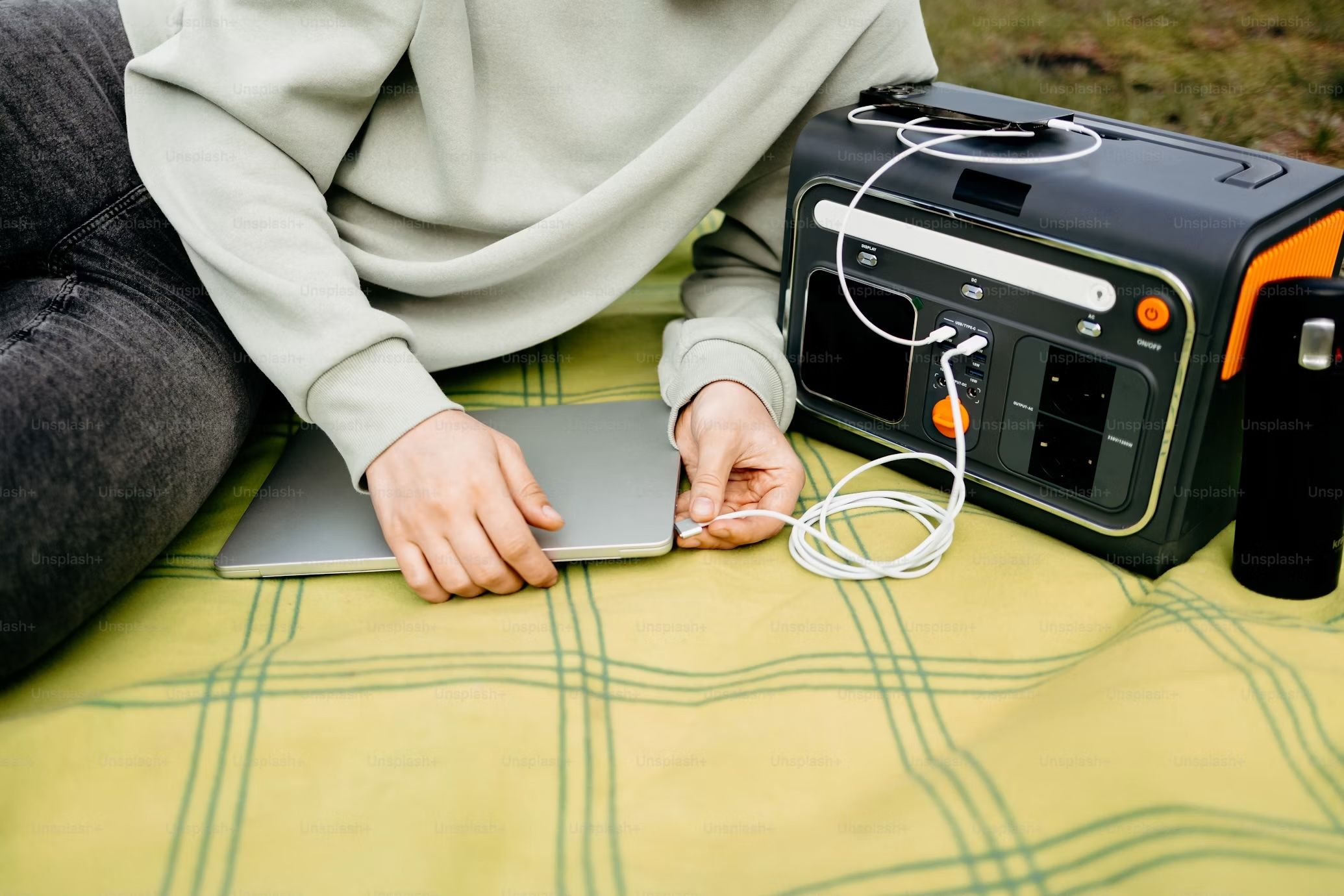


The home battery backup category now includes portable power stations with enough watt-hours to run a CPAP machine, a portable refrigerator, or a Wi-Fi router through a standard overnight outage at a sub-$500 price point.
PowerOutage.us tracks 950+ utilities serving more than 200 million customers, with outage data refreshing every 10 minutes during active events. That real-time visibility into grid instability makes a budget portable power station a practical decision. Read on to learn about some great options on a budget.
Best budget portable power stations under $500
The four LiFePO4-based stations below cover the full range of the sub-$500 category, from 17-pound units designed for frequent relocation to 1,070 Wh workhorses built for multi-day outage coverage. Watt-hour capacity is the deciding variable between them.
Jackery Explorer 1000 v2
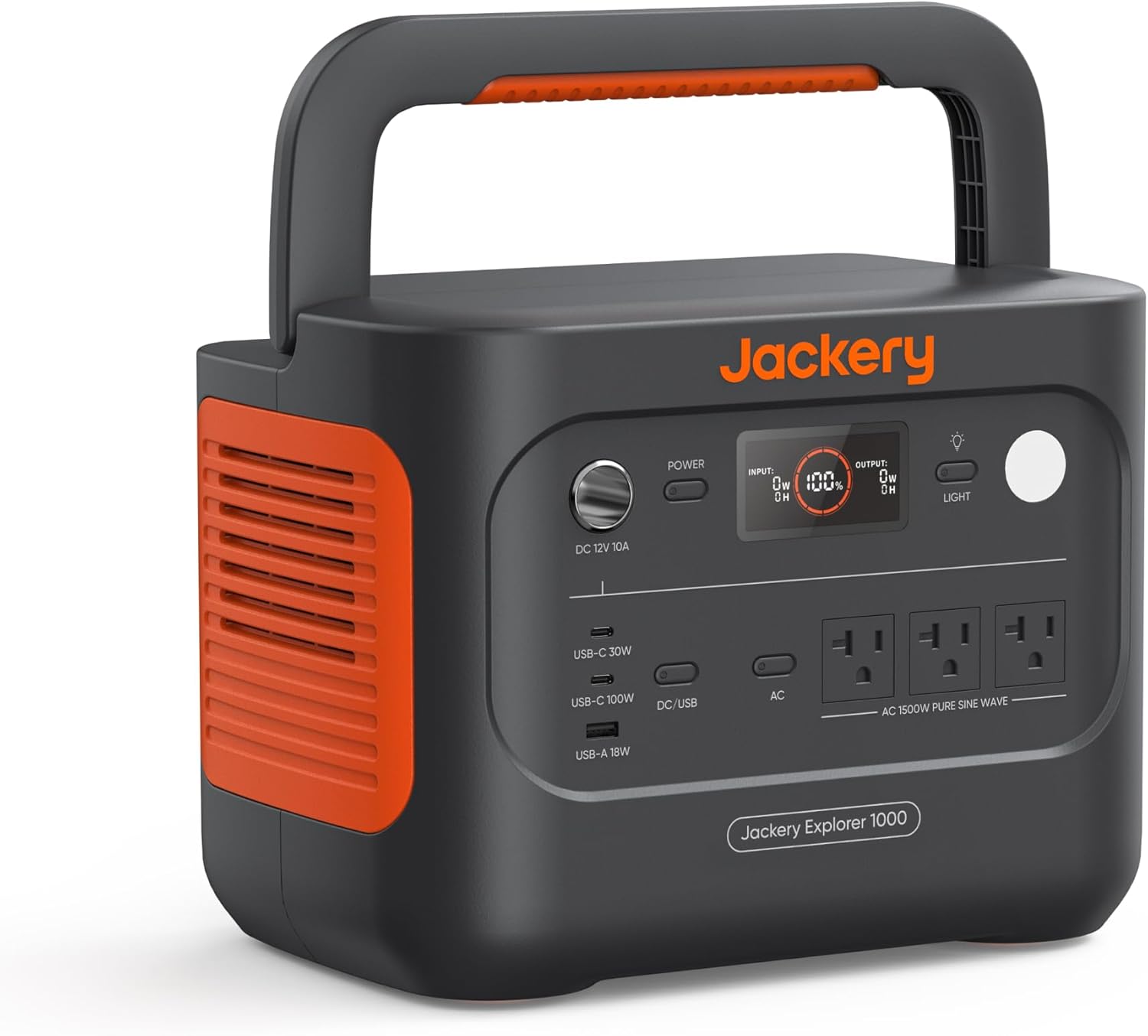
The Jackery Explorer 1000 v2 stores 1,070 Wh in a LiFePO4 battery and delivers 1,500 W continuous output. It’s great for campers, renters, and emergency preppers who need to run a portable refrigerator or CPAP machine for 12 to 16 hours on a single charge without solar backup.
What are the Jackery Explorer 1000 v2's features?
The ChargeShield 2.0 BMS is a notable feature that applies temperature-adaptive charging algorithms that reduce charge rate in cold conditions to protect cell health. This matters most for winter camping or garage storage in freezing temperatures, where NMC lithium-ion stations lose 20 to 30 percent of usable capacity.
- 1,070 Wh LiFePO4 battery with 4,000+ charge cycles to 80% capacity
- 1,500 W continuous AC output with 3,000W surge capacity
- Dual 100 W USB-C Power Delivery ports
- 200 W maximum solar panel input
- 1.7-hour full AC recharge via ChargeShield 2.0
- Bluetooth app monitoring via the Jackery app
- 23.8 lbs with integrated carry handle
- $400 to $500 price range
The 3,000 W surge capacity also handles compressor startup loads from portable refrigerators and chest freezers, which typically draw 2 to 3 times the running wattage at ignition.
What are the pros and cons of the Jackery Explorer 1000 v2?
The Explorer 1000 v2 balances decade-long LiFePO4 durability and rapid AC recharging against portability constraints and a restrictive solar ecosystem.
Pros
- 1,070 Wh covers a CPAP machine for two nights plus laptop and phone charging
- 1.7-hour AC recharge is among the fastest in the $400 to $500 range
- 4,000-cycle LiFePO4 battery lasts a decade with weekly use
- 3,000 W surge handles compressor start loads from portable refrigerators
- Established Jackery warranty support network
Cons
- Proprietary solar connector requires Jackery SolarSaga panels or a third-party adapter
- 23.8 lbs limits portability for extended hiking or daily relocation
- UPS functionality is more limited than EcoFlow’s faster 10ms implementations
- Bluetooth app lacks real-time power flow graphs compared to EcoFlow's interface
EcoFlow RIVER 2 Pro
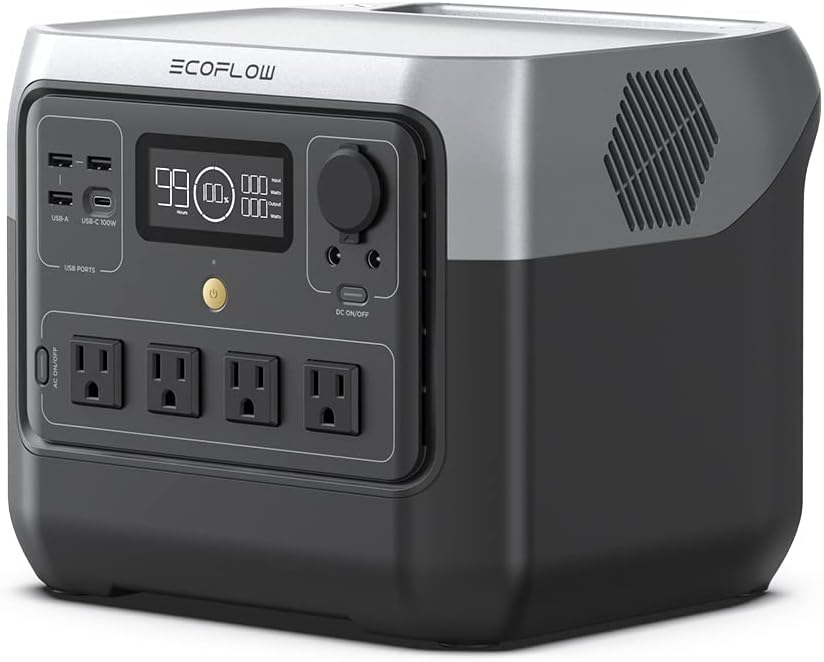
The EcoFlow RIVER 2 Pro weighs 17.4 pounds and recharges fully in 70 minutes, making it the most portable and fastest-charging station in this guide. It suits studio apartment renters, van campers, and anyone who moves the station daily. This battery is often priced below competing LiFePO4 stations with similar capacity.
What are the EcoFlow RIVER 2 Pro's features?
The RIVER 2 Pro EcoFlow battery packs a 768 Wh LiFePO4 cell into a 17.4 lb chassis with X-Boost regulation, X-Stream 70-minute recharging, and app-based wattage monitoring.
- 768 Wh LiFePO4 battery
- 800 W continuous AC output with X-Boost voltage regulation to 1,600W
- 70-minute full AC recharge via X-Stream fast charging
- 220 W maximum solar panel input
- 17.4 lbs (lightest station in this guide)
- 5-year warranty with registration
- Single 100 W USB-C Power Delivery port
- EcoFlow app with real-time wattage monitoring
The EcoFlow X-Boost works by regulating voltage delivery to devices rated above the inverter's native 800 W continuous limit. In other words, it can power a higher-wattage appliance (but for a shorter time).
What are the pros and cons of the EcoFlow RIVER 2 Pro?
The RIVER 2 Pro prioritizes lightweight mobility and sub-hour recharging but sacrifices watt-hours and inverter headroom for demanding appliances.
Pros
- 70-minute full recharge is the fastest in this price range
- 17.4 lbs makes it easy to carry between rooms or pack into a vehicle
- X-Boost extends usable wattage to 1,600 W for compatible appliances
- $300 to $400 undercuts comparable LiFePO4 stations by $100 or more
- EcoFlow app provides detailed power monitoring and historical consumption data 768 Wh capacity limits portable refrigerator runtime to 10 to 12 hours Single USB-C PD port versus dual ports on competing stations 800 W continuous output is the lowest in this guide 220 W solar input requires two panels for a sub-5-hour solar recharge
Cons
- EcoFlow app provides detailed power monitoring and historical consumption data
- 768 Wh capacity limits portable refrigerator runtime to 10 to 12 hours
- Single USB-C PD port versus dual ports on competing stations
- 800 W continuous output is the lowest in this guide 220 W solar input requires two panels for a sub-5-hour solar recharge
Bluetti AC70
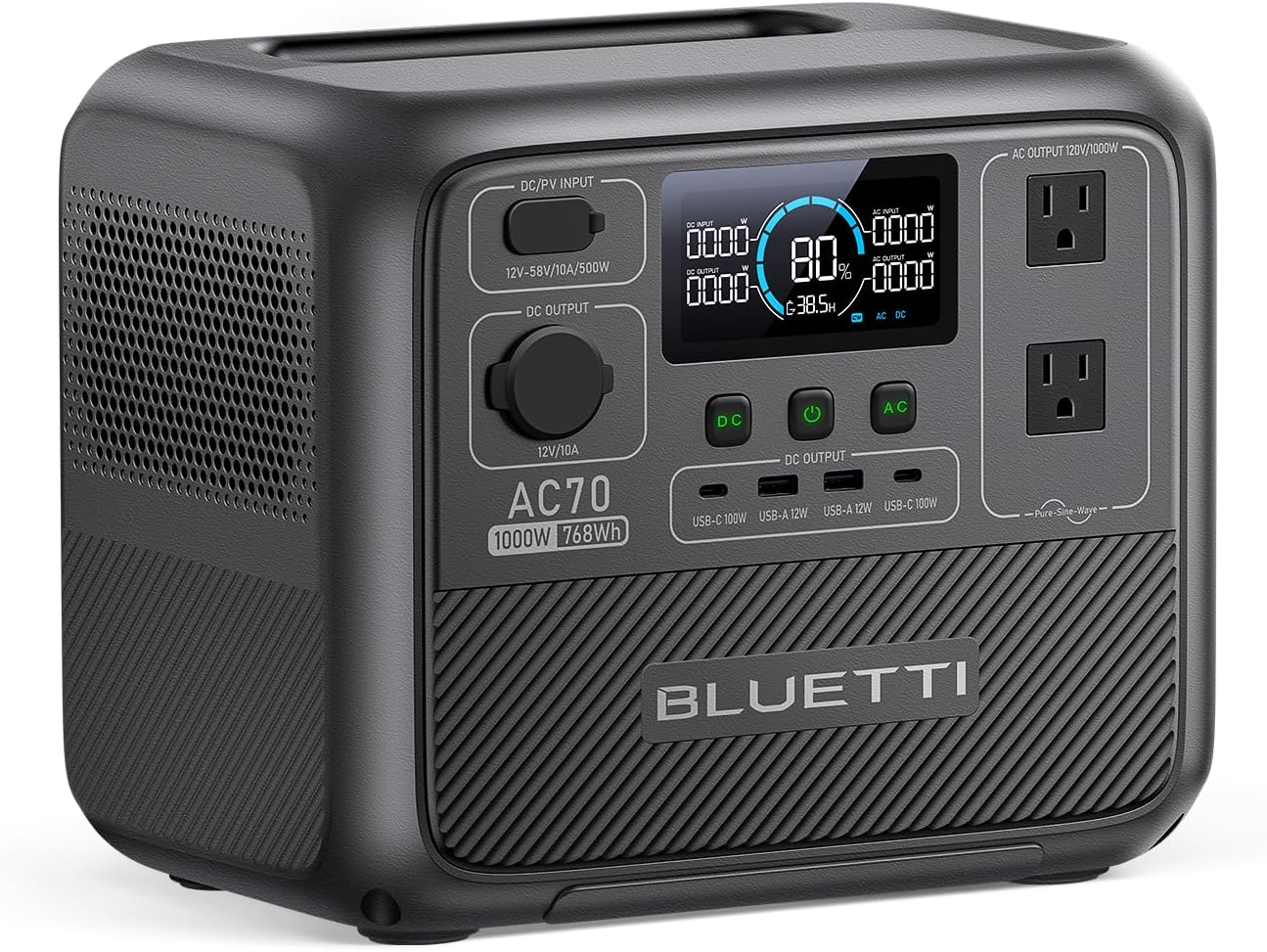
The Bluetti AC70 pairs 768 Wh of LiFePO4 storage with a 2,000 W power lifting mode that runs appliances that a 1,000 W inverter normally can’t. It’s a good option for weekend campers and apartment renters who want Bluetooth and Wi-Fi app control alongside the ability to run an electric kettle or a small radiant heater.
What are the Bluetti AC70's features?
Like the River 2’s X-Boost, the AC70’s Power Lifting mode adjusts voltage delivery to support certain resistive appliances above the inverter’s rated continuous output. The tradeoff is heat generation inside the BMS and a proportional reduction in total runtime.
- 768 Wh LiFePO4 battery with 3,000+ charge cycles
- 1,000 W continuous AC output with 2,000W Power Lifting mode
- Bluetooth and Wi-Fi app control via Bluetti app
- 45-minute recharge to 80% via AC input
- 200 W maximum solar panel input
- 7 output ports: 2 AC, 2 USB-A, 1 USB-C (100 W), 1 DC5525, 1 car socket
- $400 to $500 price range
Bluetti's BMS throttles lifting mode automatically when internal temperatures exceed operating thresholds, which prevents damage but may cut off mid-cycle appliances during sustained high-load use. This is a meaningful limitation for users planning to run a space heater for more than 20 to 30 minutes continuously.
What are the pros and cons of the Bluetti AC70?
The AC70 excels at pushing resistive loads beyond its inverter rating via Wi-Fi monitoring but throttles under sustained heating draws with less capacity than competitors.
Pros
- 2,000 W power lifting mode handles appliances that standard 1,000W inverters can’t
- Bluetooth and Wi-Fi app control for remote power monitoring
- 45 minutes to 80% charge is among the fastest in this category
- 3,000+ LiFePO4 cycles equals 8 or more years with weekly use
- Compact chassis relative to output capacity
Cons
- 768 Wh capacity is lower than the Jackery Explorer 1000 v2 at a similar price point
- Power lifting mode reduces runtime and generates additional heat inside the BMS
- Wi-Fi connectivity adds setup complexity if the app fails during an outage
- No UPS pass-through mode
EcoFlow DELTA 3 Classic
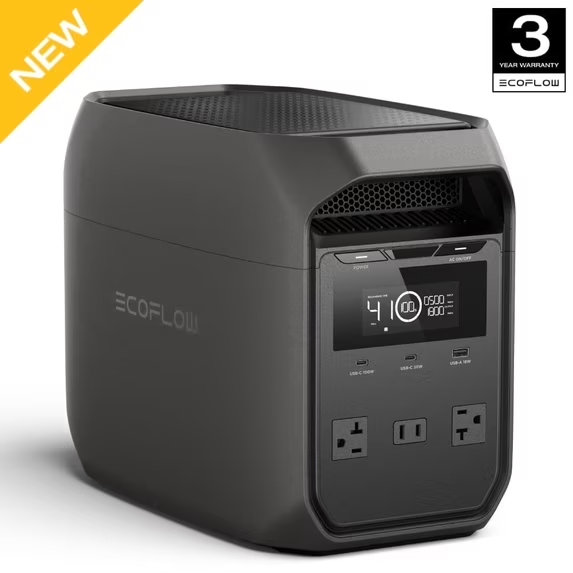
The EcoFlow DELTA 3 Classic stores 1,024 Wh and delivers 1,800 W continuous output with a 45-minute full AC recharge. It suits apartment dwellers and RV owners who need high wattage combined with a 10 ms UPS mode to protect computers and CPAP machines during a grid transfer.
What are the EcoFlow DELTA 3 Classic's features?
DELTA 3 Classic features include X boost up to 2,600 W for more output.
- 1,024 Wh LiFePO4 battery
- 1,800 W continuous AC output with X-Boost to 2,600 W
- 45-minute full AC recharge via X-Stream fast charging
- 10 ms UPS pass-through mode for sensitive electronics
- 500 W maximum solar panel input
- EcoFlow app with real-time wattage graphs and historical data
The 10 ms UPS switchover speed matters specifically for devices with capacitors that drain during a power interruption.
CPAP machines with heated humidifiers and desktop computers with active sessions restart or lose settings during a 20 ms or slower switchover. The DELTA 3 Classic's 10 ms transfer keeps those devices running without interruption. This distinguishes it from stations that market a "UPS mode" without specifying the actual switchover time in milliseconds.
What are the pros and cons of the EcoFlow DELTA 3 Classic?
The DELTA 3 Classic delivers the highest wattage and fastest UPS switchover for medical devices and computers, but commands a premium price over budget rivals.
Pros
- 1,800 W continuous output handles induction cooktops, microwave ovens, and power tools
- 45 minutes to 80% and about 60 minutes for a full AC recharge
- 10 ms UPS mode protects desktop computers and medical devices during grid transfers
- 1,024 Wh covers a portable refrigerator for 14 to 16 hours
- EcoFlow app includes historical power consumption tracking
Cons
- Pricing typically ranges from the mid-$500s to around $700, though promotional pricing can occasionally drop below $500.
- Heavier than the RIVER 2 Pro at approximately 23 pounds
- No solar compatibility with third-party MC4 connectors without an adapter
- EcoFlow firmware updates occasionally introduce temporary software bugs requiring patches
How to choose a cheap portable power station
Watt-hours and battery chemistry are the two specifications that determine whether a sub-$500 portable power station meets your actual backup needs, and every other spec depends on them first. A station with impressive wattage but low capacity exhausts itself in two hours regardless of its peak output rating.
How much capacity do you need from a portable power station?
The right watt-hour capacity depends on the total wattage of your devices and how many hours you need them to run.
For example, A 60 W portable refrigerator draws roughly 430 Wh over 12 hours, assuming a 60% compressor duty cycle. A CPAP machine without a humidifier draws 30 to 60 W and consumes 300 to 480 Wh per night. Adding smartphone and laptop charging brings most overnight outage loads to 500 to 800 Wh.
Expect 15 to 20 percent capacity loss from DC-to-AC inverter conversion. A station rated at 768 Wh delivers approximately 615 to 653Wh to AC-powered devices. Plan around the usable figure, not the nameplate capacity, or you will consistently run short.
- 768 Wh (RIVER 2 Pro, AC70): 1 to 2 nights of CPAP use, 10 to 12 hours of mini-fridge operation, or 2 days of laptop and phone charging
- 1,024 Wh (DELTA 3 Classic): 14 to 16 hours of mini-fridge operation, 2 full nights of CPAP use
- 1,070 Wh (Explorer 1000 v2): The most capacity in this guide, handles a mini-fridge plus device charging for a full day
For households that want backup power without relying on any grid recharge, our battery backup without solar guide covers capacity sizing for extended blackout scenarios.
Does LiFePO4 chemistry matter in a sub-$500 power station?
LiFePO4 batteries in the $300 to $500 range deliver 3,000 to 4,000 charge cycles before dropping to 80% capacity, compared to 500 to 800 cycles for NMC (nickel manganese cobalt) lithium-ion cells. For weekly use, that difference separates a 3-year lifespan from a 10-year lifespan.
All four stations in this guide use LiFePO4 cells, which is now the standard in the mid-range portable power station market.
What continuous output wattage should a budget power station have?
An 800 W continuous inverter covers laptops, Wi-Fi routers, LED lights, fans, and CPAP machines comfortably. It doesn’t cover portable air conditioners (700 to 1,200 W), induction cooktops (1,000 to 1,800 W), or microwave ovens (700 to 1,100 W).
A 1,000 W or 1,800 W inverter handles those appliances but shortens runtime proportionally. Match inverter wattage to your single highest-draw device, not to the sum of all devices running simultaneously.
For solar-assisted charging strategies that extend runtime across multi-day outages, our solar portable generator guide covers panel pairing recommendations for common portable station inputs.
How long can a budget power station last during an outage?
Real outage durations from tracked grid events show that multi-day outages occur often enough to exceed what a single 768 Wh charge provides, making the recharge strategy as important as capacity. A station without a solar panel or access to grid power during a cycling outage will exhaust within one to two days.
For example, North American Winter Storm Fern struck in January 2026 and knocked out more than 1 million customers across a 2,000-mile area from New Mexico to New England. Over 306,700 customers lost power in Tennessee, and some went over six days without electricity. A 768 Wh station without solar charging would have drained in under two days of essential device use.
Similarly, Hurricane Milton made landfall in Florida in October 2024 and cut power to 3.4 million customers. Grid restoration cycled on and off over multiple days, with brief windows of 30 minutes to 2 hours when utility power returned before failing again.
For stations with fast recharge times like the EcoFlow DELTA 3 Classic (45 minutes full) and the EcoFlow RIVER 2 Pro (70 minutes full), those brief windows were enough to recover meaningful capacity before the next outage cycle.
What devices can a portable power station under $500 actually run?
A portable power station in the $300 to $500 range can power many devices like CPAP machines, laptops, fans, and more. The limiting factors are always continuous wattage and total watt-hours. Below are some examples.
Devices all four stations handle:
- CPAP and BiPAP machines (30 to 90 W): 8 to 24 hours depending on humidifier use. See our medical device power outage checklist to brainstorm backup options for devices.
- Laptop computers (45 to 100 W): 8 to 16 full charges
- Smartphones (10 to 25 W): 30 to 80 full charges
- Wi-Fi routers (10 to 20 W): 2 to 4 days continuous
- LED light bulbs and strips (5 to 20 W): 30 to 80 hours
- Portable fans (20 to 80 W): 10 to 30 hours
Devices requiring 1,000W or 1,800W inverter:
- Induction cooktops (1,000 to 1,800 W): 30 to 60 minutes per session on 1,024 Wh stations
- Microwave ovens (700 to 1,100 W): 45 to 90 minutes total runtime
- Power tools like circular saws and jigsaws (1,200 to 1,500 W): short-burst operation only
Devices these stations can’t power:
- Central air conditioning compressors (2,000 to 5,000 W)
- Electric resistance water heaters (3,000 to 5,500 W)
- Electric clothes dryers (4,000 to 6,000 W)
A broader emergency supply list, including non-electrical items to pair with a portable station during a multi-day outage, is available in the power outage emergency kit guide.
Are affordable battery generators safe to use indoors?
LiFePO4-based portable power stations produce no combustion emissions and require no ventilation when operating indoors, which is the defining safety advantage over gasoline, propane, and dual-fuel portable generators. Battery-based stations can run in a bedroom, apartment, or sealed living space without any air quality risk.
The Consumer Product Safety Commission (CPSC) has flagged some fire incidents linked to unbranded lithium power bank products. However, these affect unregulated battery management system designs absent from Jackery, EcoFlow, and Bluetti stations.
Also, be aware that all four stations in this guide generate some fan noise. The Bluetti AC70 and EcoFlow DELTA 3 Classic produce more audible fan noise at high loads than the EcoFlow RIVER 2 Pro. This could make a difference if you power a CPAP machine at night and sleep next to the battery.
Quick recap
To summarize our top picks for power stations under $500:
- The Jackery Explorer 1000 v2 leads this category with 1,070 Wh and 1,500 W output.
- The EcoFlow RIVER 2 Pro is the lightest with a 70-minute recharge at $300 to $400.
- The Bluetti AC70 adds 2,000 W with Lower Lifting.
- The EcoFlow DELTA 3 Classic delivers 1,800 W output and a 45-minute recharge.