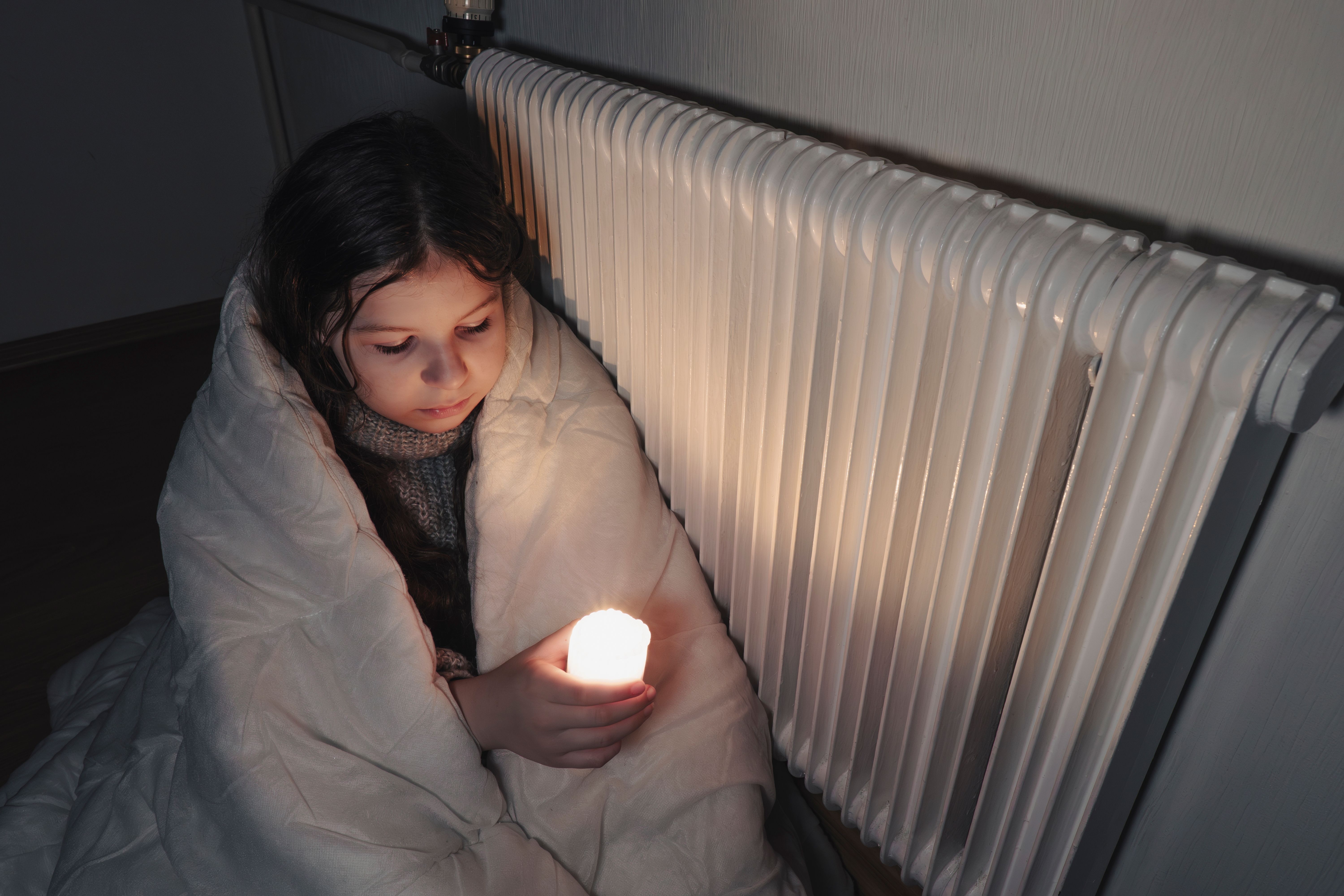


PowerOutage.us tracks more than 950 utilities serving over 200 million customers across the United States. Our outage data shows winter blackouts now run for days, so we’ll point you toward safe heat sources that work right when the grid fails.
How to heat your home without power
You heat a home without power by choosing one room to warm, using one safe heat source (like an indoor propane heater), and having good heat retention. Most people lose warmth because they try to heat the whole house and burn through fuel in a few hours. (Avoid doing that.)
Follow these four steps in order:
- Pick one small interior room and move everyone into it.
- Run a heat source rated for indoor use, like a catalytic propane heater.
- Seal the room so the heat stays put.
- Keep an eye on the temperature so you know when to leave for a warming center.
PowerOutage.us direct utility data shows Winter Storm Fern knocked out power for more than 1 million customers in January 2026, and the worst hit areas went 6 or more days without electricity. So a plan that lasts one night isn't really a plan. Next, we’ll detail each step of heating your place without power, starting with the room itself.
1. Move everyone into one room
A single interior room holds heat far better than an open house because it traps body warmth and cuts the volume you have to heat. Pick a room with few windows and no doors to the outside, ideally on a middle floor so heat from below rises into it. A bedroom or a small den works well. Bathrooms work too, and they protect the pipes inside them.
Close the door and shut the vents in every room you're not using. Drag your sleeping bags, blankets, and pillows in there. A few people in one small space raise the air temperature on their own, which is why families who hunker down together stay warmer than the ones who spread out. This step costs nothing, and it makes every later step easier. For more on cold-weather outages, see our winter storm power outage guide.
2. Choose safe heaters you can use indoors during an outage
A heater is safe to run indoors only when it carries an oxygen depletion sensor and a tip over shutoff, which is why a catalytic propane heater is the standard pick for a blackout. Those features cut the heater off before carbon monoxide or a knocked over flame turns deadly.
Never burn a heater indoors without ventilation and a working carbon monoxide detector, and never use a kitchen stove or oven for heat. The CDC ties a lot of post storm deaths to exactly that mistake.
Three fuel types run without electricity: propane, kerosene, and a battery for ignition only. The table below compares indoor-rated models by heat output and coverage.
| Heater | Heat output | Coverage | Safety features | Runtime | Best for |
|---|---|---|---|---|---|
| Mr. Heater Portable Buddy (MH9BX) | 9,000 BTU high, 4,000 BTU low | 225 square feet | ODS, tip-over shutoff | 3 to 6 hours | The all-around one-room pick |
| Mr. Heater Big Buddy (MH18B) | 18,000 BTU | 450 square feet | ODS, tip over shutoff, fan | Varies by tank | Open floor plans and larger rooms |
| Mr. Heater Little Buddy (MH4B) | 3,800 BTU | 95 square feet | ODS, tip-over shutoff | 3 to 6 hours | Bedrooms and very small spaces |
| DEWALT DXH12B | 12,000 BTU | 350 to 400 square feet | ODS, tip-over shutoff, electronic ignition | 7 hours on dual cylinders | Hands off, start with no pilot light |
| Camco Olympian Wave 6 | 6,000 BTU | 130 to 230 square feet | ODS, flameless catalytic | Runs on a 1-pound cylinder or bulk tank | The safest pick for sleeping areas |
A flameless catalytic heater like the Camco Olympian Wave 6 puts out less carbon monoxide per BTU than an open flame radiant burner, so it's the better call for a room where people sleep.
Propane burns fast under heavy use, so a single 1-pound cylinder might last only a few hours on high. Keep spare cylinders, crack a window for fresh air, and set the heater on the floor away from blankets.
Mr. Heater Portable Buddy (MH9BX): Our pick for an indoor-safe heater
The Mr. Heater Big Buddy (MH18B) is the best indoor safe propane heater for open living areas, with selectable output up to 18,000 BTU and long dual tank runtime.
- The Big Buddy heats an open living room, finished basement, or a drafty 400 plus square foot space where a smaller heater can't keep up.
- Selectable output runs at 4,000, 9,000, or 18,000 BTU and covers up to 450 square feet.
- An oxygen depletion sensor and a tip over auto shut off make it safe to run indoors.
- One or two 1-pound cylinders feed it, or a 20-pound tank through a hose for long multi-day runtime.
- It costs around 150 to 200 dollars, so it sits in reach for most outage budgets.
If you read the comparison table above and your space is bigger than one small room, the Big Buddy is the step up that lets you ride out a multi-day outage on a single 20 pound tank.
3. Know your heating options if you have a fireplace or wood stove
A wood or gas appliance gives you the most heat during an outage because it runs on stored fuel and needs no electricity to make heat. A wood-burning stove throws off steady warmth and lets you cook on top of it. A gravity-fed pellet stove keeps feeding pellets without a powered auger, so it still works when the grid's down. A gas fireplace insert with a standing pilot or battery ignition lights without house current.
Each of these vents its combustion gas up a chimney or flue, and that's the feature that makes them safer than a portable burner for long runs. Keep the flue clear, burn only seasoned wood in a wood stove, and check that your gas insert doesn't need a wall plug before you count on it. If you've got one of these, the rest of your plan gets a lot simpler.
4. Keep your body warm without burning anything
If you don’t have a radiant heat source, layer up in wool or fleece, cover your head, and stay dry, because wet fabric pulls heat right off your skin.
- Set up a tent inside the room, then put a second, smaller tent or a blanket fort inside that. The trapped air layers warm up from your body alone.
- Climb into a cold-rated sleeping bag and pile blankets on top.
- Boil water on a gas stove or grill, fill a hot water bottle, and keep it inside your layers. You're cooking with the stove here, not heating the room with it.
- Boil baseball-sized rocks in a covered pot of water, then set the pot in the tent to radiate heat for hours. Never heat-dry rocks, because they can crack and burst.
- Eat warm food and drink warm liquids to bring your core temperature up from the inside.
These tricks cost little. A good power outage emergency kit already has most of this gear.
5. Seal up and trap the heat you have
Sealing up the house keeps the heat you make from leaking out, and it's the cheapest thing you can do during an outage. Warm air slips out through gaps around windows and doors, and through the glass itself. (But crack a window if you are using an indoor propane heater.)
Cover windows with heavy blankets or tape clear plastic over the frames to add a layer. Push a rolled towel against the bottom of every door to block drafts. Open the curtains on south-facing windows during the day to let the sun warm the room, then close them at dusk to hold that heat in. If the room has a ceiling fan, set it to spin on low so it pushes the warm air back down. Each step is small, but together they stretch your fuel and keep you warm longer.
6. Avoid carbon monoxide risk
Carbon monoxide is an odorless, colorless gas that kills before most people notice a single symptom, which is why it is the deadliest hazard of heating without power. Anything that burns propane, kerosene, wood, or gasoline makes it. A battery-powered carbon monoxide detector on every floor is the one thing that’s imperative to have.
Follow these rules from the CDC without exception.
- Never run a generator or any gasoline engine inside a home, basement, or garage, or within 20 feet of a window, door, or vent.
- Keep snow clear of a running generator's exhaust.
- Never heat a home with a kitchen stove or oven.
The early symptoms are headache, dizziness, weakness, nausea, and confusion, and people who are asleep or who've been drinking can die before they ever feel them. If your detector goes off or anyone shows these signs, get everyone into fresh air and call 911. For safe setup, read our generator safety guide.
7. Set realistic expectations for how long the heat lasts
Your house holds usable heat for hours to a couple of days after the power fails, and how long it lasts depends on insulation, outdoor temperature, and home size.
Insulation comes first, because a tightly sealed, well insulated home loses heat much slower than a drafty one. Outdoor temperature comes second, since a bigger gap between inside and outside makes the heat leave faster. Home size comes third, because a small heated room cools off slower than a big open one.
So the move is to act early, not to trust some countdown. During Winter Storm Fern, ice took down line after line and left the worst hit areas dark for 6 or more days, way past the point any unheated house stays comfortable. Get your warm room set up before the indoor temperature drops, while you've still got stored heat to work with.
8. Know what temperature is too cold and when to leave
A body temperature below 95 degrees Fahrenheit is a medical emergency, and that number, not the thermostat, is what tells you it is no longer safe to stay home.
The CDC lists the adult warning signs of hypothermia as shivering, extreme fatigue, confusion, fumbling hands, memory loss, slurred speech, and drowsiness. In infants, it shows up as bright red, cold skin and very low energy. Frostbite shows as grayish yellow or waxy skin and numbness in the nose, ears, cheeks, chin, fingers, and toes.
Some people can't wait for those signs. Infants under 1 year old lose heat faster than adults, and they should never sleep in a cold room. Adults over 65, people who depend on powered oxygen or other medical devices, and pets all need a warm space sooner than a healthy adult does.
When you can't keep the room safely, leave for a community warming center. Find one through your local emergency management office, or by calling 2-1-1, the nationwide resource line described by Ready.gov. If you can't get there, call your local non-emergency line for a ride. If someone in your home relies on equipment, our medical device power outage checklist helps you plan ahead.
9. Keep your heat and medical equipment running with backup power
Backup power lets you run the electric parts of a heating system and keep medical devices running. A portable power station like the Jackery Explorer 1000 v2 stores 1,070 watt hours and runs indoors with no fumes, which is enough to power a furnace blower, recharge phones, and run a small medical device for hours. Pair it with a small generator outside to recharge it, and you can stretch heat across a multi day outage.
A natural gas or propane furnace makes its own heat, but it needs household current to run the blower and igniter. With a minor change to the furnace power connection, you can run that blower off a power station and get your central heat back.
And if anyone in the home relies on an oxygen concentrator or another powered device, size your backup to that device first, and check its real runtime before an outage hits. To match capacity to your home, see what size generator do I need for my house, and our roundup of the best home battery backup systems.