




PowerOutage.us tracks more than 950 utilities serving over 200 million customers, about 95 percent of the country. Our outage data on region and duration shows that walkie-talkies belong with an emergency radio in every storm kit.
How we ranked these walkie-talkies
We ranked these radios on manufacturer specs, published range, owner reviews, and our own PowerOutage.us outage data.
Also, we looked beyond the advertised range on a box. "36 miles" on a blister pack means line of sight between two mountaintops. In a neighborhood, an FRS radio reaches around 0.5 to 2 miles, and we ranked walkie-talkies on those numbers.
Real-world approximate range
We used published field tests and owner reports instead of marketing miles.
Battery resilience
We favored radios that fall back to AA or AAA alkalines, because rechargeable batteries eventually run out in a long outage.
NOAA weather channels
We favored radios that get weather alerts with no internet access.
Owner reliability
We looked at reviews for audio clarity, static, and build complaints.
Price per radio
We compared what it costs to put a radio in every hand of a family.
Walkie-talkie comparison
Here’s a look at how these walkie-talkies compare on service, range, power, and cost.
| Radio | Service and license | Approximate range | Power options | Approx price |
|---|---|---|---|---|
| Midland T77VP5 | FRS, none | 0.5 to 2 mi neighborhood, 6 mi open | Rechargeable + AA | $100 per pair |
| Retevis RT22 4-pack | FRS, none | About 0.5 mi in obstructed terrain | Rechargeable, USB | $60 per 4 |
| Rocky Talkie 5 Watt | GMRS, $35 license | 2 to 8 mi in favorable, more via repeaters | USB-C, 4 to 6 days | $180 each |
| Motorola T600 H2O | FRS, none | About 2 mi terrain, 6 mi open | Rechargeable + AA | $120 per pair |
| Midland LXT600VP3 | FRS, none | 0.5 to 2 mi neighborhood, 4 mi open | Rechargeable + AAA | $60 per 3 |
5 Best walkie-talkies for family emergencies
Let’s look at each emergency walkie-talkie in detail.
1. Midland T77VP5
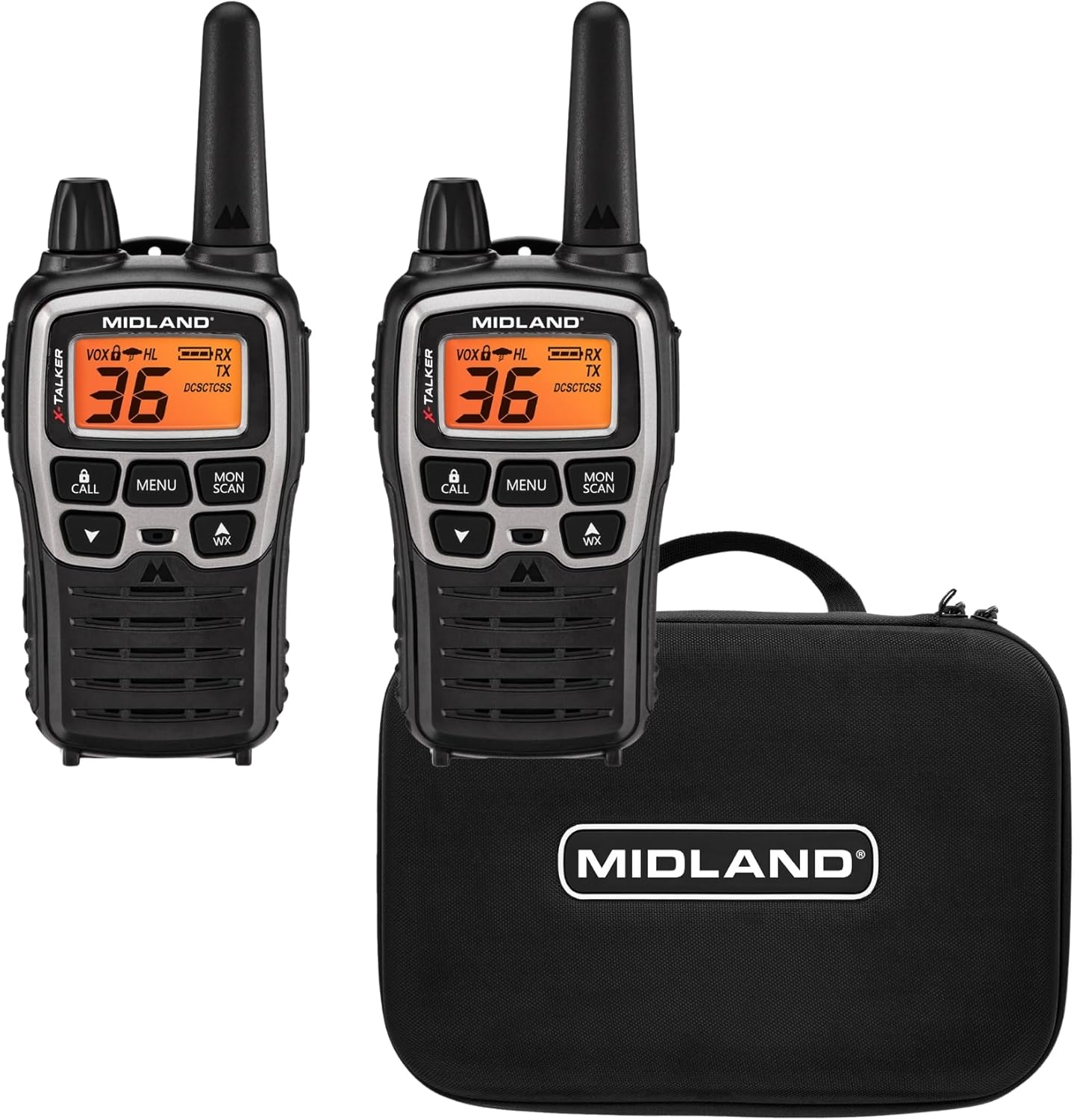
The Midland T77VP5 covers the family basics in one box: NOAA weather alerts, rechargeable packs with AA fallback, and about 15 hours per charge.
Households that want one dependable pair get the most here. You should choose the T77VP5 if you want weather alerts and battery flexibility without stepping up to a license.
- FRS, no license needed
- Approximate range of 0.5 to 2 miles in neighborhoods, up to about 6 miles in the open
- Rechargeable packs included, with 3x AA alkaline fallback
- NOAA weather scan and alert across 10 weather channels
- About 15 hours per charge; cases and headsets included
Pros
- NOAA alerts are built in.
- Runs on AA alkalines when the grid stays down.
- Clear audio across parks and ball complexes, per owners.
- Kid-simple controls.
Cons
- The 38-mile box claim has nothing to do with real use.
- Not waterproof, only splash-tolerant.
Midland T77VP5 reviews
Amazon owners rate the T77VP5 4.3 stars on over 900 reviews. Families like the audio clarity, the carrying case, and the weather alerts. Some customers had reception issues, on the other hand.
Should you buy the Midland T77VP5?
You should buy the T77VP5 if you want a reliable pair of walkie-talkies. You should pass on it if you need wider coverage through terrain, where the GMRS Rocky Talkie performs better.
2. Retevis RT22 4-pack
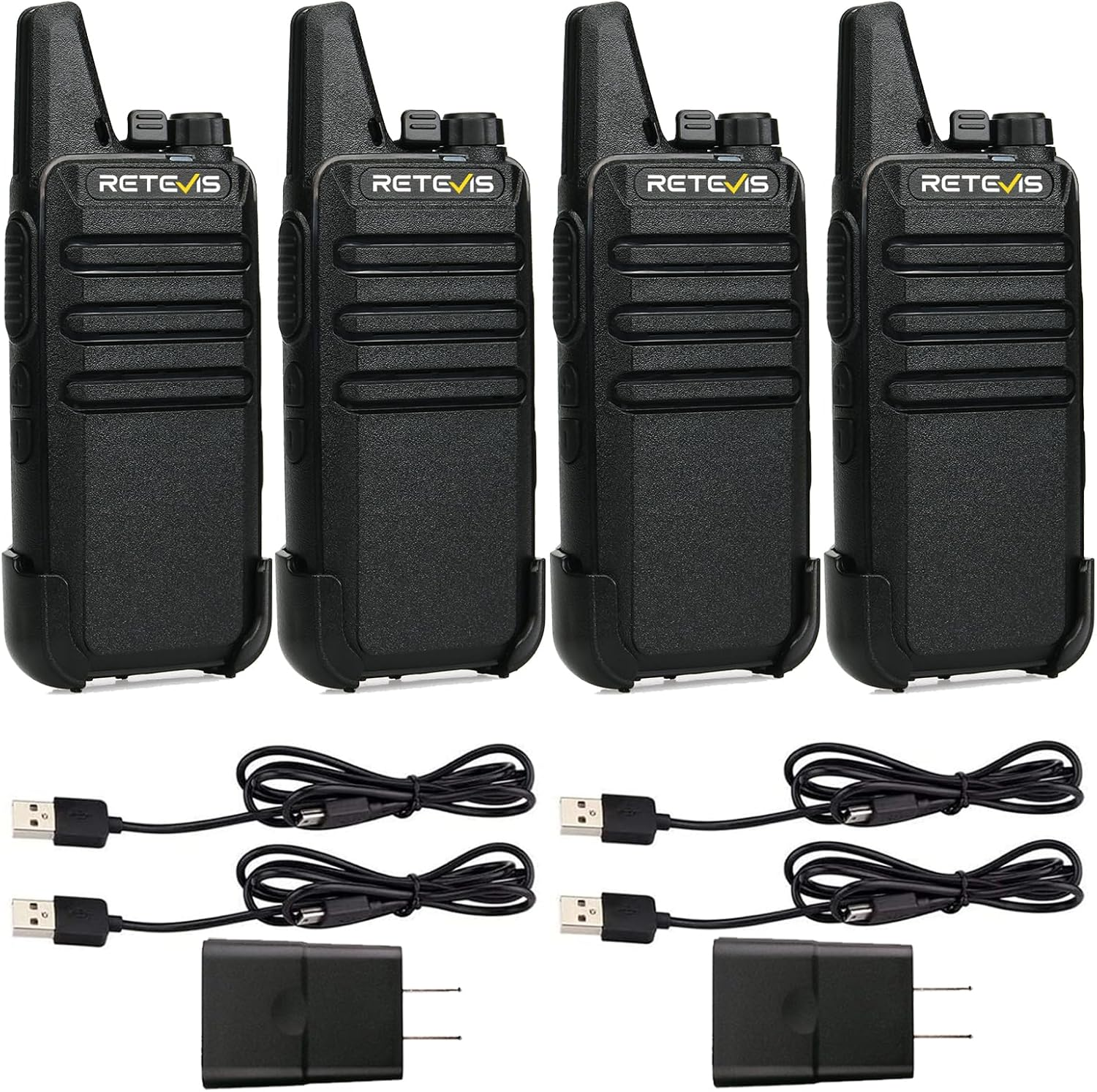
The Retevis RT22 puts four pocket radios in the family for about $60, at roughly $15 per hand.
This four-pack is great for households that talk across the house, the yard, and down the street. You should consider the RT22 pack if your goal is close-range family coordination, but not cross-town reach.
- FRS, no license needed
- Approximate range of about 0.5 miles with obstructions
- 1,000 mAh rechargeable with USB charging, up to about 18 to 24 hours of typical use
- 16 channels with 121 privacy codes
- Pocket-size, with earpieces included
Pros
- About $15 per radio.
- Four radios cover the whole family at once.
- Small enough for kids' pockets.
- USB charging from any power bank.
Cons
- Half a mile is the approximate reach in a neighborhood.
- No weatherproofing.
Retevis RT22 reviews
Owners rate the RT22 about 4.5 stars on Amazon across more than 4,000 reviews. Buyers like the multi-pack price and the included earpieces. The complaints center on the audio fading past a few blocks.
Should you buy the Retevis RT22 4-pack?
You should buy the RT22 pack if you're outfitting everyone for close-range coordination on a budget. You should pass on it if family members will roam past a half mile, where the Midlands and the Rocky Talkie hold the signal for longer.
3. Rocky Talkie 5 Watt
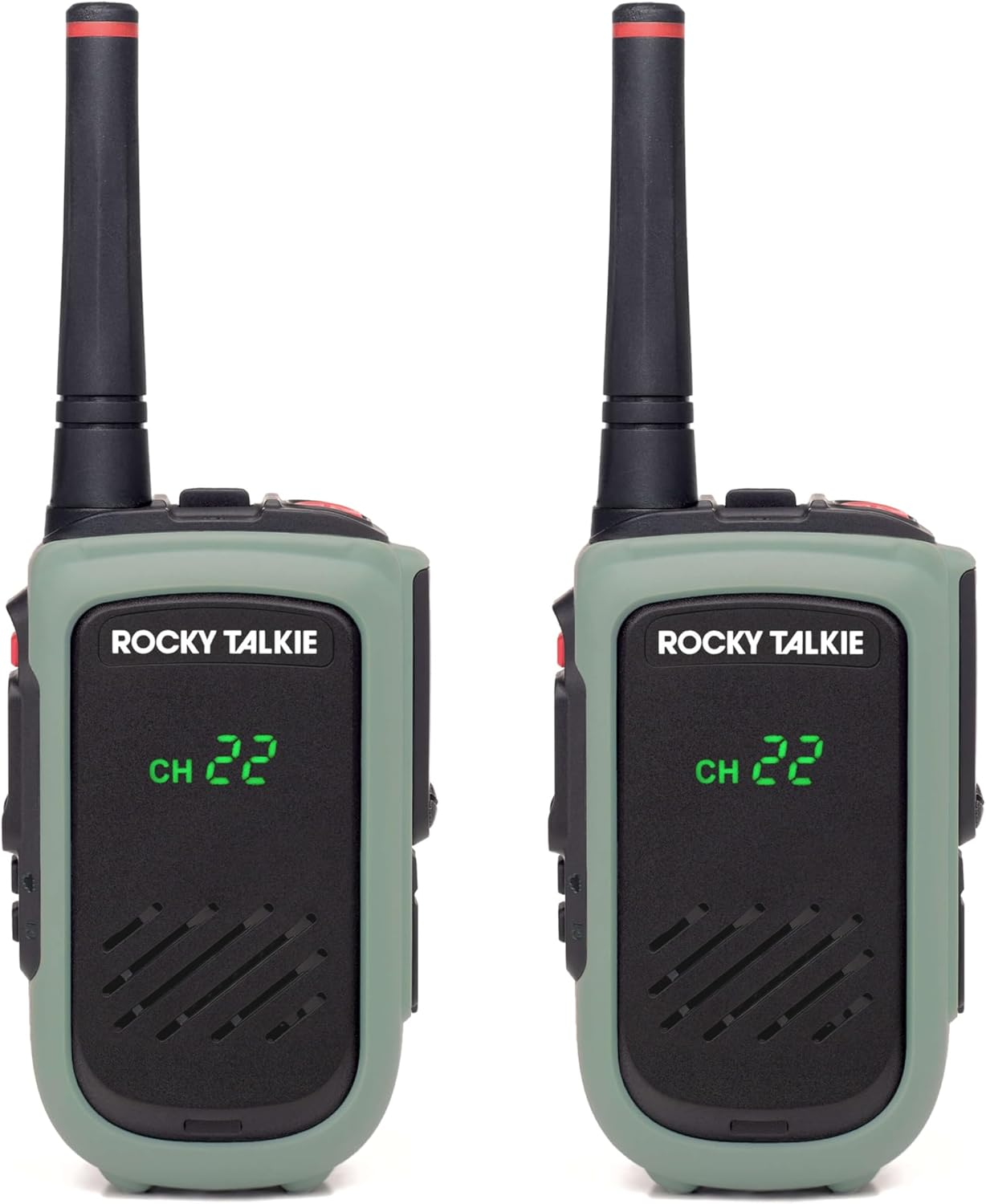
The Rocky Talkie 5 Watt gives you the legal maximum wattage for handheld GMRS communication and holds 4 to 6 days of battery.
Families spread across a real distance get the most from the Rocky Talkie 5 Watt. You should consider the Rocky Talkie if relatives are miles apart and you’re OK spending $35 on the 10-year family GMRS license.
- GMRS radio (requires $35 FCC license, no exam, covers immediate family for 10 years)
- Approximate range of 2 to 8 miles in terrain; repeater channels stretch to 10 to 30 miles
- 1,800 mAh battery, USB-C, 4 to 6 days per charge, rated to -20 F (battery and radio operation)
- 11 NOAA weather channels and 8 repeater channels
- IP67 waterproof, submersible to 1 m
Pros
- Provides better reach than 2 W radios.
- The battery covers most of a week.
- Repeater access multiplies the range.
- IP67 build makes it storm-worthy.
Cons
- Costs about $180 per radio.
- The GMRS license is required.
Rocky Talkie 5 Watt reviews
Reviewers on Amazon rate the Rockie Talkie 4.6 stars overall. Owners like the quality and range, but some say the price is a bit expensive.
Should you buy the Rocky Talkie 5 Watt?
You should buy the Rocky Talkie 5 Watt if you want to communicate over multiple miles during an outage, and you’ll get the GMRS license. You should pass on it if your family stays within a few blocks, where a $100 FRS pair covers the job.
4. Motorola T600 H2O
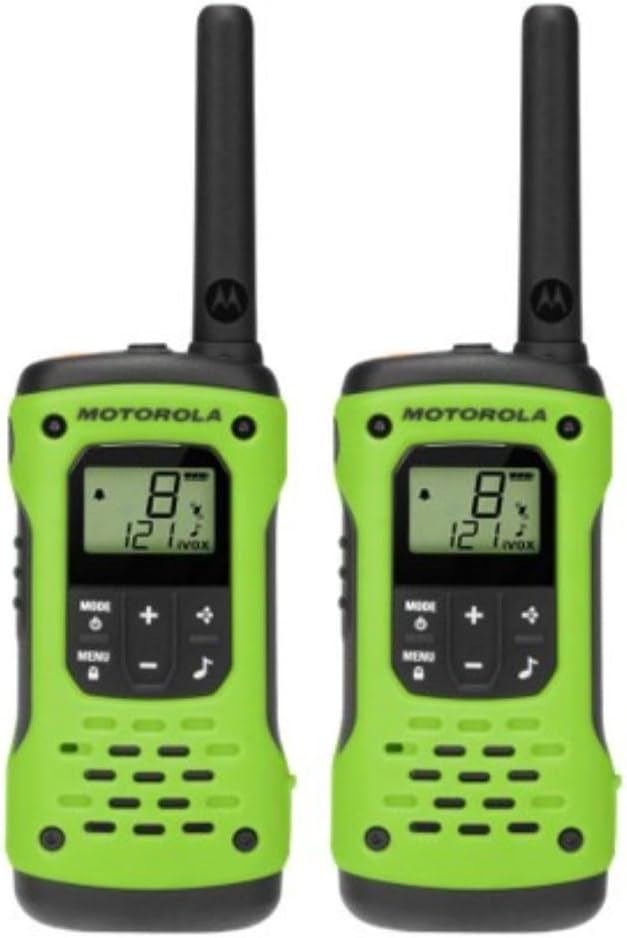
The Motorola T600 H2O carries an IP67 rating, floats, and doubles as a flashlight with white and red LEDs.
Flood-zone households and boating families get the most from the T600 H2O. You should consider the T600 H2O if you want to plan for an emergency involving water, where other radios wouldn’t hold up.
- FRS, no license needed
- Approximate range of about 2 miles in terrain, up to 6 in the open
- IP67 waterproof, floats, built-in white and red LED flashlight
- Rechargeable NiMH with AA alkaline capability as a fallback
- 22 channels, 121 privacy codes, 11 NOAA channels
Pros
- Floats and survives 30-minute submersion.
- Flashlight offers a second outage capability.
- AA fallback keeps it alive long-term.
- NOAA weather channels.
Cons
- Battery life can be shorter than that of competitors.
- A few owners dispute the waterproofing after failures.
Motorola T600 H2O reviews
Owners rate the T600 H2O about 3.9 stars on Amazon. Reviewers like that the radios float and are user-friendly. Complaints revolve around battery life, which can get worse in the cold.
Should you buy the Motorola T600 H2O?
You should buy the T600 H2O if you’re planning communication around water or boating. You should pass on it if the runtime per charge is more important, where the Rocky Talkie clearly wins.
5. Midland LXT600VP3
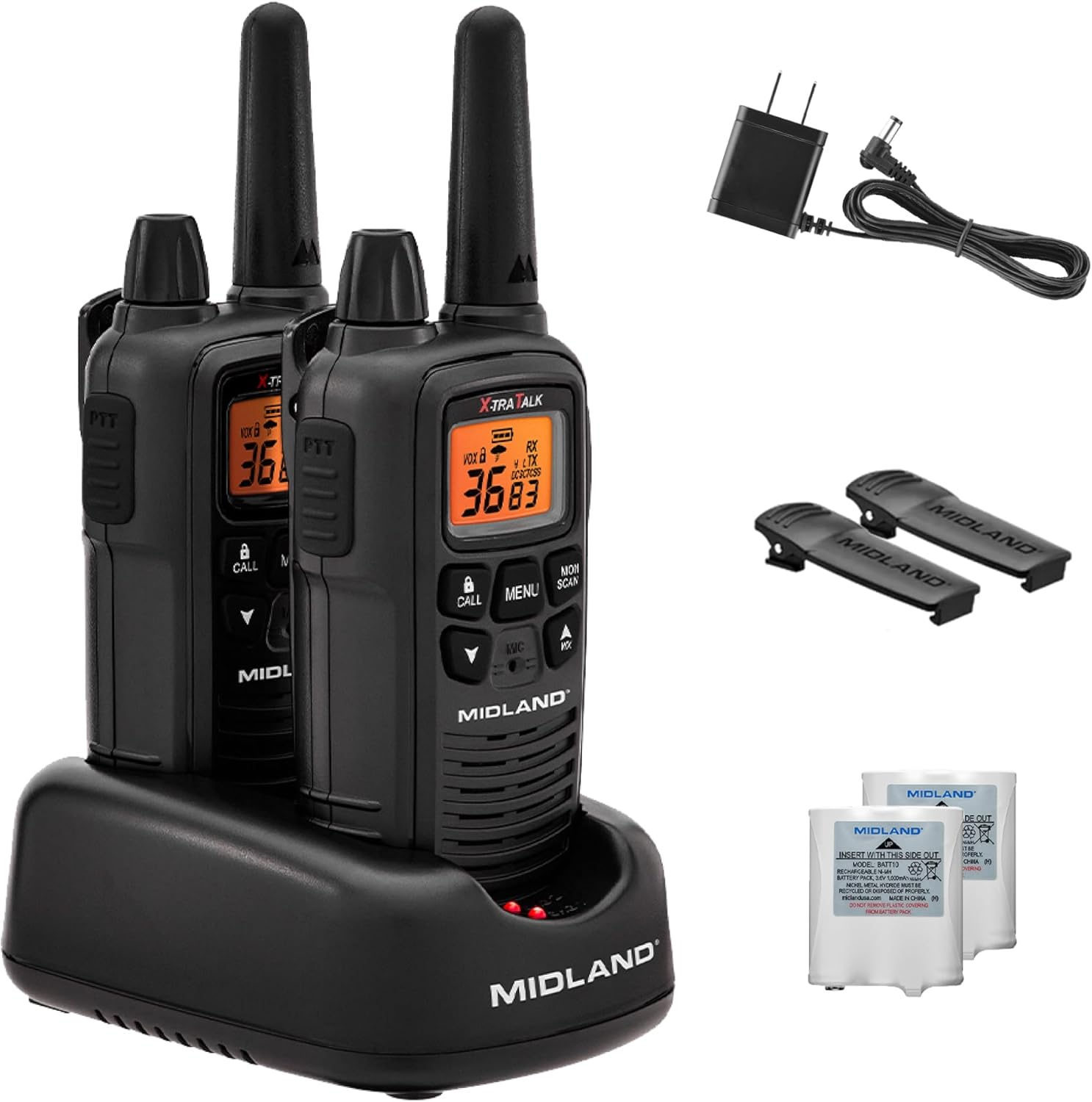
The Midland LXT600VP3 runs on its included rechargeable packs or on 3 AAA alkalines per radio, whichever you have in an outage.
Check out the Midland LXT600VP3 if you have a good stockpile of AAA batteries. You should consider the LXT600VP3 multi-packs if your kit already holds AAA alkalines and you want radios that operate from the same supply.
- FRS, no license needed
- Approximate range of 0.5 to 2 miles in neighborhoods, up to 4 open
- Rechargeable NiMH packs included, or 3x AAA alkalines per radio
- NOAA weather scan and alert on 10 channels
- 36 channels with 121 privacy codes
Pros
- AAA fallback works with the batteries most kits stock.
- About $15 to $22 per radio in multi-packs.
- NOAA alerts at a budget price.
- 36 channels for more options during storm chatter.
Cons
- Water-resistant only, no IP rating.
- Reception covers blocks, not miles.
Midland LXT600VP3 reviews
Amazon reviewers rate the LXT600VP3 4.3 stars (from over 5,000 reviews). Owners note that it has clear reception across parks and campgrounds, and they like using AAA batteries, which are versatile for other pieces of gear. Complaints mention the lower FRS range limits.
Should you buy the Midland LXT600VP3?
You should buy the LXT600VP3 if battery logistics decide your kit and multi-pack pricing fits your family size. You should pass on it if you need weather-sealed hardware, where the T600 H2O survives the water.
Storms cut cell service
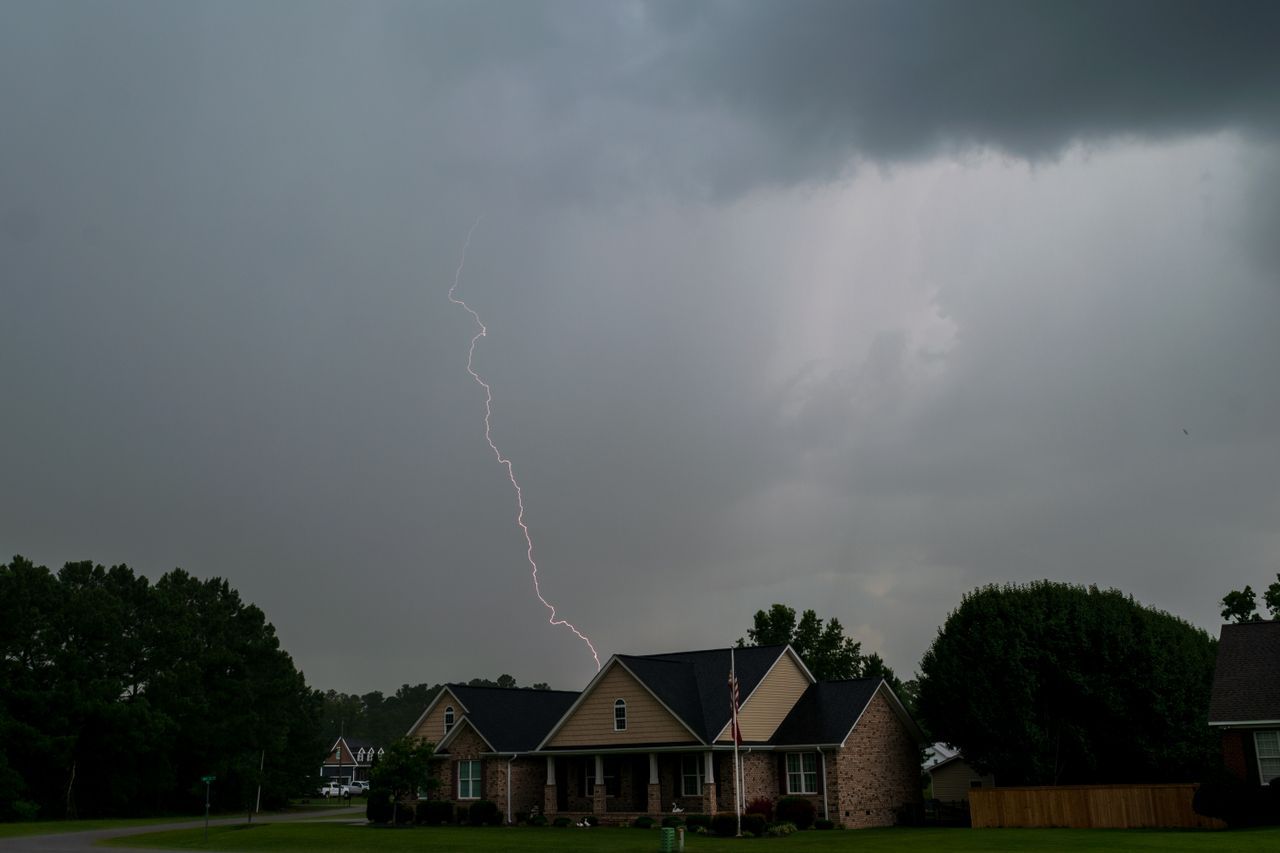
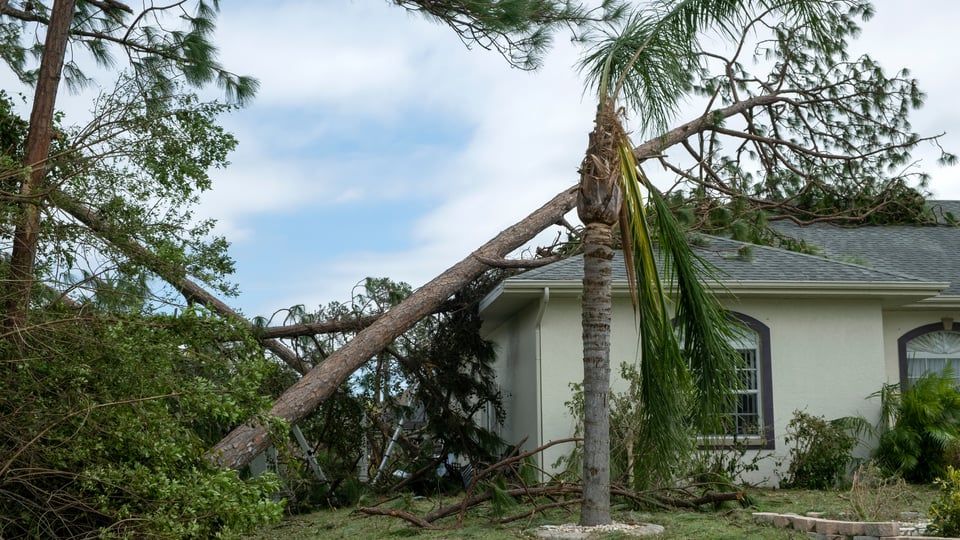
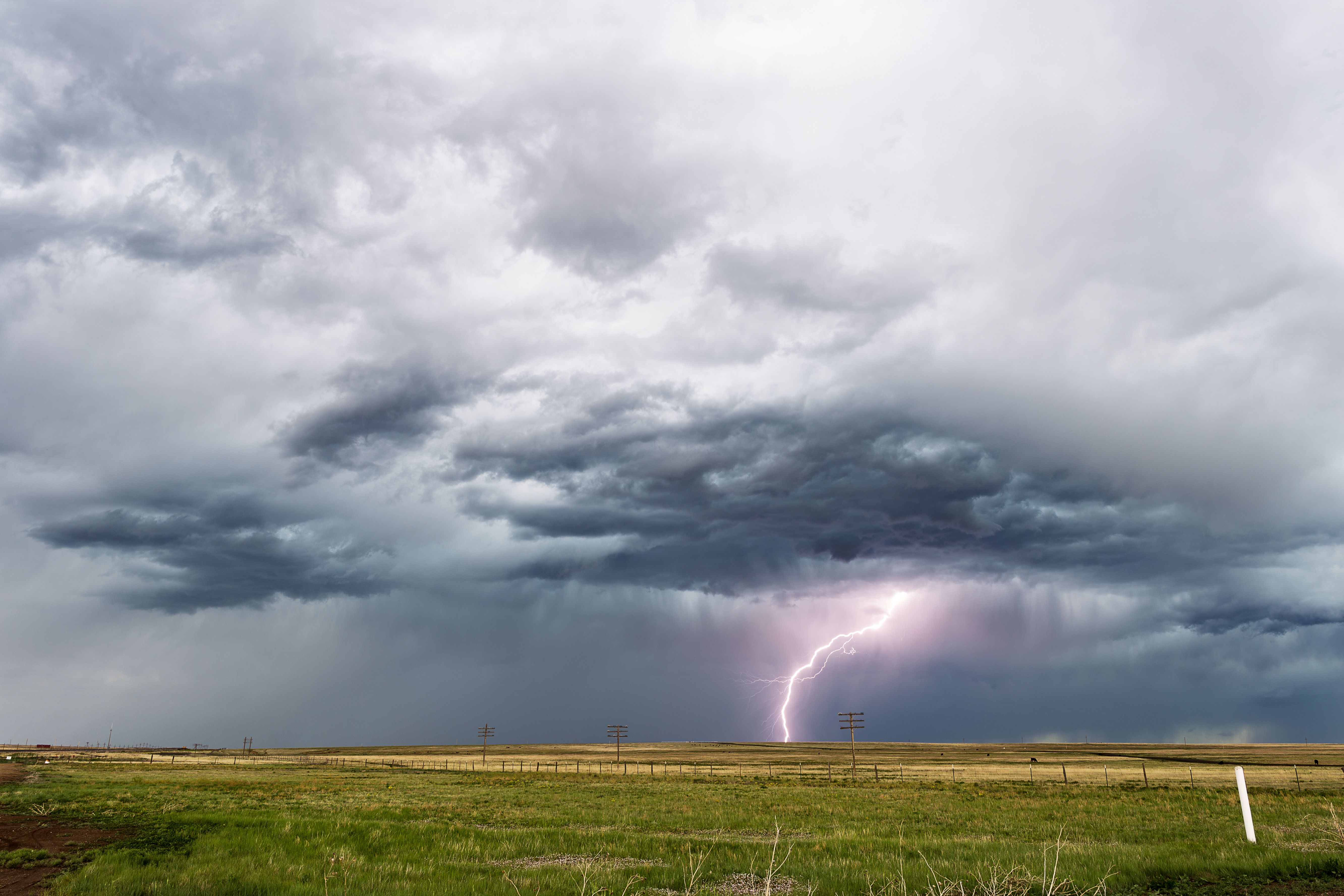
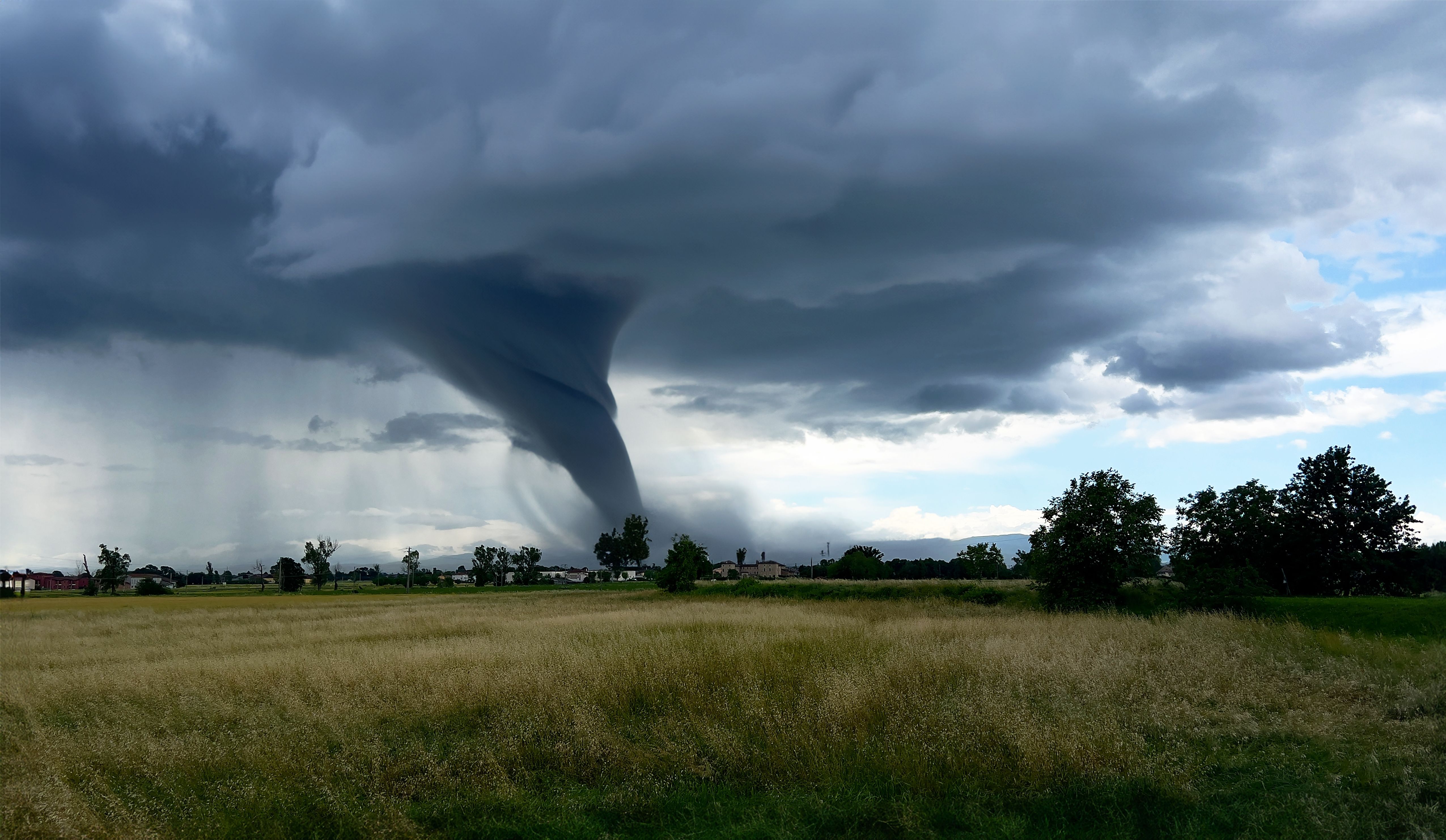
The Houston Derecho knocked out power to about 1 million Texas customers in May 2024 with 100 mph winds and almost no warning, scattering families mid-errand as a severe thunderstorm power outage hit. Walkie-talkies in the kit work the moment you pick them up, no towers required.
Similarly, Winter Storm Fern cut power to over 1 million customers across the South in January 2026, with the hardest-hit areas dark for 6 days. Through a winter storm power outage that long, families with radios don’t have to rely on dying phones.
Choose walkie-talkies for family emergencies
Choosing the right walkie-talkie includes looking at reviews for real-world range, deciding between FRS or GMRS coverage, and picking the battery type you want to use.
Believe the field tests, not the box
In suburbs, FRS radios reach 0.8 to 1.2 miles, while 5 W GMRS radios reach 2 to 5 miles. Dense woods cut both roughly in half, and open ground about doubles them.
FRS or GMRS
FRS doesn’t require a license and covers a block or a park. GMRS costs $35 for a 10-year FCC license (no exam required), covers your immediate family, and includes repeater access.
Batteries decide the long outage
You should favor radios with AA or AAA fallback, and keep power banks for a power outage charged for the USB models.
NOAA channels earn their spot
Weather alerts that don’t require the internet make the radio more useful in an emergency.
Stage them before the storm
Keep radios in your power outage emergency kit charged, and agree on the channels you’ll use to prepare for a storm before the season starts.