



A good headlamp is one of the most practical tools to have during a power outage. Unlike a flashlight, it keeps both hands free for everything from checking your electrical panel to navigating a dark house or setting up a generator. The best option depends on what you need: long battery life for extended outages, waterproof durability for storm conditions, or a lightweight rechargeable design you can keep within reach.
PowerOutage.us tracks more than 950 utilities serving over 200 million customers, about 95 percent of the country, and we consider outage patterns alongside our storm prep guidance to rank reliable emergency lights. An extended outage means long nights, and a headlamp is the light that leaves both hands free to reset a breaker, fuel a generator, or carry a child. The one that earns its place runs for days on low and keeps a backup power path open when the grid stays down.
How we ranked these headlamps
These rankings draw on manufacturer specs, lab and owner reviews, and PowerOutage.us outage data.
The criteria below run from the factor we weighted heaviest to the one we weighted least.
- Low-mode runtime: First, because dim, steady light is what carries a household through long nights.
- Power flexibility: Second, because a built-in rechargeable battery, a swappable battery, or AAA backup decides whether the light keeps working when you can’t recharge it.
- Beam and modes: Third, because a flood beam for close work, a spot beam for distance, and a red light that saves night vision make a headlamp useful in a blackout.
- Durability: Fourth, because outage work often happens outside in the rain.
- Comfort and value: Last, measured against the cost of a full outage kit.
Be aware that using full brightness drains any headlamp fast. For a multi-day outage, the number that’s important is the low-mode runtime, paired with a way to recharge or swap batteries that doesn’t depend on the grid.
5 Best headlamps for power outage preparedness
The five best headlamps run from a 1.59-ounce ultralight to a 1,200-lumen workhorse that shrugs off submersion.
1. Petzl Actik Core
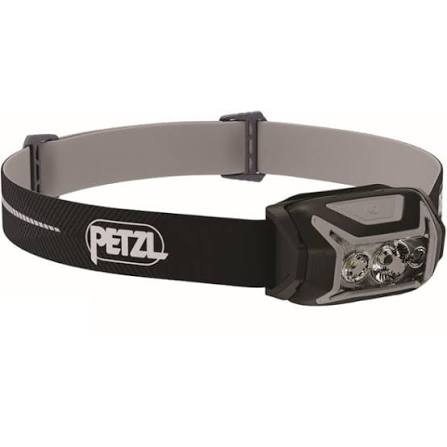
The Petzl Actik Core runs on a USB-rechargeable battery or three AAAs and lasts 100 hours on low, our top headlamp for a long outage.
A rechargeable battery that swaps for three AAAs, 100 hours on its lowest setting, and a red light make the Petzl Actik Core the headlamp to keep in every outage kit.
Reach for the Actik Core when you can’t count on power returning soon. Charge the included CORE battery over USB before the storm, and if it runs dry mid-outage, drop in three AAAs and keep going. The wide and focused beam handles close tasks around the house and a walk to the garage.
- Brightness: Up to 650 lm (450 lm on AAAs), dims to 7 lm
- Power: 1,250 mAh CORE battery recharges by USB, or runs on 3 AAAs
- Runtime: About 2 hours on high, 7 hours on standard (100 lm), 100 hours on low
- Red light: 2 lm for up to 60 hours, plus a strobe
- Build: 88 g (3.1 oz), IPX4, lock mode
What are the pros and cons of the Petzl Actik Core?
Pros
- Runs on a rechargeable battery or standard AAAs.
- Lasts 100 hours on low.
- Weighs about 3 ounces.
- Throws a wide or focused beam.
Cons
- Only IPX4, so rain is fine but submersion is not.
- Drains in about 2 hours on high.
- Costs more than basic AAA headlamps.
What buyers report
Owners credit the hybrid battery, the simple single-button controls, and the comfortable strap as highlights. Their cautions are that max output burns through a charge quickly and the water rating trails rugged rivals.
Should you buy it?
Choose the Actik Core to run one headlamp that recharges before a storm and falls back on AAAs if the outage drags on. Skip it if you need a fully waterproof light.
2. Black Diamond Storm 500-R
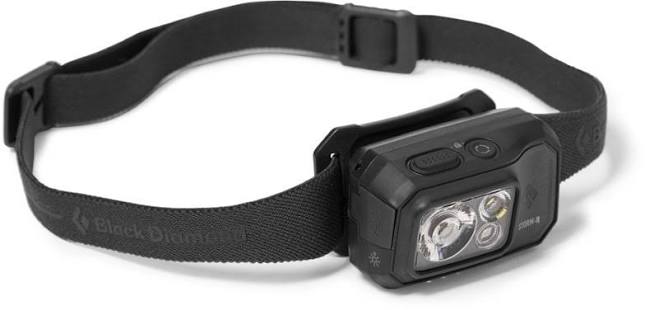
The Black Diamond Storm 500-R is best for waterproof, rugged light with a low mode that runs about 350 hours.
An IP67 waterproof body, a 2,400 mAh battery, and a low setting that runs about 350 hours make the Black Diamond Storm 500-R the toughest headlamp here.
Pick the Storm 500-R to work outside in a storm, whether that means clearing debris, checking a generator, or walking the yard in the rain. The built-in battery meter shows how much charge is left, so you can plan the night.
- Brightness: 500 lm high, 250 lm medium, 6 lm low
- Battery: Built-in 2,400 mAh Li-ion, recharges by micro-USB
- Water resistance: IP67, tested to 1 meter underwater for 30 minutes
- Modes: Red, green, and blue night-vision lights, strobe, lock mode
- Runtime: About 7 hours high, 19 hours medium, 350 hours low
What are the pros and cons of the Black Diamond Storm 500-R?
Pros
- Stays sealed in heavy rain or a dunk.
- Offers the longest low-mode runtime here.
- Shows remaining charge on a battery meter.
- Adds red light for night vision.
Cons
- Charges over older micro-USB.
- Has no AAA backup.
- Triggers its PowerTap brightness boost by accident.
What buyers report
Owners praise the brightness, the long list of modes, and the battery life. Their complaints are an overly sensitive PowerTap feature and the micro-USB port.
Should you buy it?
Buy the Storm 500-R to get the most runtime and the best weather protection in one light. Pass on it if you want AAA backup or USB-C charging.
3. Fenix HM55R Renegade
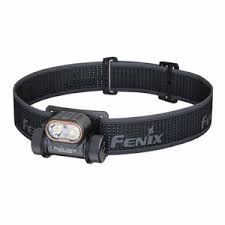
The Fenix HM55R Renegade is best for brightness when you have a job that requires powerful lighting.
A 1,200-lumen spotlight, IP68 waterproofing, and a swappable rechargeable battery make the Fenix HM55R Renegade the headlamp for jobs that need real light.
Choose the HM55R when you need to check the roof, the yard, or a downed limb, then drop to a low floodlight for the rest of the night. It pairs a spot beam with a flood beam and a red light bright enough to see across a room.
- Brightness: Up to 1,200 lm spot, flood at 350, 70, or 5 lm
- Power: 18350 rechargeable battery with waterproof USB-C charging
- Runtime: Up to 120 hours on low flood, about 6.5 hours on high spot
- Red light: 70, 30, or 5 lm
- Build: 3.7 oz with battery, IP68, 175 m beam
What are the pros and cons of the Fenix HM55R Renegade?
Pros
- Delivers the brightest light here.
- Accepts a spare battery for extra runtime.
- Runs a strong red light.
- Survives submersion.
Cons
- Weighs about an ounce more than ultralights.
- Sells the spare battery separately.
- Takes practice to find the right mode.
What buyers report
Reviewers like the output for the size, the strong red light, and a button that works with gloves on. Their notes are the extra weight on the head and a small learning curve with the modes.
Should you buy it?
Buy the HM55R Renegade to get the brightest beam and a swappable battery in a compact body. Pass on it if you want the lightest possible headlamp.
4. Nitecore NU25 UL
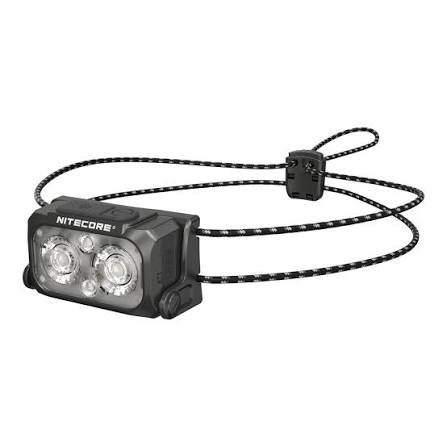
The Nitecore NU25 UL is best to keep a rechargeable light in every bag and drawer at just 1.59 ounces.
At 1.59 ounces with dual beams and USB-C charging, the Nitecore NU25 UL is the headlamp that’s easy to put in every bag, car, and bedside drawer.
Choose the NU25 UL to give each family member their own light. It weighs almost nothing, tops up quickly over USB-C, and its flood beam on 6 lumens stretches a charge to 45 hours.
- Brightness: Up to 400 lm, with 200, 60, and 6 lm floodlight levels
- Battery: Built-in 650 mAh, charges by USB-C in about 1.5 hours
- Runtime: 2 hours 40 minutes high, 10 hours 25 minutes at 60 lm, up to 45 hours at 6 lm
- Red light: 10 lm for up to 16 hours
- Build: 45 g (1.59 oz), IP66, lockout mode
What are the pros and cons of the Nitecore NU25 UL?
Pros
- Weighs almost nothing.
- Charges over USB-C.
- Offers both spot and flood beams.
- Locks out to prevent accidental drain.
Cons
- Holds the smallest battery here.
- Uses a thin cord headband with less cushion.
- Has no AAA backup.
What buyers report
Owners appreciate the featherweight build, the two-button controls, and the fast USB-C charge. Their notes are the small battery and the minimal headband.
Should you buy it?
Buy the NU25 UL to equip every person in the house with a light that’s always in reach. Pass on it if you want a swappable battery or the longest runtime.
5. Energizer Vision HD+ Focus
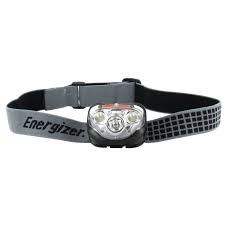
The Energizer Vision HD+ Focus is best to outfit a whole household on a budget with batteries you already own.
Three included AAA batteries, 400 lumens, and an adjustable beam make the Energizer Vision HD+ Focus the headlamp to buy when you need several for the price of one premium light.
Buy the Vision HD+ Focus to outfit a household without charging anything. It runs on AAA batteries you can swap in seconds, so a pack of spares in the kit keeps it going through a long outage. Lithium AAAs store far longer than alkaline.
- Brightness: Up to 400 lm, 85 m beam
- Power: 3 AAA batteries (included), no charging needed
- Modes: White spot, white flood, and red, with Digital Focus beam control
- Runtime: About 3 hours on high, up to 35 hours on low
- Build: IPX4, survives a 1 m drop
What are the pros and cons of the Energizer Vision HD+ Focus?
Pros
- Costs the least here.
- Needs no charger or grid power.
- Narrows or widens the beam with Digital Focus.
- Remembers your last beam setting.
Cons
- Runs out fast on high.
- Resists splashes only.
- Burns through disposable batteries.
What buyers report
Owners appreciate the low price, the easy AAA swaps, and the adjustable beam. Their notes are the short runtime on high and the lighter build compared with pricier lights.
Should you buy it?
Buy the Vision HD+ Focus to put a dependable light in every room on a budget. Pass on it if you want USB recharging or serious weatherproofing.
Power outages and why runtime and backup power matter
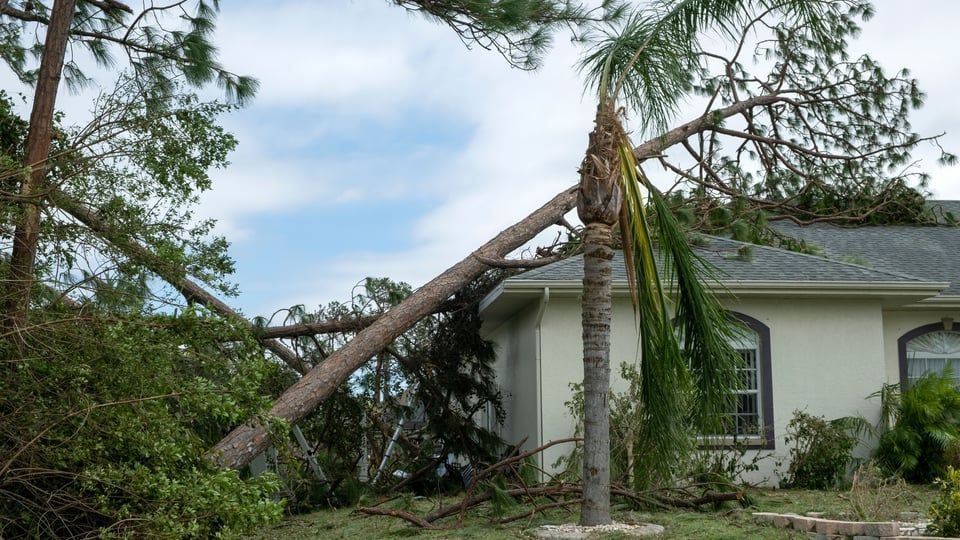
In 2024, Hurricane Helene knocked out power for 4.79 million customers, and parts of western North Carolina sat dark for 14 days. Two weeks of long nights make it important to have lights that last long and have a backup power plan.
In January 2026, Winter Storm Fern left over 1 million customers across the South dark for up to six days. A headlamp that runs for days on low, with a spare battery or AAAs in reserve, is what carries a household through a stretch like that.
How to choose a headlamp for outages
Choosing the right headlamp involves comparing low-mode runtime, power source, and weather protection.
- Read the low-mode runtime, not the max lumens. Days on low is what matters in a long outage.
- Match the power source to your situation. AAAs and swappable batteries work with the grid down; a built-in battery needs a charge source, and our solar power bank guide covers that pairing.
- Look for a red light. It saves your night vision and won’t wake the household.
- Size the brightness to the job. A few hundred lumens handle the house; save 1,000 lumens for outdoor work.
- Check the build. IPX4 handles splashes, while IP67 and IP68 survive submersion, and for multi-day power, pair the headlamp with a power station.
- Charge it before the storm and use the lock mode so it doesn’t switch on in the kit.