

PowerOutage.us tracks more than 950 utilities serving over 200 million customers. Our outage data helps us recommend sizing for real restoration delays, so homeowners avoid replacing an undersized solar panel system after a blackout.
How many panels for an outage-ready home solar system?
An outage-ready home solar system needs about 15 to 25 panels to run daytime circuits, recharge energy used from the battery overnight, and preserve a recovery margin for weak solar conditions.
Use the sizing equation below to take into account daytime demand, battery recovery, reserve energy, panel output, local sunlight, and system losses:
Panel count = (daytime load Wh + battery recharge Wh + recovery reserve Wh) / (panel watts × peak sun hours × performance factor)
- The battery recharge term should equal the energy used from storage during the planned overnight period.
- The recovery reserve adds production for clouds, higher loads, and incomplete charging without counting the same household load twice.
- The performance factor represents power lost to shade, heat, soiling, wiring, inverter conversion, battery conversion, and unavailable capacity. NREL's PVWatts manual uses a 14% default loss for grid-connected PV before battery losses. The examples below use a more conservative 80% factor for editorial planning, not as a universal design standard.
Solar panel calculation
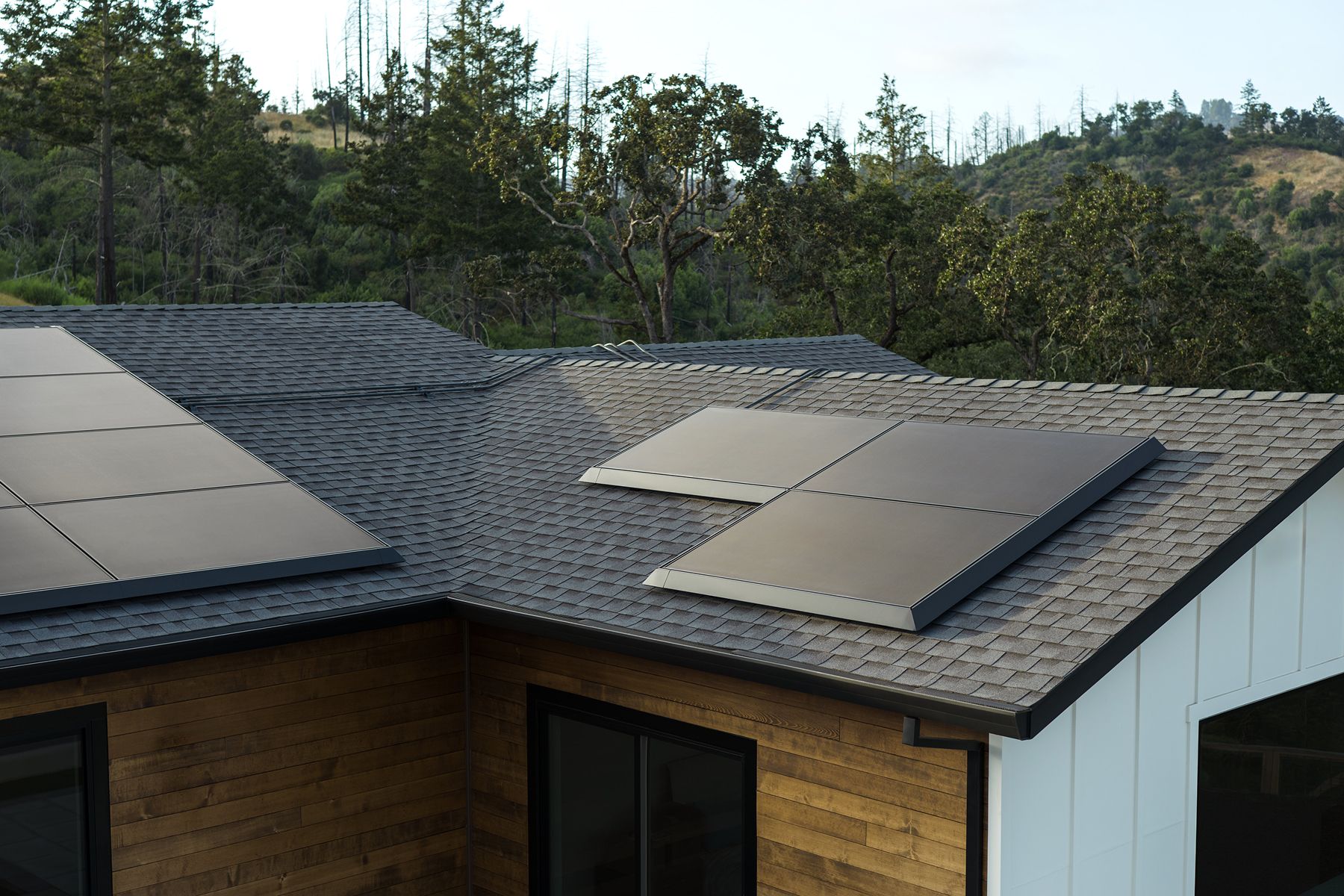
A 400 W panel with five peak sun hours produces about 1.6 kWh per day after the assumed losses. A practical residential planning range starts near 15 to 25 panels, or 6 to 10 kW, because that range provides more room to serve daytime loads and restore battery charge. The Department of Energy's representative 2024 residential system uses twenty 400 W panels for an 8 kW array.
| Residential array | Rated capacity | Estimated daily production | Outage role |
|---|---|---|---|
| 15 panels | 6 kW | About 24 kWh | Critical loads plus battery recovery |
| 20 panels | 8 kW | About 32 kWh | Typical home-array starting point |
| 25 panels | 10 kW | About 40 kWh | Higher loads or more charging margin |
These production estimates assume five peak sun hours and the 80% planning factor. They don’t guarantee whole-home coverage. A location with three winter peak sun hours, snow, nearby trees, an east-facing roof, or several cloudy days may need more panels or fewer backed-up circuits.
Homeowners should measure the loads before accepting a solar proposal. Look at a year of utility bills to see your total consumption. Consider using a plug-in watt meter and circuit monitor to show which appliances create the outage target.
The broad question of how solar panels work during a power outage becomes much easier once the refrigerator, communications, lighting, medical, pump, and cooling loads have daily kWh values.
Why solar panels alone can’t power an outage
Grid-tied solar panels can’t provide dependable home backup during an outage without battery storage and approved islanding equipment.
Their standard inverter loses the utility signal and stops sending AC power. Utility crews need de-energized lines while they repair the grid, and an uncontrolled rooftop system could energize a line that workers expect to be dead.
Having extra panels doesn’t change this. A 15 kW grid-tied array without backup capability still shuts down when the grid fails.
A dependable outage-ready system requires an approved isolation device, a grid-forming inverter, battery storage, and controls that balance generation with household loads.
An islanding solar setup uses transfer equipment to disconnect the home, a grid-forming inverter to establish voltage, battery storage to balance production, and a controller to reconnect utility power safely.
Backup battery and inverter requirements
An outage-ready solar backup system needs battery energy for darkness and clouds plus inverter power for simultaneous loads and motor startup. Panel count addresses daily production. Battery kWh and inverter kW answer different questions.
Here’s a battery sizing equation to use:
Nominal battery kWh = delivered outage kWh ÷ usable fraction ÷ conversion efficiency
For example, a 5 kWh essential-load target with a 90% usable window and 90% conversion path needs about 6.2 kWh of nominal storage.
Two days without dependable solar would push the same target toward 12.4 kWh before other reserves. A larger home battery backup may make sense where snow, smoke, tree cover, or storms limit solar production.
Inverter capacity and appliance startup power
The inverter decision covers continuous output, motor-start surge, critical-load separation, and automatic load shedding:
- Continuous output has to be higher than the highest planned combination of appliances.
- Surge output must start refrigerators, well pumps, sump pumps, and air-conditioning compressors.
- A critical-loads panel must keep dryers, resistance heat, ovens, and EV charging off a small backup system.
- Load management sheds optional circuits when inverter output or battery state of charge falls.
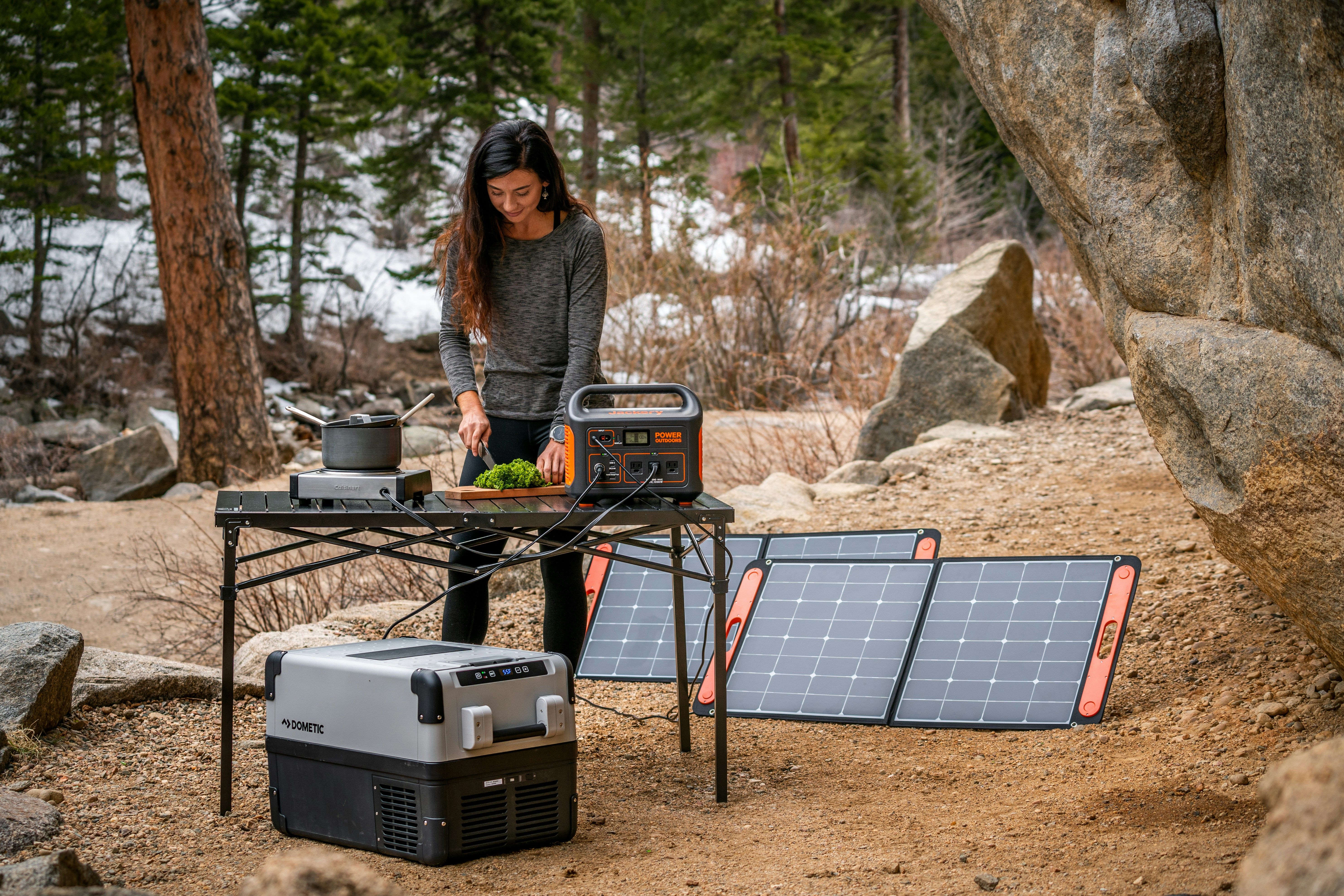
A portable power station can cover plug-in essentials without energizing home circuits. A hardwired solar backup system requires approved transfer equipment and professional design.
When solar and backup isn’t worth it
A whole-home solar backup system isn’t worth it if you have infrequent outages, low light production, high electric heating loads, or if the cost would be a stretch. The best alternative is often a smaller critical-load design.
- A shaded or small roof may not produce enough winter energy for the planned battery.
- Electric resistance heat and central cooling can drain affordable storage within hours.
- Rare short outages may not justify a large array, inverter, battery, and service upgrade.
- Long cloudy outages may favor generator integration or another rechargeable source.
A portable solar generator can run many appliances and lights when whole-home wiring is unnecessary. A generator can also complement storage when fuel availability and outdoor operation fit the property.
How to choose an islanding solar setup without undersizing it
An islanding solar setup needs a load-based design that connects measured outage demand with safe independent operation. A useful installer proposal should include those inputs instead of starting with a panel count.
- Outage loads: Each backed-up circuit, daily kWh, simultaneous kW, and motor-start requirement.
- Solar resource: Roof tilt, direction, shade, snow, temperature, and worst-month production.
- Storage: Nominal and usable kWh, reserve setting, expected conversion loss, and expansion path.
- Power electronics: Continuous output, surge output, grid-forming behavior, black-start capability, and load shedding.
- Isolation: Transfer equipment, critical-load or whole-home coverage, permits, utility approval, and commissioning test.
- Resilience: Expected runtime without sun, solar recovery after depletion, and generator or portable charging options.
The final design should also explain what happens when the battery reaches its reserve, the internet fails, a motor refuses to start, or utility power returns. Those cases decide whether the system protects a home or merely looks sufficient on a proposal.