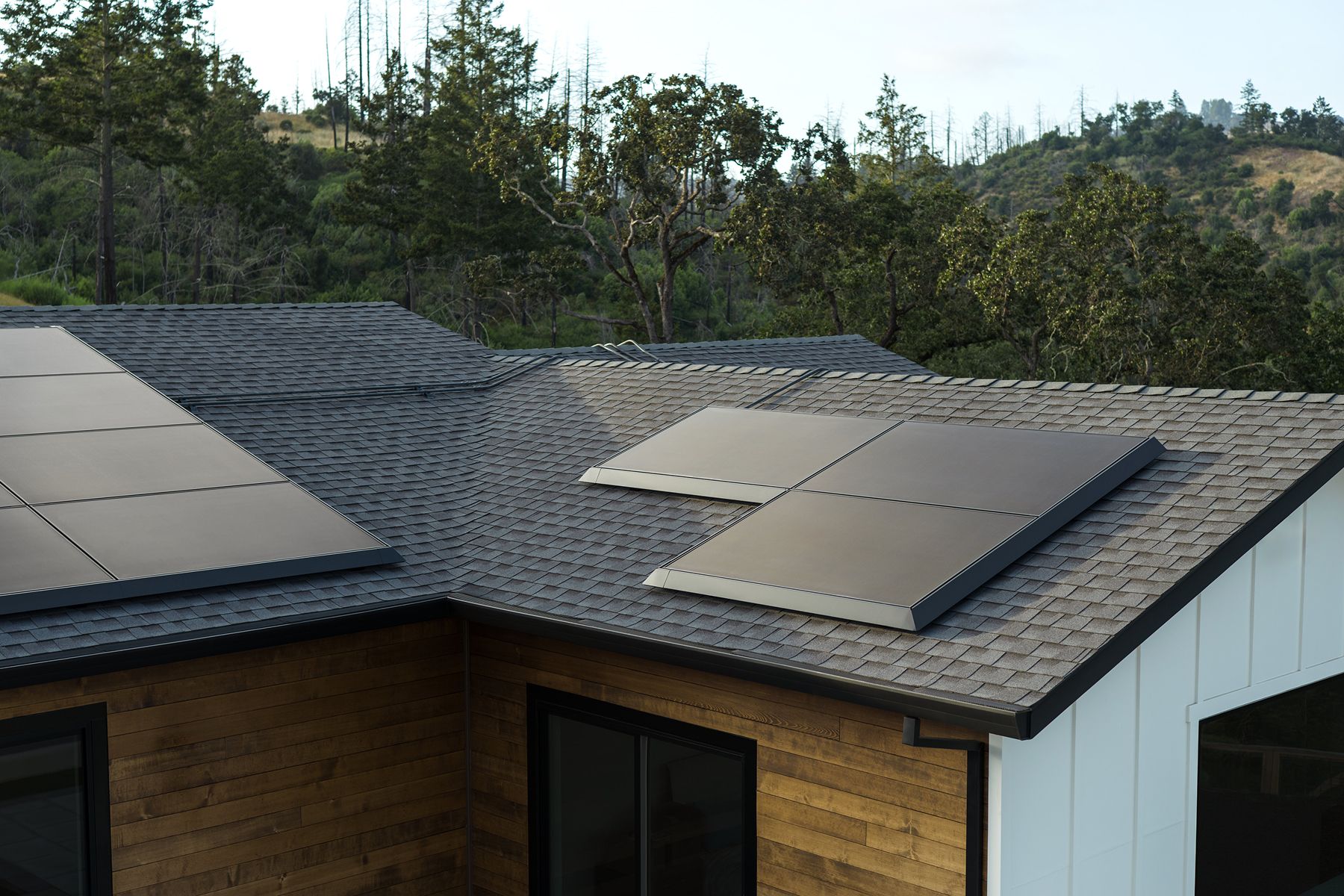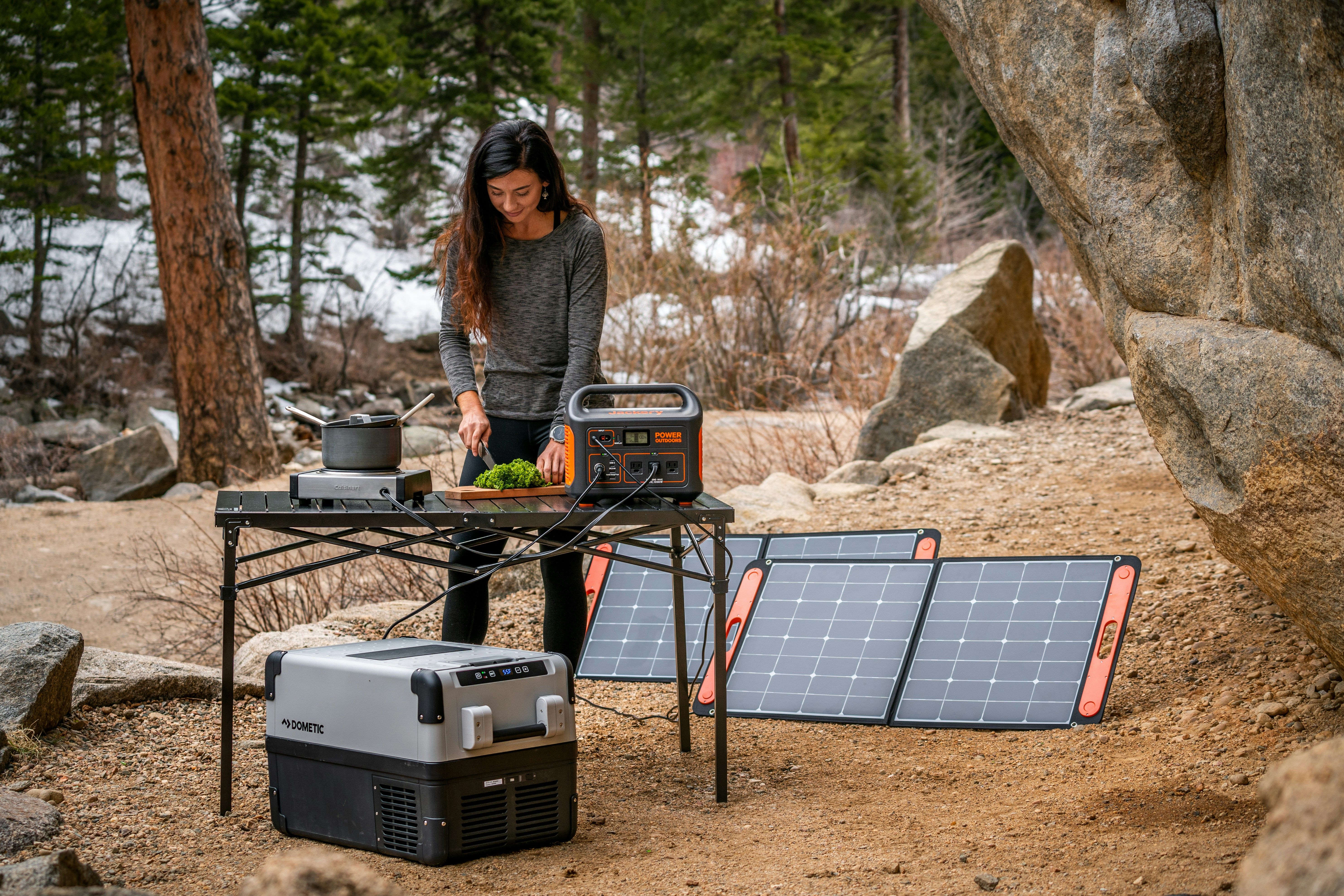


PowerOutage.us tracks more than 950 utilities covering 96% of U.S. electricity customers, so we see how many outages run for days, not hours. We ranked these solar panels on the output that charges a power station between cloudy weather, so you stay powered through a long event.
How we ranked these portable solar panels
We ranked these panels for one job: keeping your batteries charged when the grid is down for days. We combined manufacturer specs, aggregated owner and published reviews, and our own outage-duration data to weigh each pick.
Here is what mattered most, in order:
- Real output, not just the label. This carried the most weight. Panels rarely hit their rated watts, so we favored efficient monocrystalline panels that owners report holding output well in real sun.
- Output matched to your power station. A panel only helps if its voltage fits your station's solar input. We noted wattage and port type so you can pair correctly.
- Portability. During an outage you carry the panel to the sun and back. We weighed watts per pound, fold size, and whether it has a kickstand.
- Ports and pairing. USB outputs let you charge a phone straight off the panel. MC4-only panels need a power station. We flag which is which.
- Durability and warranty. We leaned on owner reports for build quality and weather resistance, and we counted longer warranties in a panel's favor.
5 Best portable solar panels for power outages
These five cover the range of outage power needs, from charging a phone in a go-bag to recharging a large power station over a multi-day event. We weighed each on real-world output, weight, ports, and price per watt.
1. Jackery SolarSaga 200W
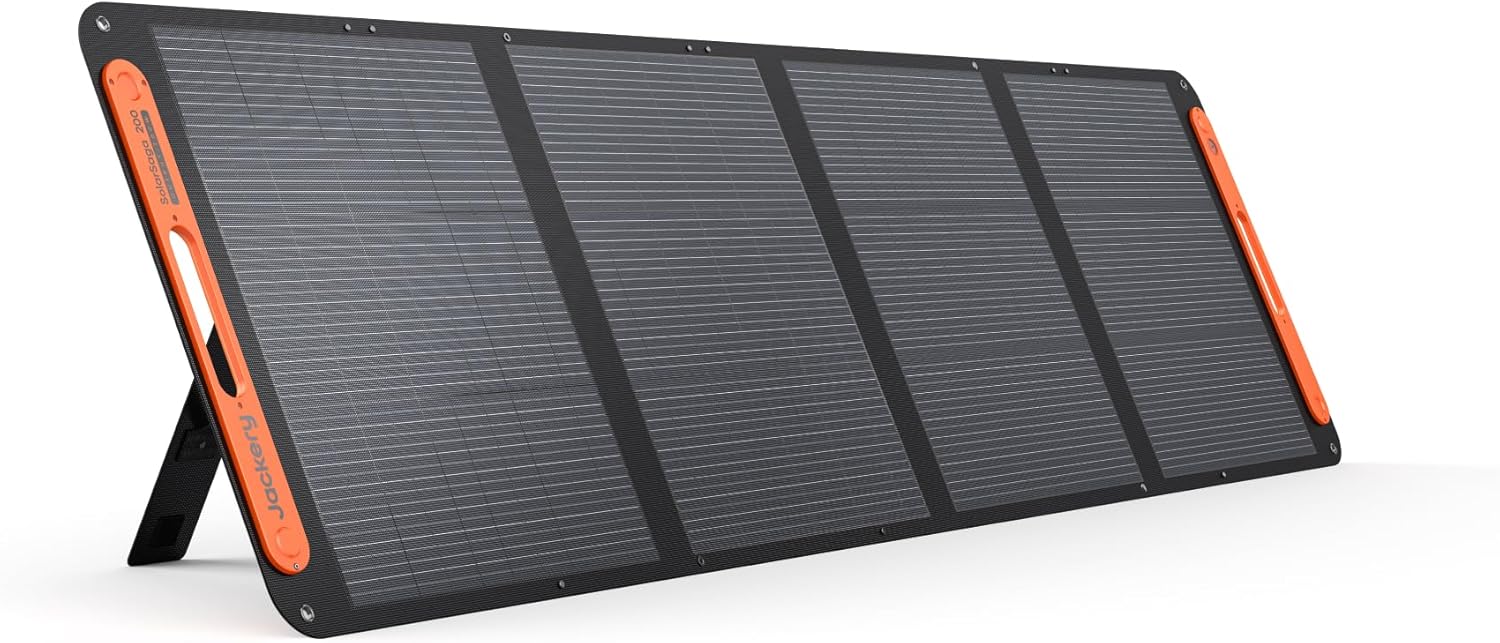
The SolarSaga 200W is the best portable solar panel for most homes, pairing 200 W of high-efficiency output with the lightest weight in its class.
The SolarSaga 200 fits most outage setups because 200 W charges a typical 1 kWh power station in a full sunny day while staying light enough to reposition through the afternoon. Jackery station owners and anyone who wants the safest all-around panel should pick the SolarSaga 200.
- Output: 200 W at about 24.3% efficiency
- Weight: 17.6 lb, folds to roughly a quarter of its open size
- Ports: USB-A and USB-C on the back, plus an MC4 solar cable
- Durability: IP-rated weather resistance, sunlight angle indicator
- Price: Around $350 to $400
Pros
- Pros: Best output-to-weight ratio in this roundup.
- Charges a 1 kWh station in about a day of full sun (1.5 to 2 days without full sun).
- USB-A and USB-C ports charge phones straight off the panel.
- High 24.3% efficiency holds output well.
Cons
- It costs more than similar 200 W panels.
- It feels a bit flimsy when fully unfolded.
Jackery SolarSaga 200 reviews
Owners praise the output, sturdy hinges, and quick setup, and they like the USB ports for charging phones directly. The common notes are the premium price and that the open panel is large and slightly flimsy.
Should you buy the Jackery SolarSaga 200?
Buy the SolarSaga 200 if you want the best mix of output, efficiency, and low weight, especially if you already run a Jackery station. Pass on it if budget is the deciding factor, where the Renogy 200W does the same job for less.
Renogy 200W RPP200EF
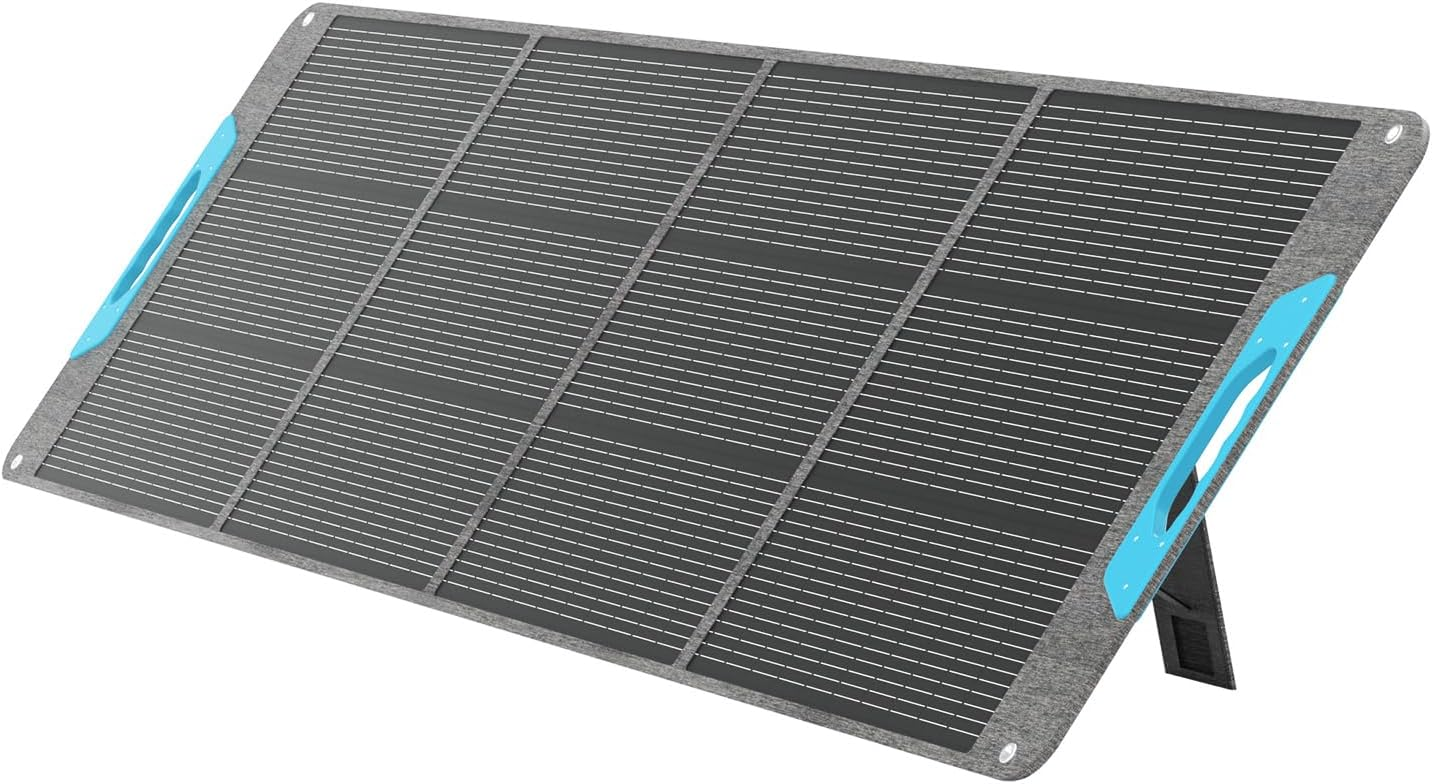
The Renogy 200W is the best value portable solar panel, matching 200 W output and adding USB ports for roughly $100 less than the Jackery.
The Renogy 200W is for buyers who want full 200 W output and USB charging without paying a premium. The RPP200EF fits homes where price per watt decides the purchase and a long warranty is a smaller concern.
- Output: 200 W, VOC about 23.4 V
- Weight: about 17 lb with adjustable kickstands
- Ports: USB-A and USB-C plus an MC4 solar cable
- Durability: IP65 waterproof
- Price: About $240 to $330
Pros
- Best price per watt of any panel here.
- Full 200 W output matches panels costing more.
- USB-A and USB-C ports are built in.
- Sturdy adjustable kickstands angle it at the sun.
Cons
- The 2-year warranty is shorter than rivals offer.
- At 17 lb it is not a go-bag panel.
Renogy 200W reviews
Owners call it the best deal in portable solar, praising the output, sturdy kickstands, and built-in USB ports. The main complaint is the short 2-year warranty next to longer-covered competitors.
Should you buy the Renogy 200W RPP200EF?
Buy the Renogy 200W if you want full 200 W output and USB charging without paying a premium. Pass on it if you want the lightest, most packable panel, where the FlexSolar S60 wins, or the most rugged build, where the EcoFlow 110W's IP68 rating wins.
3. EcoFlow 110W Portable Solar Panel
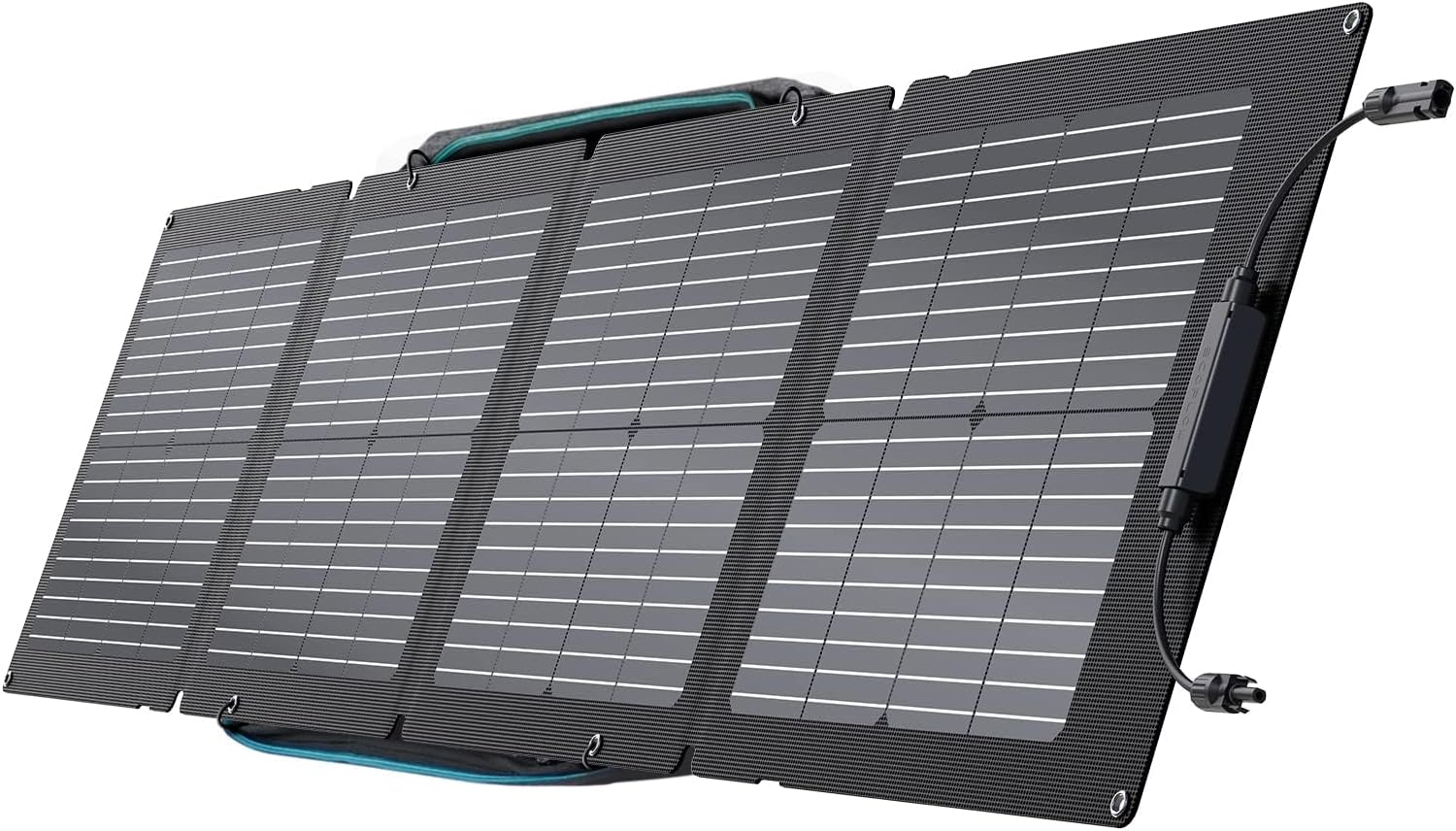
The EcoFlow 110W is the best portable solar panel for pairing with a power station, with universal MC4 output and a submersible IP68 build.
The EcoFlow 110W is for owners who already run an EcoFlow RIVER or DELTA station and want a light panel that plugs straight in. The EFSOLAR110N also fits anyone who wants a rugged, waterproof 100 W panel and charges through a station rather than off USB ports.
- Output: 110 W at about 22 to 23% efficiency
- Weight: 8.8 lb, about 12.5 W per pound
- Ports: MC4 with an included XT60 cable, no direct USB
- Durability: IP68-rated for dust and water resistance
- Price: Around $170 to $200, varies with sales
Pros
- Light at 8.8 lb with a strong watts-per-pound ratio.
- IP68 rating shrugs off rain and dust.
- Universal MC4 output pairs with EcoFlow stations and most others.
- The folding case doubles as a kickstand for angling at the sun.
Cons
- No USB ports, so it charges only through a power station.
- It is slow to fill a large station, up to 10 to 12 hours on a 1 kWh unit.
- The kickstand case feels floppy and fiddly to set.
EcoFlow 110W reviews
Owners rate it around 4.7 stars and praise the light weight, IP68 durability, and 85 to 95 W of real output in clear sun. Complaints center on slow charging for large stations and a floppy kickstand case.
Should you buy the EcoFlow 110W Portable Solar Panel?
Buy the EcoFlow 110W if you run an EcoFlow station, or want a rugged waterproof panel that plugs straight into one. Pass on it if you need to charge a phone directly, since it has no USB ports, or want the fastest fill for a large station, where the Bluetti PV350 moves more watts.
4. FlexSolar S60
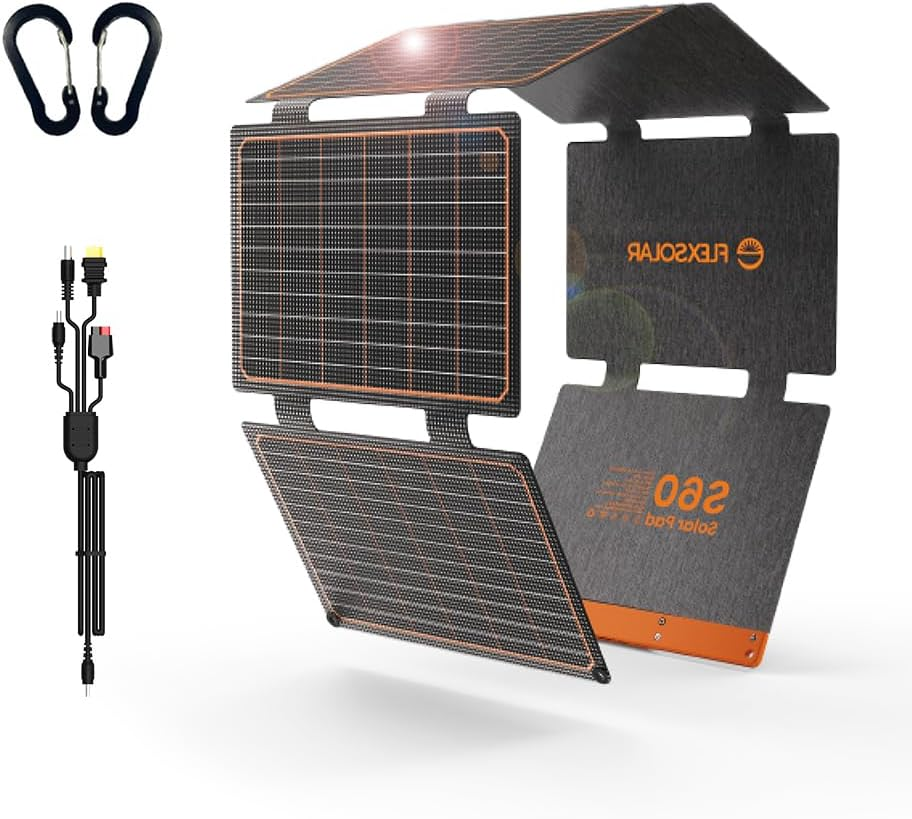
The FlexSolar S60 is the best compact portable solar panel, folding to laptop size for a go-bag while still charging phones fast.
The S60 is for go-bags and emergency kits, where keeping phones and small power banks charged matters more than charging a big battery. The FlexSolar fits anyone who needs a panel that folds flat and rides in a backpack to a shelter or a friend's house.
- Output: 60 W
- Weight: under 3 lb, folds flat
- Ports: USB-A (QC3.0, 18 W), USB-C (PD3.0, up to 40 W), and DC out with a multi-adapter cable
- Durability: IP67 waterproof
- Price: Around $120 to $140
Pros
- Pros: Light enough for an emergency kit at under 3 lb.
- USB-C fast-charges a phone straight off the panel.
- Folds down to laptop size.
- IP67 waterproof.
Cons
- At 60 W it only charges small devices.
- It has no built-in kickstand for angling at the sun.
FlexSolar S60 reviews
Owners praise the portability, the fast USB-C and USB-A outputs, and the value for a go-bag panel. A minority report output below spec, and several wish it had built-in feet for propping it up.
Should you buy the FlexSolar S60?
Buy the S60 if you want a packable panel for an emergency kit that keeps phones and small banks charged. Pass on it if you need to charge a power station, where a 200 W panel does the real work.
5. Bluetti PV350
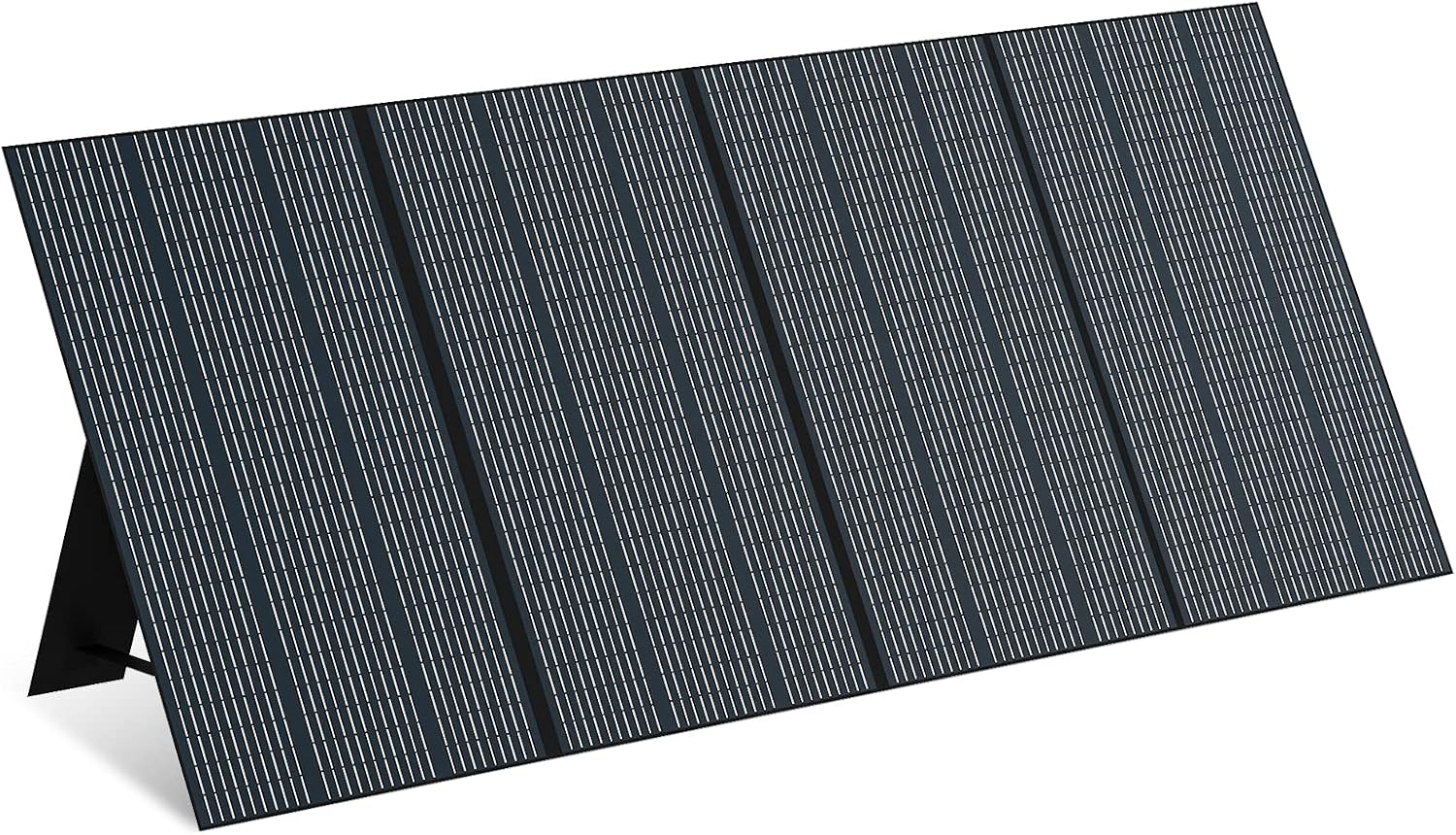
The Bluetti PV350 is the best portable solar panel for fast charging, with 350 W that charges a large power station in about a single day of full sun.
The PV350 is built for people running a large power station who want to charge it fast over a multi-day outage. The Bluetti fits buyers for whom output and charging speed matter more than weight or how small the panel packs down.
- Output: 350 W at about 23.4% efficiency
- Weight: 30.69 lb, foldable with kickstands
- Ports: MC4 connectors only, no direct USB
- Durability: IP65 weather resistance
- Price: About $820, can be less with sales
Pros
- 350 W charges a large station in under a day of sun.
- High 23.4% efficiency pushes strong output.
- Build quality feels rugged and durable.
Cons
- It is the heaviest panel here at 30.69 lb.
- IP65 weather resistance allows outdoor use, but it should not be left exposed in severe weather or standing water.
- Some buyers report slow customer service.
Bluetti PV350 reviews
Owners say it pushes power "like being plugged into the wall" and praise the build quality and fast recharging of large stations. Cons are the weight, the need to bring it in during storms, and slow customer service for some buyers.
Should you buy the Bluetti PV350?
Buy the PV350 if you run a large power station and want to charge it fast during a multi-day outage. Pass on it if you want something light and packable, where the Jackery or FlexSolar fit better.
Can an outage last long enough to need solar charging?
Multi-day outages are common enough that a single battery charge rarely covers a real event. A panel that recharges your power station each day is what keeps you running.
When Hurricane Helene made landfall in September 2024, PowerOutage.us tracked 4.79 million customers without power across the Southeast. Western North Carolina went 14 or more days without restoration in the hardest-hit mountain counties, far past any battery's runtime.
Hurricane Milton in October 2024 cut power to 3.4 million Florida customers, with the grid cycling on and off for days. For hurricane-prone homes, solar can provide an ongoing source of electricity without fuel deliveries when the grid is dark.
How to choose a portable solar panel for an outage
The right panel comes down to four buying decisions: how much power you need, whether it pairs with your battery, how you charge, and how much you can carry. Match those and the rest is preference.
- Compare cost per watt. Divide price by wattage. A 200 W panel near $1.20 to $1.90 per watt is a strong value, and bigger panels usually cost less per watt but more overall.
- Match voltage to your power station. Check that the panel's open-circuit voltage (VOC) falls inside your station's solar input range. Below the minimum it will not charge. Exceeding the station's maximum solar input voltage can prevent charging and may damage equipment depending on the charge controller design.
- Pick your charging path. USB panels charge a phone directly. MC4-only panels like the Bluetti PV350 and EcoFlow 110W need a power station or charge controller.
- Weigh portability against output. A 60 W panel rides in a go-bag but only feeds small devices. A 350 W panel recharges a big station but weighs 30 lb. Buy for the load you actually need to run.
For the full picture on charging during a blackout, see how solar panels work during a power outage.