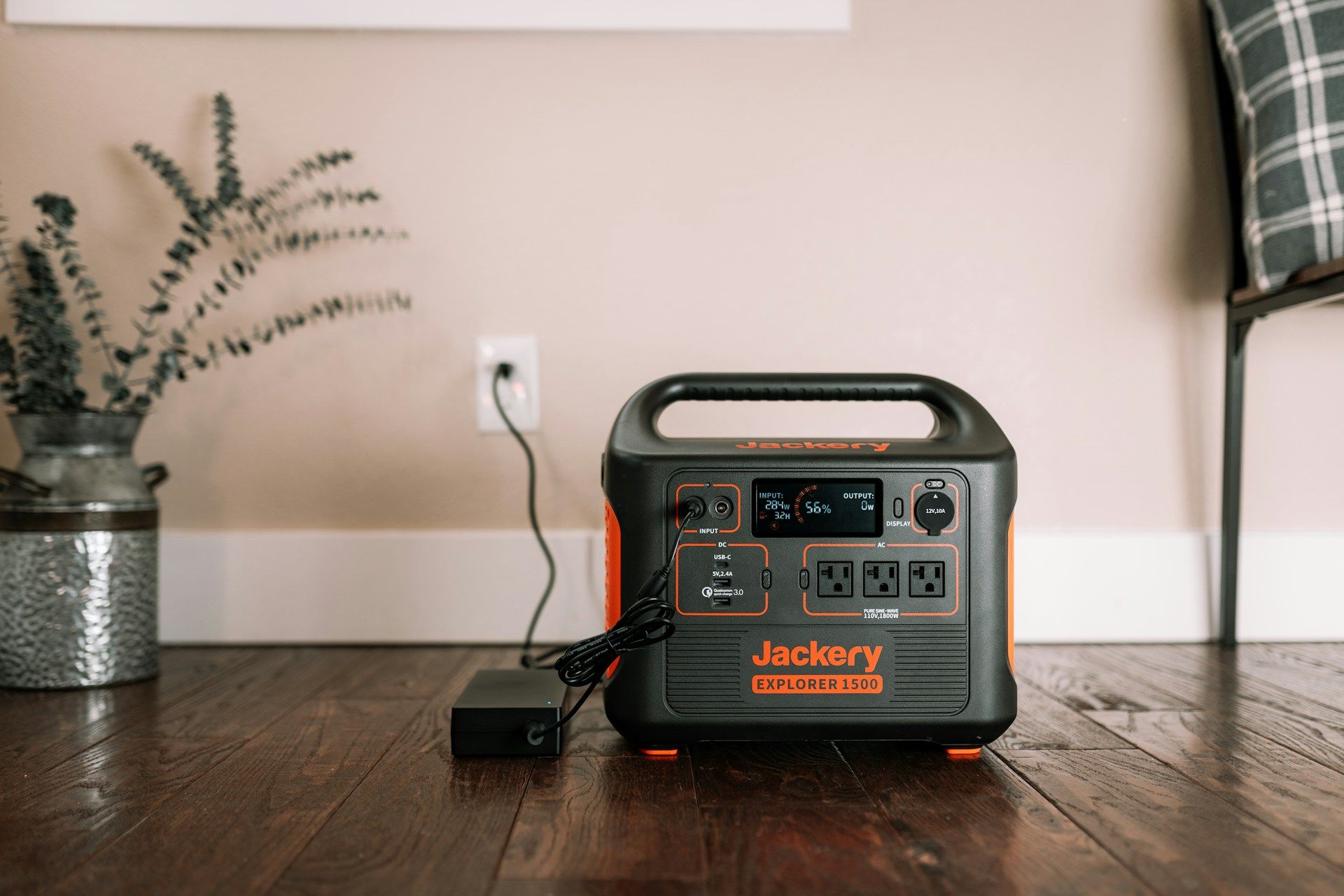


PowerOutage.us tracks more than 950 utilities serving over 200 million customers, about 95 percent of the country. We’re ranking the best portable power stations on charge speed using that live battery backup and outage data, because a station that recharges in an hour can top off during a short restoration window before the next outage.
How we ranked these fast-charging power stations
To rank these power station battery backups, we combined the manufacturer specs, owner reviews, and our PowerOutage.us outage data.
Here's what we weighted with the most important first:
- Full-charge time on AC: We weighed charge speed as the heaviest because that's the spec this list is about.
- Usable capacity: We rated capacity next against real outage loads like a refrigerator, CPAP, phones, and a router.
- Battery chemistry and longevity: We checked LiFePO4 cycle life and warranty since a backup unit has to last for years.
- UPS switchover: We looked at UPS switchover and rated output watts because sensitive electronics need clean, instant power.
- Weight and value: We weighed portability and price last, so the unit still earns its place.
4 Best fast-charging power stations for outages
These four power stations all reach full charge in about an hour or less, from a 1,056 Wh home unit down to an 8-lb model you can carry in one hand.
1. Anker SOLIX C1000 Gen 2
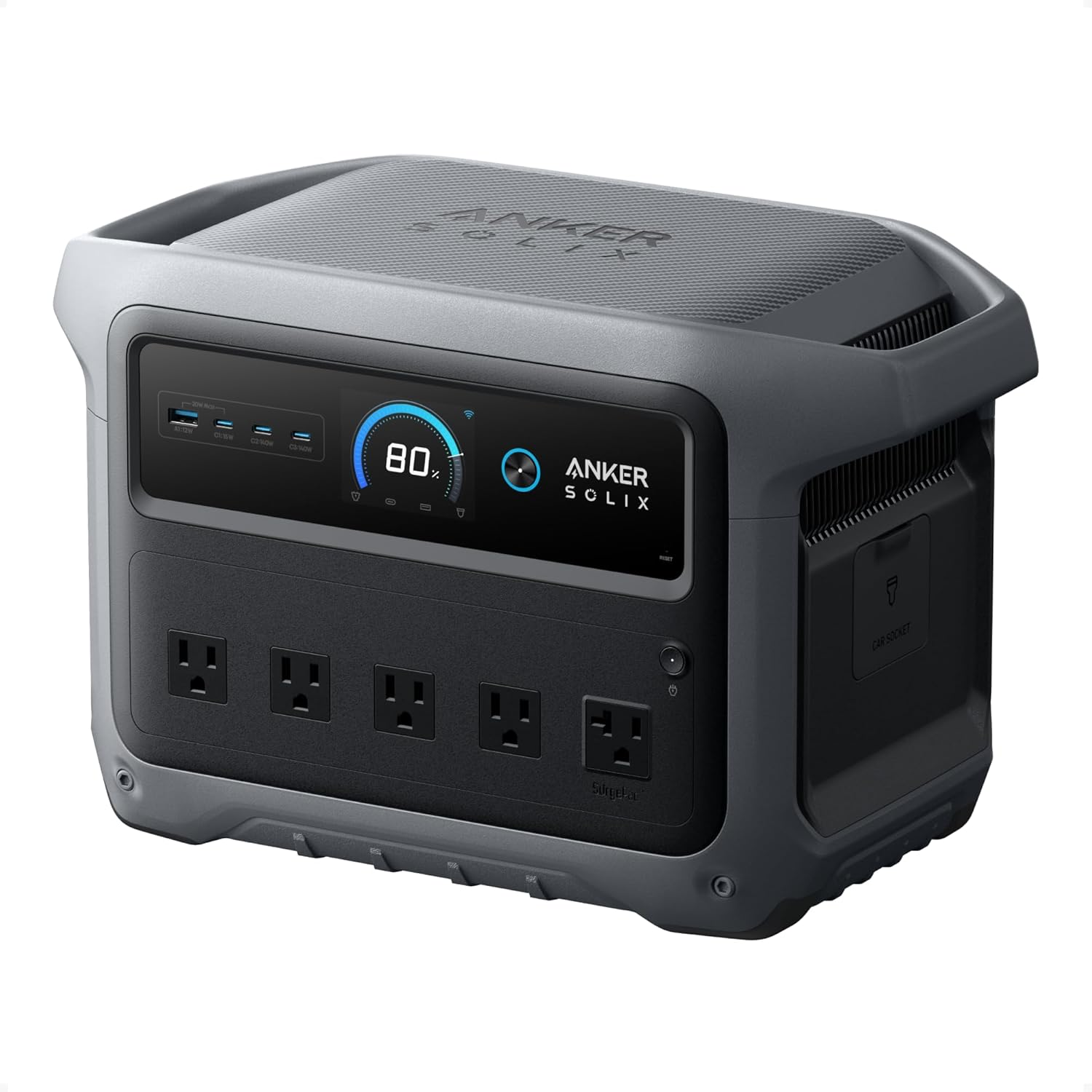
The Anker SOLIX C1000 Gen 2 holds 1,024 Wh and reaches a full charge in 49 minutes, which is the best mix of speed, capacity, and price in this class.
You should consider the Anker SOLIX C1000 Gen 2 if you want a single mid-size station for outages, camping, and job sites. Note that the expansion feature has been removed to improve portability. For those requiring expandable capacity, the original C1000 is recommended.
- 1,024 Wh LiFePO4 capacity, 2,000 W rated, 3,000 W peak
- Full charge in 49 minutes, UltraFast mode enabled via app
- 10 ports; up to 600 W solar input, full in about 1.8 hours
- 4,000 cycles, 10-year lifespan; 24.9 lbs
Pros
- Fastest full charge in this class.
- Strong 2,000 W output and 10 ports.
- 14% smaller and 11% lighter than comparable models.
- LiFePO4 with 4,000 cycles and a 5-year warranty.
Cons
- UltraFast charge mode is toggled in the app.
- Fan is audible under heavy load.
- No battery expansion option.
Anker SOLIX C1000 Gen 2 reviews
Reviewers rank this option as a leading mid-size station that’s flexible, powerful, and well-priced, with class-leading charge speed. Reviewers do note that the very fastest mode needs the app, and the fan runs under heavy load.
Should you buy the Anker SOLIX C1000 Gen 2?
You should buy the Anker SOLIX C1000 if you want the fastest full recharge with enough capacity for multi-appliance and device backup during an emergency. That said, you should pass on it if you need a tiny unit, want something expandable, or you're after true whole-home capacity.
2. EcoFlow DELTA 3 Plus
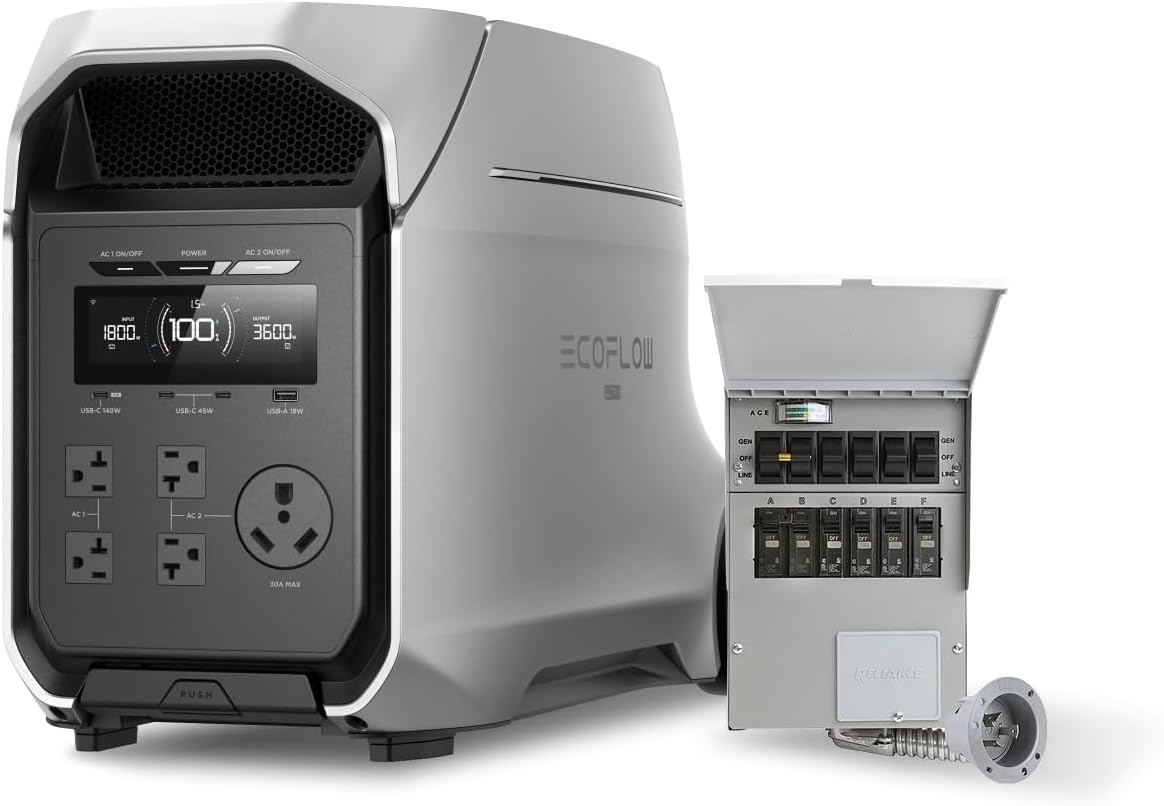
The EcoFlow Delta 3 Plus holds 1,024 Wh, recharges in 56 minutes, and switches to battery in 10 milliseconds, so it can provide safe switchover for many refrigerators and sensitive electronics.
The EcoFlow Delta 3 Plus provides true UPS backup for a refrigerator, a home office, or a NAS. The capacity expands to 2,048 Wh with a smart extra battery for longer outages, which gives you flexibility for different situations.
- 1,024 Wh LiFePO4, 1,800 W rated, 2,700 W surge with X-Boost
- Full charge in 56 minutes on 1,500 W AC
- 10 millisecond UPS switchover
- Expandable to 2,048 Wh, 4,000 cycles, about a 10-year life
- Runs 13 devices, about 27.6 lbs
Pros
- True UPS for fridges and electronics.
- 56-minute full charge.
- Expandable capacity.
- 4,000-cycle LiFePO4.
Cons
- Extra batteries and accessories add up.
- Base 1 kWh needs the add-on for long backup.
EcoFlow DELTA 3 Plus reviews
Reviewers call it EcoFlow's fastest 1 kWh unit, and they like the true UPS switchover for fridges, electronics, and a home backup plan, plus the expandability. The main gripe is that the accessories add up.
Should you buy the EcoFlow DELTA 3 Plus?
You should buy the EcoFlow Delta 3 Plus if you want fridge-safe UPS backup that you can expand later. You should pass on it if you only need a small unit or you don't care about UPS switchover.
3. Anker SOLIX C800 Plus
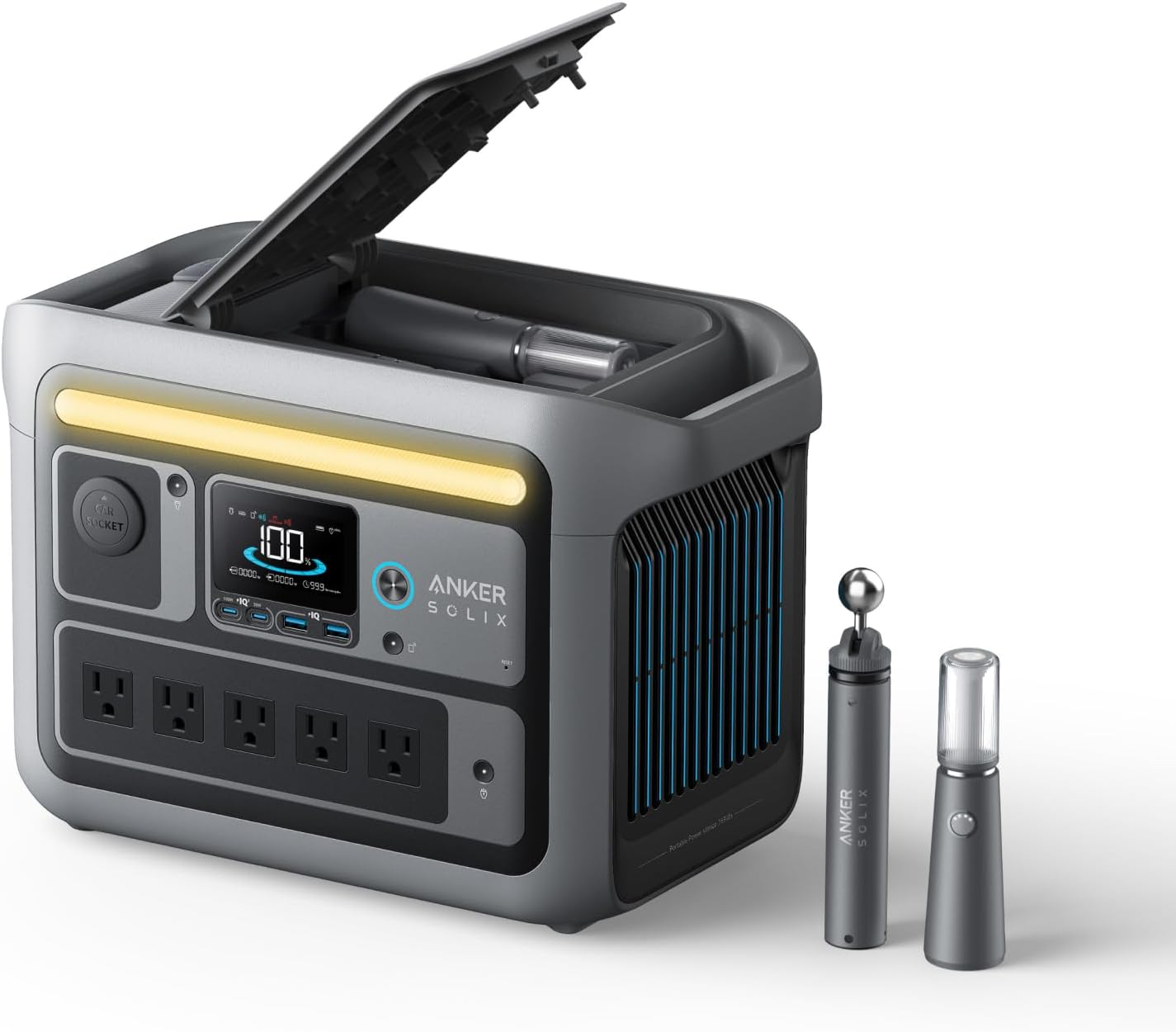
The Anker SOLIX C800 Plus holds 768 Wh, charges fully in 58 minutes, and adds built-in retractable lights, which makes it handy for outages and camping.
The Anker SOLIX C800 Plus is a smaller, lighter station that still charges fast. Its 768 Wh of LiFePO4 capacity and 1,200 W of output is enough to keep a fridge, phones, and a few lights running through an outage.
- 768 Wh LiFePO4, 1,200 W rated, 1,600 W peak with SurgePad
- Full charge in 58 minutes
- Built-in retractable camping lights
- 3,000 cycles, 5-year warranty
- Compact, about 24 lbs
Pros
- Fast 58-minute full charge.
- Built-in retractable lights.
- LiFePO4 with 3,000 cycles.
- Lighter and more compact than the 1 kWh units.
Cons
- 768 Wh covers essentials, not big loads.
- Lower capacity watts than the 1 kWh picks.
Anker SOLIX C800 Plus reviews
Reviewers call it a strong mid-range pick, and the first in its class with built-in camping lights, good for solar and outage use alike. The one limit they flag is the 768 Wh capacity.
Should you buy the Anker SOLIX C800 Plus?
You should buy the Anker SOLIX C800 Plus if you want a compact, fast-charging unit with lights for outages and camping. You should pass on it if you need to run large loads or you want higher capacity.
4. EcoFlow RIVER 3 Plus
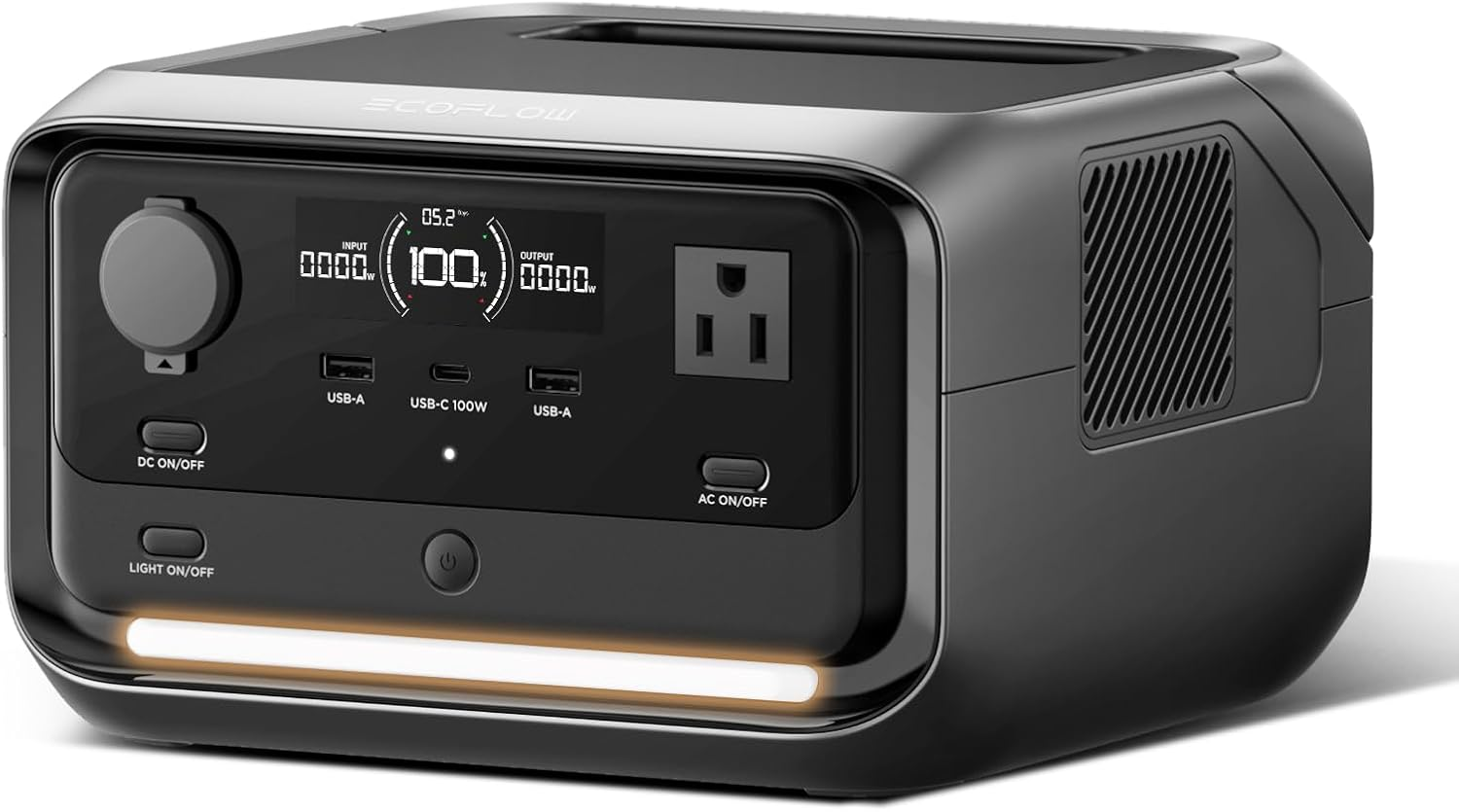
The EcoFlow River 3 Plus holds 286 Wh, weighs about 8 lbs, and still charges fully in about an hour, which makes it the easiest unit to grab and go.
The EcoFlow River 3 Plus is a smaller option that can keep phones, a laptop, a router, or a CPAP running, but not a refrigerator. It runs nearly silently and adds UPS protection.
- 286 Wh LiFePO4
- 600 W continuous AC output with X-Boost support for some appliances up to 1,200 W
- Full AC charge in about 1 hour
- Under 10 millisecond UPS, under 30 dB operation
- Expandable to 858 Wh
- About 8 lbs
Pros
- Ultralight at about 8 lbs.
- Quiet, under 30 dB.
- UPS protection for electronics.
- Low price.
Cons
- Only 286 Wh, essentials only.
- Higher-watt devices need X-Boost.
EcoFlow RIVER 3 Plus reviews
Reviewers like it as a quiet, ultralight unit with UPS protection at a low price, the kind of thing that belongs on a medical device or CPAP checklist. The obvious limit is the small 286 Wh capacity.
Should you buy the EcoFlow RIVER 3 Plus?
You should buy the EcoFlow River 3 Plus if you want the lightest, cheapest way to keep small electronics on. You should pass on it if you need to power a refrigerator or run several devices for a long time.
Power outages and why a fast recharge matters
Winter Storm Fern cut power to over 1 million customers across the South in January 2026. Tennessee alone had 306,700 people without power, and the hardest-hit areas went six days in the dark. This is the kind of long event where a power station you can recharge in under an hour earns its place.
During long events like Hurricane Helene, which knocked out 4.79 million customers in 2024, utilities may temporarily restore some circuits before additional repairs are completed. This makes fast recharge capability useful when grid power briefly returns.
How to choose a fast-charging power station
Picking a fast-charging power station comes down to matching capacity and recharge speed to the loads you need to keep running, then choosing the chemistry and features that carry you through a long outage.
- Match capacity to your loads: A 286 Wh unit covers phones and a CPAP, and 1,000 Wh runs many refrigerators for several hours.
- Weigh speed against size: Most sub-hour charging models today are under roughly 1.1 kWh, though some modern larger premium units also offer very fast recharge rates.
- Choose LiFePO4: These cells last 3,000 cycles or more, far longer than older lithium-ion.
- Get UPS if you run electronics: A switchover under 30 milliseconds is suitable for many refrigerators and sensitive electronics like a NAS or a CPAP.
Add solar input if you want off-grid recharging, and build a power outage emergency kit around the unit.