
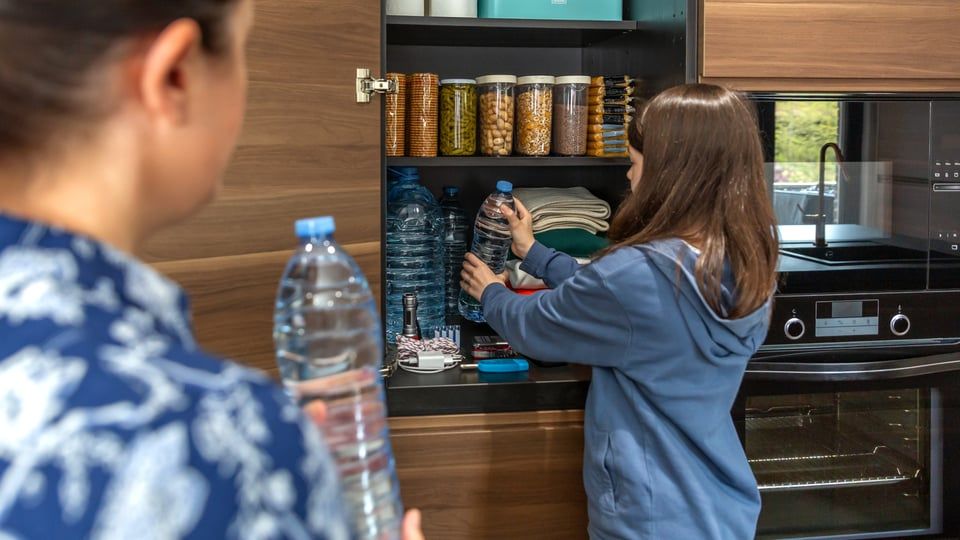


Your household needs one gallon of water per person per day, stored ahead of time. FEMA sets three days as the floor, and a two-week supply is the goal for riding out a long outage at home.
PowerOutage.us tracks more than 950 utilities serving over 200 million customers, about 95 percent of the country. Our outage data shows how long restorations really run, which is why we plan water alongside emergency food kits instead of guessing at a case of bottles.
How much water to store: a quick calculator
To calculate how much water to store, multiply your household size by the number of days you want to cover by 1 gallon. FEMA's one-gallon recommendation includes half a gallon for drinking and half for cooking and basic hygiene per day. Below is a quick water storage chart for outages.
| Household | 3 days | 1 week | 2 weeks |
|---|---|---|---|
| 1 person | 3 gal | 7 gal | 14 gal |
| 2 people | 6 gal | 14 gal | 28 gal |
| 4 people | 12 gal | 28 gal | 56 gal |
| 6 people | 18 gal | 42 gal | 84 gal |
For example, a family of four planning for a week needs to store 28 gallons, or about six 5-gallon jugs. FEMA also advises not to ration drinking water unless authorities order it. Drink what your body needs today and work on finding more tomorrow.
Who needs more than a gallon a day?
Some people need more than a gallon of water per day during an outage, and you should plan for this ahead of time.
- Children, nursing mothers, and sick family members need more than the baseline, per FEMA.
- Medical needs add water: mixing formula, flushing wounds, taking medications, and running some medical equipment all draw from the supply.
- Hot climates can double the need. In high heat, FEMA notes water needs can double, and an extreme heat power outage takes the AC down at the same time.
- Pets drink too. A common veterinary rule for dogs runs about 1 oz per pound of body weight per day, so a 60 lb dog adds roughly half a gallon.
How to store emergency water
Getting commercially bottled water is the easiest way to store emergency water. The FDA doesn't require expiration dates on it, and if unopened, properly sealed bottles stay safe indefinitely. Printed dates mark freshness, not safety.
If you fill your own containers, a few rules keep that water safe:
- Use FDA-approved food-grade water containers, not old milk jugs or chemical containers.
- Label each container "drinking water" with the fill date.
- Store between 50 and 70 F, away from sunlight and away from anything like gasoline or pesticides.
- Replace self-filled water every 6 months, per CDC and FEMA guidance.
Water belongs next to the rest of your power outage emergency kit, where you can reach it in the dark.
Use backup sources at home in an emergency
A standard tank heater holds drinkable water (after treating) even when the grid and the water main are down (tankless models hold none). Your water heater is a 30 to 60-gallon reserve that many people forget.
Of course, this isn’t your first line of defense in a water shortage. But if you have no access to other sources of safe water, a water heater reservoir can become useful.
To use it safely: turn off power or gas to the heater first, then close the home's main water valve to protect the tank from contaminated lines. Open a hot tap upstairs to let air in, then drain the water heater from the valve at the bottom of the tank through a clean cloth to catch sediment. Treat it before drinking, as covered below.
Ice in the freezer and the water sitting in your pipes add a few more quarts. For anything questionable, a purifier-class emergency water filter turns backup sources into drinking water without power.
How to make backup water safe to drink
Backup water sources can be made safe by boiling or disinfecting the water. Boiling comes first: the CDC calls a rolling boil of 1 minute the most reliable treatment for eliminating pathogens in the water. Let it cool before drinking, of course.
If you can't boil water, disinfect it. Add 1/8 teaspoon of plain unscented household bleach (5.25 to 6 percent sodium hypochlorite) per gallon, stir, and wait 30 minutes. A purifier rated for viruses covers the same job when the stove is down with the power.
Power outages take water systems with them
Winter Storm Uri cut power to 4.4 million Texas customers in February 2021, and the failures cascaded into water systems, triggering 322 boil-water notices statewide. Stored gallons carried households through the days before those notices lifted, when a winter storm power outage stopped both power and water at once.
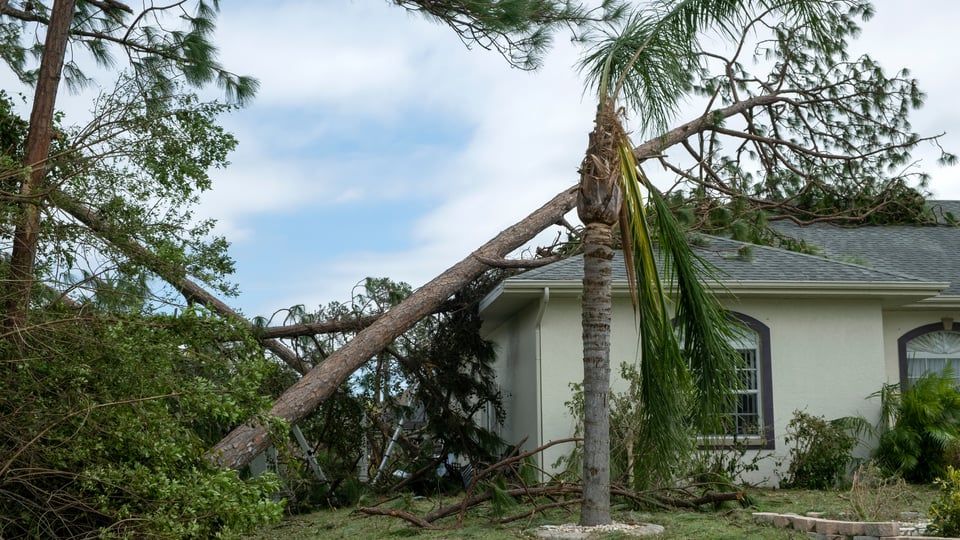
In another example, Hurricane Helene knocked out 4.79 million customers in September 2024, and western North Carolina communities spent weeks rebuilding water systems after the hurricane power outage. The two-week storage goal exists for exactly that scenario.