

Roof repair costs swing wildly, and most of the "average" figures online are useless until you know what's actually wrong with your roof. A small leak at a flashing joint and a rotted section of decking are both types of roof repair, but they aren't close in price. This guide breaks down what drives the cost, what common repairs run, when a repair stops being worth it, and how insurance reshapes the bill.
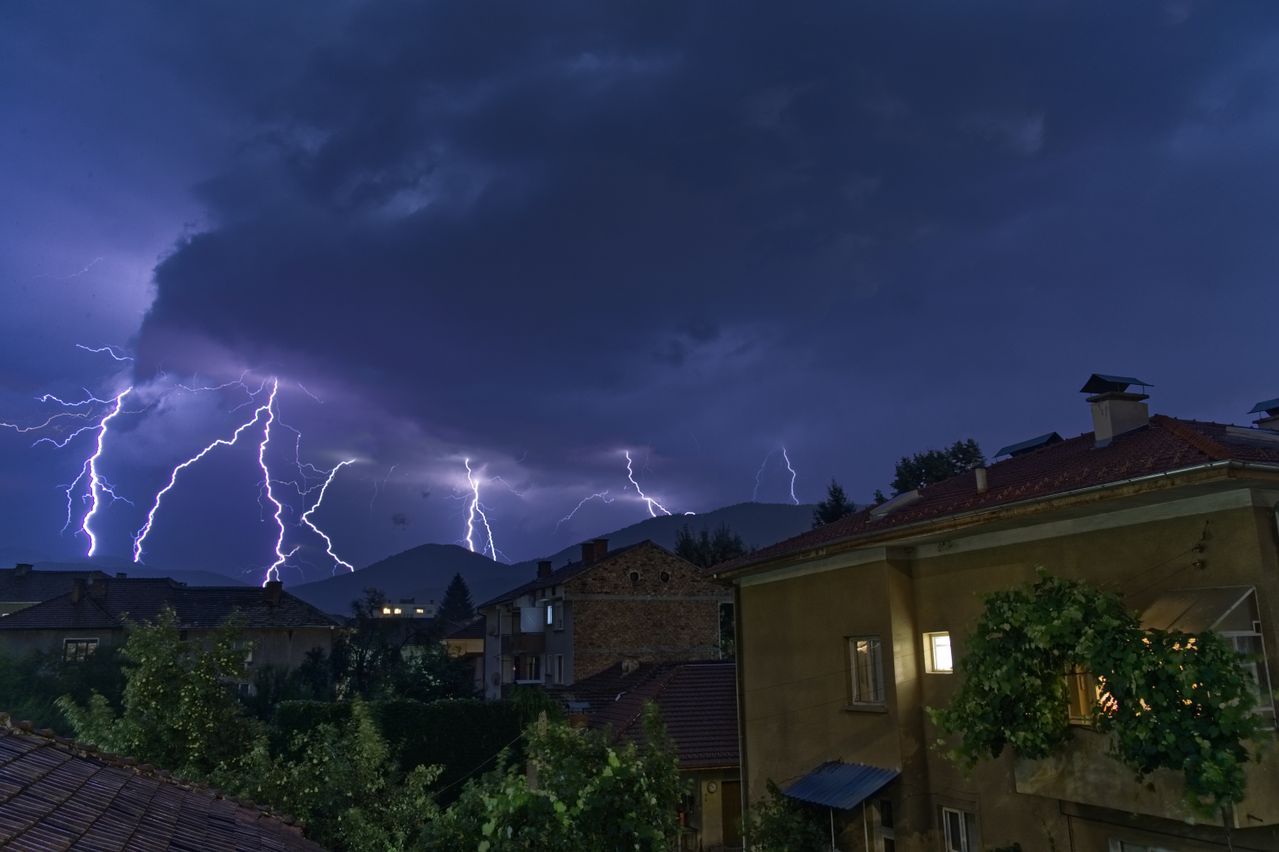
PowerOutage.us tracks storms across more than 950 utilities and about 96% of U.S. electricity customers in real time. A lot of roof repair bills start with the same storms that knock out power, so we recommend checking your roof in storms that cause blackouts.
How much does roof repair cost?
Roof repair cost falls into three rough tiers: minor fixes in the low hundreds, mid-range repairs from several hundred to a couple thousand, and major structural or decking repairs that climb into five figures.
No single number works because four things set the price, and they're all specific to your roof: size, material, pitch, and the extent of the damage.
What affects your roof repair cost
Roof repair cost is driven by roof size, roofing material, pitch, and how much damage there is. Labor and your location further modify the price.
- Roof size is measured in squares, where one square covers 100 square feet, so a large roof costs more for the same repair.
- Roofing material sets the base cost, with asphalt shingles cheapest and metal, tile, and slate progressively more expensive to buy and install.
- Roof pitch raises the price when the slope is steep enough to need extra safety setup and slows the crew down.
- Damage extent decides whether you're paying for a patch or a rebuild, especially once water reaches the decking underneath.
The Bureau of Labor Statistics tracks both roofing materials and roofing-contractor labor as separate price indexes, which is a good reminder that your bill is really two costs stacked together. The National Roofing Contractors Association also notes that maintenance is the single biggest factor, after the original installation, in what a roof costs over its life. A neglected roof costs more to repair than a maintained one of the same age.
How roofing material changes the cost
Roofing material changes the cost more than almost anything except the size of the job. Asphalt shingles are the low-cost baseline, which is why most homes have them and most repair estimates assume them.
Metal, tile, and slate cost more to buy, and they cost more to install because they're heavier and need specialized labor. If you have slate or tile, even a small repair carries a higher price than the same fix on asphalt, so a low "average" figure you found online probably doesn't apply to you.
How roof size and pitch change the cost
Roof size and pitch change the cost by influencing how much material the job needs and how hard it is to reach. Roof size affects the material quantity, priced by the square. Pitch sets the difficulty: a steep roof needs more safety equipment and slows the whole job down, so the same square footage costs more on a steep roof than a walkable one. A tall two-story roof adds the same kind of premium. Neither shows up on a materials list, but both show up on the bill.
Roof repair cost by problem: leaks, flashing, shingles, decking
Roof repair cost is heavily influenced by the problem, because a flashing leak and a rotted deck are at opposite ends of the cost range. Here are some common roofing repairs, cheapest to most expensive:
- Flashing leaks around chimneys, vents, and valleys are usually the cheapest fix. The Department of Energy notes not every leak means a new roof, since a loose flashing or one bad section can be repaired on its own. This is standard roof leak repair territory.
- Missing or wind-lifted shingles are a mid-range repair, priced by how many need replacing and whether they still match. Storm damage roof repair might include replacing just a few shingles.
- Active storm leaks that are letting water in right now are an urgent job, and emergency roof repair can be more expensive but warranted.
- Rotted decking under the shingles has to be replaced before new shingles go on, which increases the cost toward roof replacement pricing.
When to replace instead of repair
Roof repair cost stops being worth it when the damage extends beyond 10% of the roof, when the roof is near the end of its life, or when a second roof re-cover isn't allowed.
Once more than 10% of the roof needs repair, a new roof is the recommended call. Below that line you should do a repair. Above it, repeated repairs just delay a replacement you're going to pay for anyway.
Looking at age, most roofs are designed for about 20 years of service, so real damage on a roof near that age necessitates replacement, not a patch. Also, building codes usually allow only one re-cover before a full tear-off is required. If your roof has already been layered over once, the cheap option is off the table.
Think about it this way. If you're paying for your third repair within a few years on a fifteen-year-old roof, you're spending money on quick fixes but still ending up with an old roof.
Roof repair cost and insurance: what you actually pay
Your insurance payout can affect what you pay out of pocket for a roof repair. How much roof damage insurance actually contributes depends on your deductible and roof age.
That deductible sets the minimum you pay out of pocket, so if the repair costs less than the deductible, you don’t get anything from insurance. It’s also not worth filing a claim, since $0 claims can increase your policy premiums in the future.
A wind and hail deductible is often separate from your regular deductible and higher, frequently set as a percentage of your home's insured value rather than a flat amount. It applies if your roof was damaged in a storm.
The other main insurance factor is how your policy values the roof. A replacement cost policy pays today's price to fix the damage minus your deductible. An actual cash value policy subtracts depreciation first, which hits older roofs hard.
For example, on a ten-year-old roof that costs $10,000 to replace with a $2,000 deductible, a replacement cost policy leaves you paying $2,000. But an actual cash value policy that values the roof at $7,000 leaves you paying $5,000.