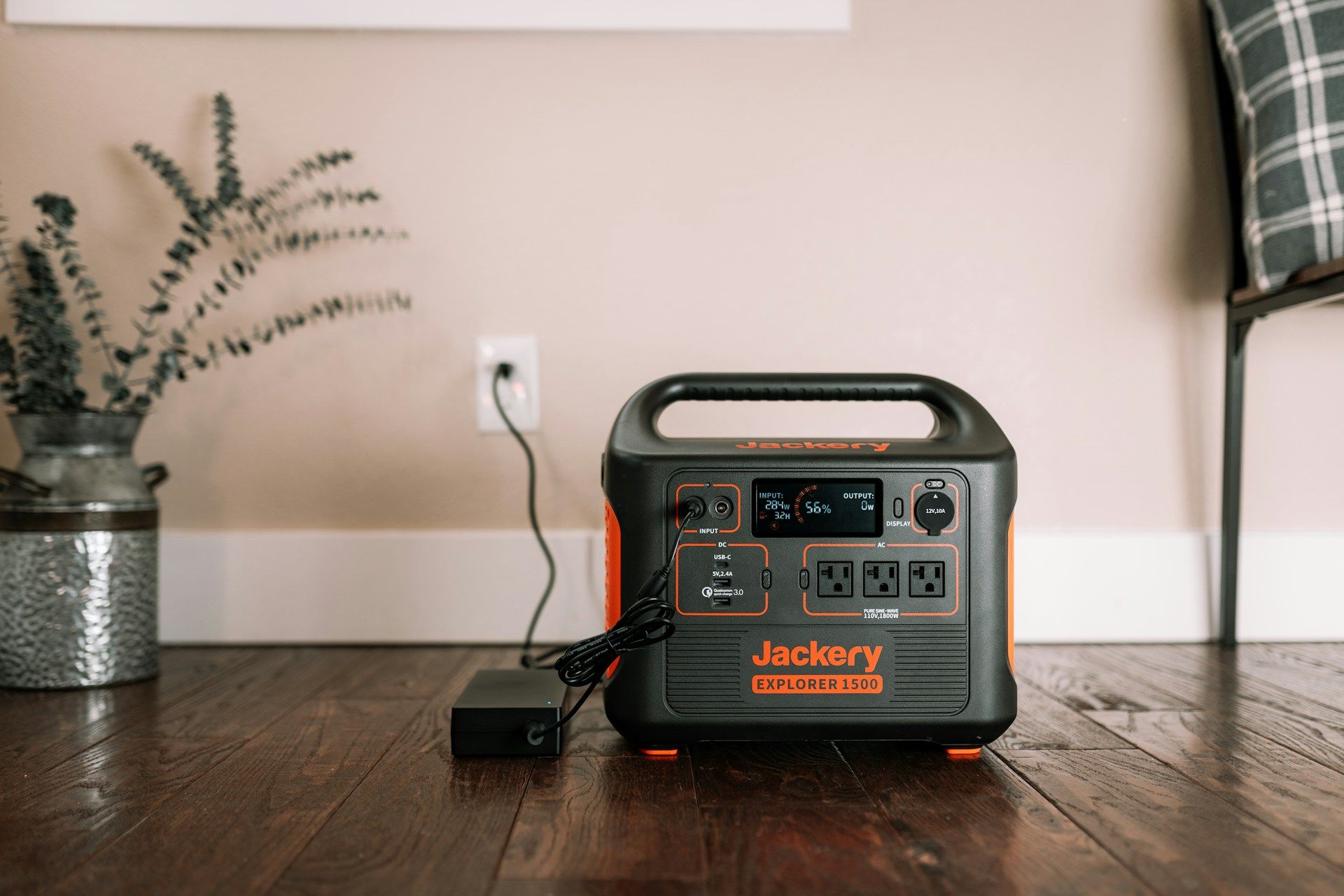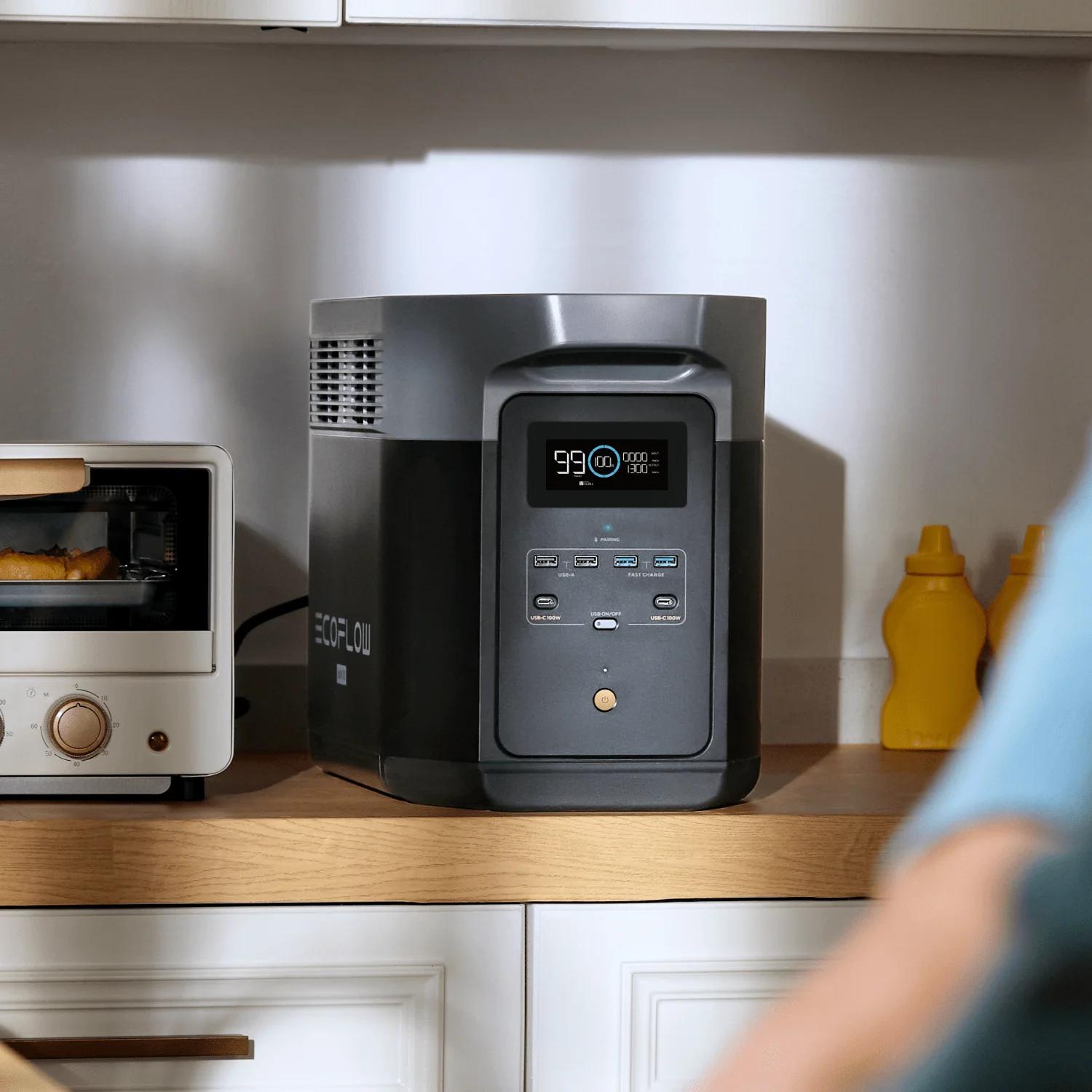


A home battery backup with enough capacity for your concentrator's wattage gives you time to switch to portable oxygen or contact your supplier before you're in a medical emergency. Our guide covers five LFP-based portable power stations sized for concentrators drawing 150 W to 600 W, plus a buyer's guide for calculating your exact runtime.
PowerOutage.us tracks outages across 96% of U.S. electricity customers, monitoring over 950 utilities in real time during live events. Those outage duration patterns in your area can guide how many hours of backup you actually need.
5 Best portable power stations for oxygen concentrators
We evaluated the five units below on four main criteria: pure sine wave AC output, UPS transfer time, LFP battery chemistry, and watt-hour capacity relative to common concentrator draw ranges. Runtime estimates use 85% inverter efficiency throughout.
Note that oxygen-dependent households should still maintain a backup oxygen plan through their medical provider or oxygen supplier, including portable cylinders or other approved emergency options. A battery backup is one layer of preparedness, not a complete substitute for medical contingency planning.
1. EcoFlow DELTA 3 Max Plus
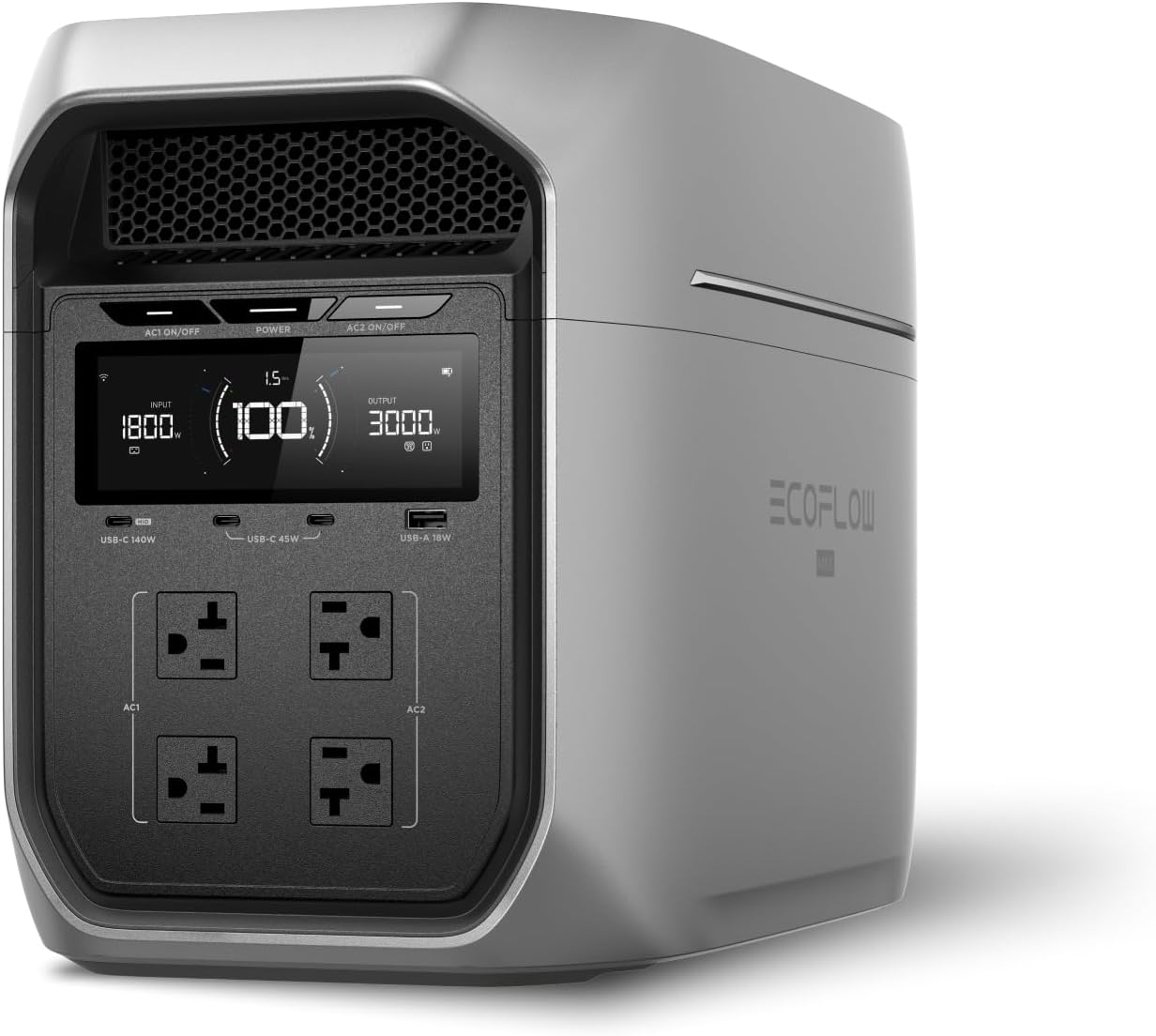
The EcoFlow DELTA 3 Max Plus is the best battery backup with 2,048 Wh of LFP capacity and 10 ms UPS transfer time. It covers the most common outage scenarios without requiring a switch to portable cylinders.
What do you get with this portable power station?
The DELTA 3 Max Plus pairs high LFP capacity with one of the fastest UPS transfer times in the portable power category. It's one of the most complete solutions out there.
- Battery: 2,048 Wh LFP, expandable to 5 kWh via EcoFlow extra battery packs
- Continuous AC output: 3,000 W (6,000 W surge; X-Boost extends effective output to 3,800 W)
- UPS mode: 10 ms transfer time
- Recharge time: About 1 hour via high-speed wall charging under ideal conditions.
- Price range: $1,050 to $1,900
- App control: Yes, via EcoFlow app (real-time watt draw and runtime monitoring)
The expandability is the most important long-term feature here. If your concentrator prescription moves to a higher flow rate and draws more watts, adding an EcoFlow battery pack gets you to 5 kWh without replacing the base unit.
EcoFlow DELTA 3 Max Plus pros and cons
The DELTA 3 Max Plus has the best combination of UPS speed and capacity in this list.
Pros
- 10 ms UPS transfer means the concentrator doesn't register the switch to battery power
- 2,048 Wh covers 5.8 hours at 300 W or 11.6 hours for a 150 W portable concentrator
- Expandable to 5 kWh for high-flow usage or if you face multi-day outage risk
Cons
- At $1,050 to $1,900, it's the second-most expensive unit in this list
- At 500 W, the base capacity provides only 3.5 hours. High-flow users should step up to the DELTA Pro 3.
Should you buy the EcoFlow DELTA 3 Max Plus?
The EcoFlow DELTA 3 Max Plus is the right buy for most standard home concentrators because it pairs 2,048 Wh of capacity with a 10 ms UPS transfer time that keeps the compressor running through a grid switch. If you're sizing backup for a typical 300 W concentrator and you want the fastest documented switchover on this list, start here.
Buy it if:
- Your concentrator draws around 300 W and you want at least 5.8 hours of runtime from one unit
- A fast, well-documented UPS transfer time matters because your concentrator restarts its boot cycle on any power gap
- You want a clear upgrade path, since EcoFlow battery packs take this unit to 5 kWh without replacing it
Skip it if:
- Your concentrator draws 400 W or more, where the DELTA Pro 3 covers the longer runtime you need
- You want native 120V/240V output for additional medical equipment, which only the DELTA Pro 3 provides
- You're on a tighter budget and use a low-flow or portable concentrator, where the Anker Solix C1000 Gen 2 costs less
2. EcoFlow DELTA Pro 3
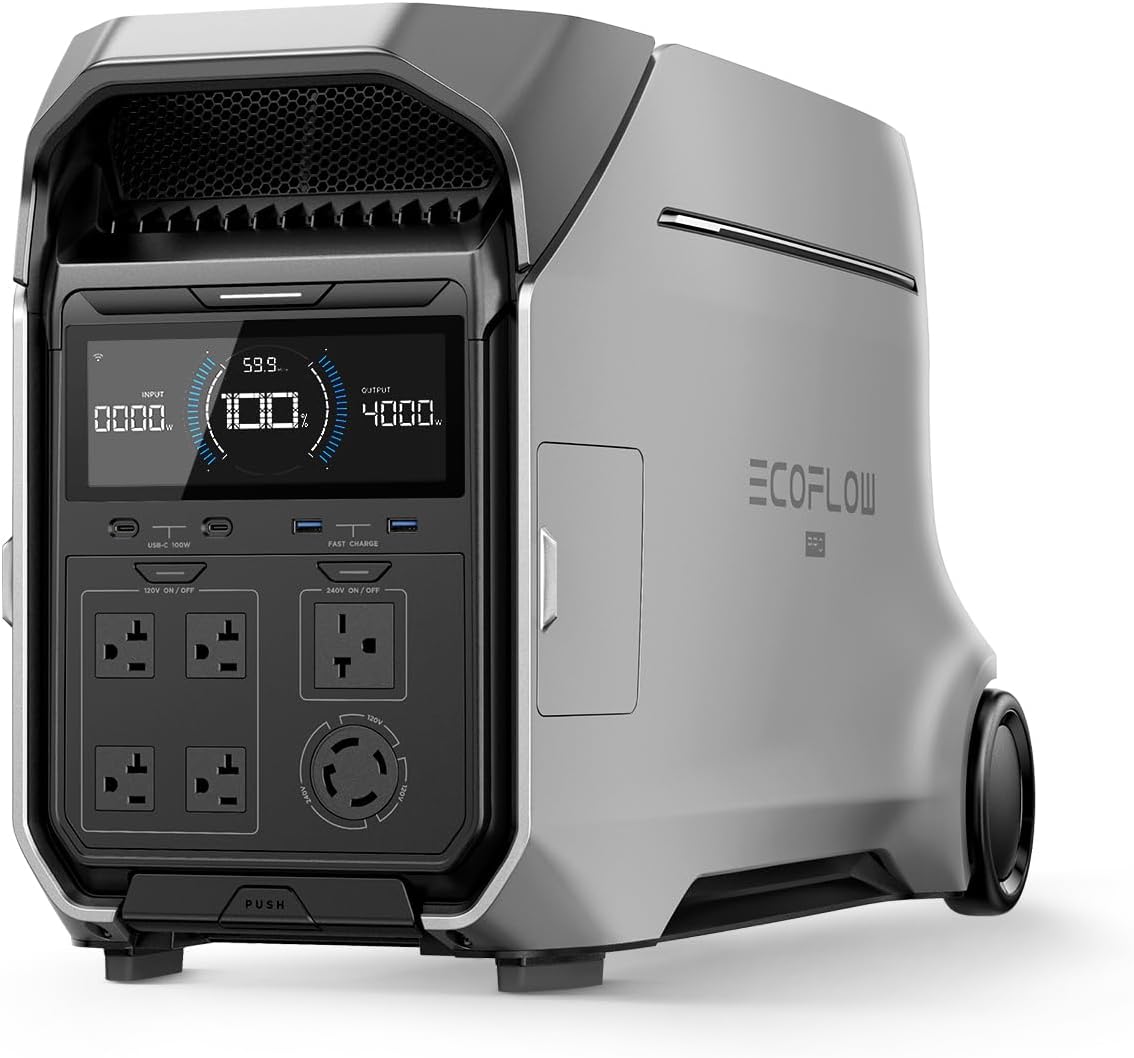
The EcoFlow DELTA Pro 3 is the right pick for high-flow concentrators drawing 400 W or more, where the DELTA 3 Max Plus falls short of a meaningful backup window.
What do you get with this portable power station?
The DELTA Pro 3 is EcoFlow's flagship portable unit. It's also the only one in this list with native 120V/240V output, which supports larger medical equipment configurations beyond the concentrator itself.
- Battery: 4,096 Wh LFP, expandable to large multi-battery configurations depending on setup
- Continuous AC output: 4,000 W pure sine wave
- Voltage output: 120V/240V
- UPS mode: X-Stream UPS capable (transfer time not independently published by EcoFlow)
- Price range: $2,300 to $3,700
- App control: Yes, via EcoFlow app with solar integration
EcoFlow DELTA Pro 3 pros and cons
The DELTA Pro 3 EcoFlow battery is the most capable unit in this list. But the price only makes sense for high-flow concentrators or people in regions with documented multi-day outage history.
Pros
- 4,096 Wh covers 11.6 hours at 300 W or 7 hours at 500 W without expansion
- Expandable to 12 kWh for those facing multi-day outage risk in hurricane-prone regions
- 120V/240V output supports broader medical equipment needs
- Pure sine wave output at 3,600 W handles even the highest-draw home concentrators
Cons
- At $2,300 to $3,700, it costs substantially more than the DELTA 3 Max Plus for people drawing under 350 W
- It's heavier than the other units, which matters if you need to move it between rooms during an outage
Should you buy the EcoFlow DELTA Pro 3?
The EcoFlow DELTA Pro 3 is worth the higher price if your concentrator draws 400 W or more, because its 4,096 Wh capacity delivers about 7 hours of runtime at 500 W where the DELTA 3 Max Plus falls to roughly 3.5 hours. It's the right call for high-flow prescriptions, or for households in regions with a documented history of multi-day outages.
Buy it if:
- Your concentrator draws 400 to 600 W and you need real multi-hour coverage at that load
- You want native 120V/240V output for other medical equipment beyond the concentrator
- You live somewhere with a history of multi-day outages and want the 12 kWh expansion path
Skip it if:
- Your concentrator draws under 350 W, where the EcoFlow DELTA 3 Max Plus covers the same hours for less money
- Moving the unit between rooms during an outage matters, since the DELTA Pro 3 is heavier than the others here
- You want a more affordable expandable option, where the Anker Solix F3000 sits in between on price and capacity
3. Bluetti Elite 200 V2

The Bluetti Elite 200 V2 is the best alternative to EcoFlow if you want 2,073.6 Wh of LFP capacity with 11 outlets for running a concentrator plus other medical or household devices.
What do you get with this portable power station?
The Elite 200 V2 Bluetti battery is the most versatile unit in this list for multi-device households. It combines high capacity with the most flexible outlet options of any unit here.
- Battery: About 2,073.6 Wh-class LFP capacity with Bluetti battery expansion support
- Continuous AC output: 2,400 to 2,600 W depending on operating mode and regional model version
- Outlets: 11 ports (4x AC, 2x USB-A, 2x USB-C, 1x car port, 1x DC5521, 1x NEMA TT-30)
- UPS mode: About 15 ms transfer time
- Price range: $1,200 to $1,600
- App control: Yes, Bluetooth via Bluetti app
Running a concentrator alongside a router, phone charger, and LED lighting adds only about 75 to 100 W to the total load. At a combined 375 to 400 W, the Elite 200 V2 delivers roughly 4.3 hours of runtime. And because of the 11-outlet configuration, you don't need a power strip between the unit and your devices.
Bluetti Elite 200 V2 pros and cons
The Elite 200 V2 matches the DELTA 3 Max Plus on UPS speed and capacity but offers more outlets and a slightly lower maximum price.
Pros
- Fast UPS-style switchover designed to minimize interruption during outages
- 2,073.6 Wh covers 5.8 hours at 300 W with room for additional household loads
- 11 outlets mean no power strip needed in multi-device medical setups
- Bluetti battery systems have a consistent track record across extended outage scenarios
Cons
- It's heavier than the DELTA 3 Max Plus, which makes room-to-room relocation more difficult
- The 2,400-2,600 W continuous output is lower than the DELTA 3 Max Plus's 3,000 W, which limits using multiple appliances at once
Should you buy the Bluetti Elite 200 V2?
The Bluetti Elite 200 V2 is the right buy if your concentrator shares an outage setup with other devices, because its 11 outlets and 2,073.6 Wh of capacity cover a concentrator plus a router, phone charger, and lighting at around 375 to 400 W without a power strip. It matches the DELTA 3 Max Plus on runtime for a typical 300 W concentrator, but it gives multi-device households more places to plug in.
Buy it if:
- You need to run a concentrator alongside other devices like a router, lights, or phone chargers from one unit
- You want 11 outlets so you don't need a power strip during an outage
- Your concentrator draws around 300 W and 5.8 hours of runtime fits your needs
Skip it if:
- You need to move the unit between rooms often, since it's heavier than the DELTA 3 Max Plus
- You want to run multiple high-draw appliances at once, where the DELTA 3 Max Plus's 3,000 W continuous output gives more headroom
- Your concentrator draws 400 W or more, where the DELTA Pro 3 or Anker Solix F3000 cover the runtime better
4. Anker Solix F3000
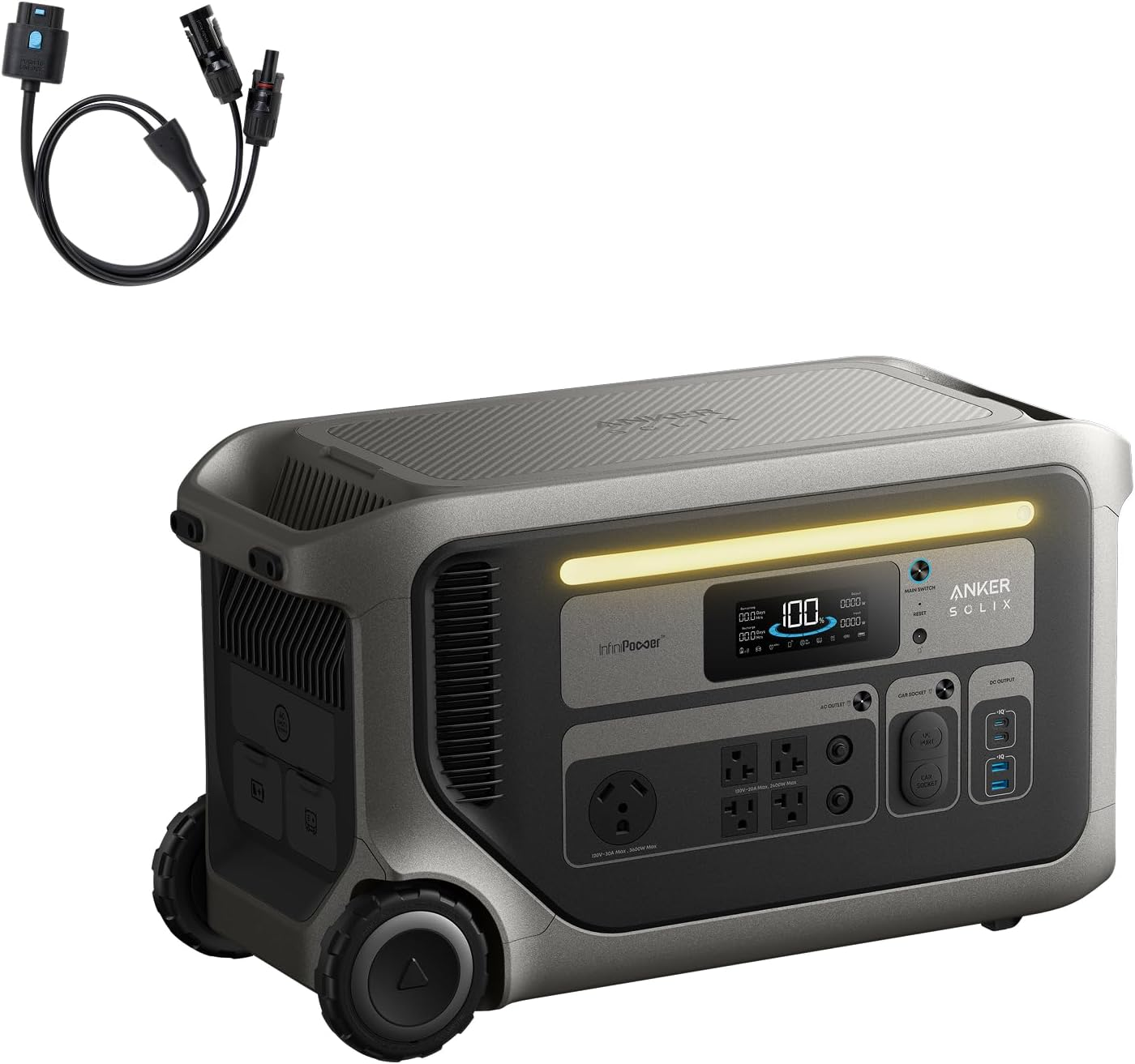
The Anker Solix F3000 is the best pick if you want more than 2,048 Wh of base capacity without paying the DELTA Pro 3's price. At 300 W draw, it delivers about 8.7 hours of runtime.
What do you get with this portable power station?
The F3000 sits between the 2,048 Wh units and the DELTA Pro 3. It gives you more base runtime than the DELTA 3 Max Plus and Elite 200 V2 without hitting the top tier in price.
- Battery: 3,072 Wh LFP with expandable battery configurations available depending on system setup
- Continuous AC output: 3,600 W pass-through capable
- Solar input: Dual-voltage solar input for off-grid recharging
- Price range: $1,800 to $2,500
- App control: Yes, via Anker app
Pass-through capability is worth understanding. You plug the concentrator into the F3000 and leave it there. When grid power is on, the concentrator draws through the unit without pulling from the battery. When the grid fails, the F3000 switches to battery output automatically. That's the right setup for any oxygen-dependent user, really, regardless of which unit they choose.
Anker Solix F3000 pros and cons
The F3000 has the best base runtime at 300 W draw in this list. But its UPS transfer time specification is less precisely documented than EcoFlow or Bluetti equivalents.
Pros
- 3,072 Wh base delivers 8.7 hours at 300 W, more than any other under-$2,500 unit here
- Pass-through mode supports always-on concentrator use without cycling the battery
- Expandable to 6 kWh for people in hurricane or ice storm-prone regions
- Dual-voltage solar input supports recharging during extended grid failures via outdoor panels
Cons
- The published UPS transfer time isn't as precisely documented as EcoFlow's 10 ms spec. That matters when you need guaranteed seamless switchover.
- At $1,800 to $2,500, it costs more than the DELTA 3 Max Plus without matching the DELTA Pro 3's capacity or output
Should you buy the Anker Solix F3000?
The Anker Solix F3000 is the right buy if you want more runtime per dollar than the 2,048 Wh units without stepping up to the DELTA Pro 3's price. Its 3,072 Wh capacity delivers about 8.7 hours at 300 W, and its pass-through mode keeps the concentrator running off grid power until the battery is needed. It's a strong fit for always-on concentrator setups in hurricane or ice storm-prone regions.
Buy it if:
- You want more runtime than 2,048 Wh provides without paying DELTA Pro 3 pricing
- Pass-through mode appeals to you because your concentrator runs continuously and you want it plugged into one unit at all times
- You live in a hurricane or ice storm-prone region and want the 6 kWh expansion option
Skip it if:
- A precisely documented UPS transfer time is non-negotiable for you, where the EcoFlow DELTA 3 Max Plus's 10 ms spec is better confirmed
- You want the lowest price for around 2,000 Wh of capacity, where the DELTA 3 Max Plus or Bluetti Elite 200 V2 cost less
- Your concentrator draws 400 W or more, where the DELTA Pro 3 gives you more headroom
5. Anker Solix C1000 Gen 2
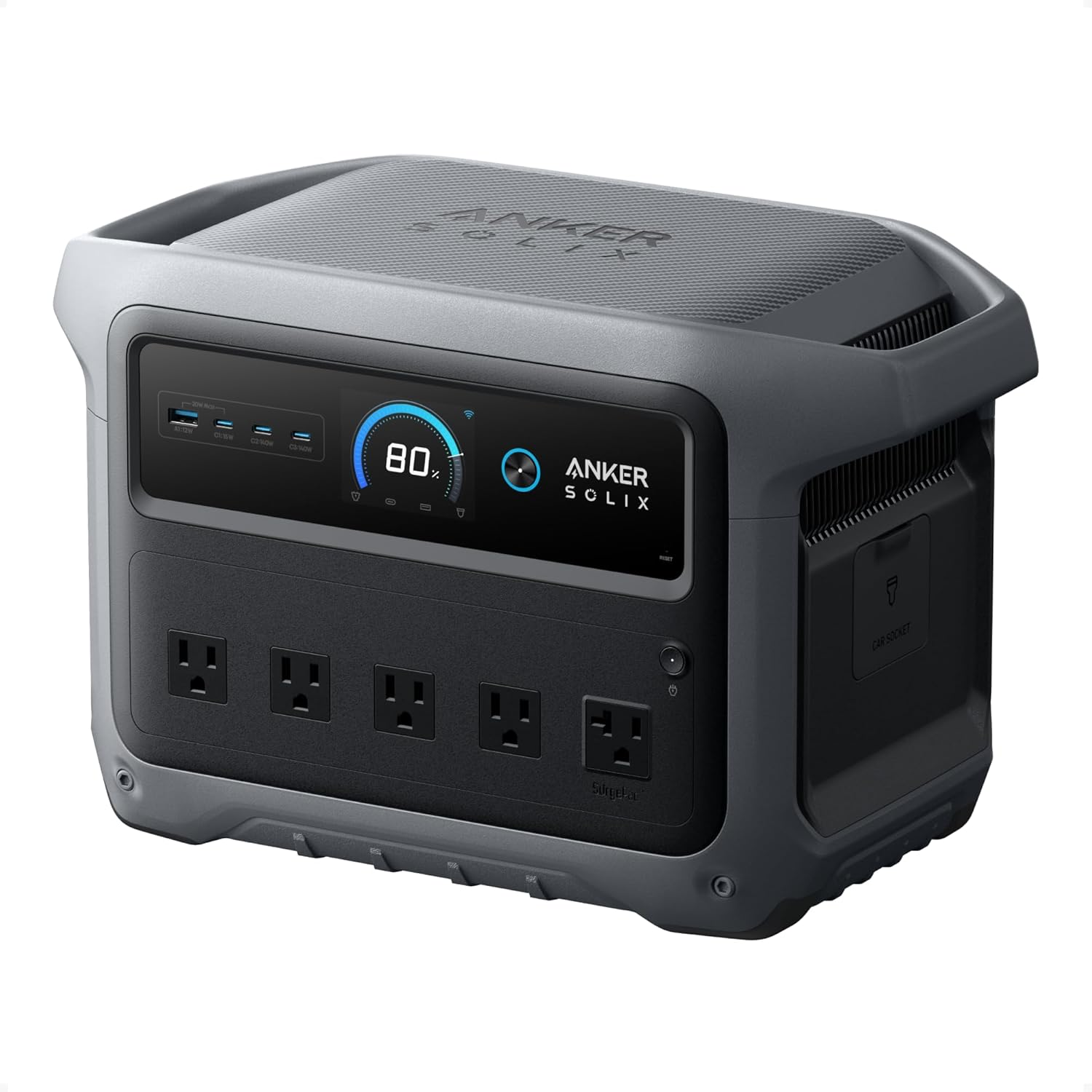
The Anker Solix C1000 Gen 2 is the best option if you use portable or low-flow oxygen concentrators drawing under 150 W. At that load, the 1,024 Wh battery delivers approximately 6 hours of runtime.
What do you get with this portable power station?
The C1000 Gen 2 is a solid primary backup for low-draw portable concentrators and a decent secondary unit for higher-draw setups.
- Battery: About 1,024 Wh-class LFP capacity rated for long-cycle lifespan
- Continuous AC output: About 2,000 W pure sine wave
- UPS mode: 10 ms transfer time
- Recharge time: About 50 minutes to 1 hour depending on charging mode and conditions
- Price range: $500 to $750
The one-hour recharge time comes into play in cycling outage scenarios. During Hurricane Milton in October 2024, for example, PowerOutage.us recorded grid restoration windows as short as 30 to 60 minutes before repeat failures across Florida, affecting 3.4 million customers. A unit that can recapture most of its capacity in under an hour is a lot more useful in that situation than one requiring 4 to 7 hours.
Anker Solix C1000 Gen 2 pros and cons
The C1000 Gen 2 is the right call for portable concentrator users or those prescribed under 2 LPM. But it doesn't provide adequate runtime for standard 300 W home concentrators beyond roughly 3 hours.
Pros
- 58-minute full recharge captures maximum energy during brief grid restoration windows
- 1,024 Wh covers approximately 6 hours for portable concentrators drawing 150 W or less
- 10-year LFP lifespan reduces long-term replacement cost
- $500 to $750 is the most accessible entry point in this list
Cons
- At 300 W draw, 1,024 Wh provides approximately 3 hours. That's the absolute minimum for home concentrator use.
- It's not suitable for high-flow concentrators drawing 400 W or more There's no expandable battery option if your oxygen needs increase over time
Should you buy the Anker Solix C1000 Gen 2?
The Anker Solix C1000 Gen 2 is the right buy for portable or low-flow concentrator users because its 1,024 Wh battery covers about 6 hours at 150 W, and its 58-minute recharge time fits the short restoration windows that cycling outages tend to produce. At $500 to $750, it's the most accessible entry point on this list for that use case.
Buy it if:
- You use a portable or low-flow concentrator drawing under 150 W and want around 6 hours of runtime
- Your area sees cycling outages with brief restoration windows, where the 58-minute recharge gets you back to full fast
- You want the lowest entry price on this list and don't need expandability
Skip it if:
- Your concentrator draws 300 W or more, where 1,024 Wh provides only about 3 hours, the bare minimum for home use
- Your oxygen needs might increase over time and you want an expandable option, where the DELTA 3 Max Plus or F3000 fit better
- You run a high-flow concentrator at 400 W or more, where the DELTA Pro 3 or F3000 are the better fit
How we ranked these oxygen concentrator battery backups
We ranked these portable power stations for one specific situation: keeping an oxygen concentrator running during a power outage. We combined manufacturer specs, verified consumer reviews, and published test results, then weighted everything against what PowerOutage.us outage tracking data shows about how long outages actually last.
Here's what mattered most, in order:
- Pure sine wave output. This got the heaviest weight. Oxygen concentrators use AC induction motors and electronically controlled compressors that need clean sine wave power, so any unit without it was out.
- UPS transfer time. A fast, well-documented switchover keeps the concentrator from registering a grid failure at all. We favored units with published transfer times under 30 ms, like the EcoFlow DELTA 3 Max Plus's 10 ms and the Anker Solix C1000 Gen 2's 10 ms, and we noted where a manufacturer hadn't published a precise figure, as with the Anker Solix F3000.
- Capacity versus concentrator draw. PowerOutage.us tracks outages across 96% of U.S. electricity customers and over 950 utilities in real time, and that data shaped our runtime assumptions. We compared each unit's watt-hour capacity against the 150 W, 300 W, and 500 W draw ranges common to home and portable concentrators, using 85% inverter efficiency throughout.
- Outage-cycling fit. Some areas see repeated short outages rather than one long one. During Hurricane Milton, PowerOutage.us recorded grid restoration windows as short as 30 to 60 minutes before repeat failures across Florida, affecting 3.4 million customers. We gave credit to units like the Anker Solix C1000 Gen 2, with its 58-minute recharge time, for fitting that pattern.
- Outlets and expandability. Households running a concentrator alongside other medical or household devices need enough outlets and headroom, so we noted which units expand to higher capacity for people facing multi-day outage risk.
- Cost. We compared price ranges across the list, from the Anker Solix C1000 Gen 2 at $500 to $750 up to the EcoFlow DELTA Pro 3 at $2,300 to $3,700, and weighed that against the capacity and features each unit delivers.
Why is a battery backup worth buying for an oxygen concentrator?
A battery backup is worth buying for an oxygen concentrator because outages pose a direct medical risk to oxygen-dependent households.
Concentrators have no internal battery and stop producing oxygen the moment grid power fails. According to PubMed research on home oxygen therapy after disasters, 25.7% of surveyed oxygen patients in Japan interrupted their therapy during grid outages following the 2011 earthquake, even though oxygen cylinders reached 95.8% of patients before supplies ran out.
During Hurricane Ida in August 2021, PowerOutage.us tracked more than 1 million Louisiana customers without power. Some parishes faced month-long restoration estimates. All 8 transmission lines into New Orleans were destroyed, and 721,000 customers were still without power a full week after landfall.
Similarly, Hurricane Helene in September 2024 affected 4.79 million customers across six states, with western North Carolina mountain counties losing power for 14 or more days. Urban areas like Charlotte restored within 24 hours.
Rural counties went through complete infrastructure rebuilds rather than repairs. That's one reason why concentrator people in rural areas usually need significantly more backup capacity than those in urban cores.
Quick recap
Wrapping up our picks, the EcoFlow DELTA 3 Max Plus is the best battery backup for most oxygen concentrators, with 2,048 Wh of LFP capacity, 10 ms UPS transfer, and expandability to 5 kWh. If you use high-flow devices drawing 400 W or more, you'll need the DELTA Pro 3 or Anker Solix F3000. The Anker Solix C1000 Gen 2 is the right fit for portable and low-flow concentrators on a tighter budget.