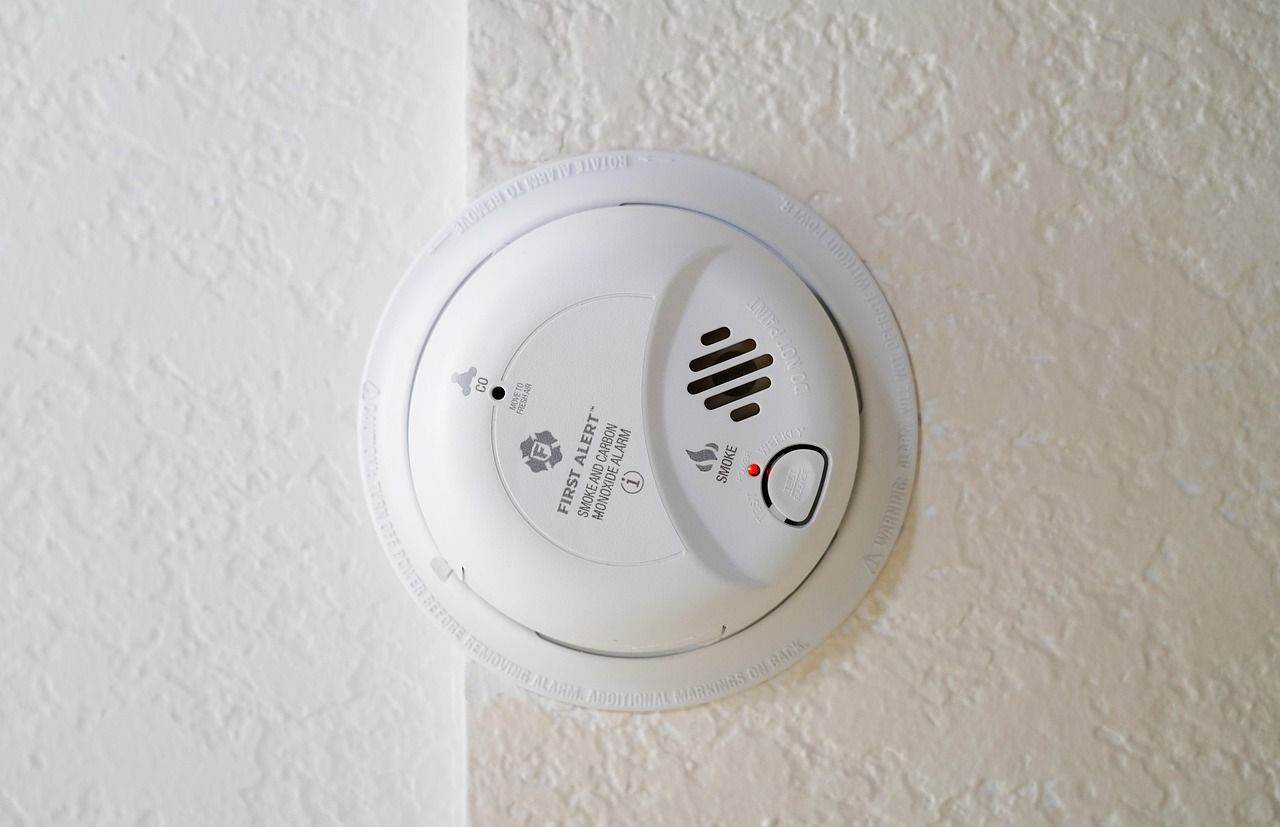


PowerOutage.us tracks more than 900 utilities serving more than 200 million customers, showing where storm outages spread across the United States. Our outage data helps us rank detectors for households using generators when grid power disappears.
How we chose carbon monoxide detectors
We compared published detection results, manufacturer specifications, owner feedback, outage power design, maintenance requirements, and typical pricing to rank these carbon monoxide detectors.
Our criteria were:
- Detection performance: How reliably the alarm detects dangerous carbon monoxide levels.
- Outage power: Whether the alarm keeps working when grid power fails.
- Warning information: How clearly the alarm communicates current levels, peak readings, and hazards.
- Maintenance and service life: How often the batteries or alarm need replacement.
- Value: How the price compares with the alarm’s detection, power, and warning features.
Carbon monoxide detector comparison
Here’s a quick comparison of our top picks.
| Detector | Outage power | Warning information | Interconnection | Service life |
|---|---|---|---|---|
| First Alert CO615 | AA battery backup | Display and peak memory | No | About 7 years |
| Kidde COBDL10 | Sealed 10-year battery | 30 to 70 ppm warning and display | No | 10 years |
| X-Sense SC07-W | Sealed 10-year battery | Smoke and CO display | Up to 18 alarms | 10 years |
| First Alert CO710 | Sealed 10-year battery | CO, peak, and temperature display | No | 10 years |
| Kidde KN-COPP-B-LPM | Three AA batteries | Display and peak memory | No | 10 years |
5 Best carbon monoxide detectors for generators
Now let's cover our top picks in detail.
1. First Alert CO615
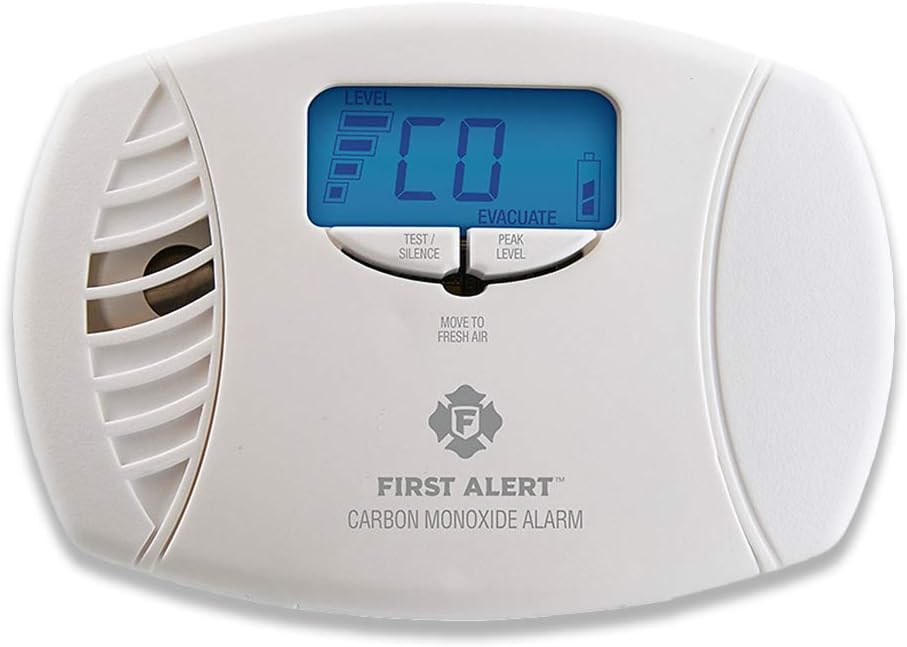
The First Alert CO615 pairs reliable detection with practical outage protection and clear information at a reasonable price.
The First Alert CO615 is best for homeowners who want a plug-in alarm that stays active after utility power fails. The display and peak memory also help you see whether the alarm recorded elevated carbon monoxide.
- Power: Plug in with two AA backup batteries
- Sensor: Electrochemical
- Alert: 85 dB alarm
- Display: Current level and peak memory
- Service life: About 7 years
Pros
- Strong published detection results
- Battery backup works during outages
- Display shows current readings
- Peak memory records prior exposure
Cons
- Shorter service life than 10-year models
- Requires an available wall outlet
First Alert CO615 reviews
Amazon customers give the CO615 about 4.6 stars across more than 8,600 ratings. Reviewers tend to like the simple setup and visible reading, but some get confused by the chirps or end-of-life alerts.
Should you buy the First Alert CO615?
Buy the CO615 if you want a clear display, battery backup, and well-rounded detection for about $36. Pass if you prefer a sealed 10-year battery or need alarms that communicate with one another.
2. Kidde COBDL10
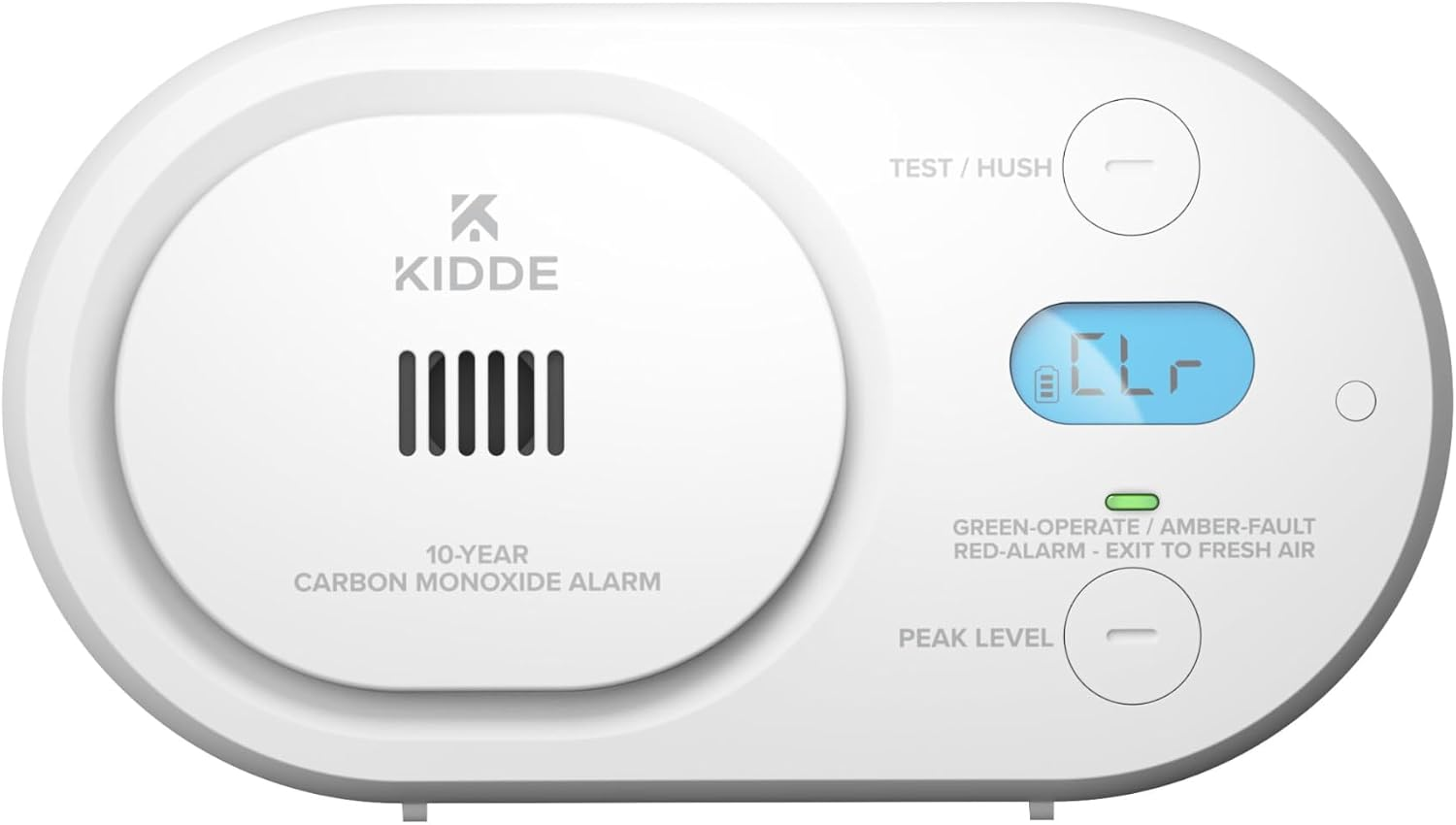
The Kidde COBDL10 adds a separate low-level warning for households that want more information before a standard alarm threshold.
The Kidde COBDL10 is the best detector if you want earlier awareness and a long maintenance cycle. The sealed battery also works well where an outlet isn't available or may lose power.
- Power: Sealed 10-year battery
- Sensor: Electrochemical
- Low level warning: 30 to 70 ppm
- Display: Backlit carbon monoxide reading
- Certification: ETL listed to UL 2034 Fifth Edition
Pros
- Separate low-level warning
- Sealed battery needs no routine replacement
- Backlit display is easy to check
- 10-year warranty
Cons
- Limited long-term owner feedback
- Typical price was unavailable during research
Kidde COBDL10 reviews
Amazon customers give the COBDL10 about 4.7 stars across 37 ratings, with more than 400 recent purchases shown during verification. That's a much smaller sample than the review totals for our other picks.
Should you buy the Kidde COBDL10?
Buy the COBDL10 if a separate low-level warning and sealed battery matter more than a long review history. Pass if you want a proven model with thousands of owner ratings or a lower confirmed price.
3. X-Sense SC07-W
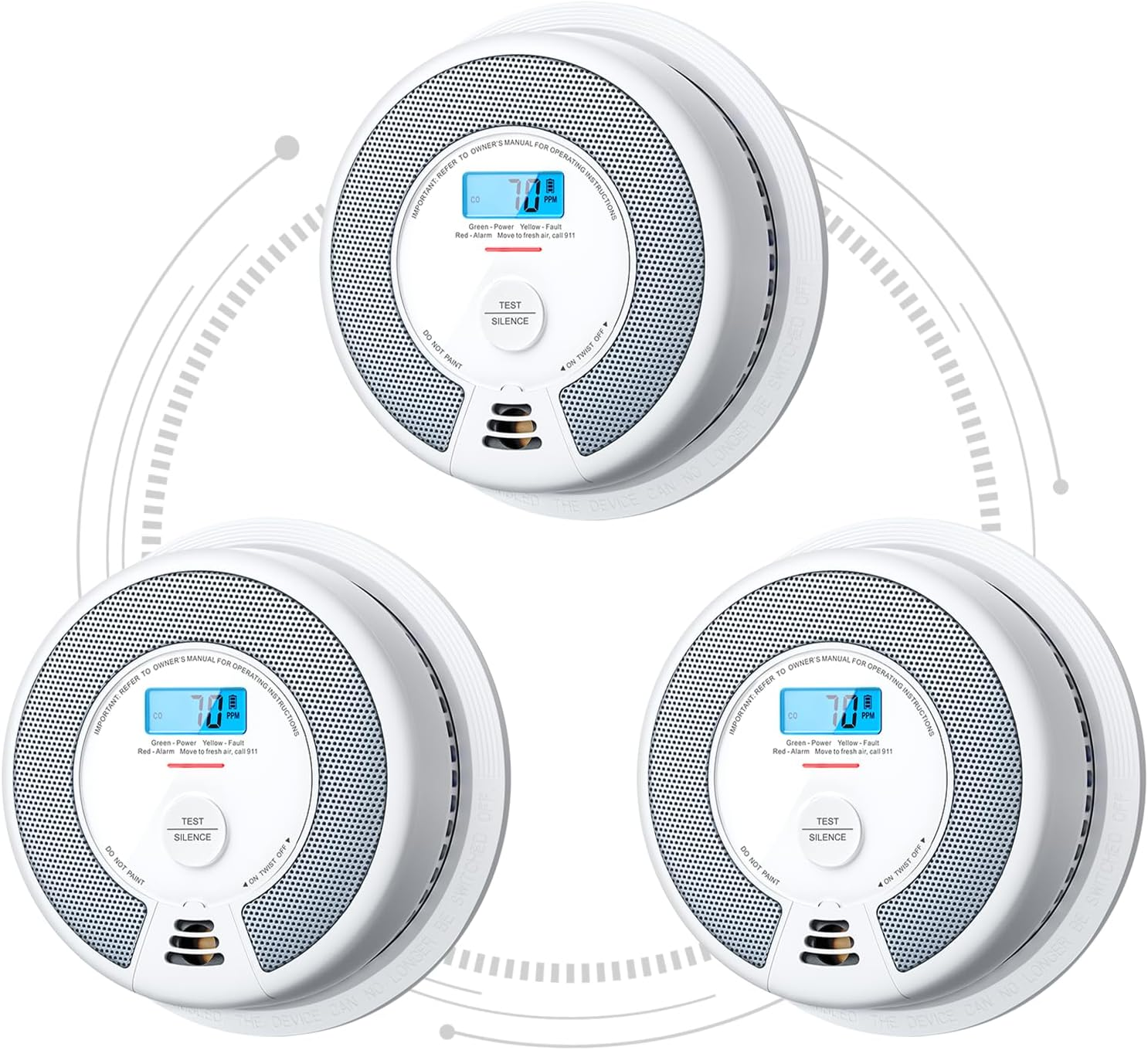
The X-Sense SC07-W links smoke and carbon monoxide alarms to keep things simple.
The X-Sense SC07-W is best for larger or multistory homes where one isolated alarm may be hard to hear. The current United States version connects up to 18 compatible alarms without wiring, a hub, WiFi, or a subscription.
- Power: Sealed 10-year battery
- Sensors: Photoelectric smoke and electrochemical CO
- Network: Wireless connection for up to 18 alarms
- Display: Smoke and carbon monoxide information
- Certifications: UL 217 and UL 2034
Pros
- Interconnects up to 18 alarms
- Combines smoke and CO detection
- Requires no wiring or subscription
- Sealed battery supports outage operation
Cons
- Costs more than standalone alarms
- Buyers must confirm the SC07-W variant
X-Sense SC07-W reviews
The current SC07-W holds about 4.5 stars across more than 1,500 retailer ratings. Reviewers tend to like the wireless interconnection and simple installation, but some get frustrated with pairing or false alarms.
Should you buy the X-Sense SC07-W?
Buy the SC07-W if whole home alerts and combined smoke and CO detection justify its higher price. Pass if you need only one inexpensive detector or want phone notifications.
4. First Alert CO710
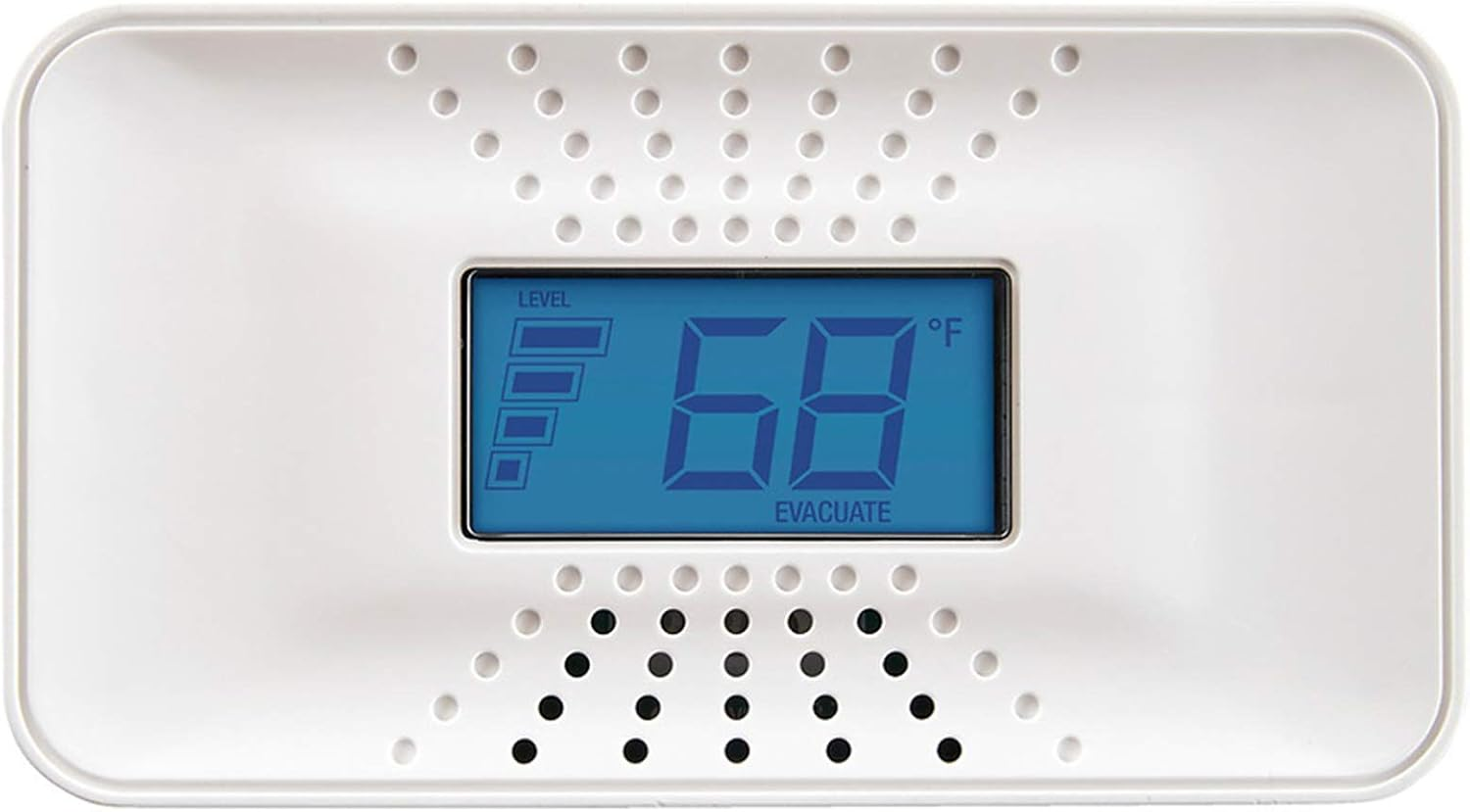
The First Alert CO710 offers flexible placement, a sealed battery, and a display without requiring access to a wall outlet.
The First Alert CO710 is the best detector for buyers who want a portable tabletop or wall-mounted alarm with a long service life. The current, peak, and temperature readings give you more context than a basic alarm.
- Power: Sealed 10-year battery
- Sensor: Electrochemical
- Alert: 85 dB alarm
- Display: Current CO, peak CO, and temperature
- Warranty: 10 years
Pros
- Flexible wall or tabletop placement
- Sealed battery lasts through outages
- Shows current and peak readings
- Includes an end-of-life alert
Cons
- Usually costs about $45 to $55
- Does not interconnect with other alarms
First Alert CO710 reviews
Amazon customers give the CO710 about 4.6 stars across more than 4,000 ratings. Reviewers tend to like the portable design and readable display, but some dislike the display brightness or alert behavior.
Should you buy the First Alert CO710?
Buy the CO710 if flexible placement and a sealed 10-year battery outweigh its higher price. Pass if you want interconnection or a less expensive detector with replaceable batteries.
5. Kidde KN-COPP-B-LPM
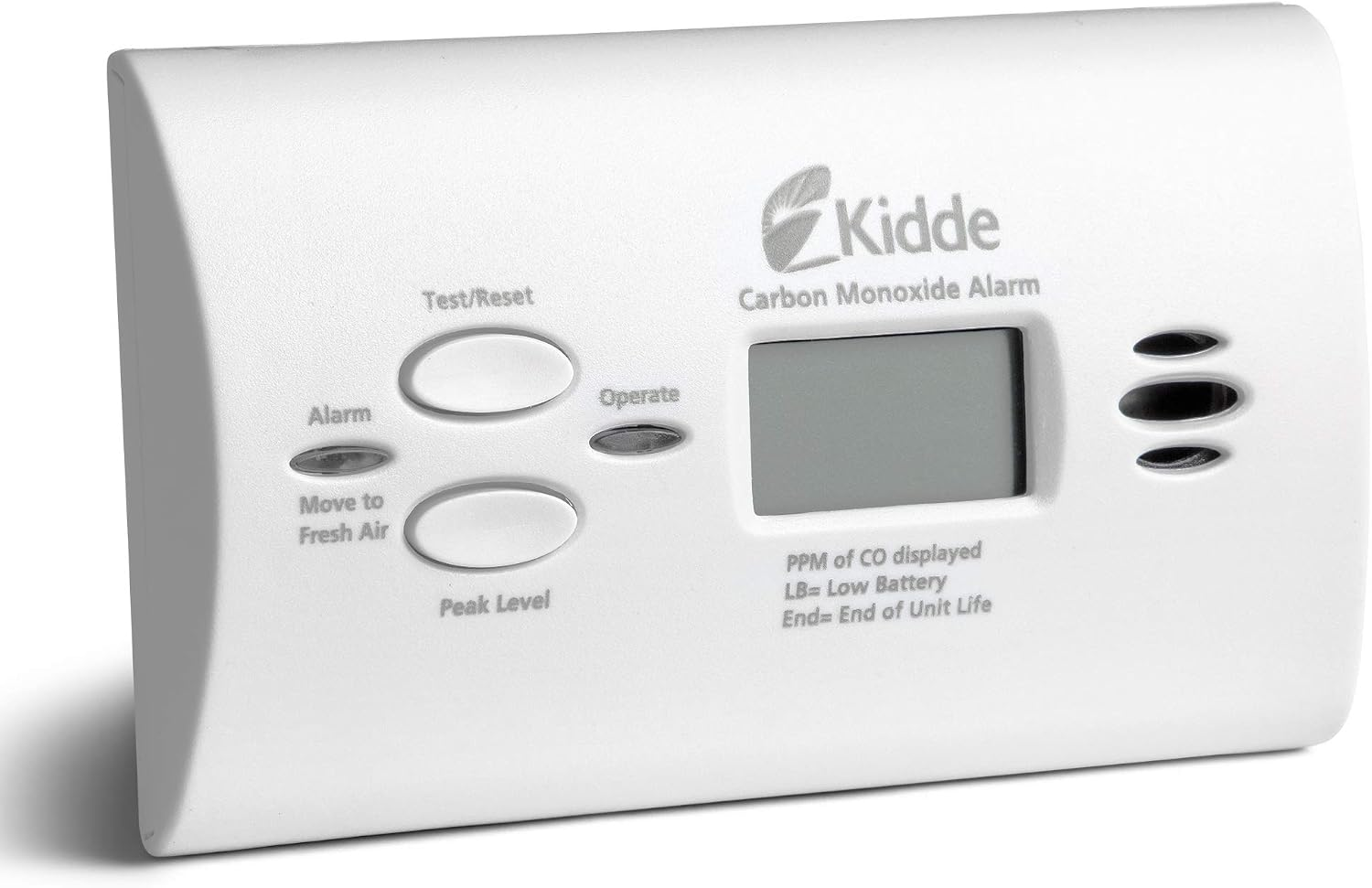
The Kidde KN-COPP-B-LPM provides carbon monoxide protection with replaceable batteries for about $19.
The Kidde KN-COPP-B-LPM is a great carbon monoxide detector for budget-focused buyers who need simple wall or tabletop placement during an outage. The digital display shows 30 to 999 ppm, while peak memory records the highest level measured since the last reset.
- Power: Three AA batteries
- Sensor: Electrochemical
- Alert: 85 dB alarm
- Display: Shows 30 to 999 ppm with peak memory
- Certification: UL listed
Pros
- Lowest typical price among our picks
- Works without household electricity
- Digital display shows current readings
- Peak memory records prior exposure
Cons
- Display stays at zero below 30 ppm
- Three batteries require routine replacement
Kidde KN-COPP-B-LPM reviews
Amazon customers give this Kidde alarm about 4.7 stars across more than 19,800 ratings. Reviewers tend to praise the straightforward setup and value, but some have trouble figuring out the chirps.
Should you buy the Kidde KN-COPP-B-LPM?
Buy this Kidde alarm if you want battery-powered protection and a digital display at a budget price. Pass if you want a sealed battery or interconnected alerts.
Power outages increase generator CO risk
Our data shows Winter Storm Fern made 1,005,641 customers go without power, with some areas dark for more than six days. Generator use can continue long after plug-in alarms lose utility power, so generator carbon monoxide safety starts with an alarm that has working battery power.
Similarly, Hurricane Milton left 3.4 million Florida customers without power amid multiday and cycling failures. A charged CO alarm must keep working each time a generator restarts, making outage power part of a broader power outage safety plan.
How to choose a carbon monoxide detector
To choose a carbon monoxide detector, start with outage power you want, then compare warning information, placement, interconnection, and upkeep.
- Choose a plug-in model only when it includes battery backup.
- Use sealed battery alarms when you want fewer maintenance decisions.
- Choose a numeric display when current or peak readings help your household respond.
- Use interconnected alarms in larger homes where one alarm may not be heard everywhere.
- Check the service life and replacement date before buying.
- Follow the manufacturer's instructions for placement, testing, and replacement.
A detector supports safe generator use, but it never makes indoor generator operation acceptable. Keep a portable generator for home outdoors at least 20 feet from the house with exhaust aimed away. Follow the same placement rule for dual fuel generators.
Review your alarm instructions before an outage and include monthly testing in your broader generator safety routine.