

PowerOutage.us tracks more than 950 utilities serving over 200 million customers, about 95 percent of the country. We rank fuel-flexible generators first using learnings from our live outage data, so you buy the right one before the lights go out, not after.
How we ranked these dual-fuel generators
To rank these dual fuel generators, we combined manufacturer specs, aggregated owner and published reviews, and our own PowerOutage.us outage data about outage durations for different events.
Here's what we weighted, heaviest first:
- Real outage usefulness: We weighed running watts against typical home loads heaviest, plus fuel flexibility, because that's what carries a house through an outage.
- Reliability and starting: We rated owner-reported reliability and starting next, favoring electric or remote start over recoil.
- Runtime and safety: We checked runtime, tank size, and carbon monoxide shutoff because a generator has to run long and run safely.
- Power quality and noise: We looked at power quality for electronics and noise level since a neighborhood generator has to behave.
- Portability and value: We weighed weight and price per watt last so the generator still earns its place.
5 best dual-fuel generators for outages
These five dual-fuel generators cover the whole range of generator sizes, from whole-home power down to a 47 lb unit you may be able to carry one-handed.
1. DuroMax XP13000EH
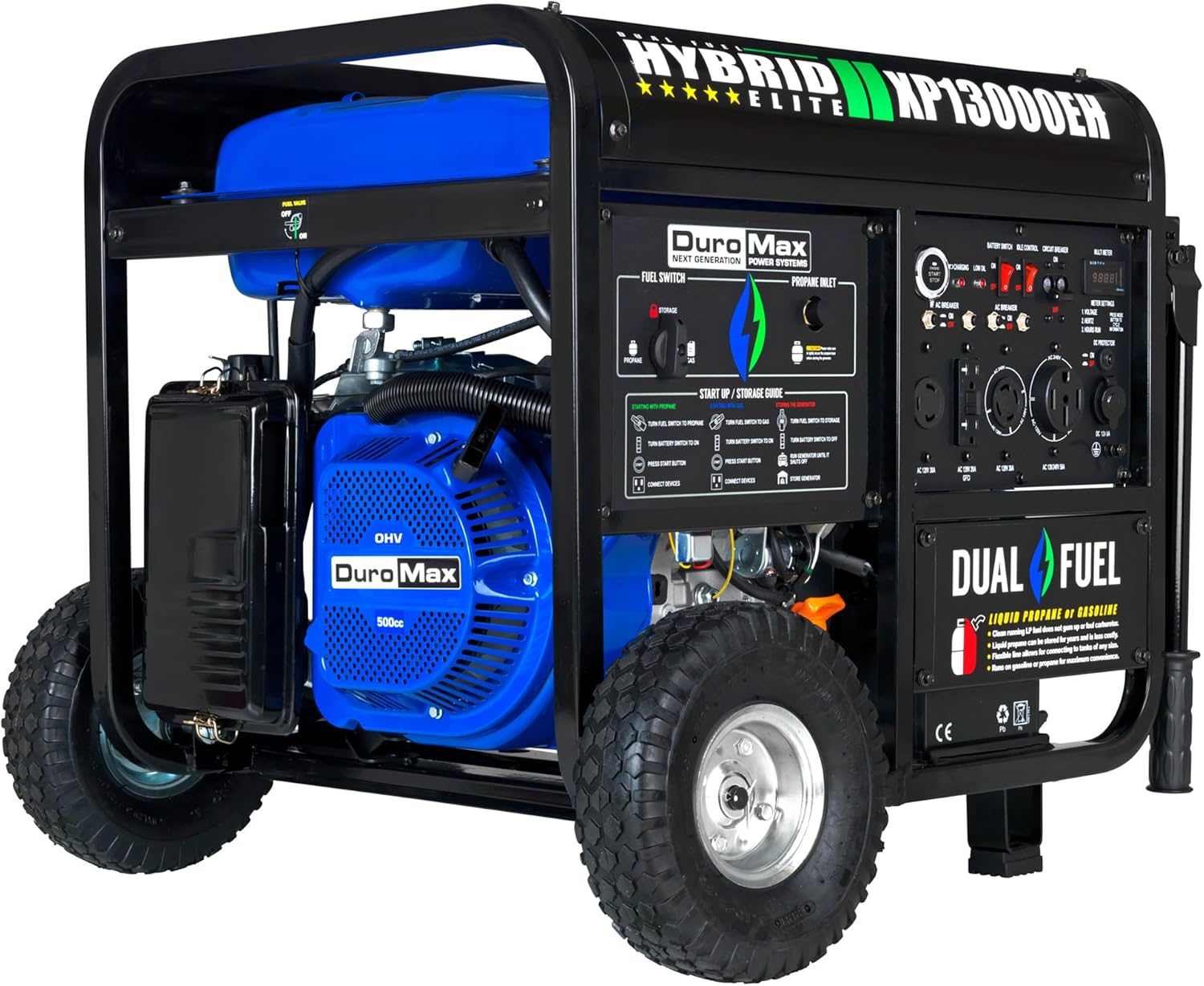
The DuroMax XP13000EH puts out 13,000 starting watts on gasoline or propane, enough to carry most homes through an outage.
You should consider the DuroMax XP13000EH if you want to run central air conditioning alongside the fridge, well pump, and lights. Pair this generator with a transfer switch so the power feeds your panel safely.
Key specs include:
- 13,000 starting watts, 10,500 running watts on gasoline
- Dual fuel, gasoline or propane
- 500 cc OHV V-twin engine, push-button electric start
- About 8 hours at 50 percent load on a full 8.3-gallon tank
- 120/240 V, transfer-switch ready, all-metal frame
Pros
- Powers nearly a whole home, including many central air systems.
- Heavy-duty all-metal frame.
- Easy push-button electric start.
- Transfer-switch ready out of the box.
Cons
- Loud at high load.
- Gasoline usage increases significantly under heavy demand.
- Heavy at about 234 lbs.
DuroMax XP13000EH reviews
Owners on Amazon call this generator powerful and reliable, and they like the easy electric start and the solid metal build that runs a full house. The complaint that keeps coming up is noise, which a lot of owners say is loud in a neighborhood.
Should you buy the DuroMax XP13000EH?
You should buy the DuroMax XP13000EH if you want true whole-home capacity, and you'll wire it to your panel through a transfer switch. You should pass on it if you want something quiet or something one person can move more easily.
2. Westinghouse WGen9500DF
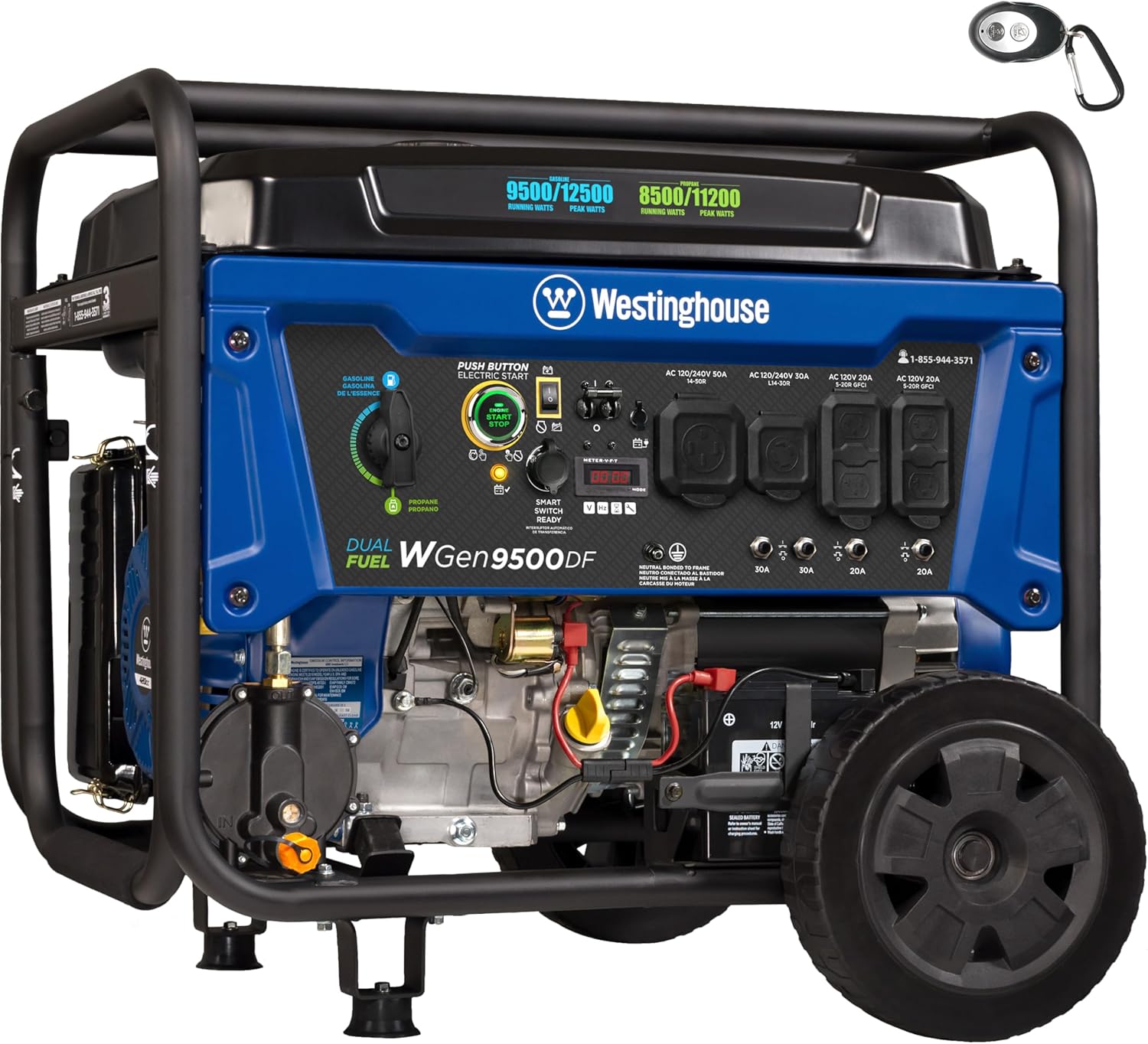
The Westinghouse WGen9500DF delivers 12,500 peak watts with a key-fob remote start, which makes it the best all-round outage pick for most homes.
The Westinghouse WGen9500DF provides strong backup if your requirements don’t need the 13,000-watt class. The remote start means you can turn the power on from inside during a storm.
Key specs include:
- 12,500 peak watts, 9,500 running watts on gasoline
- 11,200 peak watts, 8,500 running watts on propane
- 457 cc OHV engine with cast-iron sleeve
- Up to about 12 hours on a 6.6-gallon tank
- Remote, electric, and recoil start, transfer-switch ready
Pros
- Key-fob remote start.
- Strong, balanced home-backup power.
- Plug-and-play propane regulator included.
- Three-year warranty.
Cons
- Heavy at about 211 lbs.
- Open-frame design is loud.
Westinghouse WGen9500DF reviews
Owners point to the remote start, the simple setup, and plenty of power for a home backup plan. The downsides they mention are the weight and the open-frame noise you get with this class. It’s a portable generator but quite heavy.
Should you buy the Westinghouse WGen9500DF?
You should buy the Westinghouse WGen9500DF if you want the best balance of power, price, and convenience for whole-house essentials. You should pass on it if you need quiet power for sensitive electronics, or you're trying to run central air.
3. Champion Power Equipment 100165
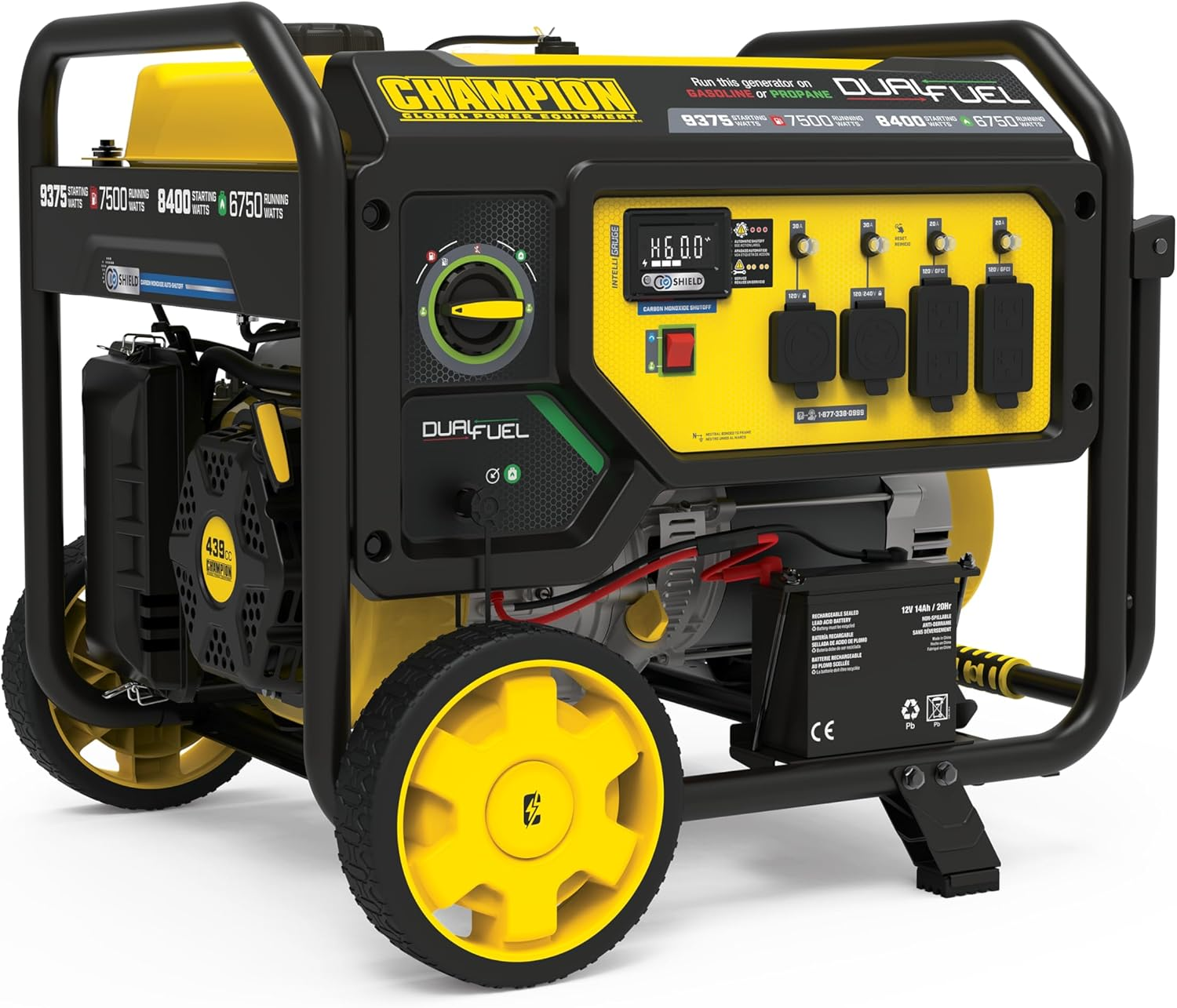
The Champion 100165 offers 9,375 starting watts plus lifetime technical support, so it's the value workhorse for your essentials and a little comfort.
Budget-minded buyers should consider the Champion 100165 if they're powering a fridge, furnace blower, well pump, and a few rooms. The support line helps a lot if it's your first generator.
- 9,375 starting watts, 7,500 running watts on gasoline
- 8,400 starting watts, 6,750 running watts on propane
- 439 cc engine, electric start with battery and Cold Start Technology
- About 8 hours at 50 percent load on a 6.1-gallon tank
- Intelligauge metering, low-oil shutoff, 120/240 V
Pros
- Strong watts per dollar.
- Free lifetime technical support.
- Electric start with cold-weather help.
- Intelligauge tracks volts, hertz, and hours.
Cons
- Heavy at about 215 lbs.
- Open-frame noise.
- Not an inverter generator.
Champion 100165 reviews
Owners like the value, the dependable electric start, and Champion's lifetime support team. The usual gripes are the weight and the noise you'd expect from an open-frame gasoline generator.
Should you buy the Champion 100165?
You should buy the Champion 100165 if you want the most running watts per dollar for household essentials. Shoppers might want to pass if they need clean power for electronics or a unit light enough to move more easily.
4. Champion Power Equipment 200988
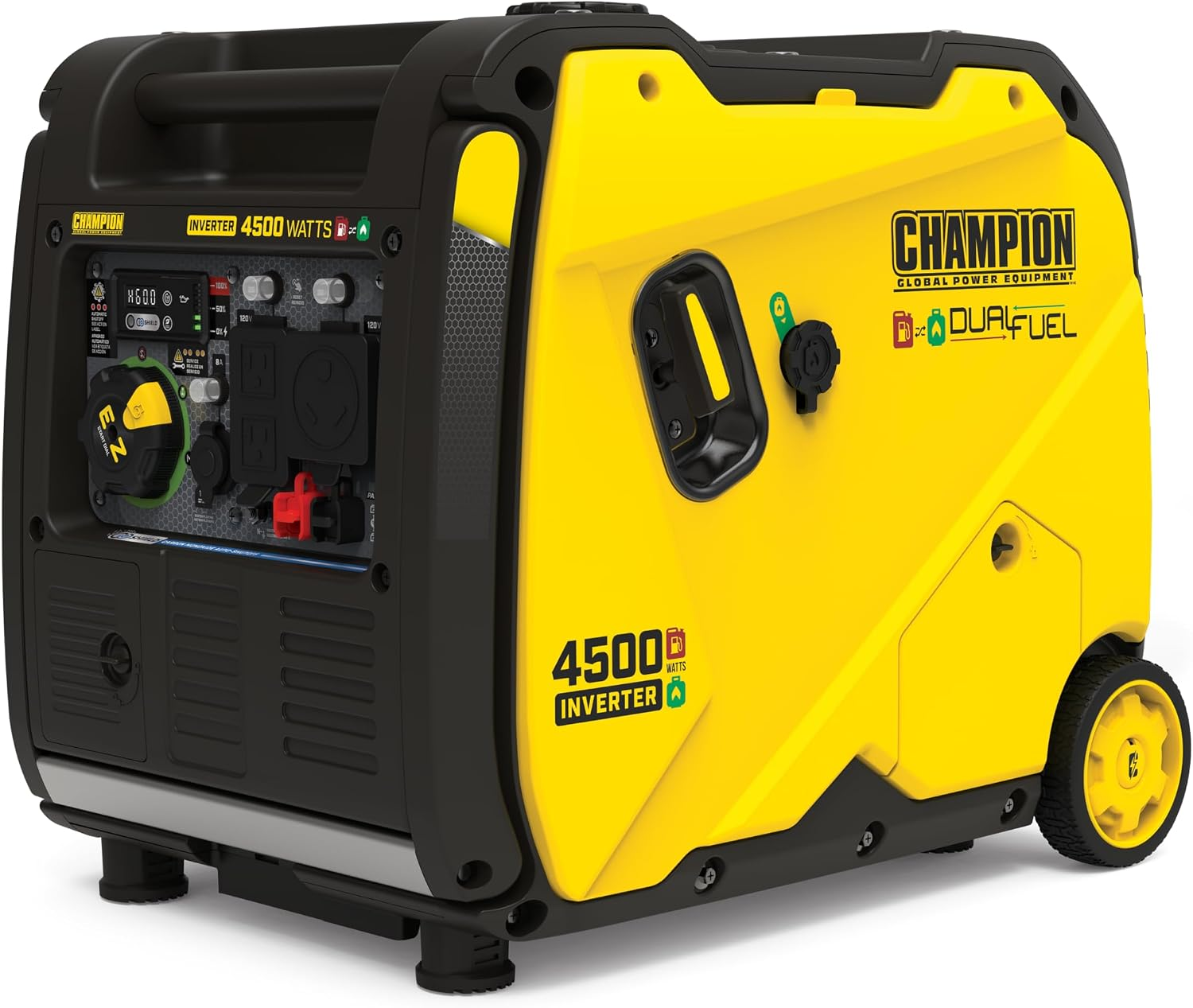
The Champion 200988 gives you 4,500 starting watts of clean inverter power at 61 dB, so it's quiet enough for a neighborhood and safe for electronics.
You should consider the Champion 200988 if you want to run a fridge and your electronics quietly, or power an RV, without a roaring open-frame unit. The inverter output protects laptops, phones, and modern appliance boards.
- 4,500 starting watts, 3,500 running watts on gasoline, about 14 hours at 25 percent load
- 4,500 starting watts, 3,150 running watts on propane, about 21 hours at 25 percent load
- 212 cc engine, inverter with clean power under 3 percent THD
- 61 dB, electric start with Cold Start Technology
- 30 amp RV-ready, parallel-capable
Pros
- Quiet, clean inverter power.
- Long runtime on propane.
- RV-ready 30-amp outlet.
- Parallel-capable for more power later.
Cons
- Tops out at 4,500 watts.
- Costs more per watt than open-frame options.
Champion 200988 reviews
Owners value the quiet operation, the clean power for electronics along with the long propane runtime, and a lot of them use it for both home backup and an RV. The complaints are about the wattage ceiling and the higher price.
Should you buy the Champion 200988?
Homeowners wanting backup should buy the Champion 200988 if they want quiet, electronics-safe backup or RV power. You should pass on it if you need to run central air or carry the whole house at once.
5. Pulsar Products GD400BN
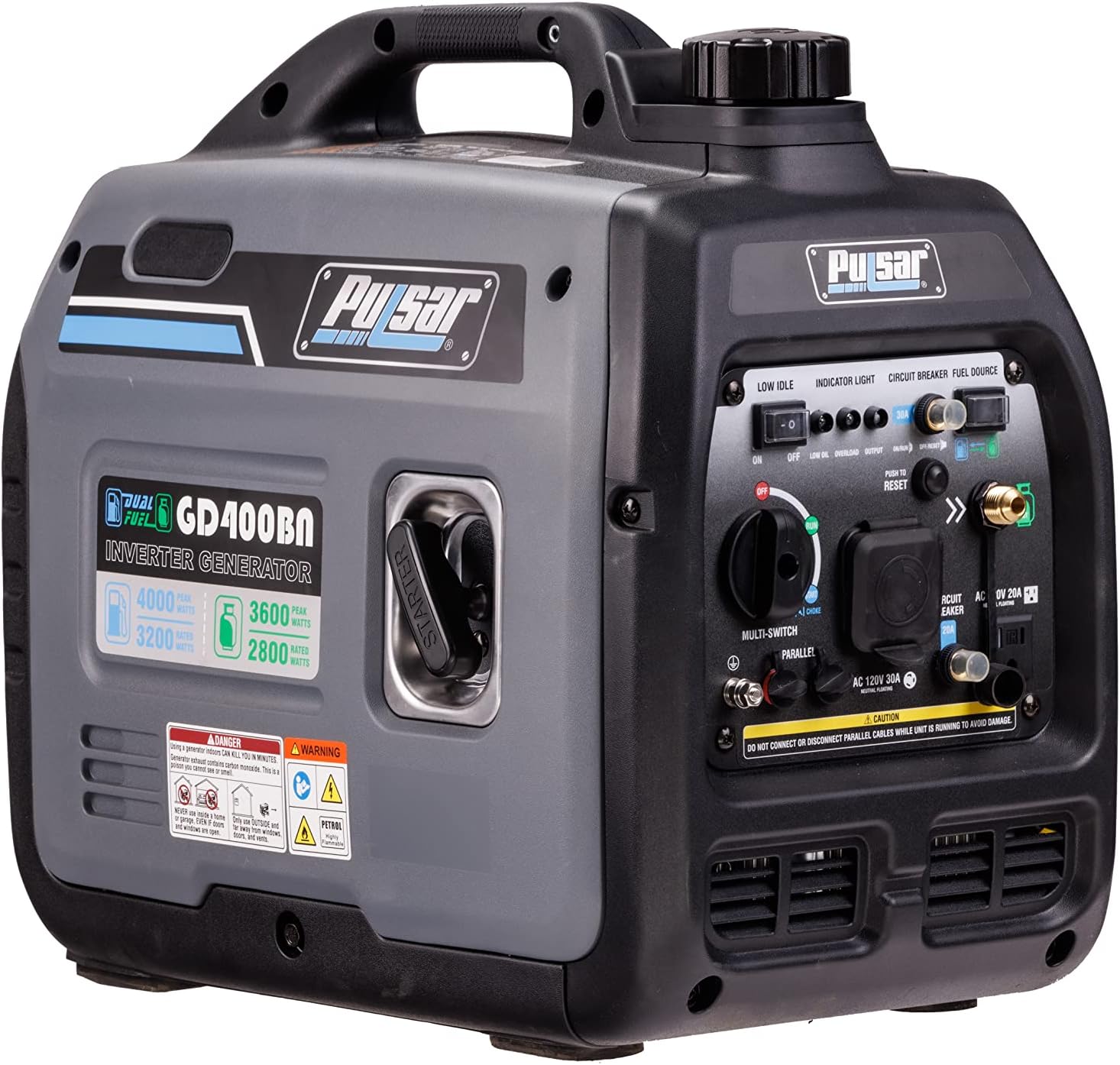
The Pulsar GD400BN makes 4,000 peak watts at just 47 lbs, so it's the cheapest, most portable way to keep the essentials running.
Renters and small-home buyers should consider the Pulsar GD400BN if they need a fridge, lights, and phones, not the whole house. One person can lift it and put it away without help.
- 4,000 peak watts, 3,200 running watts on gasoline
- 3,600 peak watts, 2,800 running watts on propane
- Inverter output with a stable sine wave, about 59 dB at half load
- About 47 lbs, parallel-capable, RV-ready, CARB compliant
- 1.1-gallon gas tank, about 4.5 hours at half load on gasoline
Pros
- Ultralight at about 47 lbs.
- Low price for dual fuel.
- Inverter power safe for electronics.
- Parallel-capable for more watts.
Cons
- Small capacity, essentials only.
- Recoil start only.
- Small tank means frequent refuels.
Pulsar GD400BN reviews
Reviewers rate it about 4.7 out of 5 across 374 ratings at Newegg, and they call it a strong value for the weight and like the dual-fuel flexibility. That said, one long-term owner wished it ran a touch quieter.
Should you buy the Pulsar GD400BN?
You should buy the Pulsar GD400BN if you want the lightest, cheapest way to power essentials. Since it’s not a whole-house option, you should pass on it if you need to run an air conditioner or several circuits at once.
Power outages and why fuel flexibility matters
When an outage can run six days or two weeks, the fuel you can actually get matters more than the one you planned on, which is why a dual-fuel generator that runs on whichever you can still find is a flexible option. For example, Winter Storm Fern cut power to over 1 million customers across the South in January 2026. Tennessee alone had 306,700 out, and the hardest-hit areas went six days in the dark.
In another example, Hurricane Helene knocked out 4.79 million customers in September 2024. Parts of western North Carolina stayed dark for 14 days, way longer than one tank of any single fuel can cover.
How to choose a dual-fuel generator for an outage
Dual-fuel generator shopping involves knowing your electrical load, the difference between gas and propane, inverter vs open frame, and more.
- Size to your electrical load: Add up the running watts of your fridge, furnace or well, and essentials, not the peak numbers, then check your total.
- Know fuel type benefits: Propane stores for years and burns clean, but gasoline packs slightly more energy, so it delivers more watts.
- Choose inverter or open-frame: Inverters give you quiet, clean power for electronics, and open-frame units give you the most watts per dollar.
- Check the start and safety: Go for electric or remote start and a built-in carbon monoxide shutoff, and read up on generator safety before you need it.
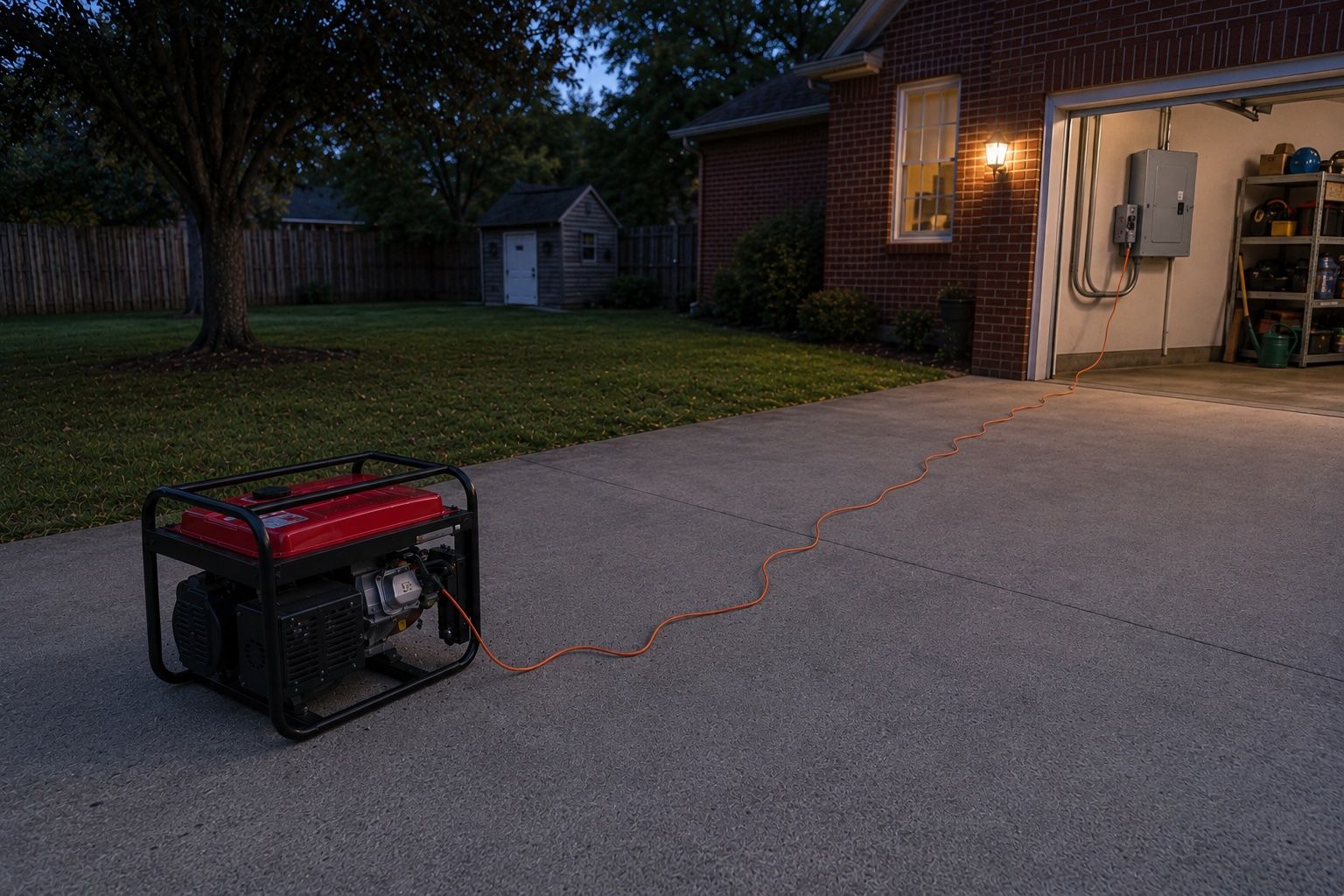
- Connect it safely: Use a transfer switch, never backfeed an outlet, and prepare your home ahead of storm season.
Finally, never run a generator indoors, in a garage, or near windows. Carbon monoxide is deadly.