


Power grid failure and rolling blackouts aren’t hypothetical risks. During Winter Storm Uri in February 2021, for example, the ERCOT blackout left 4.4 million Texas customers without power as the state's grid came within minutes of a complete, uncontrolled collapse. Similar stress events occur during heat waves when air conditioning load spikes past grid reserves and during cold snaps when heating demand overwhelms fuel-constrained generation fleets.
PowerOutage.us has tracked 950+ utilities serving about 95% of the U.S. since 2016, monitoring every major outage event, including grid-level failures, storm-driven outages, and rolling blackout sequences. Our data refreshes every 10 minutes during live events, providing the most reliable real-time outage record available. Let’s cover how to stay safe and informed before, during, and after a grid failure.
How to prepare for a rolling blackout
Preparing for a blackout involves planning your backup power, food/water strategy, and medical equipment needs.
Emergency outage kit
A basic emergency outage kit covers the first 72 hours without grid power. Gather these things before an outage is in the forecast:
- Flashlights and extra batteries
- Bottled water (1 gallon per person per day)
- Non-perishable food and a manual can opener
- Portable power station or battery bank for phones and medical devices
- First aid kit and a 7-day supply of medications
- Cash, copies of important documents, and a battery-powered or hand-crank radio
Backup power
If you have resources for backup power (like a battery power bank, backup battery, or generator), calculate your essential electricity load in watts before an outage.
Add up the wattage of devices you can’t live safely without: CPAP machine (30–60W), refrigerator (100–200W running, 400–600W startup), basic lighting (10–40W LED), phone charging (5–20W), and any other medical equipment. This total is the minimum output capacity you need for a backup power source.
Prioritize circuits depending on how crucial each is to your safety. Medical devices and refrigeration could be non-negotiable circuits for you, for example. Space heating or cooling comes second. Entertainment and non-critical loads should be disconnected during rolling blackout cycles to reduce demand on backup systems.
Keep in mind solar panel systems need a backup battery to store power, and most systems automatically shut off during an outage unless an automatic transfer switch and inverter setup allow islanded operation.
Food and water strategy
To stay safe with food and water in an outage, use the U.S. Department of Health & Human Services’ storage recommendations:
- Refrigerator: Safe below 40°F for up to 4 hours with the door kept closed.
- Freezer (full): Safe for 48 hours; (half-full): safe for 24 hours.
- Discard: Throw away any food that has stayed above 40°F for more than 2 hours.
Store a minimum 72-hour supply of drinking water (1 gallon per person per day). Given the risk of water system failure during extended grid events, consider increasing that to a week’s supply.
Medical needs
Find out specific backup power requirements for any electrically dependent medical equipment, including oxygen concentrators (300–600W continuous), dialysis machines, powered wheelchairs, and infusion pumps. Create a medical equipment outage checklist to follow when switching to backup power or deciding to leave the area.
Contact your utility's medical baseline or life support registry. Most utilities maintain priority restoration lists and provide notifications for customers with critical medical needs. Contact information for your utility's program is typically available on their website or through NERC's consumer resources.
Should you buy a ready-made emergency kit?
Ready-made emergency kits work best for renters, apartment dwellers, and households building a preparedness baseline quickly. They cover short outages well but rarely include backup power. For households with medical equipment dependencies or multi-day outage exposure, supplement a ready-made kit with a portable power station sized to your essential wattage load.
Backup power options
Many backup power options exist, and some might work better for you than others.
Portable power stations
Portable power stations like the EcoFlow Delta Pro (3,600Wh) or Jackery Explorer 2000 Pro (2,042Wh) are safe for indoor use, silent, and able to run essential loads through a single rolling blackout cycle. They operate without combustion, producing no carbon monoxide, making them safe for apartments and enclosed spaces. Output is limited (typically 1,800–3,600W), so they can’t sustain high-draw appliances like central air conditioning or electric water heaters.
Gas generators
Gas generators, like those from Generac's GP or GP series, provide 5,000–12,000W output. This is enough to run multiple circuits at the same time, including window AC units. They require outdoor placement at least 20 feet from any door, window, or vent due to carbon monoxide output. Runtime depends on fuel supply. You can typically get about 8 to 12 hours per tank at 50% load.
Home battery systems
Home battery backups like the Tesla Powerwall 3 (13.5kWh) or FranklinWH aPower (13.6kWh) integrate with the home's electrical panel and activate automatically within milliseconds of grid failure. You get near-seamless backup without manual intervention.
Large battery systems can sustain essential loads through multiple rolling blackout cycles and recharge from solar panels during daylight hours when the grid is active. As we mentioned above, off-grid solar generation requires a battery and islanding capabilities.
Recommended brands and systems
| Brand/product | Type | Capacity | Best for |
|---|---|---|---|
| EcoFlow Delta Pro | Portable power station | 3,600Wh | Indoor use, apartment use |
| Jackery Explorer 2000 Pro | Portable power station | 2,042Wh | Portable, essential loads |
| Generac GP8000E | Gas generator | 8,000W | Whole-home partial coverage |
| Tesla Powerwall 3 | Home battery system | 13.5kWh | Seamless automatic backup |
| FranklinWH aPower | Home battery system | 13.6kWh | Solar integration, multi-day |
Generator and safety rules
Carbon monoxide (CO) poisoning causes more deaths during power outages than the outages themselves in many events.
- 20-foot rule: Position any gas or propane generator at least 20 feet from doors, windows, vents, and attached garages. CO disperses upward and laterally and will enter structures at shorter distances regardless of wind direction.
- No indoor use: Never operate a gas generator inside a garage, even with the door open. CO accumulates faster than ventilation removes it.
- Surge protection: Connect sensitive electronics (computers, televisions, medical equipment) through a surge protector or UPS, even when using generator power. Generator voltage regulation is less precise than grid power and can damage unprotected electronics.
- Appliance disconnection: Disconnect major appliances from the grid before generator startup to prevent backfeed into utility lines, which creates electrocution hazards for line workers. Install a transfer switch (either manual or automatic) for any permanent generator installation.
What to do during a rolling blackout
Keep these in mind during a rolling blackout or grid failure:
- Reduce load immediately: Turn off electric stoves, clothes dryers, and water heaters to relieve strain on the grid and extend backup power runtime.
- Keep refrigerator and freezer doors closed: Every door opening introduces heat. Apply the 4-hour/48-hour rule to determine when to evaluate food safety.
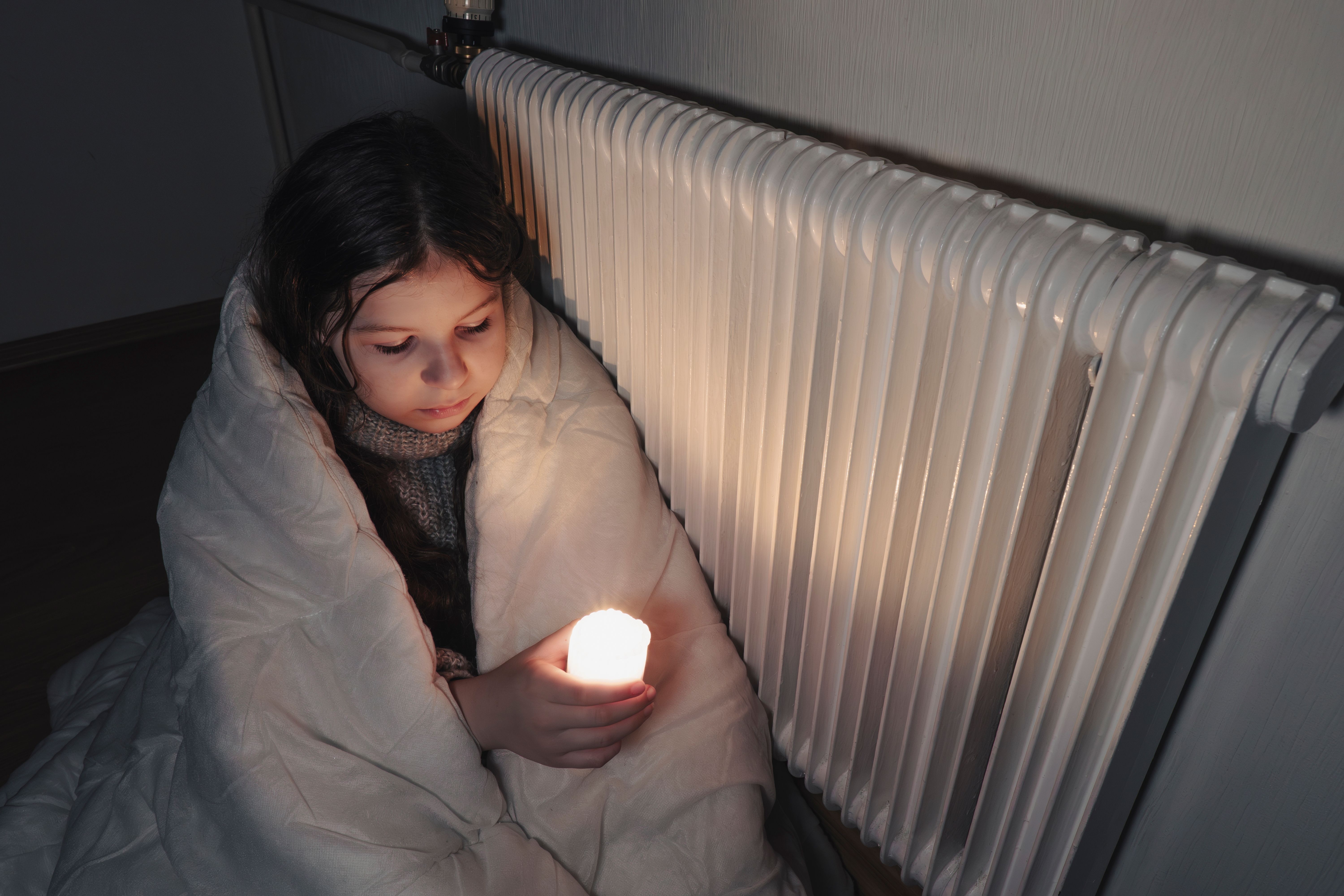
- Use flashlights, not candles: LED flashlights eliminate fire risk and operate at far lower energy draw from battery reserves.
- Monitor grid alerts: Sign up for real-time outage alerts at PowerOutage.us to receive text or email notification of outage status, estimated restoration times, and area-specific grid conditions. During live events, our data refreshes every 10 minutes.
- Avoid opening exterior doors unnecessarily: In extreme heat or cold, indoor temperature management during a rolling blackout requires minimizing thermal exchange with the outside.
After power is restored
Do some safety checks after the power comes back to make sure everything is in the clear.
- Check food safety first: Use a food thermometer to verify refrigerator temperature is at or below 40°F before consuming stored food. Discard anything that has been above 40°F for more than 2 hours.
- Reset breakers carefully: After an extended outage, reset circuit breakers one at a time rather than simultaneously. Simultaneous reconnection of all circuits creates a demand surge that can stress restored grid equipment and trip breakers.
- Inspect electronics: Voltage irregularities can damage sensitive electronics. Wait for 5 to 10 minutes before turning on computers, TVs, and audio equipment.
- Recharge backup systems: Star recharging portable power stations and home battery systems to full capacity. A second rolling blackout cycle within 24 hours is possible during grid events.
After an extended outage, document any property or appliance damage with photos before discarding spoiled food or damaged equipment. Most homeowners and renters insurance policies cover food loss and surge-related appliance damage. Contact your insurer soon, because many policies set short windows for filing outage-related claims.
ERCOT blackout case study (Texas)
The ERCOT blackout during Winter Storm Uri in February 2021 represents the most severe grid failure in modern U.S. history and the clearest case study in how power grid overload becomes a cascading infrastructure crisis.
What happened
Temperatures in Texas fell to -19°C (2.2°F) in the High Plains, far below what the state's generation fleet was designed to withstand. Natural gas supply lines froze. Wind turbines lost instrumentation. Nuclear and coal plants tripped offline due to frozen equipment. Demand for heating surged simultaneously.
Why the grid failed
Texas operates an islanded grid under ERCOT's management, intentionally disconnected from neighboring interstate grids to avoid federal regulation. This design prevented Texas from importing emergency power from surrounding states during the crisis. As generation units tripped offline faster than load shedding could compensate, ERCOT came within minutes of an uncontrolled total collapse that could have left the state without power for weeks or months.
Duration and scale
PowerOutage.us tracked 4.4 million Texas customers without power at peak, with 4.8 million affected across the broader U.S. At least 246 people died. Water systems failed statewide, with many boil water notices issued. Some areas remained without power for more than a week.
Main lessons
NERC's post-event analysis identified winterization of generation assets and fuel supply infrastructure as the primary corrective requirement. Reserve margin planning must account for weather scenarios outside historical norms. FERC and NERC subsequently issued joint recommendations on mandatory cold-weather standards for ERCOT and other regional transmission organizations.
Outage examples from PowerOutage.us data
PowerOutage.us has continuously tracked grid stress events that illustrate both planned rolling blackouts and uncontrolled grid failures at scale.
During Winter Storm Uri (February 2021), PowerOutage.us tracked 4.4 million Texas customers without power at peak as ERCOT's grid reached the edge of total collapse. Outages that began as structured rolling blackouts extended into multi-day events as generation capacity could not recover between load-shedding cycles. The event produced 322 boil water notices statewide as water infrastructure failed.
Winter Storm Elliott (December 2022) produced rolling blackout orders from TVA and Duke Energy across Tennessee, Virginia, and the Carolinas on Christmas Eve. Overall, 6.3 million total U.S. households were affected at some point during the event.
Most recently, Winter Storm Fern (January 24–26, 2026) caused 1,005,641 customers to lose power at its height and spanned a 2,000-mile zone of storm activity from Texas to New England. Tennessee alone recorded 306,700 customers affected, with duration exceeding 6 days in the hardest-hit areas.
What is a rolling blackout?
A rolling blackout is an intentional, temporary disconnection of electrical service applied sequentially across geographic zones to reduce total system load. Utilities and grid operators rotate outages (typically in 30- to 120-minute intervals) so that no single area bears the full burden of load reduction while the grid stabilizes.
| Outage type | Cause | Controlled? | Typical duration |
|---|---|---|---|
| Blackout | Equipment failure, storm damage | No | Hours to weeks |
| Rolling blackout | Demand exceeds generation capacity | Yes | 30–120 min per cycle |
| Brownout | Voltage reduction to reduce load | Yes | Minutes to hours |
Rolling blackouts most often occur during peak demand windows (usually 4–7 PM on weekdays) when residential and commercial loads combine with industrial demand. A brownout, by contrast, reduces voltage across the network rather than cutting service entirely, and is often a precursor condition before utilities escalate to full load shedding.
What causes power grid failure?
Power grid failure results from an imbalance between electrical generation and consumer demand, compounded by infrastructure vulnerabilities at the generation, transmission, or distribution level.
- Grid overload is the primary driver. When demand exceeds available generation by even a small margin (measured in megawatts) grid frequency drops below the standard 60 Hz in the U.S. Protective relays then trip generators offline to prevent equipment damage, which accelerates the shortfall and risks cascading failure.
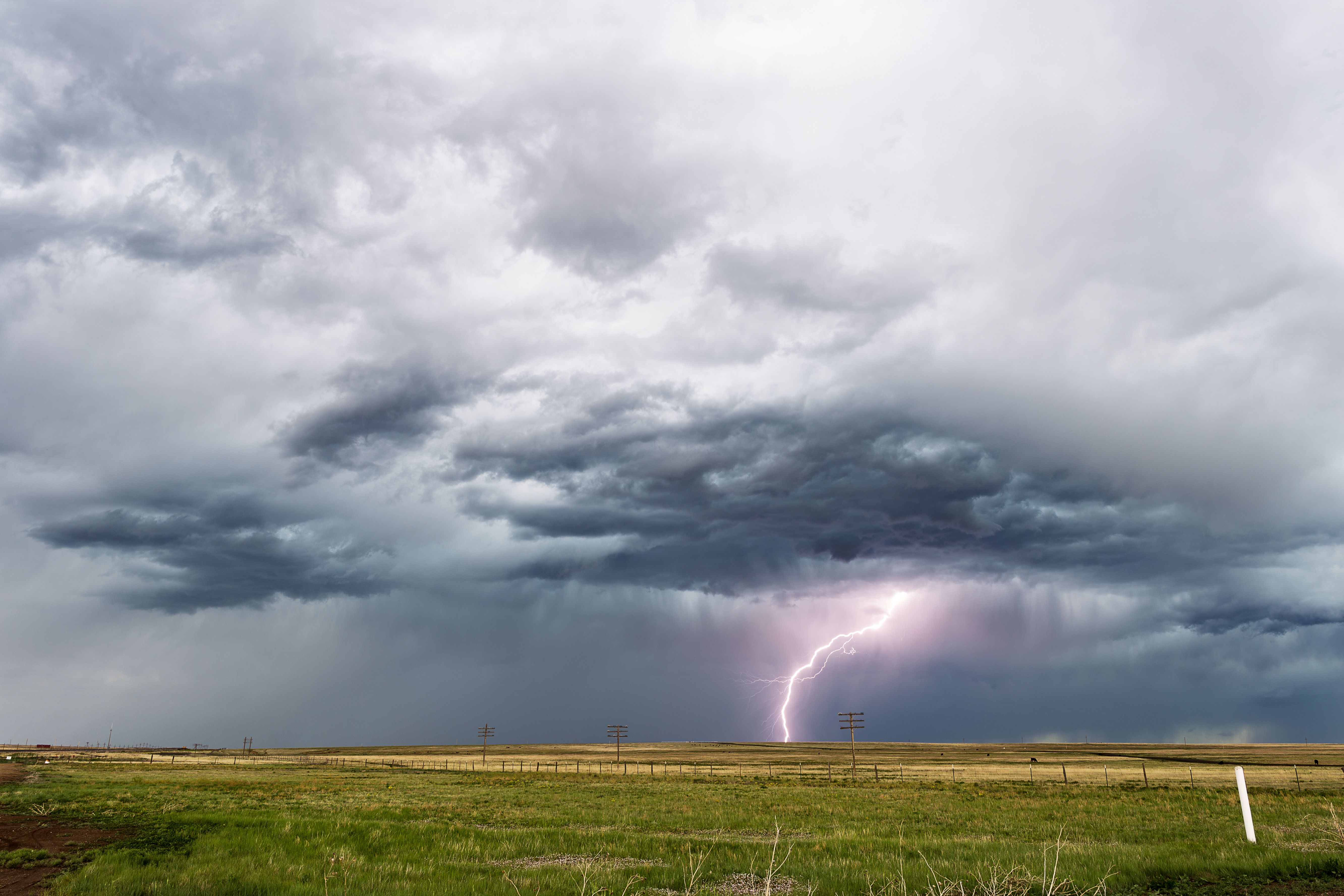
- Extreme weather applies stress from both directions. Heat waves drive air conditioning demand to record levels, for example. On the other hand, extreme cold snaps freeze natural gas supply lines, wind turbine components, and instrumentation, which raises heating demand and lowers fuel availability. Both conditions can spike load thresholds beyond what reserve capacity can absorb within minutes.
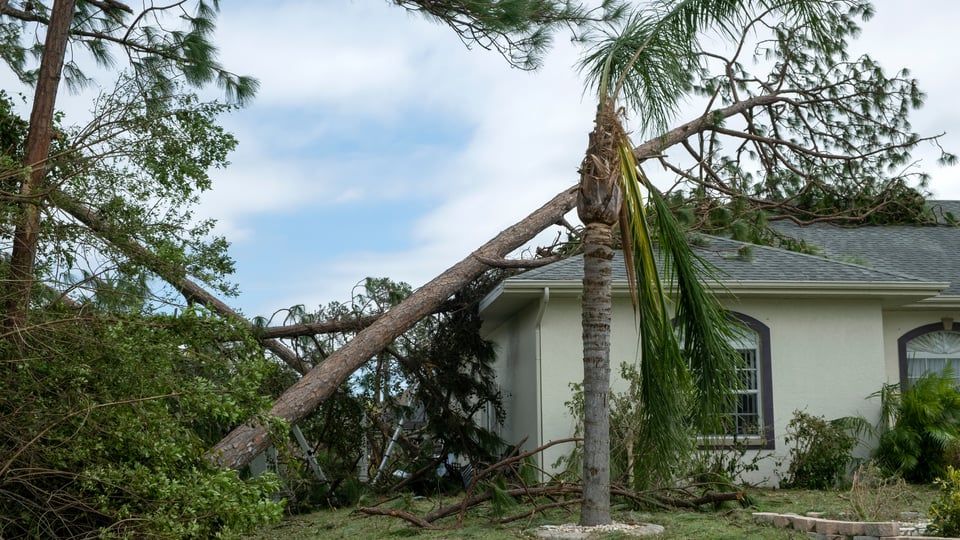
- Transmission and substation failures block the pathways that transfer power from generation plants to consumers. A single high-voltage substation failure can isolate entire regions from generation sources, even when those sources remain online. The transmission grid — the high-voltage backbone connecting power plants to local distribution networks — is particularly vulnerable to physical damage from ice accumulation, high winds, and flooding.
- Fuel supply pressures affect thermal generation directly. Natural gas pipeline capacity, coal delivery logistics, and nuclear refueling schedules all constrain how much power plants can generate during prolonged stress events.
The Federal Energy Regulatory Commission (FERC) and the North American Electric Reliability Corporation (NERC) set mandatory reliability standards for bulk power system operators, requiring utilities to maintain reserve margins and winterization plans. Unfortunately, the ERCOT blackout demonstrated these requirements were inadequately enforced in Texas at the time.
How power grid overload leads to rolling blackouts
Power grid overload activates rolling blackouts through a step-by-step sequence that grid operators manage in real time.
- Demand spike: Consumer load climbs past forecast levels, like when there’s a heat wave or unexpected cold snap. Generation units committed for the period can’t ramp fast enough to compensate.
- Reserve margin erosion: Available reserve capacity (the buffer generation maintained above expected peak demand) falls below the minimum threshold. This is usually 15–20% in well-managed systems.
- Frequency instability: Grid frequency drops below 60 Hz as demand outpaces supply. Generators begin tripping offline automatically at approximately 59.3 Hz to protect equipment, compounding the generation deficit.
- Load shedding: Grid operators, like ERCOT in Texas, initiate emergency load shedding instructions to transmission-level utilities. Utilities execute controlled outages by opening circuit breakers at substations serving specific zones.
- Geographic rotation: Outages are rotated across zones (typically every 30 to 120 minutes) to distribute the burden equitably and prevent sustained damage to a single area's infrastructure, businesses, or vulnerable residents.
Overall, short rotating outages manage to protect refrigeration, water systems, and medical infrastructure.
How long do rolling blackouts last?
Individual rolling blackout cycles typically run 30 to 120 minutes per affected zone. After that point, power is restored, and the outage rotates to the next area. Under moderate grid stress, a given location may experience one to two outage cycles per day.
Under sustained grid stress — multi-day heat waves, extended cold snaps, or prolonged fuel shortages — the cycle can repeat three to four times within a 24-hour period. In severe scenarios like Winter Storm Uri, what began as planned rolling blackouts became extended outages lasting multiple days as the grid could not stabilize between cycles.
Duration depends on three variables: the magnitude of the generation shortfall (measured in MW), the rate at which demand can be reduced voluntarily or through demand response programs, and the speed at which offline generation units can return to service.
When grid failures are most likely
You’re more likely to see grid failures in extreme temperatures, peak demand hours, and areas with surging populations.
Heat waves
Heat waves represent the highest probability period for rolling blackouts in most U.S. regions. Peak demand during a heat wave occurs between 4 and 7 PM when commercial and residential air conditioning loads combine. Grid operators issue Energy Emergency Alerts (EEAs) when reserves fall below required minimums; these are publicly posted by NERC and regional transmission organizations.
Cold snaps
Cold snaps with temperatures below 10°F strain both demand (heating) and supply (fuel system freeze) simultaneously. This is the combination that caused the 2021 ERCOT blackout. Winter events below forecast temperatures are the highest-risk scenario for multi-day rolling blackouts.
Peak demand hours
Peak demand hours (4–7 PM on summer weekdays) are the structural daily risk window, even absent severe weather. Demand response programs, offered by many utilities, compensate customers who voluntarily reduce load during these windows and directly reduce rolling blackout probability.
Areas with high population growth
Rapid population growth regions (particularly in Texas, Florida, Arizona, and the Mountain West) face compounding risk as load growth outpaces transmission infrastructure expansion. NERC's annual Long-Term Reliability Assessment identifies regions where reserve margins are projected to fall below reliability thresholds within a 10-year horizon.
Quick recap
A rolling blackout is the predictable output of a grid operating beyond its generation capacity — as the 2021 ERCOT blackout demonstrated, an unmanaged shortfall can cascade into a multi-week crisis. Preparation involves calculating your essential backup load and planning food and water around 4-hour and 48-hour storage thresholds.
Monitor current outage conditions and sign up for real-time alerts at PowerOutage.us. We track 950+ utilities across more than 200 million customers, with data that updates every 10 minutes during live grid events.